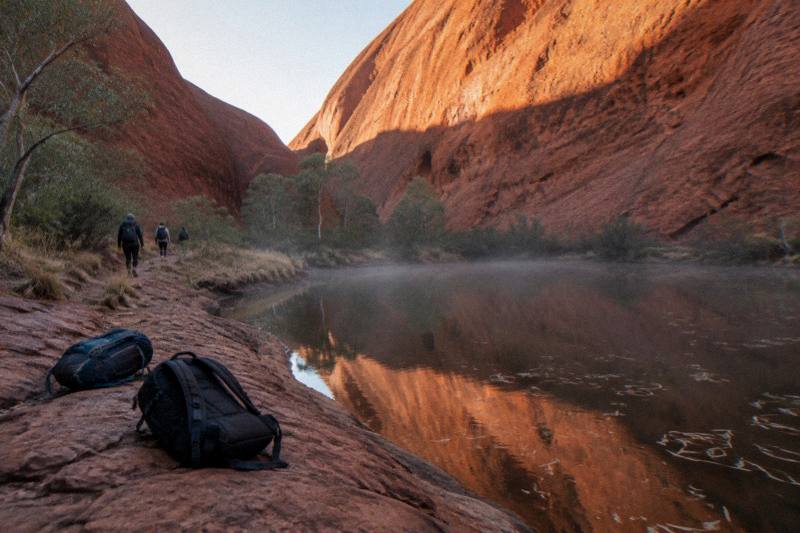
Can You Walk Around Uluru Without A Tour?
Yes, you can walk Uluru's 10 km base walk without a tour. Here is what the park pass costs, when heat rules close sections, and when a guided walk earns its price.
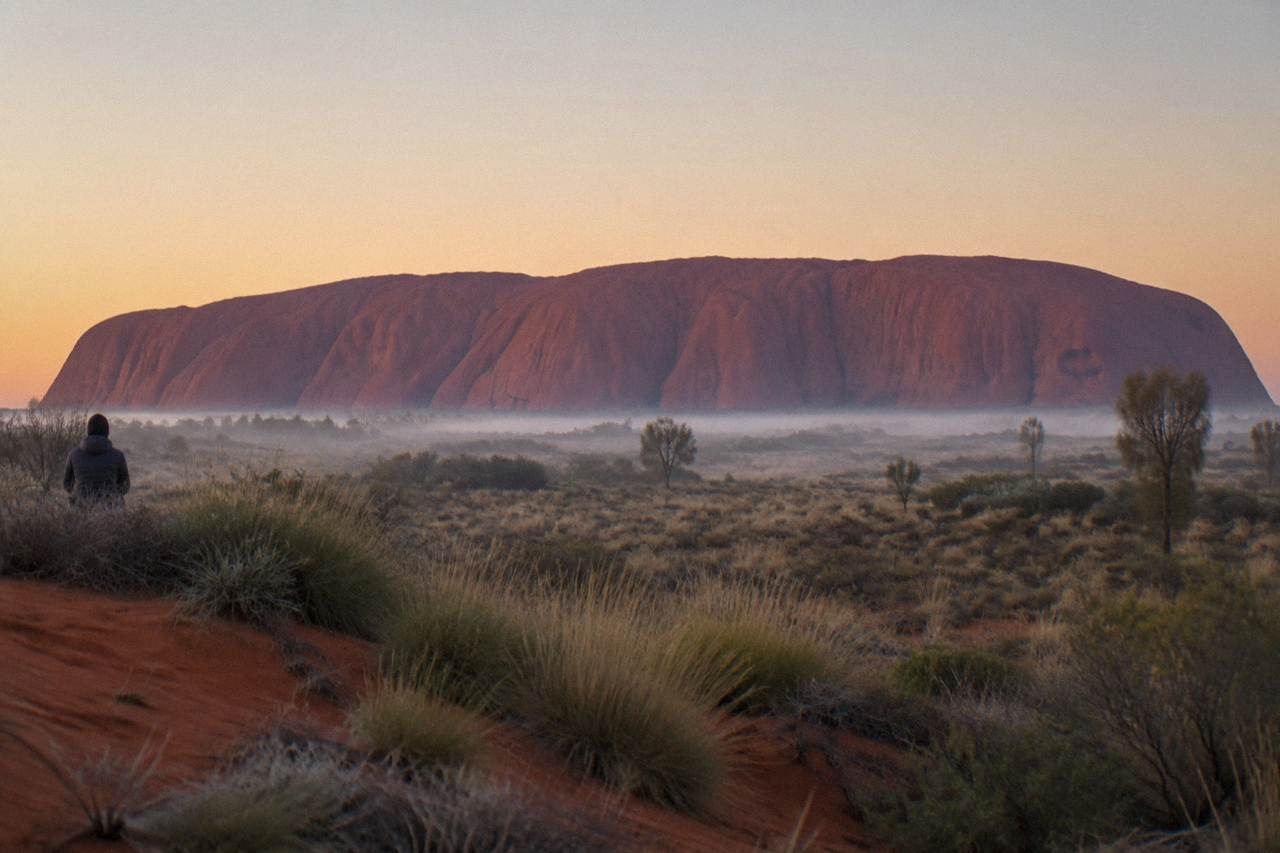
Can You Walk Around Uluru Without A Tour?
Yes, you can walk around Uluru without a tour. The base walk is about 10 km around the whole circumference, it is free to walk once you hold a park pass, and the park's own guidance says to start at the Mala carpark in the early morning and go clockwise. No operator, guide or booking is required. What the decision really turns on is timing, the separate park pass, heat rules, and whether interpretation matters to you. If you'd also like to see the rock from above, our breakdown of whether Uluru helicopter flights justify their price weighs the flight options against the fixed-wing alternative.
That is the short answer, and it is the answer the park itself gives. Uluru-Kata Tjuta National Park treats the base walk as a self-guidable activity, one of several listed on the park's walks page alongside the Mala walk and the Kuniya walk to Mutitjulu Waterhole. Anangu are named as the Traditional Owners of the park, and the walk passes culturally sensitive sites that are clearly signed, so self-guided does not mean rules-free. The route is broken into named sections: the Mala walk, the north-east face walk, the Kuniya walk, the Lungkata walk and the Liru walk, which links the Mala carpark with the Cultural Centre. If the sheer age of the rock underfoot sparks your curiosity, whether Uluru is older than the dinosaurs is a fun question to settle before you set out.
The buying decision for most readers is not whether a tour is compulsory. It is whether the guided version of the same loop, such as the small-group Full Uluru Base Walk at Sunrise Including Breakfast from SEIT Tours at from A$249 per person, adds enough to justify the fare over a free walk plus a A$38 park pass. This article lays out both sides with the park's own figures, then shows where a guided option genuinely changes the day. A fuller treatment of the route itself sits in the Uluru base walk guide.
Where Does The Base Walk Start And How Long Does It Take?
The base walk starts at the Mala carpark, runs about 10 km around the full circumference of Uluru, and the park advises walking clockwise and starting in the early morning. A comfortable self-guided pace with stops is roughly three to four hours for the full loop. The track is flat, paved for much of its length, and passes drinking water at points along the Mala section, though carrying your own supply is expected. If you would like a steeper challenge with big lookout views, our guide to the Valley of the Winds walk at Kata Tjuta covers everything to expect on that trail.
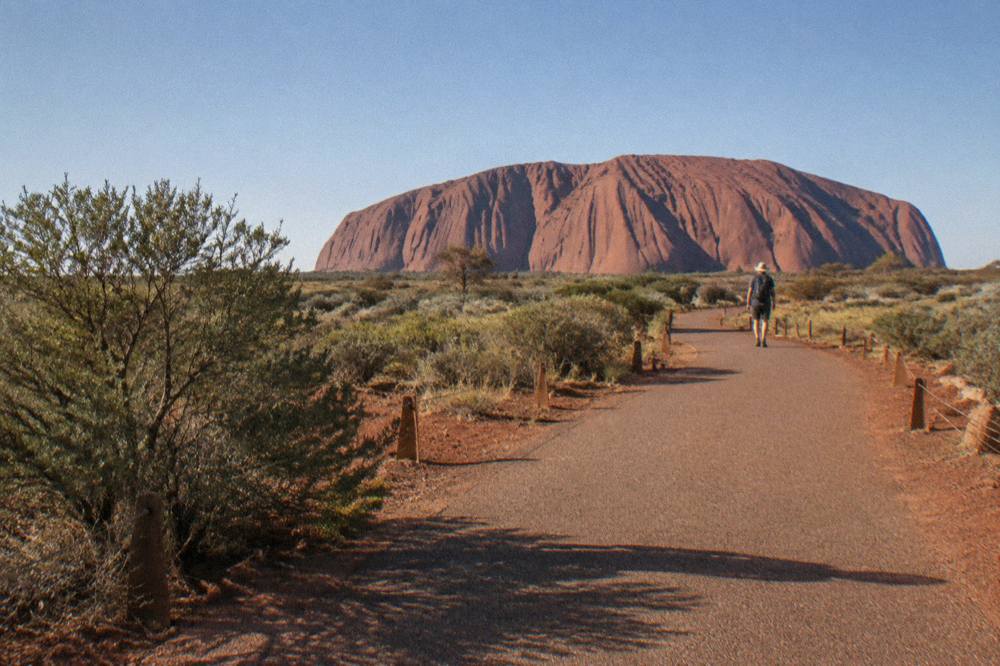
The park's own walk page gives the practical anchors. Distances between sections are short enough that walkers commonly break the loop into pieces and skip sections, and a shorter alternative is the 2 km return Mala walk from the carpark to Kantju Gorge, which the park lists as wheelchair accessible with drinking water available. That matters for families and for anyone reconsidering a full loop in warm weather: the base walk is not an all-or-nothing commitment.
The clockwise direction the park advises is not arbitrary. Starting from the Mala carpark and heading clockwise puts the most exposed sections behind you in the coolest hours, and it lines up with the drinking water point on the Mala section early in the walk rather than at the end of it. Walkers who prefer a later start can also enter the loop from the Cultural Centre end via the Liru walk link track, though the early morning advice from the park applies whichever direction you join from.
Timing interacts with the park's opening hours. The park is open every day of the year but closes at night, with hours shifting by month: 5.00 am to 8.00 pm in October, 6.30 am to 7.30 pm in June and July. All visitors must be out by closing time. Starting at the Mala carpark early, as the park advises, keeps you ahead of both the heat rules covered below and the midday crowding at the viewing areas. The park also states that in hot weather walkers should walk only in the cooler morning hours and finish before 11.00 am.
| Base walk option | Distance | Time at walking pace | Notes from the park page |
|---|---|---|---|
| Full base walk | About 10 km | Roughly 3 to 4 hours | Start Mala carpark, clockwise, early morning |
| Mala walk section | 2 km return | About 1 hour | Wheelchair accessible, drinking water available |
| Kuniya walk to Mutitjulu Waterhole | Short section | Under 1 hour | Links into the base walk loop |
| Liru walk | Link track | Varies | Connects Mala carpark with the Cultural Centre |
If the number that interests you is the time the loop takes different walkers, the base walk duration question is covered in its own article. For comparison, the guided Full Uluru Base Walk at Sunrise Including Breakfast runs the full circuit in a 6 hour small-group format at from A$249 per person, rated 4.8 from 460 reviews, which tells you the guided pace includes interpretation stops, not just the walk.
Do You Need A Park Pass If You Have No Tour?
A park pass is required for every visitor to Uluru-Kata Tjuta National Park, including walkers with no tour: $38 for an adult 3-day pass, $50 for an annual pass, free for under 18s. The pass is bought online and scanned at the entry station. Tour listings state the fee separately from their own price, so going self-guided saves the tour fare, never the pass. If you're budgeting the whole trip, our guide to the cheapest way to see Uluru covers the free ranger-led walks and the lowest tour prices around.
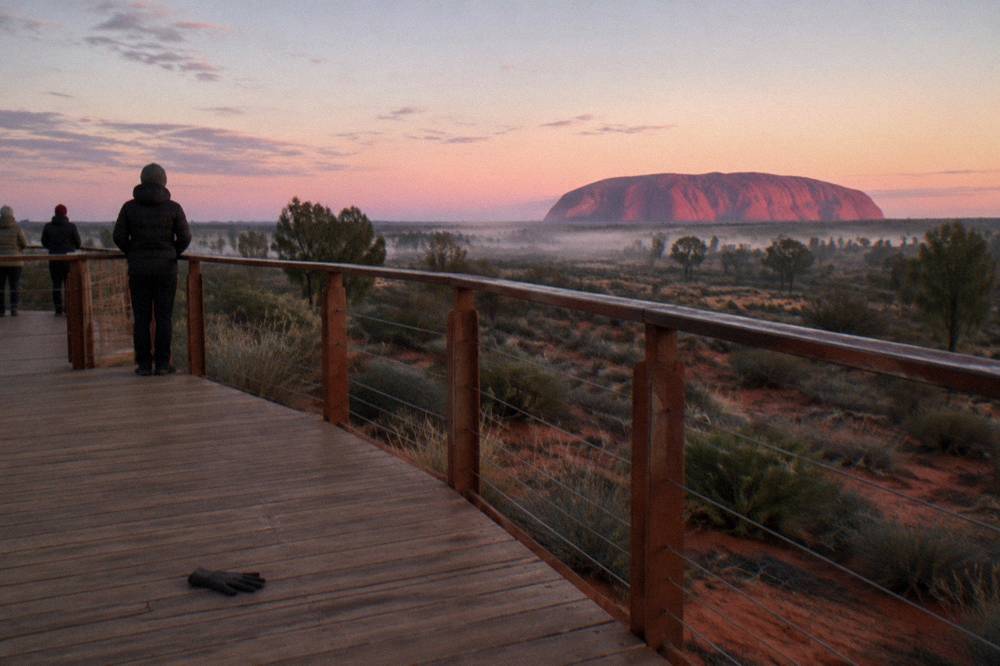
The pass page is explicit on the details that catch people out. The pass is valid for Uluru-Kata Tjuta National Park only, so it does not carry into other parks. It covers three consecutive days, which lines up with the common advice of spreading Uluru and Kata Tjuta across more than one morning. The park states that all pass revenue is reinvested in the park, and visitors buy online then scan the QR code at the entry station's left-hand lane or pick up a pass at the station itself, per the official park pass page.
One point worth fixing clearly, because listings phrase it in ways that mislead: no tour on this site's roster includes the park pass. Each listing states the $38 adult fee as a separate item that must be pre-purchased online. That means the honest cost comparison for a solo walker is pass plus nothing, versus pass plus tour fare. The pass is also per person, not per group, so a family of two adults and two children pays for the adults only while the under 18s walk in free.
Self-guiding the base walk is also the anchor of the free things at Uluru guide: the base walk, the Cultural Centre (free to enter, 7.00 am to 5.45 pm daily) and the sunrise and sunset viewing areas all cost nothing beyond the pass. The ranger-guided Mala walk is likewise free for park visitors, running 8.00 am from October to April and 10.00 am from May to September, so a free interpretation option exists even with no tour booked, as the park's ranger activities page states.
The cheapest supported option on the roster is the Uluru & Kata Tjuta Hop on Hop Off Pass at from A$140 per person, rated 4.5 from 154 reviews, which solves transport rather than guiding.
What Are The Heat Rules And Safety Constraints?
The park's heat rules are specific: in hot weather walk only in the cooler morning hours and finish before 11.00 am, avoid walking between 2.30 pm and 6.30 pm in summer, and carry at least one litre of water per person per hour. The north-east face walk closes from 11 am when the temperature reaches 40 C, and the Lungkata walk closes from 2 pm at that temperature. Emergency numbers are 000 or 112.
These figures come straight from the park's staying safe page and walk pages, and they are the strongest argument for the early start. October to March can exceed 35 C daily, and summer temperatures can exceed 40 C, at which point the closures above take effect on the named sections. The Yulara averages tell the shape of the year: January averages a maximum of 38.4 C, July 20.6 C with an overnight minimum of 4.4 C, October 32.3 C. Winter walkers trade heat for very cold nights, which the cold nights question covers in detail.
| Yulara month | Average max C | Average min C | Average rain mm |
|---|---|---|---|
| January | 38.4 | 22.8 | 28.8 |
| April | 29.9 | 14.5 | 15.7 |
| July | 20.6 | 4.4 | 17.6 |
| October | 32.3 | 14.9 | 21.1 |
Beyond heat, the park notes emergency radios on most walks, bush flies are present between September and April, and UV is extreme in the warm months, so sun protection is part of the kit rather than an afterthought. A hat, long sleeves and a fly net for the warmer months are the standard loadout, and the park's one litre per person per hour rule should be read as a floor, not a suggestion. Walkers finishing the loop in three hours in mild weather carry less than the same walkers in a 35 C October morning, where the rule is what keeps the last kilometre safe.
Winter changes the risk profile rather than removing it. Overnight minimums in June and July average below 6 C, so an early start means starting in near-freezing air while the midday still climbs past 20 C. Layering is the practical answer: cold at the Mala carpark, comfortable by the halfway point, warm at the finish. The heat closures barely feature in these months, but the water rule still applies, because dry air dehydrates walkers who never feel hot.
Conditions change: the park occasionally closes areas for cultural reasons and track sections close in extreme heat, so the park's own news page is the source to read before travelling, at uluru.gov.au/news/.
What Does A Guided Base Walk Actually Add?
A guided base walk adds interpretation, logistics and pace management, not access: the loop is identical, and no operator can sell you closed sections. Guided options run from A$186 per person for the five-hour Guided Walking Tour at Sunrise, rated 4.6 from 318 reviews, to A$249 for the small-group Full Uluru Base Walk at Sunrise, rated 4.8 from 460 reviews. Both include pickup from Yulara.
The honest framing is what you cannot get alone. A guide explains Tjukurpa-related context at the level the park permits, points out the meaning behind signed sites, handles the early-morning timing so the group finishes before the heat rules bite, and includes breakfast. A verbatim guest review of the SEIT full base walk captures the case: "This was an excellent tour. The guide was incredibly knowledgeable and enjoyable. I would highly recommend this wonderful experience." (Ian S, 5 stars).
| Guided base walk option | Format | Duration | From price | Rating |
|---|---|---|---|---|
| Full Uluru Base Walk at Sunrise Including Breakfast | Small group | 6 hours | A$249 per person | 4.8 from 460 reviews |
| Guided Walking Tour at Sunrise with Light Breakfast | Coach, large group | 5.5 hours | A$186 per person | 4.6 from 318 reviews |
| Segway the FULL base of Uluru | Small group on Segways | 5 hours | A$259 per person | 4.9 from 499 reviews |
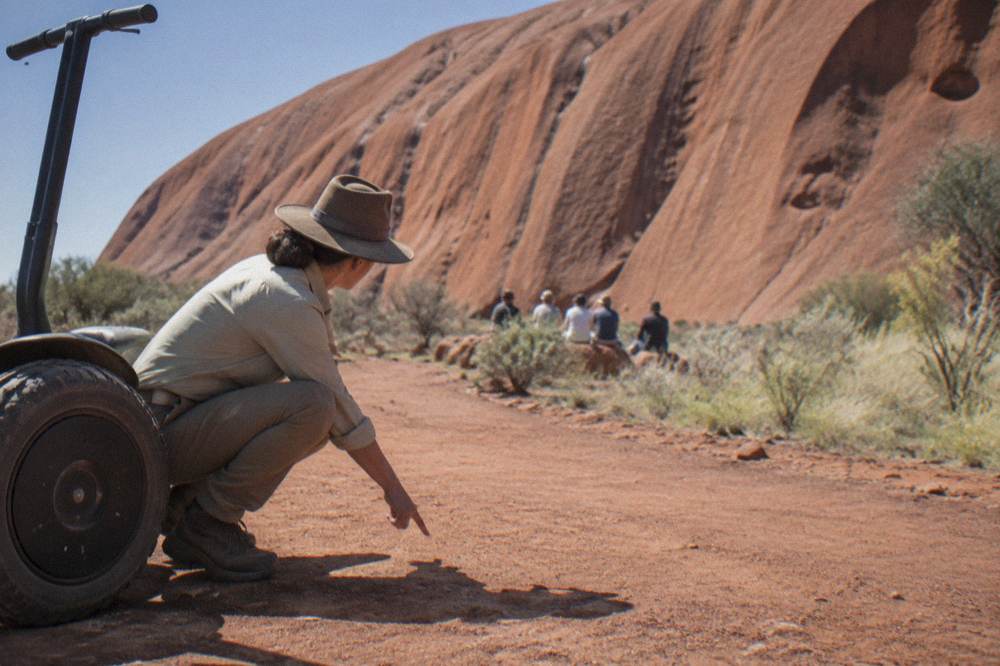
There is also a middle format. The Segway the FULL base of Uluru tour from Uluru Segway Tours, from A$259 per person and rated 4.9 from 499 reviews, covers the full base loop on a Segway with a guide in a five-hour small-group format. It suits walkers who want the complete circuit with less strain on knees, and a guest review reflects that: "I wasn't sure I could manage the Segway but it became very comfortable. The team were very helpful and info. So, so pleased we did it!" (Janine C, 5 stars).
Cancellation terms differ by listing and are worth reading before booking rather than assuming. The Full Uluru Base Walk at Sunrise Including Breakfast row lists free cancellation with a cutoff that varies, six days before start. The guided walking tour with light breakfast row lists a 24 hour cutoff. Most roster listings allow free cancellation but the cutoff differs, so read the booking page for whichever one you choose.
What Photography Rules Apply On The Walk?
Photography along the base walk is broadly allowed, with specific signed exceptions: culturally sensitive sites at Uluru and Kata Tjuta are clearly signed and photographing those exact sites is prohibited. This is not a ban on photographing Uluru, and wide shots from a distance are fine. On the north-east face, Anangu ask for wide shots from a distance only, with nothing showing the detail on the top-left side; the best light comes one to two hours before sunset.
The park's photography page is the source for all of this, and it matters to self-guided walkers in a particular way: without a guide, you are the one responsible for spotting the signage. Drones and remote controlled devices are prohibited in the park under the EPBC Act, with penalties applying, and commercial photography and content creation need a media permit. All visitors must be out of the park by closing time, so night-sky photography happens outside it, from the dune lookout beside the Lasseter Highway halfway between the entry station and Ayers Rock Resort, per the park's photography page. Since the signage does so much of the work on a self-guided visit, it also pays to know exactly where you can walk beside the rock, which is where our guide to the rules on touching Uluru comes in.
For self-guided walkers the practical takeaway is simple. The signage along the base walk marks the exact spots where the camera stays down, and those signs are the same signs a guide would point out on a paid tour. Reading them carefully costs nothing and is the difference between a respectful walk and an accidental breach. The signage system exists precisely so that independent visitors can self-manage, which is part of why the park keeps the walk open without any guiding requirement.
The broader naming question, including why the site's own name uses both Uluru and the still-searched Ayers Rock, is handled in the why the name changed article.
So Which Should You Choose: Self-Guided Or Guided?
Choose self-guided if you are comfortable walking about 10 km on a mostly flat track, can start early, and are happy to read the signage yourself: your cost is the adult pass and a morning. Choose guided if you want the interpretation, the pickup, the breakfast, or the assurance of a pace set by someone who watches the heat rules for a living. Both walk the same rock, on the same track, under the same rules.
Budget is the cleanest lens. Two adults walking independently over three days pay for two adult 3-day passes and nothing else for the walk itself. The same two adults on the SEIT full base walk pay the same two passes plus the tour fare for the pair. That gap buys a guide, a vehicle and breakfast, and only you can price those. What the gap never buys is better access, a closer look or a section closed to independent walkers: Uluru Australia Tours compares these listings on what they actually include, not on access nobody can sell you.
Fitness and season tilt the answer as much as money does. A confident walker in July, starting at 7 am with a warm layer and a full water bottle, loses almost nothing by skipping the guide. The same walker in a hot October, or a walker with knee trouble on a 10 km circuit, or a visitor with one morning only and no car, gets real value from the guided formats. The Segway option exists precisely for that knee-trouble case, and the coach-based guided walk exists for the one-morning case.
A note on the shorter middle option: the 3-hour Highlights of Uluru Including Sunrise and Breakfast from SEIT Tours, from A$189 per person and rated 4.8 from 220 reviews, covers the highlights rather than the full loop, and suits visitors who want a guided morning without committing to 10 km. It is the option most often overlooked between the free walk and the full circuit.
Common Questions About Walking Around Uluru Without A Tour
Can You Walk Around Uluru Without A Tour?
Yes. The base walk is about 10 km, it is free to walk once you hold a park pass, and no guide or booking is required. Start at the Mala carpark in the early morning and walk clockwise, as the park advises.
How Much Does It Cost To Walk Around Uluru Yourself?
Nothing beyond the park pass: $38 for an adult 3-day pass, $50 annual, free for under 18s, bought online and scanned at the entry station. No tour on the roster includes the pass, so guided walkers pay it too.
How Long Does The Base Walk Take Without A Guide?
Roughly three to four hours at a comfortable pace with stops for the full 10 km loop. The park advises finishing before 11.00 am in hot weather, and the 2 km return Mala walk is a shorter accessible option.
Is The Base Walk Hard?
The track is mostly flat and much of it is paved. The challenge is distance, heat and sun rather than terrain. Carry at least one litre of water per person per hour and avoid walking between 2.30 pm and 6.30 pm in summer.
Can You Photograph Uluru On The Walk?
Yes, wide shots are fine. Culturally sensitive sites are clearly signed and photographing those specific sites is prohibited, and on the north-east face Anangu ask for wide shots from a distance only. Drones are prohibited in the park.
Do Sections Of The Walk Close?
Yes. The north-east face walk closes from 11 am and the Lungkata walk from 2 pm when the temperature reaches 40 C, and the park occasionally closes areas for cultural reasons. Check the park's news page before you travel.