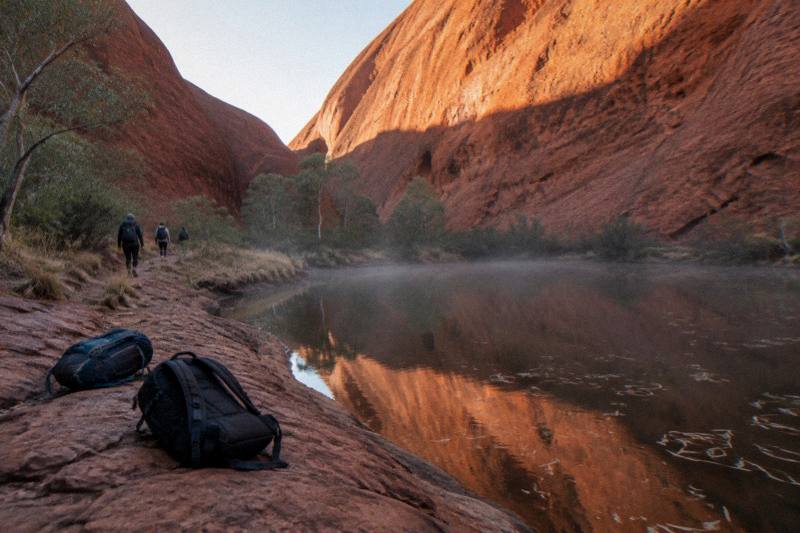
How Long Does It Take To Walk Around The Base Of Uluru?
The Uluru base walk is about 10 km and takes most independent walkers 3 to 4 hours, while guided and Segway versions run 5 to 6 hours with stops included. Here is the full timing breakdown.
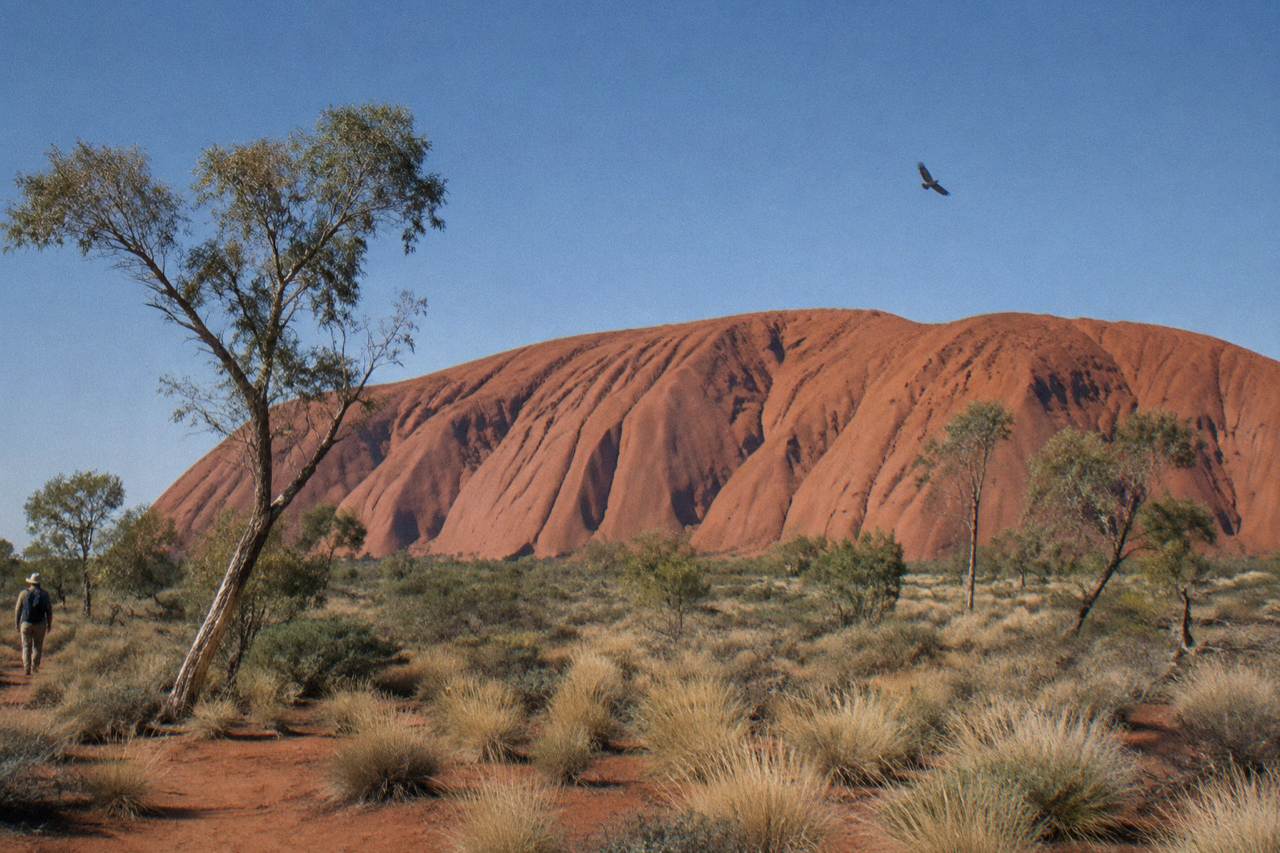
The base walk around Uluru is a single, continuous loop of about 10 km that follows the whole circumference of the rock, and the time it takes splits cleanly into two answers: walkers doing it alone at their own pace should plan for roughly 3 to 4 hours on the path, while the listed tours that cover the same loop run longer because they fold in stops, interpretation and a meal. The park's own walks page, which sets the reference figures for everything below, describes the circuit as about 10 km and recommends starting at the Mala carpark in the early morning, walking clockwise. The official Uluru-Kata Tjuta walks page is the source for the distances and section names used here, and the tour timings come straight from each operator's listing.
Timing matters more at Uluru than at most walking destinations because the climate does not forgive a late start. In the warmer months the park closes parts of the base walk itself in the afternoon heat, and the guidance is to finish walking before 11.00 am. Get the timing right and the loop is one of the great desert walks in Australia. Get it wrong and the same 10 km becomes a survival exercise, which is why this article breaks the answer down by pace, by section, by season and by the guided options on the roster. If you would rather go it alone, the guide to walking Uluru without a tour covers the park pass cost, the heat rules, and the moments when a guide actually earns the price.
How Long Does It Take To Walk Around The Base Of Uluru?
Most independent walkers complete the full 10 km base circuit in 3 to 4 hours at a steady pace, and the park advises finishing before 11.00 am in warmer months. Guided versions run longer by design: the small-group sunrise base walk takes about 6 hours including breakfast, and the Segway tour covering the full base takes about 5 hours. The number that should shape your plan is the total block of your morning the loop will consume.
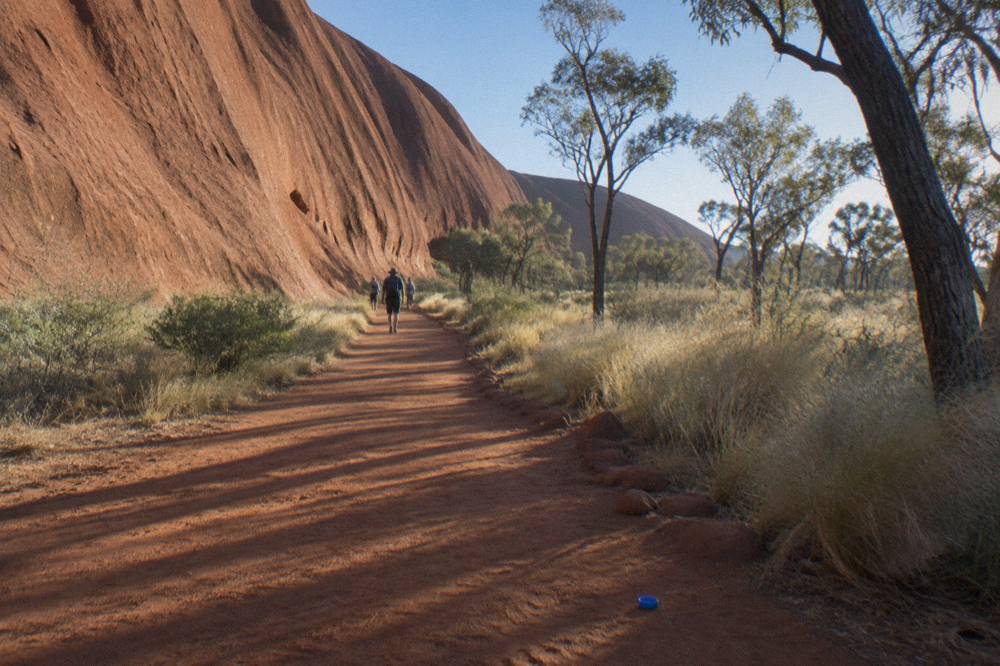
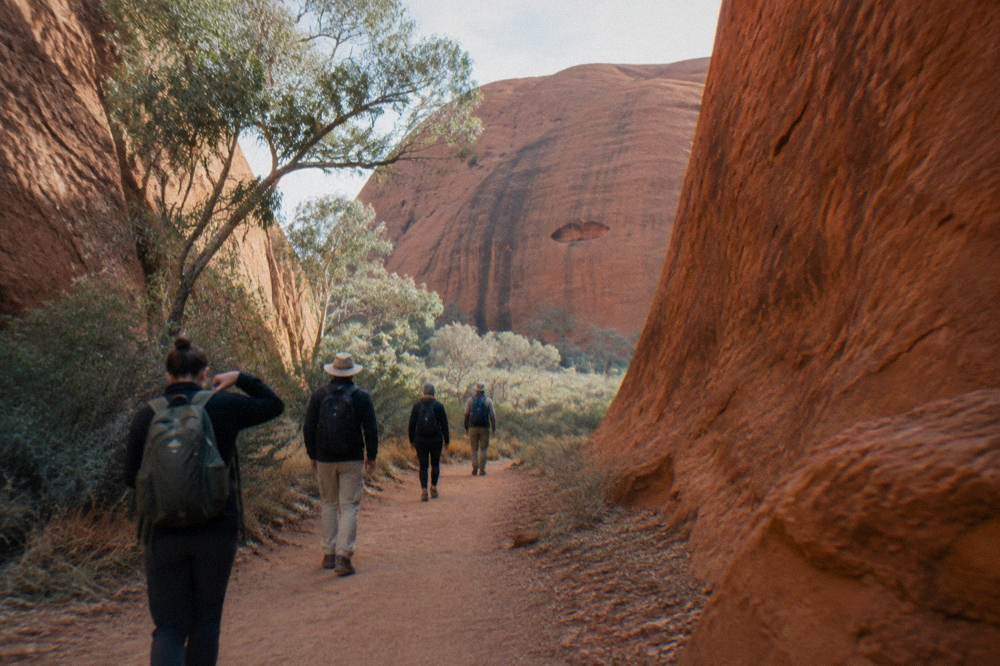
That 3 to 4 hour figure assumes you are walking the loop as a circuit from the Mala carpark, clockwise, with modest stops for water, photos and the signed cultural sites along the way. It is a flat track for the most part, packed earth and some sandy stretches, with no climbing involved. The Uluru climb closed permanently on 26 October 2019, and the base walk is now the way to experience the rock up close: at 348 metres high and 9.4 km around, the monolith takes on an entirely different character at ground level than it does from the sunrise viewing area, and much of that character, the waterholes, the rock art sites, the folded north-east face, only exists for people who walk it. If you're staying at Yulara without your own car, the guide to the Uluru hop-on hop-off bus covers which stops put you closest to the base walk trailheads.
Speed is not the variable most first-time visitors expect. Fitness matters less than the stops. The circuit passes a series of named sections, and each one invites you to slow down: the Mala walk to Kantju Gorge, the north-east face, the Kuniya walk detour to Mutitjulu Waterhole, and the return along the Lungkata stretch. A walker who treats it as exercise can finish in well under 3 hours. A walker who reads the signs, waits for the light to move across the rock and takes the Kuniya detour will land closer to 4. There is no right answer, but there is a right time of day, and the table below puts the options side by side.
| Way of doing the base walk | Distance | Typical total time | What the time includes |
|---|---|---|---|
| Independent walk, steady pace | About 10 km loop | 3 to 4 hours | Walking plus short stops, photos and water breaks |
| With the Kuniya walk detour to Mutitjulu Waterhole | About 10 km plus detour | Up to 4 hours | Adds the walk in to the waterhole and time at the site |
| Guided small-group sunrise base walk (SEIT Tours) | Full base circuit | 6 hours | Guiding, interpretation, breakfast, hotel pickup from Yulara |
| Segway the FULL base of Uluru (Uluru Segway Tours) | Full base circuit | 5 hours | Training, guiding, the full loop and stops |
| Ranger-guided Mala walk only (free for park visitors) | 2 km return | Duration set by the ranger schedule | A ranger guide covering the Mala section only |
For readers weighing the guided version against going alone, the difference is not the pace but what fills the extra hours. The Full Uluru Base Walk at Sunrise, from A$249 per person and rated 4.8 from 460 reviews, uses the six hours for pickup, the sunrise itself, a full interpreted loop and breakfast, so the walk is the spine of the morning rather than the whole of it. One guest review calls it plainly: "This was an excellent tour. The guide was incredibly knowledgeable and enjoyable. I would highly recommend this wonderful experience."
If timing your morning around the loop is the decision you are making, these are the three listings that solve it in different ways:
What Changes Your Walking Time At The Base Of Uluru?
Four things move the clock on the base walk more than fitness does: the season and forecast temperature, the number of detours you take, the time of your start, and whether any sections are closed for the day. In summer conditions the park itself closes the north-east walk from 11 am and the Lungkata walk from 2 pm when the temperature reaches 40 C, which converts the loop from a full-day choice into an early-morning-only choice.
Heat is the big one. The park's safety guidance is direct about it: carry at least one litre of water per person per hour of walking, avoid the 2.30 pm to 6.30 pm window in summer, and plan to be off the track well before the middle of the day. The Yulara climate averages tell the story of why. Daytime maximums average 38.4 C in January against 20.4 C in June, and from October to March the mercury regularly clears 35 C. A 10 km loop that feels reasonable in a June morning at 10 C is a different proposition entirely in a November morning at 30 C before the sun is fully up. The Bureau's longer-range outlook favours above-average temperatures and rainfall for the southern Northern Territory through to December, so heat planning belongs in every spring and summer itinerary, not just the peak of summer.
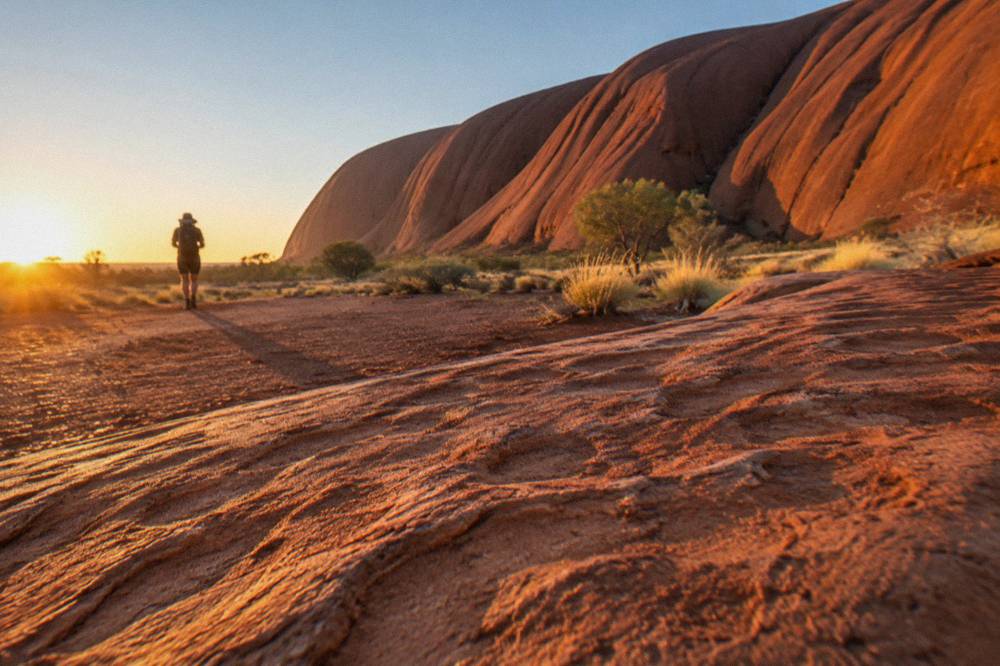
Detours are the second factor, and the honest answer is that they are worth the time. The Kuniya walk to Mutitjulu Waterhole is the standout: a short, sheltered track to a permanent waterhole at the rock's base that most walkers rate as the emotional centre of the whole circuit. Counting it in adds distance and time, and neither is well spent skipping. The third factor is start time, which interacts with the park's own hours: the park opens seasonally, from 5.00 am in October to 6.30 am in the June and July winter, so in midwinter the earliest possible start is pushed back relative to summer. Early risers get the cooler track and the low light on the rock. The fourth factor, closures and conditions, is simply a matter of checking before you go: the park occasionally closes areas for cultural reasons, sections of tracks close in extreme heat, and conditions change, so the park's news page is worth a read before any visit.
| Month | Park opening hours | Average max / min at Yulara | Walking window reality |
|---|---|---|---|
| June, July | 6.30 am to 7.30 pm | 20.4 / 5.6 and 20.6 / 4.4 C | Cold starts, comfortable all morning |
| August | 6.00 am to 7.30 pm | 23.7 / 5.9 C | Comfortable, wildflower season beginning |
| September | 5.30 am to 7.30 pm | 28.7 / 10.7 C | Warm by late morning, start at opening |
| October | 5.00 am to 8.00 pm | 32.3 / 14.9 C | Finish before 11 am |
| November | 5.00 am to 8.30 pm | 35.1 / 18.4 C | Early start not optional |
| January | 5.00 am to 9.00 pm | 38.4 / 22.8 C | Extreme heat, walk only in the coolest hours |
One more cost that shapes the timing decision: the park pass. An adult pass costs $38 for 3 days, under 18s are free, and it must be bought online before you enter, with tour listings stating the fee separately rather than including it. If the 10 km loop is going to eat one of your three pass days, it is worth doing properly.
Which Sections Make Up The Full Base Walk?
The base walk is a chain of named sections, each with its own character and time cost: the Mala walk to Kantju Gorge, the north-east face walk, the Kuniya walk to Mutitjulu Waterhole, the Lungkata walk and the Liru walk linking the Mala carpark with the Cultural Centre. Walking the loop clockwise from the Mala carpark is the park's stated recommendation, and knowing the sections lets you budget your time before you set out.
The Mala walk comes first for most walkers and is the gentlest introduction: 2 km return from the Mala carpark to Kantju Gorge, wheelchair accessible, with drinking water available. It is also where the free ranger-guided walk runs, at 8.00 am from October to April and 10.00 am from May to September, free for park visitors. The north-east face that follows is the stretch where Anangu ask photographers for wide shots from a distance only, with nothing showing the detail on the top-left side; the cultural signs along it are specific and worth reading before you raise a camera. The Kuniya section delivers Mutitjulu Waterhole. The Lungkata stretch carries you back toward the start, and the Liru walk is the connector that ties the Mala carpark to the Cultural Centre for walkers who begin or end there.
Timing the sections individually is what turns an intimidating 10 km into a manageable morning. A rough split, based on the park's own distances and the steady 3 to 4 hour total, looks like this.
| Section | What it offers | Share of your morning |
|---|---|---|
| Mala walk to Kantju Gorge | Rock art sites, accessible track, gorge walls | 30 to 40 minutes with stops |
| North-east face walk | Folded rock detail, photography with restrictions | 45 to 60 minutes |
| Kuniya walk and Mutitjulu Waterhole | Permanent waterhole, shelter, quiet | 40 to 50 minutes including the detour |
| Lungkata walk | Return stretch along the southern base | 45 to 60 minutes |
| Liru walk (if used) | Connector to the Cultural Centre | Adds 20 to 30 minutes |
The Cultural Centre itself, open 7.00 am to 5.45 pm daily and free to enter, is a sensible bookend: start there to load up on context, walk the loop, and let the circuit finish before the day heats up. Our longer section-by-section treatment, including the photography rules in detail, sits in the Uluru base walk guide, which covers each stretch of the loop.
Do You Need A Guided Tour To Walk The Base Of Uluru?
No, the base walk is a public park track that anyone with a park pass can walk alone, and many visitors do exactly that. A guided tour changes the time budget rather than the access: it converts a 3 to 4 hour independent walk into a 5 to 6 hour interpreted experience with pickup, breakfast and a guide who reads the rock and the culture for you, which is a genuine gain if you want depth rather than distance.
The case for going alone is straightforward: the track is well marked, flat for most of its length, and free to walk once you hold a pass. The case for a guide is the layer you cannot see. The rock's stories, the meaning of the signed sites and the difference between the places you may photograph and the places you may not are easy to walk straight past unaccompanied, and a good guide turns 10 km of walking into a narrative. The roster's guided options make the trade-off concrete. The Full Uluru Base Walk at Sunrise (6 hours, small group, from A$249) covers the whole circuit with breakfast. The guided walking tour at sunrise with light breakfast from AAT Kings, 5.5 hours from A$186 and rated 4.6 from 318 reviews, splits the difference between a coach-based morning and a full walking morning. And for walkers whose knees object to 10 km, Segway the FULL base of Uluru covers the identical loop in about 5 hours, from A$259, rated 4.9 from 499 reviews, with one guest review noting: "I wasn't sure I could manage the Segway but it became very comfortable. The team were very helpful and info. So, so pleased we did it!" Everything else covered here is indexed on Uluru Australia Tours.
Shorter guided mornings exist too, and they answer a different question: if 6 hours is more morning than you have, the 3-hour Highlights of Uluru Including Sunrise and Breakfast from SEIT Tours, from A$189 and rated 4.8 from 220 reviews, samples the rock's highlights without the full loop. The choice is really about how much of your morning the base walk deserves, and for many travellers the answer is all of it.
There is also a middle path for independent-minded walkers who still want wheels: the hop-on hop-off bus pass, from A$140 and rated 4.5 from 154 reviews, lets you ride to the Mala carpark or the Cultural Centre on your own schedule and walk whichever section suits your energy on the day. It does not interpret the rock for you, but it removes the parking and logistics questions entirely.
When Should You Start The Base Walk At Uluru?
Start at, or as close to, the park's opening time as your body allows, and plan to finish before 11.00 am, which is the park's own heat guidance for the warmer months. Because opening times shift with the seasons, from 5.00 am in the October-to-February summer to 6.30 am in June and July, the length of your viable walking window changes across the year.
The reason to be early is not just temperature, though temperature alone would justify it. The first two hours of daylight give you low, angled light on the rock, the coolest track surface of the day, and the segments all to yourself before the coach groups arrive at the sunrise platform and disperse. The park's safety guidance reinforces it from the other end: avoid walking between 2.30 pm and 6.30 pm in summer, and remember the section closures that kick in at forecast 40 C. The full picture of month-by-month conditions is in our best time to visit Uluru guide, but the short version for walkers is May to September for comfort, and early starts in every other month.
Water planning belongs in the timing conversation because the two fail together. At one litre per person per hour, a 4-hour loop means carrying 4 litres per person, and that weight is part of why some walkers prefer the guided versions, where the operator manages pickup and timing for the whole morning. The ranger-guided Mala walk, free for park visitors, is a good heat-safe compromise on days when the full circuit feels like too much: it covers the most rewarding 2 km of the base in the company of a ranger. More detail on the walk's place among the park's free options is in our free things to do at Uluru guide.
What Should You Carry For A 10 Km Desert Walk?
Carry at least one litre of water per person per hour of walking, sun protection including a hat and sunscreen, sturdy shoes, and a fly net from September to April when bush flies are heavy at Uluru; the park's safety page sets these as the baseline, not the maximum, and walkers should also note that emergency help in the park is 000 or 112, with emergency radios located on most walks.
The list is short because the walk is short, but the stakes scale with the temperature. In winter months, June and July, overnight minimums at Yulara average 5.6 C and 4.4 C, so an early start means starting cold and peeling layers as the sun climbs; morning walkers in shorts at 6 am in July are usually regretting it by 6.15. In the warmer months the same start time demands the full desert kit: the litre-per-hour water rule, UV protection rated for conditions the Bureau classifies as extreme in the warm months, and footwear that handles sand and packed earth. None of this is optional weight. It is the difference between a 4-hour walk and a rescue.
A note on respecting the rock while you walk it: Anangu are the Traditional Owners, culturally sensitive sites along the base are clearly signed, and photographing those specific sites is prohibited. This is not a ban on photographing Uluru, wide shots from a distance are welcome, but the signs mark places where the right response is to put the camera away. The story of why the climb itself closed permanently on 26 October 2019, and what replaced it, is covered in our Uluru climb ban guide.
By now the timing question should feel answerable in one line: budget 3 to 4 hours to walk it alone at a human pace, 5 to 6 hours for the guided versions that fold in sunrise and breakfast, and the whole first half of your morning either way. These are the listings that cover the loop in each style:
Common Questions About Walking Around The Base Of Uluru
How Long Does It Take To Walk Around The Base Of Uluru?
About 3 to 4 hours for most independent walkers covering the full 10 km loop at a steady pace with stops. Guided versions run longer: the small-group sunrise base walk is about 6 hours including breakfast, and the Segway tour covering the full base is about 5 hours.
Can you walk around Uluru without a tour?
Yes. The base walk is a public track inside Uluru-Kata Tjuta National Park, open to anyone holding a park pass, which costs $38 for an adult for 3 days. Start at the Mala carpark in the early morning and walk clockwise.
Is the Uluru base walk hard?
It is a long walk rather than a difficult one: about 10 km, mostly flat packed earth and sand with no climbing. The challenge is the climate, not the terrain, which is why the park advises finishing before 11.00 am and avoiding the 2.30 pm to 6.30 pm window in summer.
What time should I start the base walk?
As close to the park's opening time as you can manage. Opening hours shift by season, from 5.00 am in the warmer months to 6.30 am in June and July. The early start buys you the coolest track and the best light.
How much water do I need for the base walk?
The park's safety guidance is at least one litre of water per person per hour of walking. For a 4-hour loop that means carrying about 4 litres per person, plus sun protection and, from September to April, a fly net.
Do tours include the park pass?
No. Tour listings state the $38 adult park pass fee separately and note that it must be pre-purchased online before entry. The pass is valid for Uluru-Kata Tjuta National Park for 3 consecutive days, and under 18s enter free.