Is Uluru Older Than Dinosaurs?
Uluru's sandstone is about half a billion years old, far older than the dinosaurs. Here is what the park's own pages say, and how that age feels from the ground.
Is Uluru Older Than Dinosaurs?
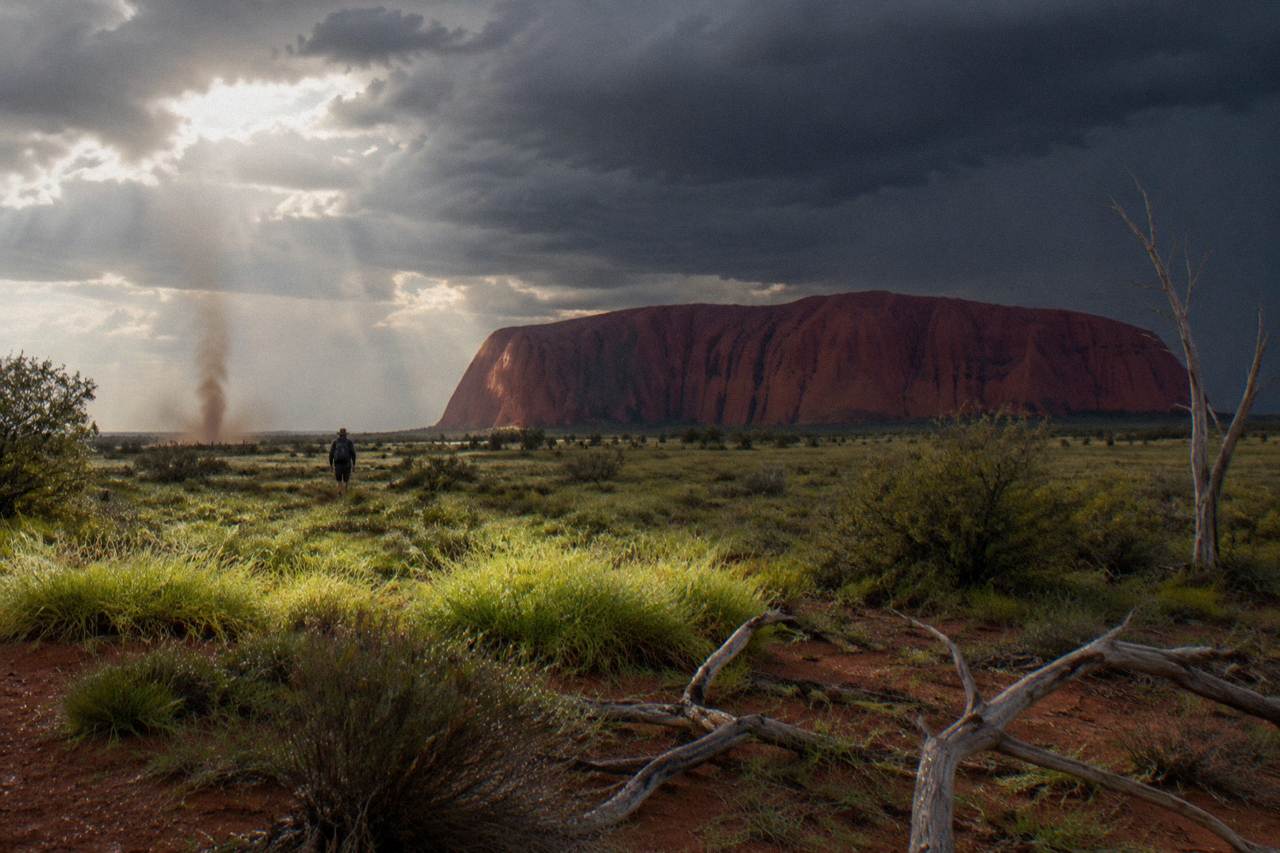
Yes, and by a margin that is hard to picture. Uluru is sandstone the national park's own page describes as about half a billion years old, while the dinosaurs arrived much later in the story of life on Earth. When the first dinosaurs appeared, the rock that became Uluru had already been formed, buried, folded and pushed back toward the surface. Standing at its base, you are looking at stone that predates them entirely.
That single line from the park, "about half a billion years", is doing a lot of work, and it is worth unpacking what it means in plain terms. Half a billion years is roughly ten times the whole span of dinosaur history, from the first species to the last. The comparison is not close. It is the difference between a very old thing and a genuinely ancient one.
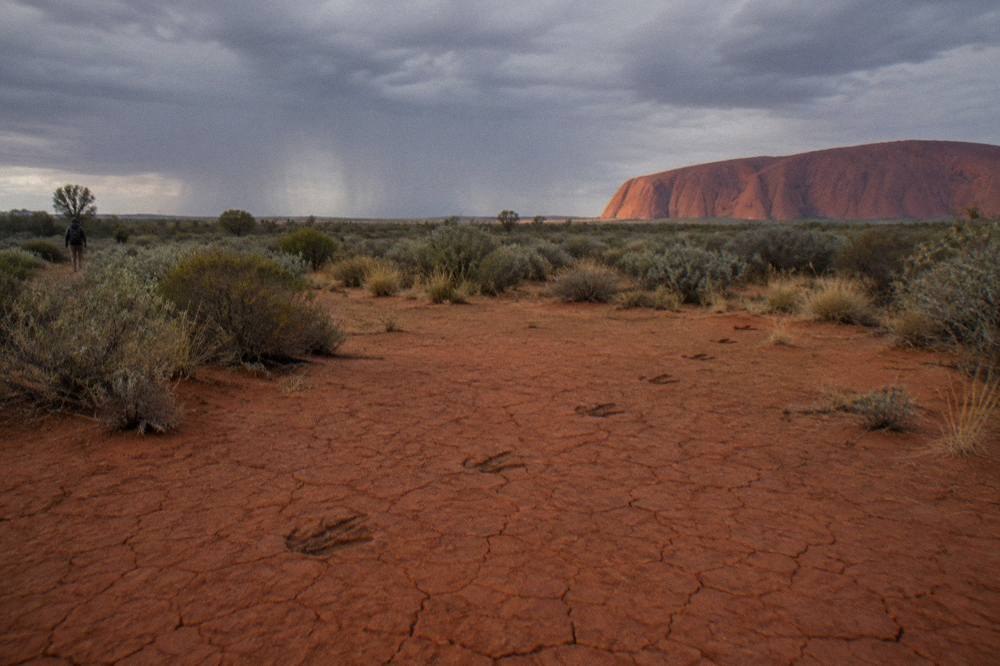
It also changes how the place feels. Most of the world's famous natural landmarks are, geologically speaking, recent arrivals: young mountain ranges, fresh volcanic cones, river gorges carved in the last few million years. Central Australia works on a different clock. The park states that Uluru stands 348 metres high with a circumference of 9.4 kilometres, and that its sandstone is about half a billion years old, on the official park page for the rock. Those numbers belong to a piece of the planet that has been sitting through epochs most people have never heard of.
The question people usually ask next is some version of "so what was alive when it formed?" The honest answer is: almost nothing you would recognise. Half a billion years ago the land that is now Australia sat in a very different position on the globe, and the ancestors of this landscape were sediments settling in a low basin. Life at that time was largely marine and largely simple. No plants covered the land, no animals walked it, and the dinosaurs were hundreds of millions of years away from existing at all.
If the comparison is what brought you here, the Bus Sunrise, Kata Tjuta Combo is a practical way to see both halves of this ancient pair in one five-hour outing from Yulara.
How Old Is Uluru, According To The Park?
The park's own figure is about half a billion years for the sandstone. That number refers to the age of the rock material itself, the compacted sediments that eventually became Uluru, rather than the moment the monolith appeared above the plain. The park describes Uluru as sandstone about half a billion years old, 348 metres high and 9.4 kilometres around, and it treats those as headline facts of the site. If those headline facts leave you wondering why this rock matters so much to so many people, our look at what makes Uluru so special goes beyond the measurements to the cultural and natural story behind them.
That distinction between the age of the rock and the age of the landmark matters more than it first seems. Sandstone begins as sand, usually in a river delta, lake bed or sea floor. Over immense stretches of time the sand is buried, compressed and cemented into stone. Later earth movements can tilt it, stand it on edge and expose it, and erosion then goes to work on what is visible. When geologists talk about the age of Uluru, they are generally talking about when those original sediments were laid down, which is the half-a-billion-year figure the park prints.
The sculpting is younger. The shape travellers photograph today, with its ribs, caves and smooth flanks, has been carved by millions of years of wind and water acting on the exposed stone. So there are really two answers to "how old is it": the material is about half a billion years old, and the landform in its current form is younger, the product of relentless erosion stripping away the softer rock that once surrounded it. Neither answer makes it young.
For a sense of scale, it helps to line the park's own numbers up side by side with its neighbour, because Kata Tjuta is part of the same ancient story and is less talked about.
| Fact | Uluru | Kata Tjuta |
|---|---|---|
| Former name | Ayers Rock | The Olgas |
| Rock type | Sandstone | Conglomerate |
| Age stated by the park | About half a billion years | Part of the same ancient landscape |
| Height | 348 metres | Highest dome rises up to 546 metres |
| Size | 9.4 km circumference | 36 domes over more than 20 square km |
| Meaning of the name | Anangu name for the site | Pitjantjatjara term meaning 'many heads' |
Both facts columns come from the park's Uluru and Kata Tjuta highlight pages. One detail surprises most visitors: Kata Tjuta's tallest dome is higher than Uluru. The rock people think of as the giant of the desert is actually the shorter of the two, though its single unbroken form makes it look monumental from every angle.
Why The Comparison With Dinosaurs Is Not Even Close?
Dinosaurs as a group dominated land life for a long stretch of geological time, but that entire stretch sits inside the most recent fifth of Earth's history. The sandstone of Uluru, at about half a billion years, was already rock before any dinosaur existed, remained rock through their entire era, and was rock long after they vanished. The rock has outlasted them completely.
Put simply, the timeline is lopsided. If you compressed Earth's history into a single year, with the planet forming on 1 January, the sandstone that became Uluru would date to roughly mid-October on that calendar, while the entire age of dinosaurs would be squeezed into the last few days of December. This site deliberately avoids printing specific dinosaur dates and figures, because the interesting point does not need them: whatever dates you assign to the dinosaurs, the sandstone came first by an enormous margin.
There is a useful thought experiment here. When the first dinosaur stood on ground that may have overlapped this continent, the sediments that became Uluru were already hundreds of millions of years old. When the last one died, they were older still. Every dinosaur that ever lived, every species we know from fossils and every one we will never find, came and went inside the lifespan of this rock as a piece of stone. That is the honest framing, and the park's own pages support the older half of it directly.
The comparison also explains why Uluru is such a draw for travellers who care about deep time. You can visit dinosaur fossil sites in several countries and see bones, which is thrilling in a different way. At Uluru you are not looking at remains. You are looking at the actual rock, a surviving fragment of a world that predates the entire cast. A guest review of the 15-minute helicopter flight puts it well: "being able to view Uluru by air gave a true perspective of the size." Scale, seen from above, is the quickest way to grasp how much stone half a billion years produces.
What Does Half A Billion Years Feel Like On Foot?
It feels like a very long walk. The base walk around Uluru covers about 10 kilometres, the full circumference of the rock, and the park recommends starting early in the morning from the Mala carpark and walking clockwise. Every few hundred metres the character of the stone changes, from rippled slopes to wind-carved caves to the quiet of Mutitjulu Waterhole, and each section is a different page of the same ancient record.
The base walk is free once you hold a park pass, and the park's guidance is clear about how to do it safely: carry at least one litre of water per person per hour, and in hot weather walk only in the cooler morning hours, finishing before 11.00 am. Summer temperatures regularly exceed 35 C and can pass 40 C, and the park advises avoiding walking between 2.30 pm and 6.30 pm. Conditions change, and sections of tracks can close in extreme heat, so the park's own safety page is the reference to read before you set out.
Doing it with a guide adds a layer the free walk cannot. The Full Base Walk, Small Group run by SEIT Tours covers the full circuit at sunrise with breakfast included, lasts about six hours, is rated 4.8 from 460 reviews, and costs from A$249 per person. Its cancellation cutoff is 6 days before start, which is longer than most, so it suits travellers whose plans are settled early. A guest named Ian left a verbatim review: "This was an excellent tour. The guide was incredibly knowledgeable and enjoyable. I would highly recommend this wonderful experience."
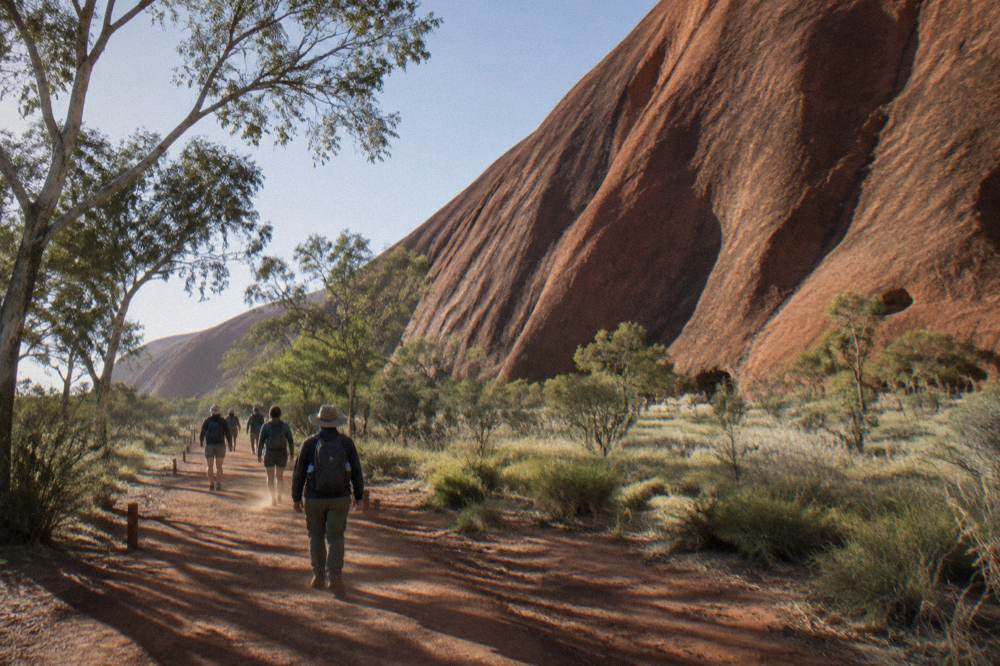
If ten kilometres sounds like more than your knees are offering, there are softer ways to meet the rock. The ranger-guided Mala walk is free for park visitors, a 2 km return stretch from the Mala carpark to Kantju Gorge that the park lists as wheelchair accessible with drinking water available. The Cultural Centre, also free and open 7.00 am to 5.45 pm daily, gives the cultural context that turns the stone from scenery into story. Neither needs a booking, though both need the park pass, which is $38 for an adult for 3 days and free for under 18s. Our guide to walking the Uluru base walk covers the sections in detail.
One thing you will never do here is climb it. The climb closed permanently on 26 October 2019, climbing breaches the EPBC Act, and penalties apply. Anangu, the Traditional Owners, had asked visitors not to climb for decades before the closure. The walks, the viewing areas and the tours are the full experience now, and honestly they always were.
Where Do The Dinosaurs Fit In Australia's Story?
Australia has its own dinosaur fossil record, mostly in Queensland and Victoria, and it belongs entirely to the chapter that came after the Uluru sandstone. The rock that makes Uluru was laid down in a much earlier world. The dinosaurs of the Australian fossil sites walked across a landscape that already contained this sandstone deep beneath its surface, being slowly worked on by water and wind.
This is the part of the story that turns a trivia answer into a reason to travel. The Australian dinosaur sites are famous and worth visiting in their own right, and they tell a story of a younger, greener, colder-at-times Australia. Uluru tells an older one, of sediments settling when life was simpler and the continents sat in unfamiliar places. Between them they cover an enormous span of the planet's history, and you can stand at both ends of it without leaving the country.
For planning purposes, the best months to walk are May to September, when daytime maximums usually sit between 20 and 30 C. The park's seasons page also names the piriyakutu, or piriya piriya, season, usually August to October, when food plants flower. Bush flies are present from September to April, and the park notes head nets are sold on arrival. Winter nights can be very cold, which surprises visitors who packed only for the desert stereotype. The Bureau of Meteorology's outlook to December 2026 favours above-average temperatures for the southern Northern Territory, so heat planning matters even in shoulder months.
| Month | Typical daily max | Typical overnight min | Notes for walkers |
|---|---|---|---|
| May | 24.3 C | 9.3 C | Comfortable walking, cold nights |
| June | 20.4 C | 5.6 C | Peak season, coldest mornings |
| July | 20.6 C | 4.4 C | Frost possible before sunrise starts |
| August | 23.7 C | 5.9 C | Wildflower and piriyakutu season begins |
| September | 28.7 C | 10.7 C | Warming, flies return late month |
| October | 32.3 C | 14.9 C | Early starts essential |
Those averages come from the Bureau of Meteorology data printed on the park's own when-to-come page, and the park advises checking conditions before any walk. The best time to visit Uluru guide expands on the seasons month by month.
Which Tours Show The Age Of The Place Best?
Age shows best through scale and context: a guided base walk gets you close to the rock's detail, a sunrise combo sets the two ancient sites side by side, and a scenic flight delivers the sheer size of the thing. Options run from A$115 for a two-hour Field of Light sunrise coach tour to A$195 for a 15-minute helicopter flight, so every budget finds a way in.
Scale is the helicopter's argument. The 15-minute flight with Professional Helicopter Services is rated 4.9 from 669 reviews and costs from A$195 per person. A longer option covers both Uluru and Kata Tjuta in 25 minutes, from A$315, rated 4.8 from 616 reviews. From the air you see the rock as one piece in a vast, folded plain, which is exactly the view that makes half a billion years feel real. Weather and operations decide whether a flight runs, so treat the timing as a plan, not a promise.
Context is the guided walk's argument. The small-group tours run by SEIT keep numbers low and interpretation high, and the homelands experience, at 4.8 from 44 reviews and from A$399, spends a full seven hours on private Aboriginal land with an Anangu guide. A guest named Jessica described it verbatim as "a true privilege to spend time on private Aboriginal land with an Anangu guide sharing stories". That is cultural depth rather than geological depth, but at Uluru the two belong together: Anangu have understood this country for a span of time that makes European settlement look like a long weekend.
Then there is the all-rounder. The Bus Sunrise, Kata Tjuta Combo from AAT Kings, from A$186 per person, rated 4.6 from 603 reviews, delivers sunrise at Uluru and a walk among Kata Tjuta's 36 domes in one five-hour coach day with hotel pickup. A guest named Maddison reviewed it: "Very good tour and the guides, Dani and Regi, were amazing." For a first visit built around the age question, seeing both rock sites in one morning is the most efficient answer. Cancellation on that listing is free, with a cutoff of 24 hours before start, but cutoffs differ across the roster, so read each booking page. The sunrise and sunset tours hub lists the full set.
| Tour | Format | Duration | From (per person) | Rating |
|---|---|---|---|---|
| Bus Sunrise, Kata Tjuta Combo | Coach, large group | 5 hours | A$186 | 4.6 from 603 reviews |
| Full Base Walk, Small Group | Small group walk | 6 hours | A$249 | 4.8 from 460 reviews |
| 15-Minute Uluru Helicopter | Shared helicopter | 15 minutes | A$195 | 4.9 from 669 reviews |
| Valley Of The Winds Hike | Small group walk | 5 hours | A$249 | 4.9 from 30 reviews |
| Field Of Light Sunrise, Hot Drinks | Coach, large group | 2 hours | A$115 | 4.6 from 677 reviews |
Every tour above departs Yulara, at Ayers Rock Resort, and every price is a "from" figure that varies by date and group size. Note that none of these listings includes the park pass: the fee is stated separately on the listings and must be pre-purchased online, as the park requires. Our Uluru Australia Tours comparison pages cover the full 25-tour roster if you want to weigh formats side by side.
For travellers pairing the two rock sites, Kata Tjuta rewards the extra effort. The Valley of the Winds circuit is graded 4, with the full loop taking three to four hours, and the shorter Walpa Gorge walk suits tighter schedules. The Kata Tjuta tours guide lays out the options, and the small-group sunrise tour with breakfast, from A$249 and rated 4.8 from 255 reviews, is the pick of them.
So, is Uluru older than the dinosaurs? Yes, and the more you learn, the less surprising the answer becomes. This is a continent of old things, and Uluru is among the oldest you can stand beside. Half a billion years of stone, 348 metres tall, 9.4 kilometres around, and still changing shape every time it rains.
Common Questions About Uluru And Dinosaurs
Is Uluru Older Than Dinosaurs?
Yes. The park describes Uluru's sandstone as about half a billion years old, and the dinosaurs arrived much later in Earth's history. The rock was already ancient stone before the first dinosaur existed and it remains long after the last one disappeared.
How old is Uluru exactly?
The park's own page states about half a billion years for the sandstone. That figure refers to when the original sediments were laid down, not to the exposed landform, which erosion has continued to shape ever since.
Is Kata Tjuta older than Uluru?
The park treats both as part of the same ancient landscape, though the two are different rock types: Uluru is sandstone and Kata Tjuta is a conglomerate of 36 domes. Kata Tjuta's highest dome rises up to 546 metres, which is higher than Uluru's 348 metres.
Can you still climb Uluru?
No. The climb closed permanently on 26 October 2019. Climbing breaches the EPBC Act and penalties apply. Anangu, the Traditional Owners, had asked visitors not to climb for decades before the closure.
What is the best way to appreciate Uluru's age?
Combine perspectives: walk a section of the 10 km base path for the stone's detail, then take a scenic flight for scale. The 15-minute helicopter flight is rated 4.9 from 669 reviews and costs from A$195 per person.
Do I need a park pass to see Uluru?
Yes. An adult 3-day pass costs $38, an annual pass is $50, and under 18s are free. The pass is valid for Uluru-Kata Tjuta National Park only, tour listings state the fee separately, and it must be pre-purchased online.