Can You Touch Uluru?
The honest answer from the official park pages: whether you can touch Uluru, where walking beside the rock is allowed, and which signed areas are off limits.
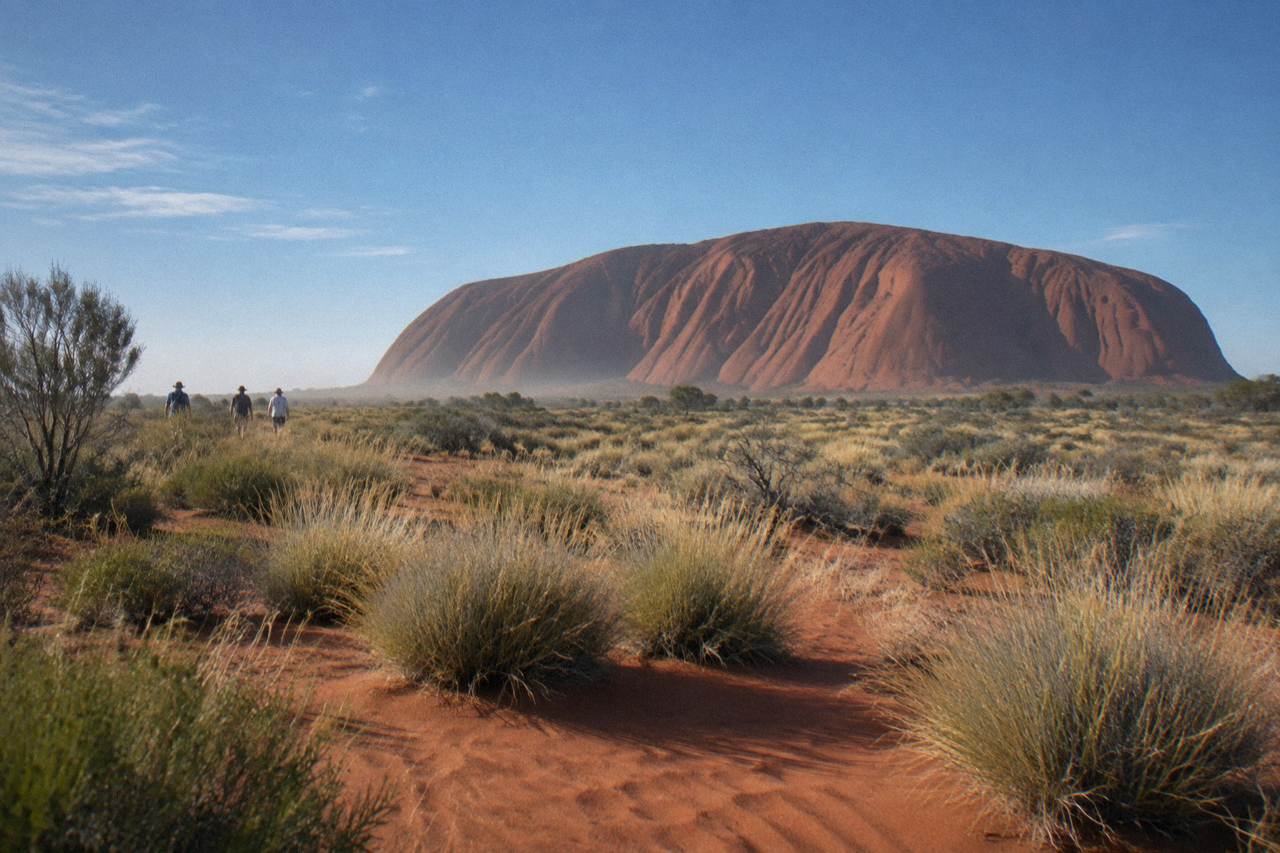
Yes, you can touch Uluru in the sense that matters to most visitors: the base walk runs right beside the rock, and nothing in the park rules forbids walking on the sand next to it or resting a hand on an unsigned stretch of the base. What you cannot do is climb it, enter the signed sacred areas, or photograph the culturally sensitive sections. The park's own pages draw these lines clearly, and this article walks through each one.
The question sounds simple, and the answer mostly is, but a surprising number of travellers arrive at Uluru-Kata Tjuta National Park with half-remembered rules from before October 2019. Some think the whole rock is off limits, that rangers shoo people away from the base and that every photograph is somehow restricted. Others assume the opposite, that a fee or a guide unlocks the climb. Neither extreme is true. Anangu, the Traditional Owners, jointly manage the park with Parks Australia, and the rules reflect Tjukurpa, Anangu law and culture, not arbitrary park bureaucracy drawn up for crowd control.
The practical result is a park that is more open than most visitors expect, with a small number of firm boundaries. You can spend an entire day walking beside the rock, eating breakfast at its foot, watching sunrise from a dedicated viewing deck and still never break a single rule. Equally, you can break several within minutes of arriving if you ignore the signs, because the sensitive places sit right beside the walking track, not behind fences far from it. Knowing which is which is the whole game.
Can You Touch Uluru?
The short answer is yes, with limits: you can walk the entire 10 km base circuit and stand directly beside the rock, and touching an unsigned part of the base is not prohibited by the park. The Uluru climb, however, closed permanently on 26 October 2019, and climbing breaches the EPBC Act with penalties attached. Signed sacred sites must not be entered or photographed.
That three-part answer covers almost every situation a visitor will meet. The base walk puts you close enough to see the texture of the sandstone, the pitting, the flaky ochre-coloured surfaces and the water stains that streak down from the shoulders of the rock after rain. You will pass within metres, sometimes closer, of the rock face itself. Sections of the track cross bare sand at the foot of the cliff, and the scale only becomes real at that distance: Uluru stands 348 metres high with a circumference of 9.4 km, and the sandstone is about half a billion years old, per the park's own highlights pages. If that age has you wondering where the dinosaurs fit in, our article on whether Uluru is older than the dinosaurs sets out the timeline in plain terms.
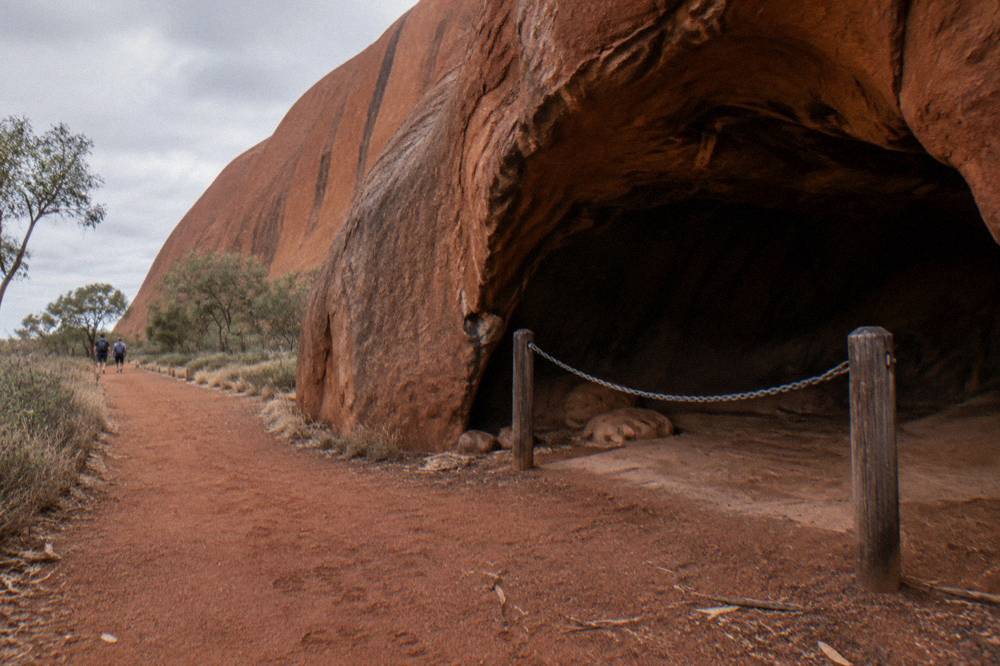
What the park prohibits is specific and clearly signed. Certain sections of Uluru are sacred men's or women's areas under Tjukurpa, and entering them, touching them or photographing them is not allowed. The park marks these zones physically, so you are not left guessing where the line sits. A useful companion read for the wider history is our guide to the Uluru climb ban and what changed, which sets out the 2019 closure in full.
What The Official Park Rules Actually Say
The park's pages state three things plainly: the climb is closed permanently and attempting it is an offence under the EPBC Act; culturally sensitive sites at Uluru and Kata Tjuta are clearly signed and photographing those specific sites is prohibited; and the base walk is a sanctioned, marked activity that every visitor can do. None of the official pages contain a general ban on touching the rock itself.
The climb closure page records the unanimous November 2017 decision of the Board of Management and the closure date, 26 October 2019, the 34th anniversary of Handback. Climbing was not generally permitted under Tjukurpa in the first place, and the chain that once aided climbers went with the closure. Penalties apply to anyone who attempts it, per the official climb closure page. The first chain section dates to 1964, which means visitors were climbing, against the wishes of the Traditional Owners, for more than half a century before the rule caught up with the culture.
On photography, the rules are more nuanced than many visitors expect. There is no blanket ban on photographing Uluru. Wide shots from a distance are fine, and the postcard images you have seen are all legal. The prohibition applies to specific culturally sensitive sites, which are signed on the ground. On the north-east face, for example, Anangu ask for wide shots only, with nothing showing the detail on the top-left side, and the park notes the best light for that angle falls one to two hours before sunset when shadows obscure the sensitive areas. If you have heard a rumour that photographing the rock itself is illegal, our piece on whether it is illegal to photograph Ayers Rock untangles that myth in detail.
Pull the official positions into one place and the picture is coherent rather than restrictive:
| Question | Official position | Where it is stated |
|---|---|---|
| Can you climb Uluru? | No, closed permanently since 26 October 2019; penalties apply | Climb closure page |
| Can you walk beside the rock? | Yes, the 10 km base walk is a marked, encouraged activity | Walks page |
| Can you touch an unsigned part of the base? | Not prohibited by any published park rule | No rule against it on park pages |
| Can you enter signed sacred areas? | No, these are closed to all visitors under Tjukurpa | Walk and photography pages |
| Can you photograph Uluru? | Yes, wide shots from a distance; specific signed sites are prohibited | Photography page |
Walking The Base: The Sanctioned Way To Get Close
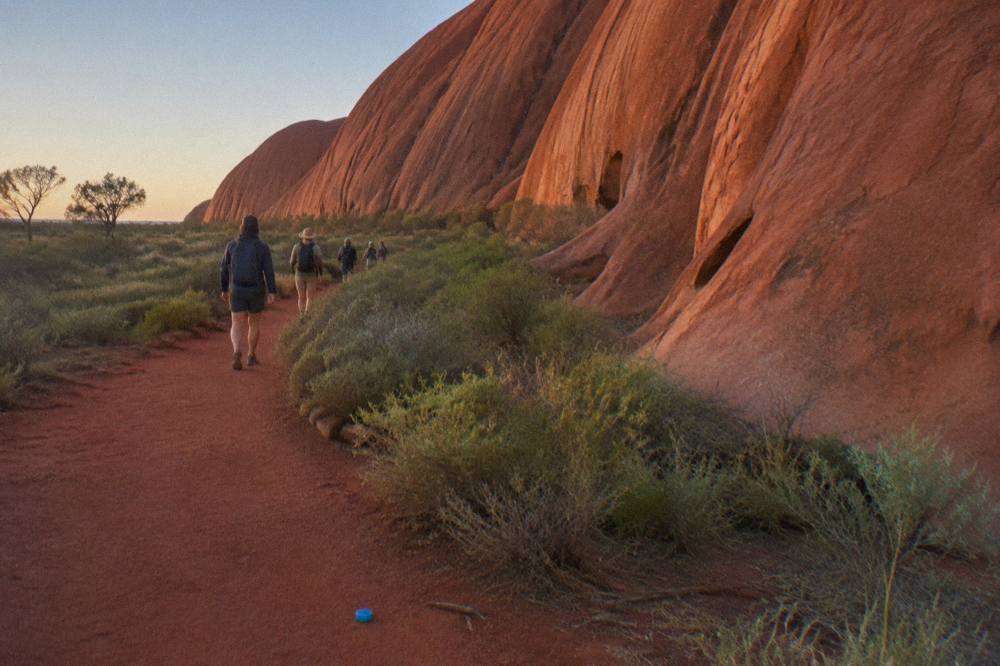
The base walk is the park's own answer to visitors who want intimacy with the rock. It runs about 10 km around the whole circumference, and the park advises starting at the Mala carpark in the early morning and walking clockwise. In hot weather you should walk only in the cooler morning hours and finish before 11.00 am.
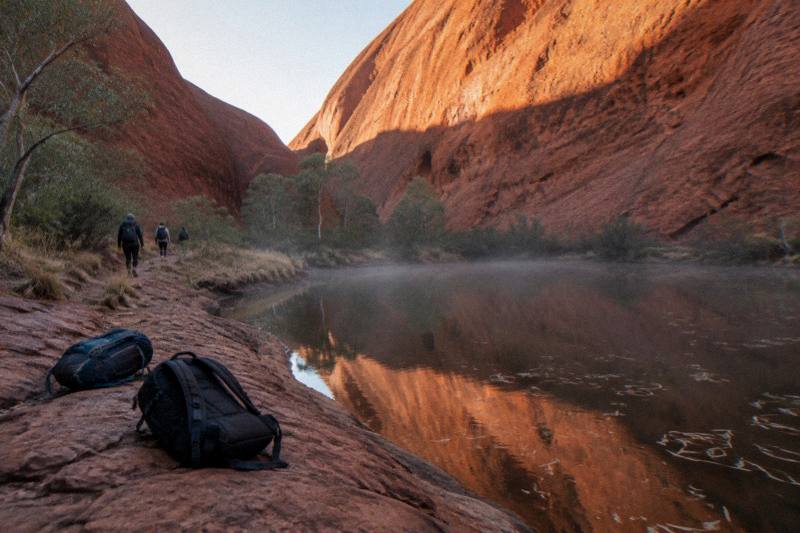
The circuit is divided into named sections: the Mala walk, the north-east face walk, the Kuniya walk to Mutitjulu Waterhole, the Lungkata walk and the Liru walk, which links the Mala carpark with the Cultural Centre. Each section brings you beside a different face of the rock. The Kuniya walk reaches Mutitjulu Waterhole, one of the few permanent water sources, where the rock overhead carries the dark stains of millennia of runoff. The Mala walk itself runs 2 km return from the carpark to Kantju Gorge and is wheelchair accessible, with drinking water available, so even visitors not attempting the full circuit get a genuine up-close experience.
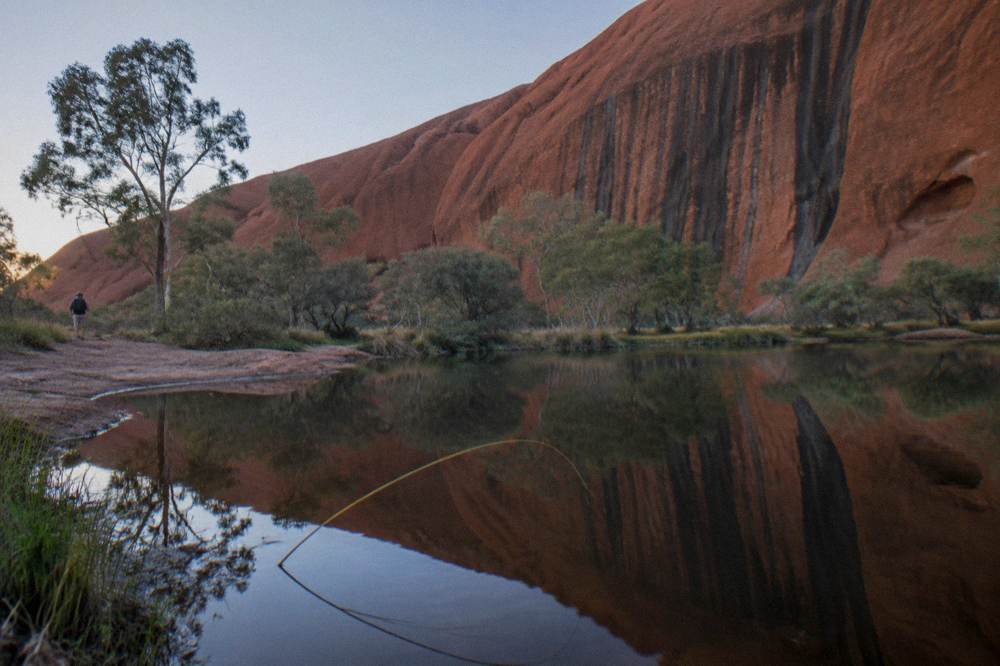
You can do this walk alone, and many people do; our longer Uluru base walk guide covers the sections, distances and water rules in detail. The heat rules deserve respect: the park advises carrying at least one litre of water per person per hour of walking, avoiding the 2.30 pm to 6.30 pm window in summer, and notes that the north-east walk closes from 11 am and the Lungkata walk from 2 pm when the forecast or actual temperature reaches 40 C. Emergency radios sit on most walks, and the emergency numbers are 000 or 112. Temperatures at Uluru regularly reach 30 C or more and can exceed 40 C in summer, so these are not advisory niceties.
A guided version adds what a map cannot. The Full Uluru Base Walk at Sunrise Including breakfast, run by SEIT Tours, covers the complete circuit in about six hours with a small group, from A$249 per person, and the listing holds a 4.8 rating from 460 reviews. One guest review reads: "This was an excellent tour. The guide was incredibly knowledgeable and enjoyable. I would highly recommend this wonderful experience." A guide who knows which sections are sacred, and why, turns a walk into an explanation. Just note the cancellation cutoff on this listing is six days before start, longer than most.
Why The Rules Exist: Tjukurpa And The Traditional Owners
Anangu are the Traditional Owners of Uluru-Kata Tjuta National Park, and the restrictions are expressions of Tjukurpa, Anangu law and culture, not modern park regulation. Certain areas of the rock are sacred to men or to women, and access rules for those places long predate the national park. Joint management means Anangu and Parks Australia run the park together.
This matters for how you read the signs. A sign marking a sacred site is not a safety notice or a queue system; it is a boundary in a legal and cultural system that has governed this country far longer than any visitor infrastructure. Anangu ask visitors to respect these places the way they do, which is why the park frames the base walk as the preferred way to experience Uluru: you see everything the rock offers publicly while the restricted areas stay protected. The Board of Management has an Anangu majority, and its public statements consistently frame the arrangement as ngapartji ngapartji, sharing and learning in both directions.
The climb closure belongs to the same story. Climbing was not generally permitted under Tjukurpa, yet it continued for decades because the park's early leases permitted it. The Board of Management resolved that inconsistency in November 2017, and the route closed permanently on 26 October 2019. For deeper context on Anangu culture and the joint management arrangement, see our guide on Aboriginal culture at Uluru.
The same logic governs photography. The official photography page explains that sensitive sites are clearly signed and that prohibited photographs are of those specific places, not of the rock in general. At Kata Tjuta, the Valley of the Winds walk passes through a men's area where no photographs or video of the formations are allowed at all, though close-ups of flora, fauna and people are welcome. If you plan to explore the domes as well, the rules there are stricter than at Uluru itself, and our Valley of the Winds walk guide covers them section by section.
The Rules At Kata Tjuta Are Stricter
Kata Tjuta, the 36 domes 50 km by road from Uluru, carries tighter restrictions than Uluru on both access and photography. Along the Valley of the Winds walk, no photographs or video of the formations are permitted at all, because the circuit passes through a men's area. Close-ups of plants, animals and people are welcome, so the ban targets the landscape, not your camera.
The Valley of the Winds is a Grade 4 walk: the full circuit takes three to four hours, the Karu lookout one hour on a 2.2 km return, and the Karingana lookout 2.5 hours over 5.4 km return. Walpa Gorge is the shorter, gentler Kata Tjuta option, and there the rule is different again: keep both sides of the gorge in frame. That instruction, from the park's photography page, is about framing the landform respectfully rather than banning images of it.
Kata Tjuta's highest dome rises 546 metres above the plain, which is taller than Uluru, and the domes cover more than 20 square kilometres. The name is a Pitjantjatjara term meaning many heads. The comparison matters for planners: two rock formations, one jointly managed park, but different rules at each, which is why reading the on-ground signage at every carpark matters more than any summary, including this one.
Common Mistakes Visitors Make With The Rules
Most rule-breaking at Uluru is accidental and comes from three habits: assuming the climb still exists, wandering past signed boundaries for a photo angle, and flying a drone. Drones and remote controlled devices are prohibited in the park under the EPBC Act, and penalties apply. All three mistakes are avoidable by reading signs at the point of decision.
The drone rule catches people out because much of central Australia is empty and looks unrestricted. It is not. The prohibition is park-wide and enforced. Commercial photography, influencers and content creators additionally need a media permit, which surprises travelling videographers who assume personal-use rules cover their monetised channels.
The third mistake is subtler: treating the base walk as a free-for-all because most of it is unrestricted. The vast majority of the circuit has no special rules at all, which makes the signed sections easy to dismiss as optional. They are not. The park also occasionally closes temporarily for cultural reasons, and conditions change, so the park's own news page is the place to check before you travel. Here is a compact summary of what each situation calls for:
| Situation | Allowed? | The reason |
|---|---|---|
| Walking the full base circuit | Yes, encouraged | Marked activity on park pages |
| Touching an unsigned part of the base | Not prohibited | No park rule against it |
| Climbing Uluru | No, illegal | Closed 26 October 2019, EPBC Act penalties |
| Entering a signed sacred site | No | Tjukurpa restrictions, marked on the ground |
| Photographing a signed sacred site | No | Cultural protection, clearly signed |
| Flying a drone in the park | No | Prohibited under the EPBC Act |
| Photographing Valley of the Winds formations | No | Men's area at Kata Tjuta, signed |
If you would rather have someone else handle the navigation and the rule-reading, a hop-on hop-off bus pass gets you between the Mala carpark, the sunset areas and the Cultural Centre on your own schedule, from A$140 per person with a 4.5 rating from 154 reviews. It suits travellers who want the base walk at their own pace but not the logistics of the park's spread-out carparks.
How A Guided Tour Changes The Experience
A guided base walk does not change the rules, it explains them. The full base walk tour with sunrise and breakfast, the guided sunrise walking tour with light breakfast and the Segway full base loop all follow the same public circuit, but each adds interpretation a self-guided walker misses: which sections are sacred, what the markings mean and how Anangu read the landscape.
The Full Uluru Base Walk at Sunrise Including breakfast from SEIT Tours, from A$249, is the most complete version at about six hours. The Guided Walking Tour at Sunrise with Light Breakfast from AAT Kings, also from A$186 per person with a 4.6 rating from 318 reviews, covers a shorter walking distance with a coach transfer between sections. The Segway the FULL base of Uluru option, from A$259 with a 4.9 rating from 499 reviews, covers the full base loop on a Segway with a guide, which one guest review describes with typical first-timer relief: "I wasn't sure I could manage the Segway but it became very comfortable."
All three depart from Yulara, include pickup, and are guided formats where the sacred-site rules are part of the commentary. That is the quiet advantage of paying for a guide at Uluru specifically: this is a place where the sign tells you what not to do, but a person can tell you why. You can compare all of these side by side on the sunrise and sunset tours hub.
One planning note that applies to the guided options: cancellation cutoffs differ sharply between listings. The SEIT full base walk lists six days, while some coach tours from the same and other operators list 24 hours. Read the booking page for the specific tour before you commit, because the differences are real and per listing, not per operator.
Budgeting The Day: Pass, Tour And Timing
Every tour price quoted in this article sits on top of the park pass, which is separate. An adult 3-day pass costs $38, an annual pass $50, and under 18s enter free. The pass is valid for Uluru-Kata Tjuta National Park only, tour listings state the fee separately, and the park says it must be pre-purchased online before you arrive at the entry station.
The pass covers three consecutive days, which lines up neatly with most visit lengths. Our guide to how many days are enough for Uluru works through the itinerary maths, but the short version is that the base walk, a Kata Tjuta walk and a sunrise viewing area fit comfortably into two days, with a third day for the longer options like Kings Canyon.
Timing shapes the whole experience more than budget does. The park is open every day of the year with hours that shift by month: 6.30 am to 7.30 pm in June and July, 5.00 am to 8.00 pm in October, 5.00 am to 9.00 pm in the height of summer. No overnight camping is permitted inside the park, and all visitors must be out by closing time. May to September is the park's own best-time window, with daytime maximums usually 20 to 30 C, while October to March can exceed 35 C daily. Winter nights, by contrast, can be very cold, which surprises visitors packing only for the desert stereotype.
Our Uluru Australia Tours coverage keeps these separate costs and seasonal limits visible, because the cheapest tour headline is not the cheapest day out once the pass, the season and the water requirements are added up.
Common Questions About Touching Uluru
Can You Touch Uluru?
Yes, in the everyday sense: the base walk runs beside the rock and touching an unsigned stretch of the base is not prohibited. The climb is closed permanently, and signed sacred sites must not be entered or photographed.
Can you climb Uluru instead?
No. The climb closed permanently on 26 October 2019. Attempting it breaches the EPBC Act and penalties apply.
Is photographing Uluru allowed?
Yes, wide shots from a distance are fine. Photographing specific culturally sensitive sites, which are clearly signed, is prohibited, and on the north-east face Anangu ask for wide shots only.
Can you walk right up to the rock on your own?
Yes. The base walk is about 10 km around the full circumference, starts at the Mala carpark, and is walked clockwise. In hot weather finish before 11.00 am and carry at least one litre of water per person per hour.
Do I need a park pass to walk the base?
Yes. An adult 3-day pass costs $38, an annual pass $50, and under 18s are free. The pass is valid for Uluru-Kata Tjuta National Park only and must be pre-purchased online.
Can I fly a drone to film the rock up close?
No. Drones and remote controlled devices are prohibited throughout the park under the EPBC Act, with penalties.