Uluru Base Walk: Guided Tour Or Walk It Yourself
The full loop around Uluru is about 10 km, free once you hold a park pass, and walkable without a guide in the cooler months. Whether you should pay for a guided base walk depends on transport, timing and how much interpretation you want.
Short answer
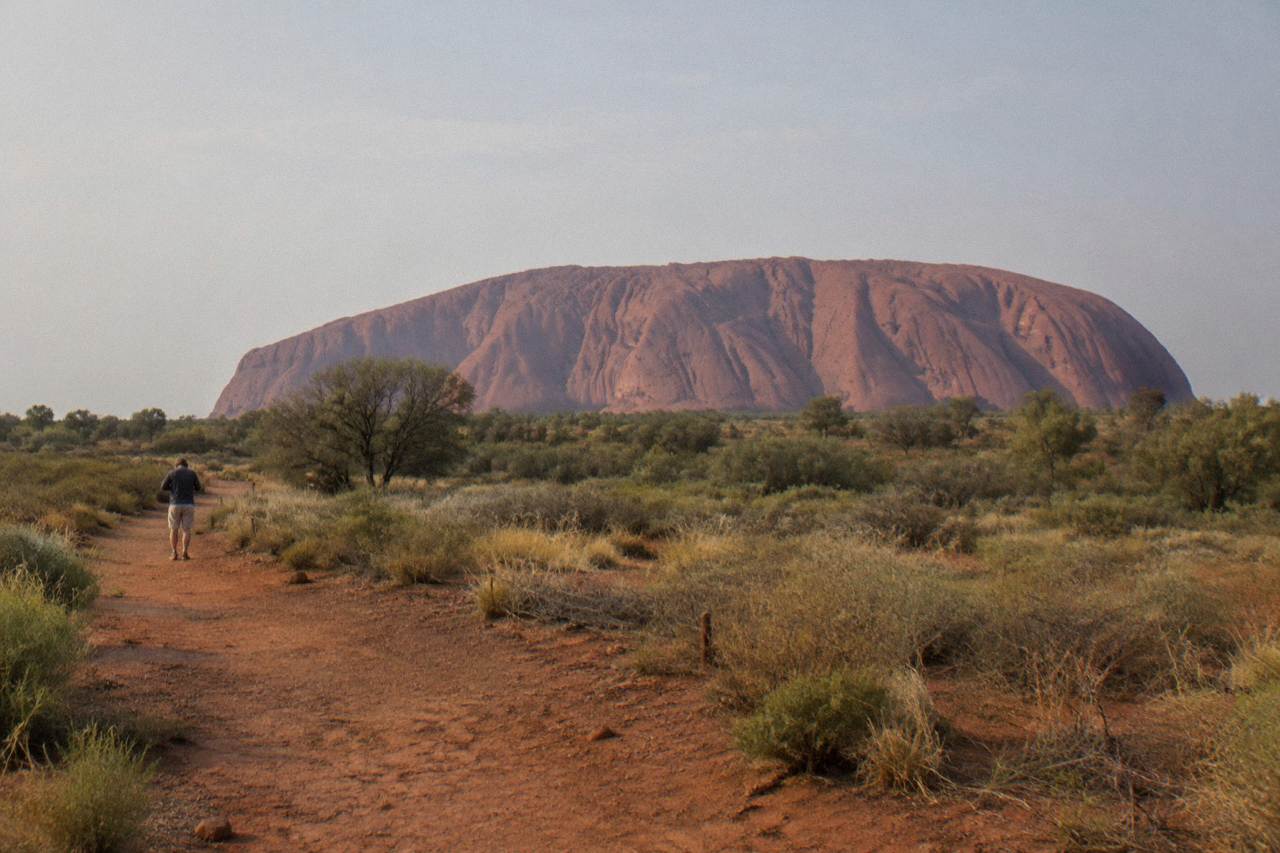
The Uluru base walk is about 10 km around the full circumference, takes roughly 3.5 hours of walking, and needs no guide: start at the Mala carpark early, go clockwise, and finish before 11.00 am in hot weather. Guided tours from A$186 to A$259 add transport, breakfast and Anangu cultural interpretation that the track signs cannot.
The base walk is the one Uluru experience that costs nothing beyond the park pass, and it is also the one most people underprepare for. The full loop is about 10 km around the entire circumference of the rock, the park's own guidance is to start at the Mala carpark in the early morning and walk clockwise, and in hot weather the instruction is blunt: finish before 11.00 am. This guide compares doing it yourself against the guided base walk tours on the roster, including the Segway option that splits the difference. If you're leaning toward skipping the guides altogether, our guide to walking Uluru's base without a tour covers what the park pass costs and how heat closures can change your plans.
Anangu are the Traditional Owners of Uluru-Kata Tjuta National Park, and the land the track crosses is theirs. The climb closed permanently on 26 October 2019 and climbing is now a breach of the EPBC Act, so the base walk is the way to meet the rock on foot. How you do it, alone or with a guide, is the decision this page works through. Walking is not the only option, either, and our guide to seeing Uluru's base by segway and bike explains how to cover the same ground on wheels instead.
How Long Is The Uluru Base Walk?
The Uluru base walk covers about 10 km around the rock's full circumference, and most walkers need three to four hours at a steady pace, plus extra time for stops. Since Uluru itself stands 348 metres high with a 9.4 km circumference, the track adds distance beyond the raw outline.
The loop is really five linked walks, not one track. The Mala walk runs from the Mala carpark toward Kantju Gorge, 2 km return and wheelchair accessible with drinking water available. From there the loop continues past the north-east face, down the Kuniya walk to Mutitjulu Waterhole, along the Lungkata walk and back via the Liru walk, which links the Mala carpark with the Cultural Centre. You can walk the whole thing or sample sections, and many visitors do a half loop in the morning and the other half at sunset from a viewing area instead.
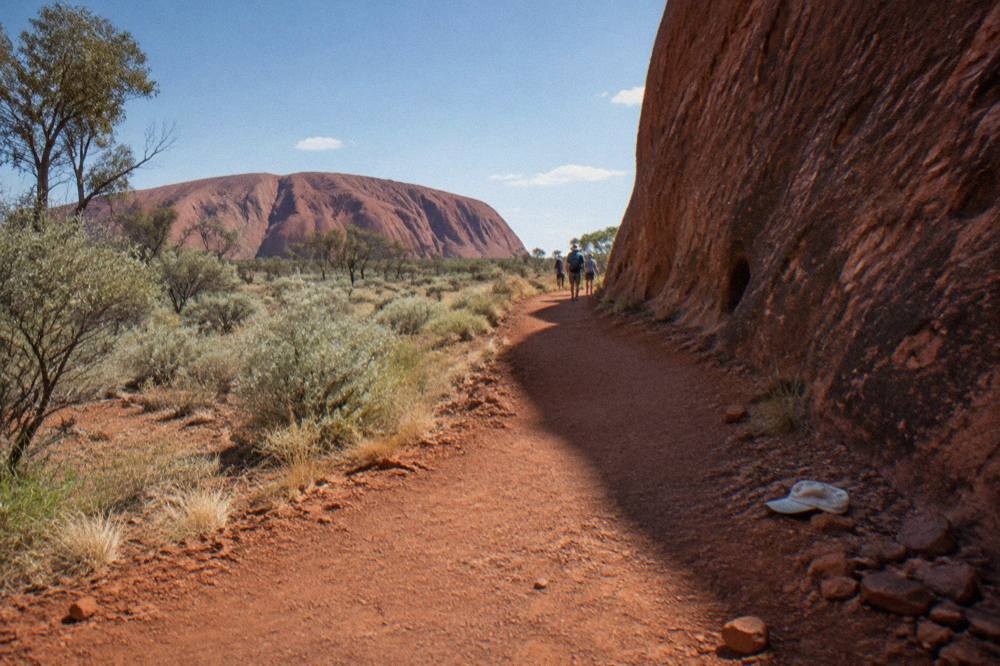
Time budgeting matters more than fitness. Allow an hour of slack for photographs, water stops and the signed culturally sensitive sites where you will want to slow down and read. If the morning is your only window, the clockwise start is not a suggestion: the park's walking page frames it as the standard route, and tour operators schedule around the same logic.
| Section | Distance | Notes |
|---|---|---|
| Mala walk (Mala carpark to Kantju Gorge) | 2 km return | Wheelchair accessible, drinking water available |
| North-east face walk | Part of the loop | Wide shots only, see the photography rules below |
| Kuniya walk to Mutitjulu Waterhole | Short spur off the loop | Waterhole at the rock base |
| Lungkata walk | Part of the loop | Closes from 2 pm when temperatures reach 40 C |
| Full base loop | About 10 km | 3 to 4 hours walking, clockwise from the Mala carpark |
Guided Or Self-Guided: What Actually Changes?
Walking alone you control the pace, the start time and the stops, and you pay nothing beyond the park pass. A guided base walk adds Yulara pickup, breakfast on most departures, and a trained guide who explains Anangu culture, geology and the stories the track signs only gesture at. The trade is money, from A$186 to A$259 per person on this roster, and a fixed schedule that starts before dawn. The same question comes up at Kata Tjuta, where our guide to hiking the Valley of the Winds solo or with a tour weighs the tradeoffs trail by trail.
The interpretation gap is the real difference. Track signage at Uluru is good but limited, and much of what makes the rock significant, the Tjukurpa associations and the reasons certain sections are sensitive, is not on a sign. A guide on the SEIT small-group tours or the AAT Kings coach walks fills that in over hours, and guests on the listings report it as the reason they booked. If you have read deeply before arriving and you are confident in the heat rules, self-guided is a completely legitimate choice, and many thousands do it every year.
Transport is the second difference. Every Yulara hotel sits kilometres from the Mala carpark, and self-drive means the park's entry gate, the loop road and early-morning parking are your problem. Every roster tour includes pickup, which at 5.00 am in October, when the park opens, is worth something on its own.
The honest middle path: walk self-guided but anchor the day with one short guided product, like the ranger-guided Mala walk, which is free for park visitors and runs at 8.00 am from October to April and 10.00 am from May to September according to the park's ranger activities page. Note the pass still applies, since it is for park visitors, as our free things to do at Uluru guide explains in full.
What The Guided Base Walk Tours Cost?
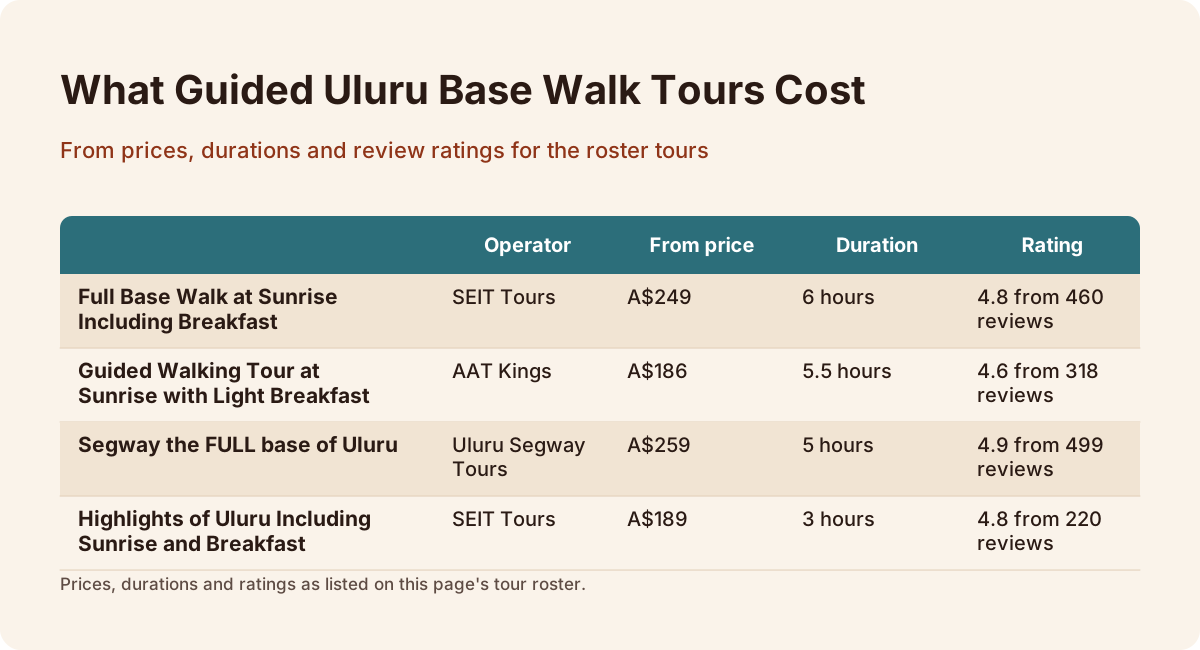
Three roster products cover the base walk on foot. The Full Base Walk at Sunrise Including Breakfast by SEIT Tours runs 6 hours, small group, from A$249, rated 4.8 from 460 reviews. AAT Kings runs the Guided Walking Tour at Sunrise with Light Breakfast, from A$186, rated 4.6 from 318 reviews. The Segway Full Base of Uluru, covered separately below, runs from A$259, rated 4.9 from 499 reviews.
The price spread is narrower than it looks once you read what each includes. All three include pickup from Yulara and food, and none includes the park pass, which listings state separately: $38 for an adult for 3 days, children under 18 free. The SEIT product is the only one that walks the full 10 km as a small group; the AAT Kings walk is a large-group coach product that walks a portion of the base rather than the entire loop.
| Tour | Operator | From price | Duration | Format | Rating |
|---|---|---|---|---|---|
| Full Base Walk at Sunrise Including Breakfast | SEIT Tours | A$249 | 6 hours | Small group | 4.8 from 460 reviews |
| Guided Walking Tour at Sunrise with Light Breakfast | AAT Kings | A$186 | 5.5 hours | Coach, large group | 4.6 from 318 reviews |
| Segway the FULL base of Uluru | Uluru Segway Tours | A$259 | 5 hours | Small group on Segways | 4.9 from 499 reviews |
A guest on the full base walk listing left a five-star review that captures the guided case: "This was an excellent tour. The guide was incredibly knowledgeable and enjoyable. I would highly recommend this wonderful experience."
If the six-hour commitment is too much, SEIT also runs the 3-hour Highlights of Uluru Including Sunrise and Breakfast, from A$189, rated 4.8 from 220 reviews, which trades the full loop for a shorter guided morning. Cancellation terms differ listing to listing: the SEIT full base walk lists free cancellation with a cutoff 6 days before start, while the AAT Kings walks list 24 hours. Read the booking page for the specific tour before you rely on either.
Walking It Yourself: Route, Timing And Safety?
Start at the Mala carpark as early as the park's opening hours allow, walk clockwise, and carry at least one litre of water per person per hour of walking, which is the park's own safety figure. In hot weather finish before 11.00 am, and avoid walking between 2.30 pm and 6.30 pm entirely in summer. Emergency numbers are 000 or 112, and emergency radios sit on most walks.
The park's staying safe page is the authority here, and its numbers are worth taking literally rather than as a suggestion. Daytime temperatures regularly reach 30 C or more and can exceed 40 C in summer; the October average maximum at Yulara is 32.3 C and January's is 38.4 C. Track closures are temperature-triggered: the north-east walk closes from 11 am when the forecast or actual temperature reaches 40 C, and the Lungkata walk closes from 2 pm at the same threshold.
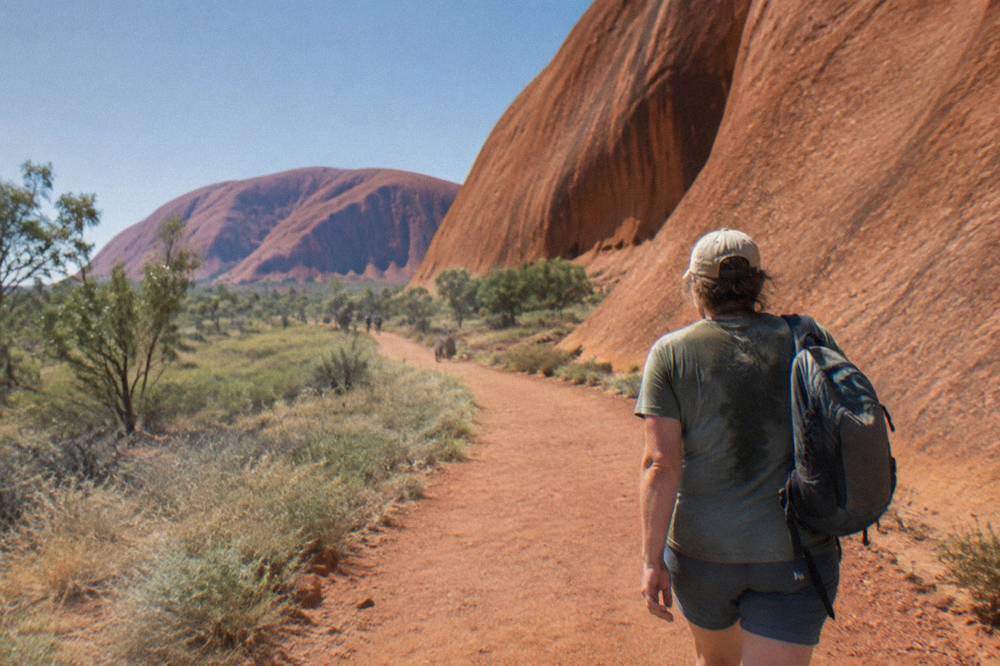
Timing around the park's seasonal hours takes a minute of planning. The park opens at 5.00 am from October through February, 5.30 am in March, April and September, and as late as 6.30 am in June and July, and everyone must be out by closing time. In winter the early start is comfortable; in October a 5.00 am start buys you six hours before the 11.00 am heat deadline. Conditions can change, including closures for cultural reasons, so check the park's news page before you travel.
| Month | Park hours | Average max / min C at Yulara | Verdict for the base walk |
|---|---|---|---|
| May | 6.00 am to 7.30 pm | 24.3 / 9.3 | Comfortable all morning |
| June, July | 6.30 am to 7.30 pm | 20.4 to 20.6 / 4.4 to 5.6 | Cold start, easiest walking |
| August | 6.00 am to 7.30 pm | 23.7 / 5.9 | Comfortable, wildflower season |
| September | 5.30 am to 7.30 pm | 28.7 / 10.7 | Warm but manageable early |
| October | 5.00 am to 8.00 pm | 32.3 / 14.9 | Start at opening, done by 11 |
| January | 5.00 am to 9.00 pm | 38.4 / 22.8 | Early start only, high heat risk |
Self-guided walkers should also plan the water question. Drinking water is available along the Mala walk, but do not count on taps around the whole 10 km loop; carry what the one-litre-per-hour rule says you need. Our how many days are enough for Uluru article helps you slot the walk into a wider itinerary.
The Third Way: Segway The Full Base?
The Segway the FULL base of Uluru tour by Uluru Segway Tours covers the entire base loop on a Segway with training first, from A$259, rated 4.9 from 499 reviews over 5 hours. It suits walkers who want the full circumference without the 10 km on foot, and it is still a small-group guided product with the interpretation that implies.
Segways divide opinion, but the listing's own review pool is unambiguous about accessibility: guests who doubted they could manage one report getting comfortable fast. A five-star review reads, "I wasn't sure I could manage the Segway but it became very comfortable. The team were very helpful and info. So, so pleased we did it!" Training is part of the 5-hour format, so the duration is not 5 hours of riding.
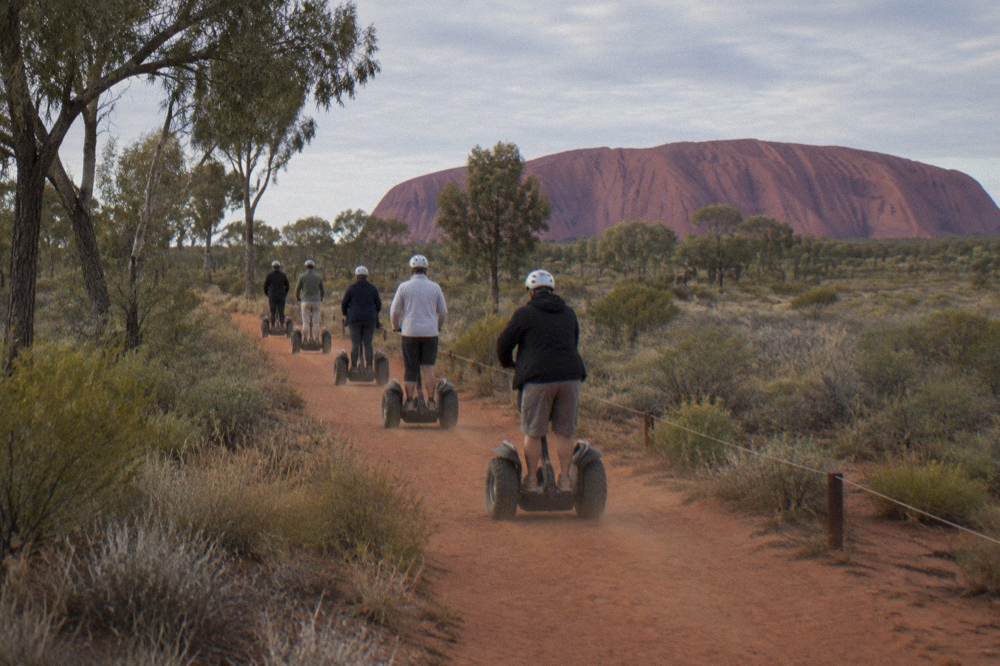
There is also a hybrid. The Best of Uluru, Segway and Walking Tour, from A$219, rated 4.8 from 294 reviews, splits the loop between Segway riding and guided walking, which suits anyone who wants some of the closeness of foot travel without the full distance. Both Segway products list free cancellation with a 24-hour cutoff.
What You Actually See On Each Section?
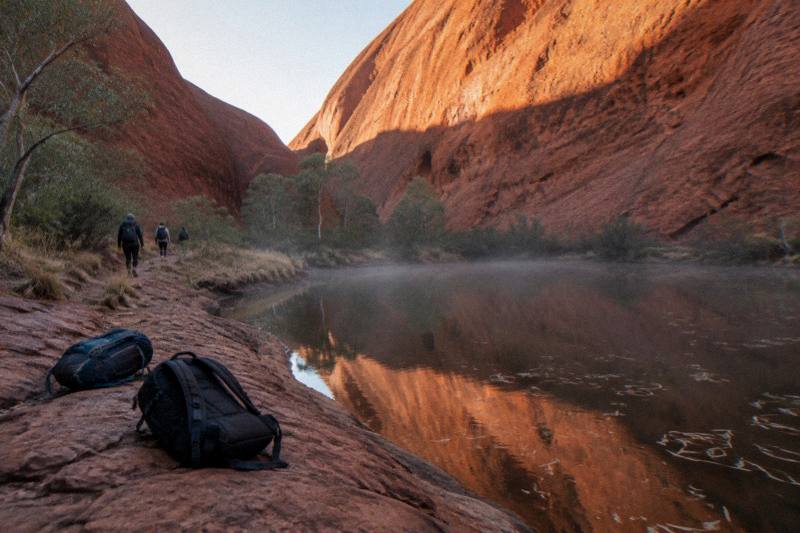
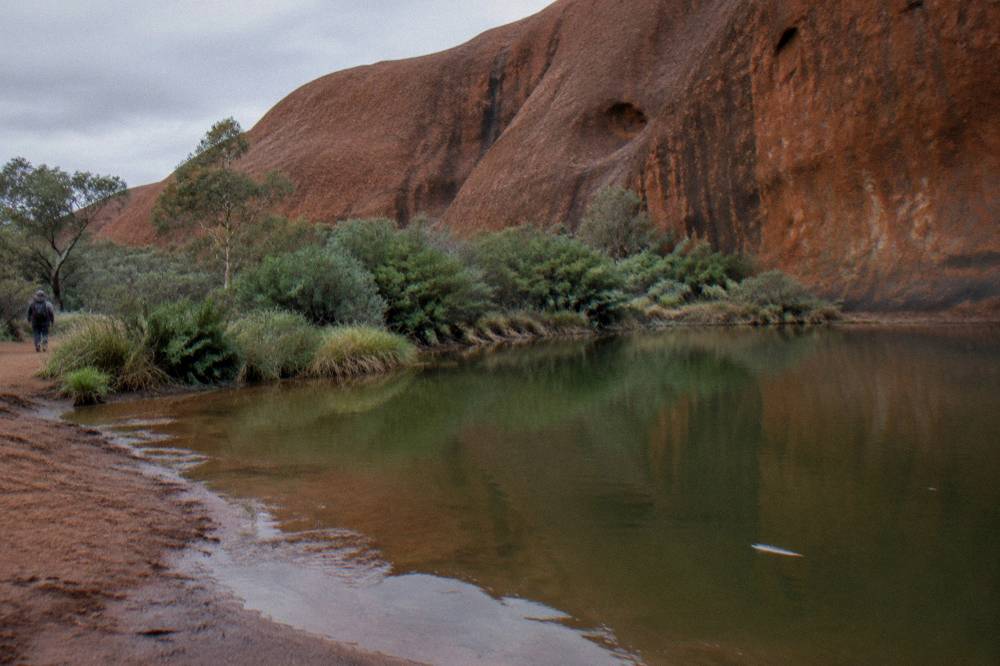
The base walk is a sequence of faces rather than one view: the Mala walk's Kantju Gorge, the long north-east face with its signed sensitive details, the Kuniya walk's Mutitjulu Waterhole, where water sits against the rock, and the quieter southern and western sections. The rock's colour changes through the morning as the sun climbs, which is why the clockwise early start rewards photographers.
Mutitjulu Waterhole is the emotional centre for many walkers: a permanent water pocket at the base of the rock, reached by the Kuniya walk, and one of the few places where the scale of the stone reads from close range. The Mala end, Kantju Gorge, is a sheer channel worth the short spur. Between them the track passes signed culturally sensitive sites where Anangu ask visitors not to photograph specific detail; wide shots of the rock from a distance are fine, and the signs mark exactly where the line sits.
Guides earn their fee on this section of the day. The geology alone, sandstone about half a billion years old tilted almost on end, is counterintuitive, and the cultural layer on top of it is not on the signage. For readers who want the deeper background, our Aboriginal culture at Uluru guide sets out what is publicly shareable and what stays with Anangu. If you're still weighing whether the rock itself justifies the trip, our guide to what makes Uluru so special lays out the full case.
Photography Rules On The Base Walk?
Photographing Uluru is not banned; photographing specific culturally sensitive sites is, and those sites are clearly signed along the track. At the north-east face, Anangu ask for wide shots from a distance only, with nothing showing the detail on the top-left side, and the park's photography page notes the best light there is one to two hours before sunset when shadows obscure the sensitive areas. Drones are prohibited entirely.
The photography page of the national park is the reference, and it is more permissive than rumour suggests. Valley of the Winds at Kata Tjuta has its own stricter rule, no photographs or video of the formations along that walk, but on the Uluru base loop the rule is site-specific signage. Commercial photography, influencers and content creators need a media permit; ordinary visitors do not.
One planning note: the park closes at night and everyone must be out by closing time, so night-sky photography happens outside the park, from the dune lookout beside the Lasseter Highway halfway between the entry station and Ayers Rock Resort. Our is it illegal to take a photo of Ayers Rock article unpacks the rules in more detail, including the can you touch Uluru question that usually follows.
Which Should You Choose?
Choose self-guided if you are visiting between May and September, you have a car or are happy with the hop-on hop-off bus, and you want the walk at your own pace for the cost of the park pass alone. Choose the guided full base walk if you want the whole 10 km with cultural interpretation, pickup and breakfast, and you are prepared for the 6-day cancellation cutoff. Choose Segway if the distance is the obstacle.
The hop-on hop-off option deserves a mention of its own: the Uluru and Kata Tjuta Hop on Hop Off Pass, from A$140, rated 4.5 from 154 reviews, solves self-guided transport without a guide, running to the park's key stops on a timetable. Paired with the free ranger-guided Mala walk, it is the cheapest structured way to do the base walk independently, and it pairs with our Uluru sunrise tours planning hub for the viewing-area morning (see Cheapest Uluru Visit).
For context beyond the rock itself, walkers with extra days often pair the Uluru loop with the Valley of the Winds circuit at Kata Tjuta, 50 km away by road, a Grade 4 track taking 3 to 4 hours for the full circuit; the SEIT Valley of the Winds Circuit Hike, from A$249, rated 4.9 from 30 reviews, is the guided version. A guest on that listing wrote, "Beautiful day with two excellent guides. They made sure everyone was doing good and were knowledgeable about the area as well as the birds and fauna."
However you walk it, respect the two fixed rules: the climb is closed and staying closed, and the heat deadlines are real. Between those anchors, the base walk is flexible, free at the point of walking, and the single best way to understand why Uluru Australia Tours exists as a site: the rock rewards time spent at its base far more than any drive-past viewing area can.
Common Questions About The Uluru Base Walk
Can you walk around Uluru without a tour?
Yes. The base walk is about 10 km, start at the Mala carpark early, walk clockwise, and finish before 11.00 am in hot weather. You need a park pass, $38 for an adult for 3 days, and you need to arrange your own transport to the carpark.
How long does it take to walk around the base of Uluru?
About three to four hours of walking for the full 10 km loop at a steady pace, plus stops. Allow extra time for the Mala walk spur, Mutitjulu Waterhole and photography.
Is the Uluru base walk hard?
The track is flat to gently undulating and rated as an easy walk, not a hike. The challenges are distance and heat: carry at least one litre of water per person per hour, avoid 2.30 pm to 6.30 pm in summer, and finish before 11.00 am on hot days.
What is the best month to do the base walk?
May to September, when daytime maximums usually sit between 20 and 30 C and overnight temperatures can be cold. The park opens later in midwinter, 6.30 am in June and July, so the early start is still comfortable.
Can I do the base walk on a Segway instead?
Yes. The Segway the FULL base of Uluru tour by Uluru Segway Tours covers the entire loop with training, from A$259, rated 4.9 from 499 reviews, and a hybrid Segway plus walking version runs from A$219.
Is a guided base walk worth it?
If you want Anangu cultural context, geology and the stories behind the signed sites, yes: guests consistently name the guide as the highlight. If you are confident with the heat rules and your own transport, the self-guided walk plus the free ranger-guided Mala walk covers the essentials for less.