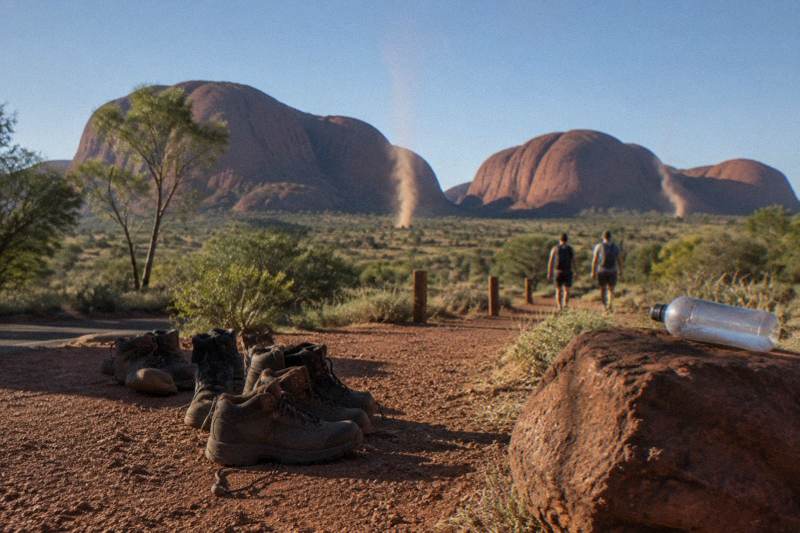
Valley Of The Winds Walk: Hike It On A Guided Tour Or Alone
Kata Tjuta's Valley of the Winds is the toughest marked walk near Uluru: a Grade 4 circuit of steep domes, two lookouts and a strict no-photography rule in the men's area. Here is how the full circuit works, what it costs to hike it with a guide, and what changes if you drive yourself.
Short answer
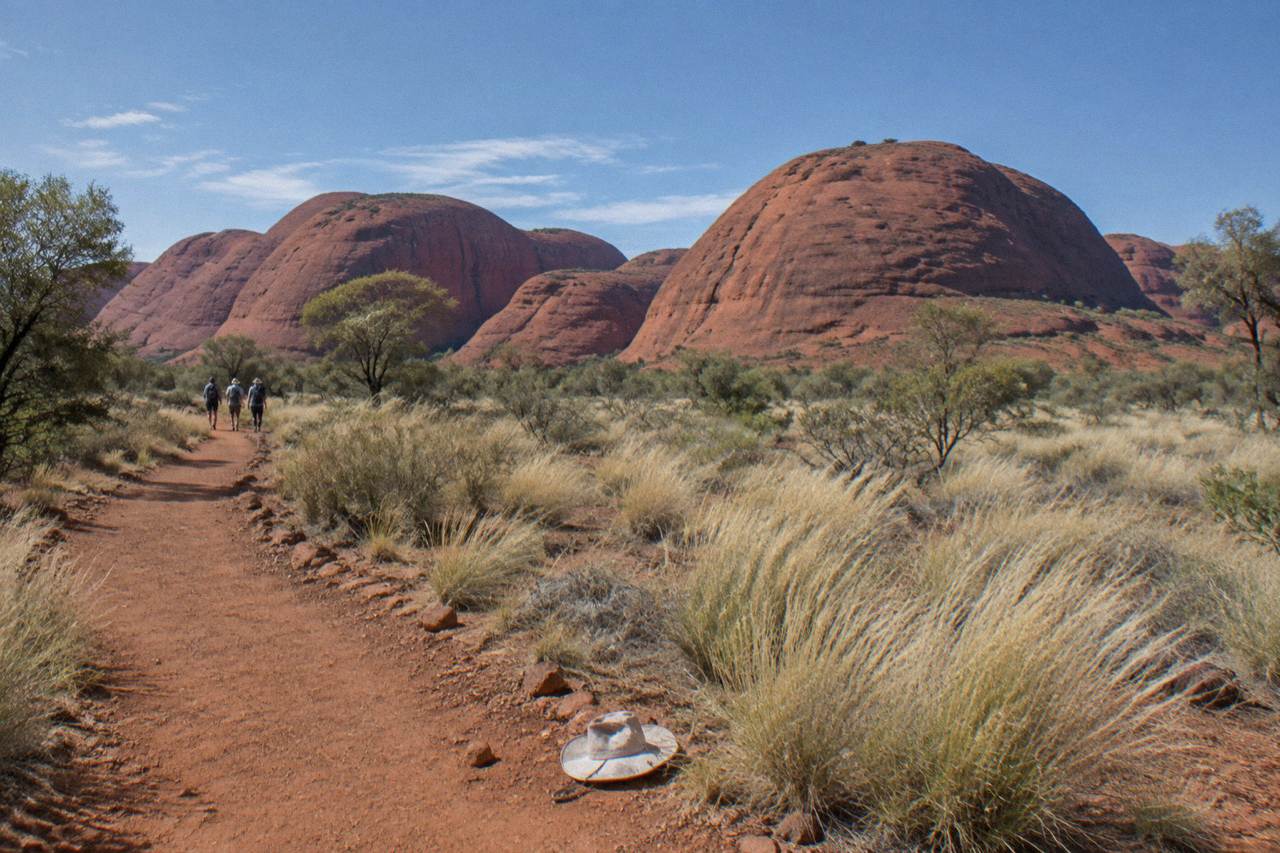
The full Valley of the Winds circuit at Kata Tjuta is a Grade 4 walk taking 3 to 4 hours, with the Karu lookout at 2.2 km return and the Karingana lookout at 5.4 km return. A guided circuit tour runs from A$249 per person; hiking alone needs your own transport, as Kata Tjuta is 50 km by road from Uluru.
Kata Tjuta, formerly known as the Olgas, is a cluster of 36 steep-sided domes covering more than 20 square kilometres and rising up to 546 metres above the surrounding plain, which makes its highest dome taller than Uluru. The name is a Pitjantjatjara term meaning 'many heads', and the park's own page for the site lists the Valley of the Winds as its headline walk. It is the only Grade 4 marked circuit in the park, it takes most people 3 to 4 hours, and it has a photography restriction that catches many visitors off guard. This guide lays out the distances, the difficulty, the rules and the honest trade-off between hiking it with a guide from the roster and driving yourself to the trailhead.
The walk sits inside Uluru-Kata Tjuta National Park, which Anangu jointly manage with Parks Australia. Every visitor needs a park pass, priced at $38 for an adult for 3 days or $50 for an annual pass, with under 18s free, and tour listings on this site state that fee separately rather than including it. Kata Tjuta is 50 km by road from Uluru itself, so the transport question matters as much as the fitness one. We compared the roster's guided Kata Tjuta options against the self-guided route so you can decide with real numbers.
What Is The Valley Of The Winds Walk?
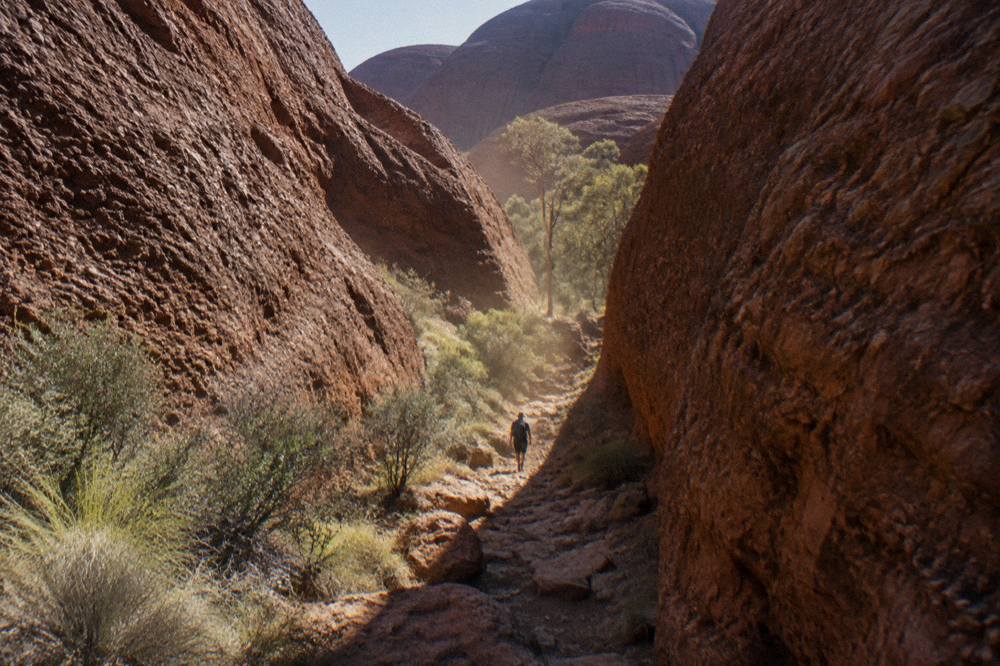
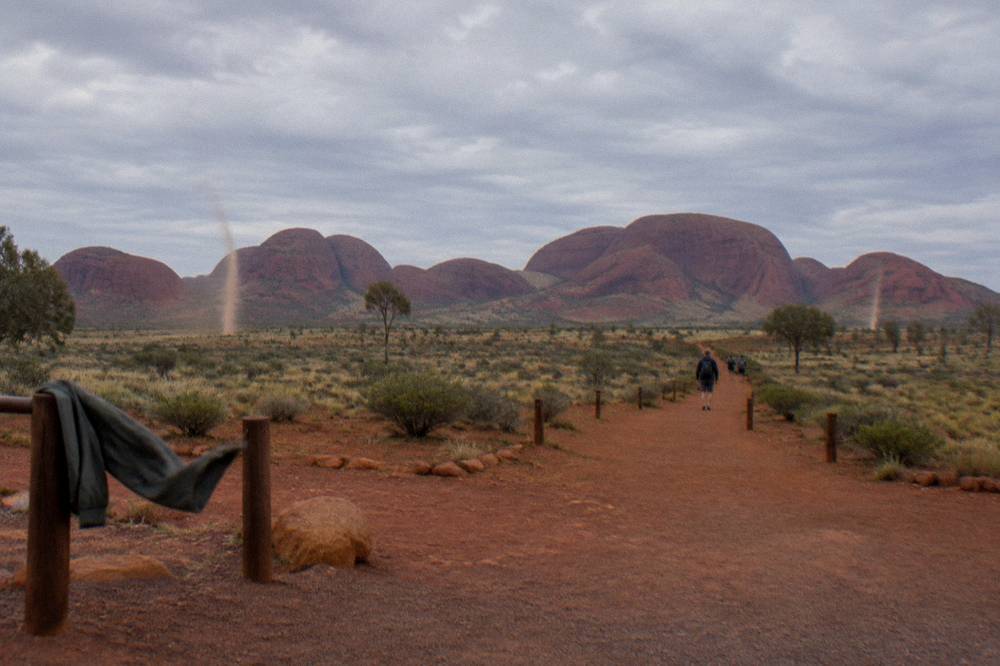
The Valley of the Winds is Kata Tjuta's premier walking track: a Grade 4 circuit of 3 to 4 hours that loops through gorges between the domes, passing two signed lookouts, the Karu lookout at 2.2 km return and the Karingana lookout at 5.4 km return. The park grades it harder than anything at Uluru because the track climbs steep stone steps, crosses exposed rock and includes sections with loose gravel. Unlike the flat 10 km base walk around Uluru, this circuit rises and falls repeatedly, and the park advises walking it in the cooler morning hours and finishing well before the heat of the day. The full loop rewards hikers with views down between the domes that simply do not exist from the car park, and the second lookout, Karingana, is where most of that payoff sits.
Anangu are the Traditional Owners of this country, and Kata Tjuta holds deep cultural significance under Tjukurpa, Anangu law and Culture. Parts of the area are designated men's sites, which is the origin of the photography restriction we cover further down. The walk itself is open to everyone and the park signs culturally sensitive areas clearly, so a respectful visitor has no trouble staying within the rules. The shorter alternative at Kata Tjuta is the Walpa Gorge walk, a gentler out-and-back that suits anyone not ready for Grade 4 terrain. If you are weighing the two, our Kata Tjuta tours guide compares every roster option at the domes, including the small-group tours that pair sunrise with breakfast.
| Section of the walk | Distance | Time | Grade |
|---|---|---|---|
| Karu lookout (first lookout) | 2.2 km return | about 1 hour | Grade 4 start, stepped climb |
| Karingana lookout (second lookout) | 5.4 km return | about 2.5 hours | Grade 4, steep and exposed |
| Full Valley of the Winds circuit | full loop | 3 to 4 hours | Grade 4 throughout |
The table shows why the lookouts matter for planning: many visitors short on time or energy walk to Karu, take in the first gorge view, and return, which takes about an hour. The Karingana lookout roughly doubles the effort and is the section people mean when they describe the circuit as hard. Between the two, the track descends into the valley floor and the wind funnels through the gaps, which is where the walk's English name comes from.
Guided Tour Or Self-Guided: Which Suits You?
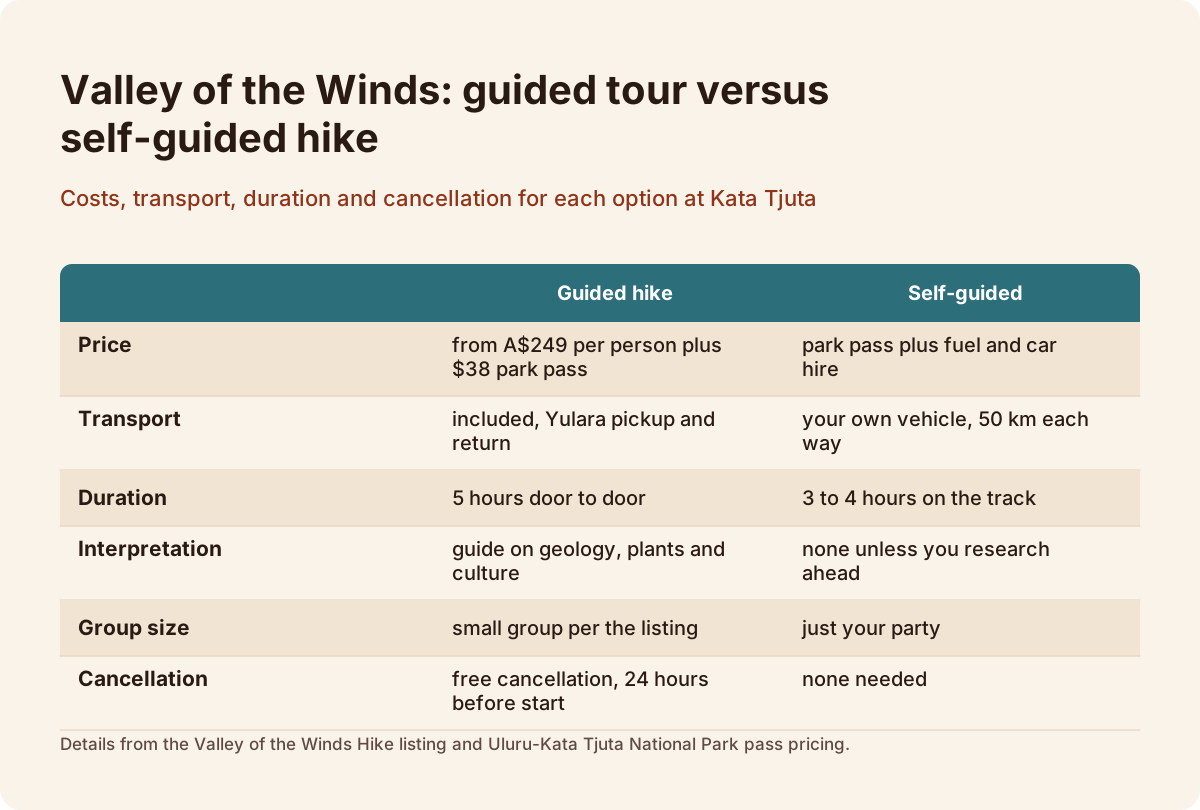
Take a guided tour if you have no car, want the geology and cultural context explained, or prefer not to think about timing, heat and water; hike alone if you have your own transport, are confident on Grade 4 terrain, and want to set your own pace and start time. The guided circuit on this roster, the Valley Of The Winds Hike by SEIT Tours, runs from A$249 per person for a 5-hour small-group experience with Yulara pickup, rated 4.9 from 30 reviews, a small pool so treat it as a strong early signal rather than a settled verdict. The self-guided route costs nothing beyond the park pass and your petrol, but Kata Tjuta is 50 km by road from Uluru and about a 45-minute drive from Yulara, and there is no shuttle from the resort to the trailhead apart from the hop-on hop-off bus pass, which lists from A$140 per person and stops at Kata Tjuta viewing areas rather than the walk itself.
The guide decision also changes what you learn. One guest on the Valley Of The Winds Hike wrote that it was a "Beautiful day with two excellent guides. They made sure everyone was doing good and were knowledgeable about the area as well as the birds and fauna." That kind of interpretation, the names of the domes, the plants, the birdlife, is exactly what a self-guided hiker trades away. Against that, a solo hiker can arrive at 6.30 am in June when the park opens at that hour, beat the crowds entirely, and linger at Karingana for an hour, something a group itinerary rarely allows. Our broader Uluru sunrise tours guide covers the same trade-off for the rock itself if you are planning both.
| Factor | Guided Valley Of The Winds Hike | Self-guided circuit |
|---|---|---|
| Price | from A$249 per person plus $38 park pass | park pass plus fuel and car hire |
| Transport | included, Yulara pickup and return | your own vehicle, 50 km each way |
| Duration | 5 hours door to door | 3 to 4 hours on the track |
| Interpretation | guide on geology, plants and culture | none unless you research ahead |
| Timing | operator sets the start time | you choose, subject to park hours |
| Group size | small group per the listing | just your party |
| Cancellation | free cancellation, 24 hours before start | none needed |
Two practical notes from the roster row: the Valley Of The Winds Hike lists free cancellation with a 24-hour cutoff, which is one of the shorter cutoffs on this site, so check the booking page before committing. And every roster tour departing Yulara includes pickup, which matters because even confident hikers without a car face a genuine barrier at Kata Tjuta.
If the full circuit feels like too much, the same operator runs two easier Kata Tjuta products worth knowing about. The Kata Tjuta sunrise small-group tour with breakfast, from A$249 and rated 4.8 from 255 reviews, takes in sunrise at the domes and a walk suited to most fitness levels. The 3-hour afternoon Walpa Gorge tour, from A$185 and rated 4.6 from 150 reviews, is the shortest guided option at the domes and pairs well with a morning at Uluru.
What Does The Guided Circuit Hike Actually Include?
The Valley Of The Winds Hike by SEIT Tours is a 5-hour small-group tour from Yulara, from A$249 per person, rated 4.9 from 30 reviews, covering the full circuit with a guide, hotel pickup and return, and free cancellation up to 24 hours before start; the $38 adult park pass is separate. The listing runs 5 hours in total, which breaks down as roughly 45 minutes of driving each way plus the 3 to 4 hours on the track itself, so the tour's clock matches the walk's honest duration. The small-group format is a real difference at Kata Tjuta: the gorges on the circuit are narrow in places, and a dozen people spaced along the track feels very different from a 50-person coach unload at a lookout. Guides on SEIT's Kata Tjuta products consistently draw praise in reviews, including the quote above about the guides' knowledge of the area, the birds and the fauna.
What the tour does not do is change the walk itself. You still climb the same steps to Karu, still cross the same exposed rock to Karingana, and still need to carry your own water, at least one litre per person per hour of walking in the park's own safety advice, available in detail on the official park safety page. What it adds is the decision layer: the guide judges the timing against the heat, reads the group's pace, and explains what you are looking at between the domes. For visitors on a short stay who want Kata Tjuta done properly on the first attempt, that is the core of the value.
A fair question is whether the sunrise breakfast tour is the better buy at the same from-price of A$249. That product, rated 4.8 from 255 reviews, includes a light breakfast and sunrise at the Kata Tjuta dune viewing area, but its walk is shorter than the full circuit. One guest described it as a "Beautiful way to wake up. The sunrise was a magical experience and the hike through the gorge was stunning." If the full Grade 4 loop is your goal, the dedicated Valley Of The Winds Hike is the listing built for it; the sunrise tour is the better fit if breakfast and the golden-hour photographs matter more than completing every kilometre. Other pages covering the same trip are gathered on Uluru Australia Tours.
How Hard Is A Grade 4 Walk Really?
Grade 4 on the Australian walking-track standard means the track is rough, steep in sections and demands fitness and some bushwalking experience; at Valley of the Winds that translates to steep stone steps to the Karu lookout, an exposed and rocky descent into the valley, and a sustained climb to Karingana that most reasonably fit adults manage but many find genuinely tiring. The park advises walkers to allow 3 to 4 hours for the full circuit and to walk in the cooler morning hours, finishing before 11.00 am on hot days. In the warmer months of October to March, daytime maximums can exceed 35 C, and the park's heat rules bite hard: the same heat-triggered closures that apply at Uluru's north-east walk apply across the park's exposed tracks when temperatures reach 40 C. The Bureau of Meteorology's outlook to December 2026 favours above-average temperatures for the southern Northern Territory, which nudges the calculus further toward an early start this season.
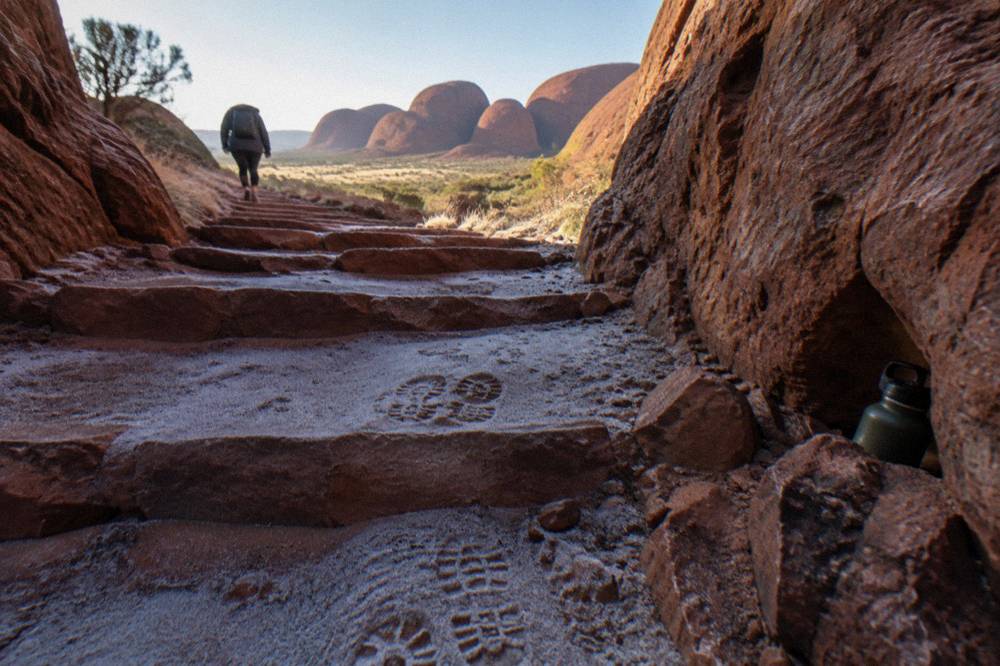
Honest comparisons help here. The Uluru base walk is about 10 km but almost entirely flat, and most people finish it comfortably at their own pace. The full Valley of the Winds circuit is shorter in kilometres but packs its distance into climbs, steps and uneven rock, so it commonly feels harder than a 10 km flat loop. Footwear matters more than at Uluru: closed shoes with grip, not thongs, and the park sells nothing at the trailhead beyond what the Cultural Centre stocks, which is 50 km away. Children complete the walk, but parents should treat the Karingana section honestly, and the 2.2 km Karu lookout return is the sensible family option.
| Month | Park hours | Typical daytime max (C) | Walk advice |
|---|---|---|---|
| May to July | 6.00 am or 6.30 am open | 20 to 24 | peak season, coldest starts, bring a layer |
| August | 6.00 am open | about 24 | wildflowers usually best August to September |
| September | 5.30 am open | about 29 | warm afternoons, start at opening |
| October | 5.00 am open | about 32.3 | start at opening, finish walking by 11.00 am |
| November to March | 5.00 am open, 5.30 am in March | 35 to 38 | heat rules often apply, morning only |
What Are The Photography Rules At Kata Tjuta?
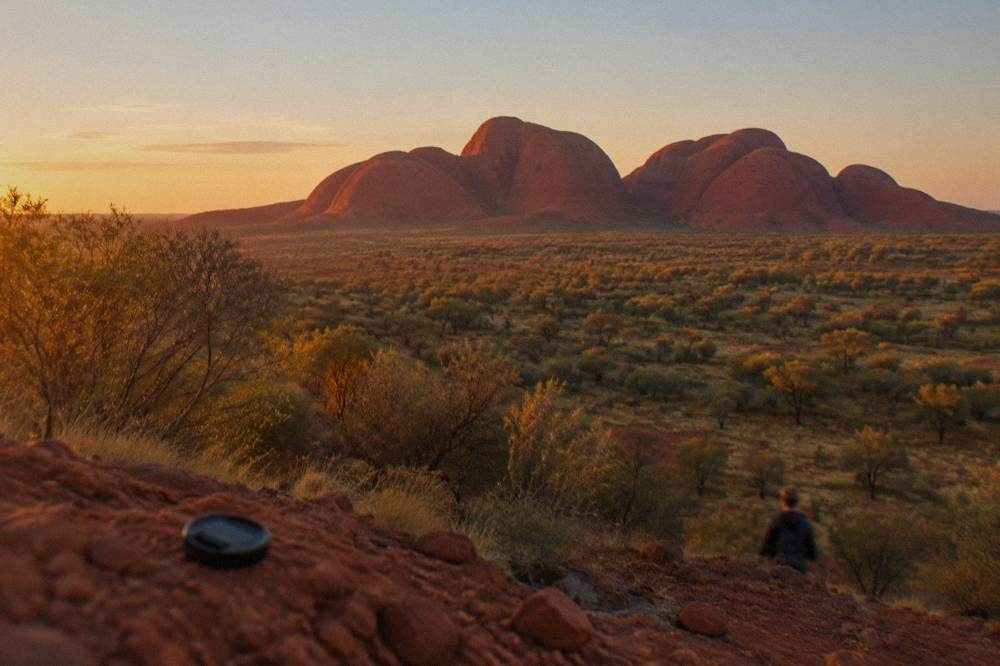
Kata Tjuta's Valley of the Winds is a designated men's area, and the park prohibits photographs and video of the Kata Tjuta formations along the walk itself; close-ups of flora, fauna and people are welcome, and the restriction does not extend to the viewing areas outside the walk. This is the single most-misunderstood rule at the domes, and it inverts what many visitors expect: you can photograph Uluru freely from a distance, but on this track the rock formations themselves are off-limits to your lens. The park states the rule plainly on its official photography page, and signs mark the boundaries. Drones make the prohibited list everywhere in the park under the EPBC Act, with penalties attached, so aerial footage of the domes is not an option for visitors at all.
The practical version: take your wide landscape shots from the Kata Tjuta dune viewing area or the sunset area before or after the walk, where both formations can fill the frame legally, and switch to plants, birds and companions while on the track. At nearby Walpa Gorge the rule is different again, keep both sides of the gorge in frame, so read the sign at each trailhead rather than assuming one rule covers everything. Commercial photography and content creation need a media permit, which is a separate process from a park pass. If seeing the domes from the air is what drew you here, the Uluru helicopter flights guide covers the scenic flights that overfly both rock sites, since the air is the one place the camera restrictions do not reach.
How Do You Get To The Trailhead Without A Tour?
Driving yourself to Kata Tjuta means about 45 minutes each way from Yulara along the park's sealed roads, 50 km from Uluru, with a car park and toilets at the trailhead; without a car your realistic options are a guided tour with pickup, the hop-on hop-off bus pass, or a rental vehicle booked ahead. Rental cars at Yulara are limited and the park advises booking several weeks ahead, with hire desks at the airport and in the resort itself. Fuel up at the resort before you go, because there is no petrol at the domes, and the driving adds up quickly if you are also doing sunrise and sunset at Uluru on the same day. The hop-on hop-off pass, from A$140 per person and rated 4.5 from 154 reviews, serves the Kata Tjuta viewing areas, but check its stop list carefully against the walk's trailhead before relying on it for a Grade 4 circuit with a fixed finish time.
Timing your drive against the park's opening hours is part of the self-guided skill set. The park opens at 5.00 am in October but not until 6.30 am in June and July, and the gate hours define your earliest possible start, not the sunrise. There is no overnight access: everyone must be out of the park by closing time, which also rules out night-sky photography inside the boundary. Conditions at the park change for cultural and operational reasons, so it is worth reading the park's news page close to your travel date, since occasional closures for cultural reasons can affect any visit and sections of tracks can close in extreme heat.
When Is The Best Time To Do The Walk?
The best window for the Valley of the Winds circuit is May to September, when daytime maximums usually sit between 20 and 30 C, with a start at park opening and the walk finished by late morning; August to October adds the piriyakutu season, when food plants flower across the park. Winter mornings are genuinely cold, with Yulara overnight minimums averaging 4.4 C in July, so the trade for safe walking temperatures is a pre-dawn start in a jacket. Summer inverts the problem: January averages a 38.4 C maximum, the park tells visitors not to walk after 11.00 am, and its safety page advises avoiding all walking between 2.30 pm and 6.30 pm in the hotter months. The Bureau of Meteorology outlook to December 2026 favours above-average maximum and minimum temperatures, and above-average rainfall, across the region, so a late-2026 visit deserves a conservative early start and a plan B for storms.
Guided tours partially absorb this planning burden, which is one of the quieter arguments for them. The operator sets the departure to match the season, and the guide carries the responsibility for turning the group around if the day heats up faster than forecast. Self-guided hikers own that call themselves, and the park's rule of at least one litre of water per person per hour of walking is the number to plan around: for the full circuit that means three to four litres per person, carried in, because the only treated water at Kata Tjuta is limited compared with the Mala walk's facilities at Uluru. Bush flies are active from September to April, and a head net costs little and saves a lot of swatting on the exposed sections.
| Item | Why it matters | Park advice |
|---|---|---|
| Water, 3 to 4 litres per person | full circuit in 3 to 4 hours | at least one litre per person per hour |
| Closed shoes with grip | steep stone steps and loose gravel | Grade 4 terrain throughout |
| Sun protection | UV reaches extreme levels in warm months | hat, sunscreen, long sleeves |
| Warm layer for the start | winter mornings average 4 to 6 C | cold overnight temperatures in winter |
| Head net, September to April | bush flies peak in the warmer months | nets sold on arrival at the resort |
What Does A Day At Kata Tjuta Cost Altogether?
A self-guided full circuit costs the $38 adult park pass plus fuel and car hire; a guided day at the domes runs from A$185 per person for the 3-hour afternoon Walpa Gorge tour, A$249 for the sunrise breakfast tour or the Valley Of The Winds Hike, all plus the pass, and multi-day camping itineraries bundle the domes with Uluru and Kings Canyon from A$795 per person. The pass is not bundled into any roster tour, and every listing states it separately, so add it to every figure in the table below. Visitors spending three or more days in the region should also weigh the 3-day camping tours, rated 4.8 from 455 reviews, which include Kata Tjuta walks within a wider itinerary and take the transport, food and timing questions off the table entirely.
| Option | Format | From price | Rating and reviews | Duration |
|---|---|---|---|---|
| Self-guided full circuit | own car | pass plus fuel | not applicable | 3 to 4 hours on track |
| 3-Hour Afternoon Walpa Gorge | small group | A$185 | 4.6 from 150 reviews | 3 hours |
| Kata Tjuta Sunrise, Breakfast | small group | A$249 | 4.8 from 255 reviews | 5 hours |
| Valley Of The Winds Hike | small group | A$249 | 4.9 from 30 reviews | 5 hours |
| 3-Day Camping Tour | camping group | A$795 | 4.8 from 455 reviews | 3 days |
Note the review-count honesty in that last column: the Valley Of The Winds Hike's 4.9 comes from 30 reviews, which is a small pool, while the sunrise tour's 4.8 from 255 reviews and the camping tour's 4.8 from 455 reviews rest on much larger samples. All three point the same direction, but the confidence levels differ, and a reader deserves to see that. For the full picture of guided options at the domes, including how the afternoon and sunrise products stack up side by side, see the Kata Tjuta tours guide, and for the pass mechanics our national park pass guide walks through every tier.
Common Questions About The Valley Of The Winds Walk
How long does the Valley of the Winds walk take?
The full circuit takes 3 to 4 hours. The Karu lookout is a 2.2 km return walk of about 1 hour, and the Karingana lookout is 5.4 km return, about 2.5 hours. Most roster tours budget 5 hours door to door from Yulara, including roughly 45 minutes of driving each way.
Can you do the Valley of the Winds walk without a tour?
Yes. The track is marked and open to all park pass holders. You need your own transport, as Kata Tjuta is 50 km by road from Uluru and about 45 minutes from Yulara, with no resort shuttle to the trailhead. Rental cars in Yulara are limited and should be booked weeks ahead.
How hard is the Valley of the Winds walk?
It is a Grade 4 track: rough, steep in sections and best suited to people with reasonable fitness and some bushwalking experience. It is shorter than Uluru's flat 10 km base walk but usually feels harder because of the stepped climbs and uneven rock. Walk it in the cooler morning hours and finish before 11.00 am on warm days.
Can you photograph the Valley of the Winds walk?
No, not the formations. The walk passes through a men's area where photographs and video of the Kata Tjuta rock formations are prohibited; close-ups of plants, animals and people are fine. Take your landscape shots from the Kata Tjuta dune or sunset viewing areas instead. Drones are prohibited throughout the park.
What does the guided Valley of the Winds tour cost?
The Valley Of The Winds Hike by SEIT Tours lists from A$249 per person, rated 4.9 from 30 reviews, with small-group format and Yulara pickup. The $38 adult park pass is separate, as the listing states. Free cancellation applies with a 24-hour cutoff before start.
When is the best time of year for the walk?
May to September, when daytime maximums usually sit between 20 and 30 C. Winter starts are cold, with July overnight minimums averaging 4.4 C at Yulara, so bring a layer. Avoid the hottest hours from October to March, when temperatures can exceed 35 C and the park restricts walking to mornings.