Best Time To Visit Uluru: Month By Month Weather And Tour Seasons
Season decides almost everything at Uluru: how hot the rock is at noon, when the park gates open, whether the flies are out and which tours feel comfortable. Here is the month by month picture from the Bureau of Meteorology's Yulara averages and the park's own hours table.
Short answer
May to September is the best time to visit Uluru, with daytime maximums usually between 20 and 30 C and almost no extreme heat. October to March regularly exceeds 35 C, so walking is limited to early mornings. Winter nights fall to 4 to 6 C, so pack warm layers for sunrise tours and the Field of Light.
Uluru sits in Central Australia, where the year swings from winter nights near 4 C to summer days well past 35 C, and the "best" month depends on what you want to do there. The park itself is open every day of the year, but its hours shift with the seasons, and in hot weather several walking tracks close at set temperatures. Get the season right and a sunrise base walk is a comfortable morning; get it wrong and the same walk ends before 11.00 am by rule, not by choice.
This guide works through the year month by month using the Bureau of Meteorology's Yulara averages as printed on the park's own planning pages, then matches each season to the tour styles that suit it. The short version: May to September is the comfortable core, August and September bring wildflowers, and summer travel is possible but shapes itself around the heat. If you are still weighing morning against evening at the rock, the sunrise versus sunset question is covered separately, and the sunrise and sunset tours hub lists every viewing option on the roster.
What Is The Best Month To Visit Uluru?
The best months to visit Uluru are May through September, when daytime maximums at Yulara average between 20.4 C and 28.7 C and rain is light at 5 to 18 mm per month. Within that window, August and September add wildflowers and milder mornings, which the park's own pages flag as the usual bloom season. June and July are the coolest but also the busiest, with overnight minimums of 4.4 to 5.6 C at sunrise.
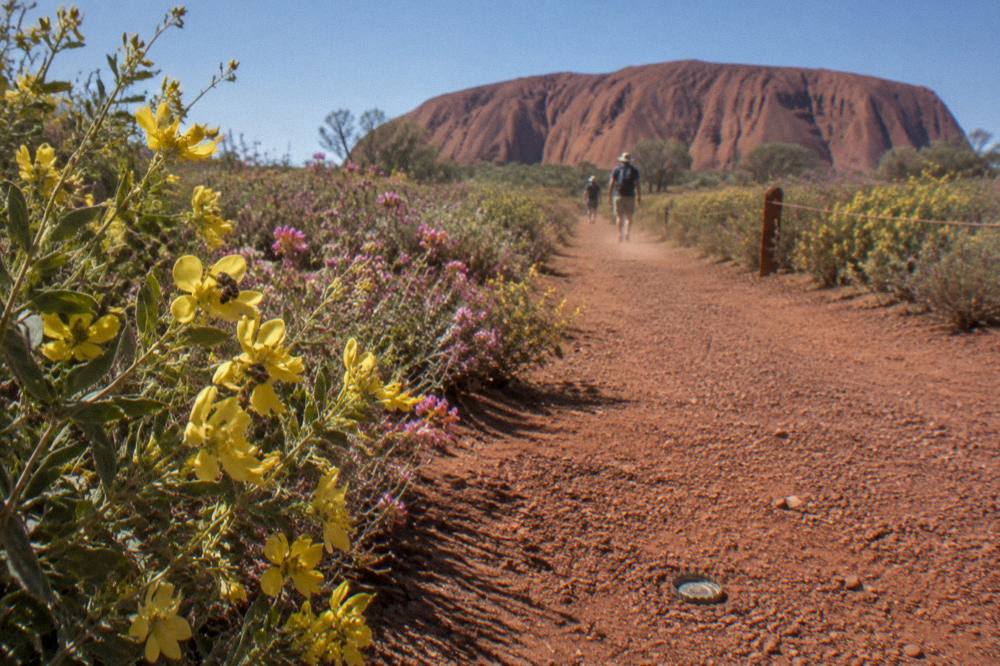
That window is not a marketing claim, it comes straight from the park's planning guidance: the best time to visit is May to September, with daytime maximums usually 20 to 30 C. The same pages note that October to March can exceed 35 C daily and that summer walking is restricted to cooler morning hours. Wildflowers are usually best in August and September, and piriyakutu, the season when food plants flower, usually runs August to October according to the park's seasons page.
Crowd pressure follows the temperature. June and July, the peak of the southern winter school-holiday flow, fill small-group tours fastest, and seats on limited-format products such as the small-group base walk with breakfast go weeks ahead in that period. May and September give you peak-season weather with slightly thinner crowds, and September mornings at 10.7 C average minimum are noticeably gentler than July's 4.4 C for a 5.00 am pickup.
One more planning item sits outside the weather entirely: every visitor needs a park pass, A$38 for an adult for 3 days, sold separately from every tour on the roster and pre-purchased online. The national park pass guide covers the detail.
Uluru Month By Month: Max, Min, Rain And Park Hours
Each month at Uluru trades heat against daylight, and the park's opening hours move with the sun: gates open as early as 5.00 am in summer and as late as 6.30 am in midwinter. The table below pairs the Bureau of Meteorology's Yulara averages, as printed by the park, with the park's own monthly hours so you can read a whole year at a glance. Rain is monthly average rainfall.
The pattern to notice is the symmetry. Midsummer gives you the longest usable morning, a 5.00 am opening with the heat already climbing, while midwinter shortens the day but makes almost every hour walkable. March and November sit in between, with mornings that work and afternoons that often do not.
| Month | Average max | Average min | Average rain | Park hours |
|---|---|---|---|---|
| January | 38.4 C | 22.8 C | 28.8 mm | 5.00 am to 9.00 pm |
| February | 37.0 C | 22.1 C | 38.4 mm | 5.00 am to 9.00 pm |
| March | 34.5 C | 19.3 C | 32.6 mm | 5.30 am to 8.30 pm |
| April | 29.9 C | 14.5 C | 15.7 mm | 5.30 am to 8.00 pm |
| May | 24.3 C | 9.3 C | 14.3 mm | 6.00 am to 7.30 pm |
| June | 20.4 C | 5.6 C | 18.2 mm | 6.30 am to 7.30 pm |
| July | 20.6 C | 4.4 C | 17.6 mm | 6.30 am to 7.30 pm |
| August | 23.7 C | 5.9 C | 5.0 mm | 6.00 am to 7.30 pm |
| September | 28.7 C | 10.7 C | 9.0 mm | 5.30 am to 7.30 pm |
| October | 32.3 C | 14.9 C | 21.1 mm | 5.00 am to 8.00 pm |
| November | 35.1 C | 18.4 C | 33.1 mm | 5.00 am to 8.30 pm |
| December | 36.5 C | 20.8 C | 45.5 mm | 5.00 am to 9.00 pm |
August stands out as the driest month on the table at 5.0 mm of average rain, which is part of why it pairs so well with the wildflower season. December is the wettest at 45.5 mm, though Central Australian rain tends to arrive in short heavy bursts rather than long drizzle, and a summer storm over the rock is one of the region's more dramatic sights from a safe viewing area.
Reading the year this way makes the tour decision simpler. The five-hour coach sunrise combo with Kata Tjuta, the Bus Sunrise, Kata Tjuta Combo from AAT Kings, runs year round at from A$186 per person, but in January the sunrise segment is doing the heavy lifting while the Kata Tjuta walk is kept short and shaded. In July the whole five hours feel mild, and the same money buys a fuller morning.
Which Tours Suit Which Season At Uluru?
Walking-based tours belong to May through September, when a six-hour small-group base walk is comfortable from start to finish. Scenic flights, sunset dining and the Field of Light work year round because their exposure to heat is short. Helicopter and light-aircraft flights in particular suit the October to April months well, since 15 to 36 minutes in the air beats hours on hot ground.
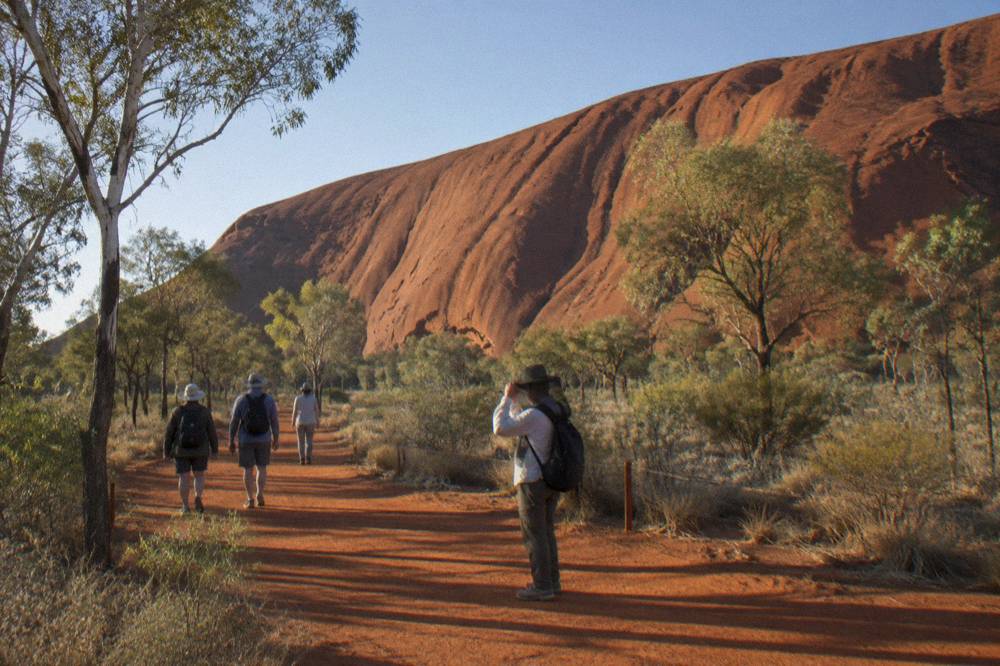
The roster splits cleanly along this line. The small-group products, SEIT's base walks and Kata Tjuta hikes and the Segway loops, put you outdoors for three to six hours, and in summer those hours must all land before late morning. The coach products, the sunrise and sunset viewings and the dining experiences, concentrate their outdoor time into one or two windows. The table below matches roster formats to seasons.
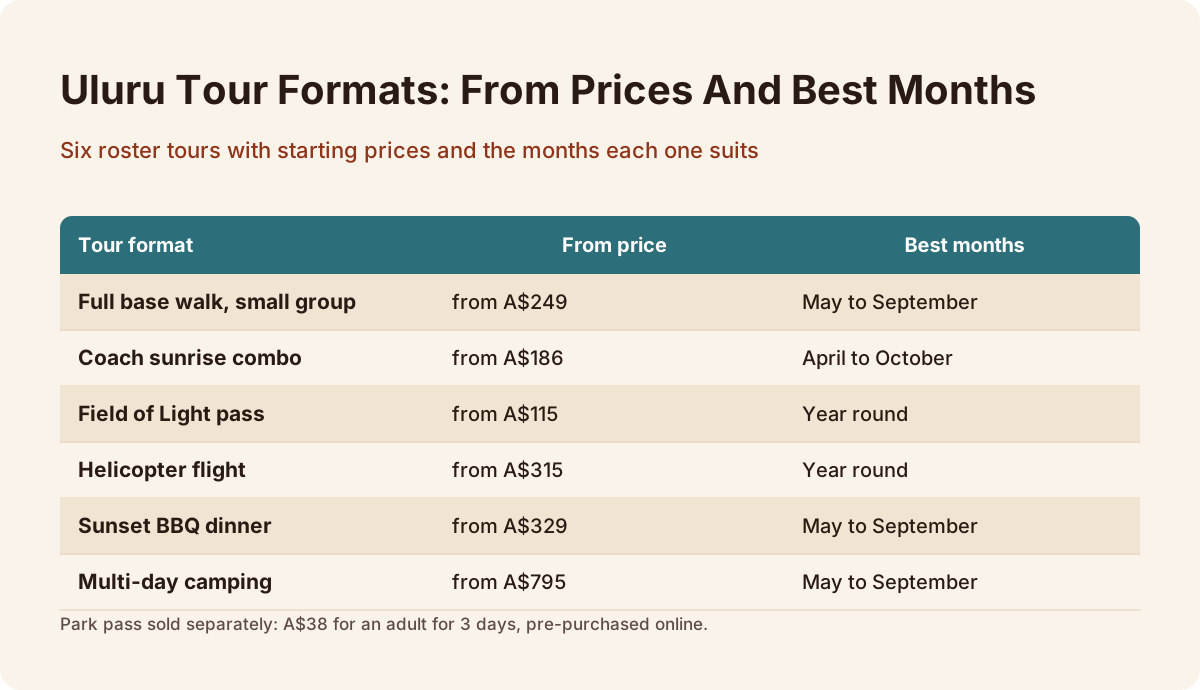
| Tour format | Roster example | Best months | Why |
|---|---|---|---|
| Full base walk, small group | Full Uluru Base Walk at Sunrise, from A$249, 6 hours | May to September | 10 km of walking is only comfortable in the mild core |
| Coach sunrise combo | Bus Sunrise, Kata Tjuta Combo, from A$186, 5 hours | April to October | Mostly seated, walks kept short |
| Field of Light pass | Field of Light Sunrise Tour with Hot Drinks, from A$115, 2 hours | Year round | Short outdoor exposure at dawn |
| Helicopter flight | 25-Minute Heli, Both Rock Sites, from A$315 | Year round | Minutes in the air, minimal ground time |
| Sunset BBQ dinner | Sunset BBQ Day Tour, from A$329, 7 hours | May to September | Longest outdoor window of the dining roster |
| Multi-day camping | 3-Day Camping, Swag Nights, from A$795 | May to September | Swag nights suit cool, dry conditions |
The walking formats deserve the most seasonal respect. The Full Uluru Base Walk at Sunrise Including breakfast, a SEIT small-group product rated 4.8 from 460 reviews, covers the full 10 km circumference, and a guest review calls it "an excellent tour" with an "incredibly knowledgeable and enjoyable" guide. That is a May-to-September experience; in the hotter months the park's own heat rules, which close sections of the north-east walk from 11 am at 40 C, shape what any walking tour can do.
By contrast, the Kata Tjuta small-group sunrise tour with breakfast, rated 4.8 from 255 reviews, is a five-hour morning that works from April into October, and its shaded gorge walking makes it more heat-tolerant than an open base loop. One verbatim guest review calls it "a magical experience", praising the guide and the light breakfast. If your dates fall in the shoulder months, that tour and the Kata Tjuta tours guide are the right starting points.
How Does Summer Change A Uluru Trip?
From October to March, daytime maximums at Yulara climb from 32.3 C in October to 38.4 C in January, and the park's safety guidance kicks in: avoid walking between 2.30 pm and 6.30 pm, carry at least one litre of water per person per hour, and expect walking tracks to close in extreme heat. Tours still run, but the day reorganises itself around dawn and dusk, and midday becomes a pool-and-shade proposition.
The park's rules are specific. Sections of the north-east walk close from 11 am when the forecast or actual temperature reaches 40 C, and the Lungkata walk closes from 2 pm at the same threshold. In hot weather the base walk is a before-11.00 am activity, full stop. The park also asks all visitors to be out by closing time, and no overnight camping is permitted inside the park boundaries, which is why the multi-day camping products on the roster stay outside it.
Summer has genuine upsides if you plan for it. Crowds thin, tour availability loosens, sunrise viewing areas are quieter, and the 5.00 am opening gives you the longest mornings of the year. The Bureau of Meteorology's outlook to December 2026 favours above-average temperatures and above-average rainfall for the southern two-thirds of the Northern Territory, so a late-2026 summer visit warrants extra attention to the park's news page for current conditions before travelling. Storm light over the rock in the wet months can be spectacular from a distance.
Bush flies are part of the same season, present from September to April, and the park's own advice is blunt about it: flies are heavy in summer and head nets are sold on arrival. They are a nuisance rather than a danger, but they change the experience of a long outdoor lunch or an exposed lookout. UV is extreme in the warm months, with sun protection recommended through the middle of the day, so a hat, sleeves and sunscreen matter as much as water.
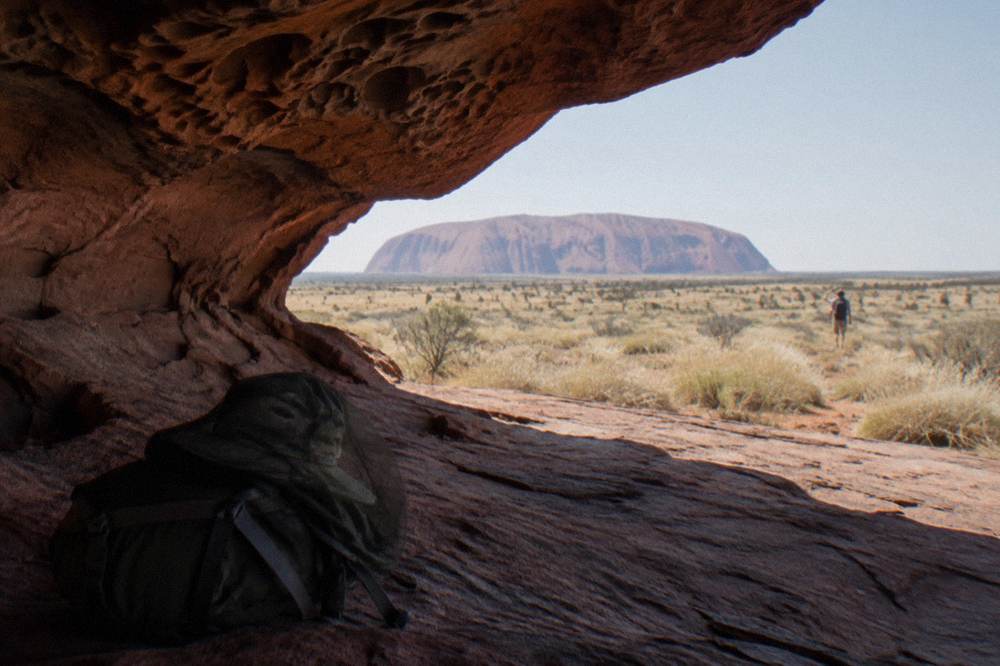
For visitors locked into summer dates, the smart roster picks are the short-exposure formats: the 15-minute helicopter flight, rated 4.9 from 669 reviews, from A$195 per person, or the Field of Light sunrise pass at from A$115, which wraps its outdoor hour into the coolest part of the day. A guest review of the scenic plane flight, rated 4.8 from 113 reviews, describes it as a "fun and affordable way to see Ayers Rock". Aviation is weather-dependent, so no flight is guaranteed, but the operator decides on the day.
What Are Winter Mornings And Nights Like At Uluru?
Winter at Uluru means daytime maximums of 20.4 to 24.3 C from May to August and overnight minimums of 4.4 to 9.3 C, so the days are close to perfect for walking and the pre-dawn tour pickups are genuinely cold. Layers are the answer: a jacket and beanie for sunrise, shed by mid-morning. The park opens later in midwinter, 6.30 am in June and July, which shifts tour start times too.
The cold surprises people more than the heat does. July's average minimum of 4.4 C means a sunrise viewing area can sit near freezing while you wait for first light on the rock, and the Field of Light passes, walked before dawn, feel every degree of it. The cold nights at Uluru question digs into this, but the packing advice is simple: treat a winter sunrise like a ski-holiday morning and a winter afternoon like late spring.
Winter is also when the walking formats shine. The Segway Full Base Loop, rated 4.9 from 499 reviews and from A$259 per person, covers the whole base with a cool morning at its back, and a verbatim guest review notes the team was "very helpful" and that the rider "wasn't sure I could manage the Segway but it became very comfortable". May to September is that tour's natural season. The same goes for Kings Canyon: the full-day rim walk tour from Ayers Rock Resort, rated 4.7 from 666 reviews and from A$345, involves three to four hours of walking, which winter handles far better than a 38.4 C January. The full index of guides sits on Uluru Australia Tours.
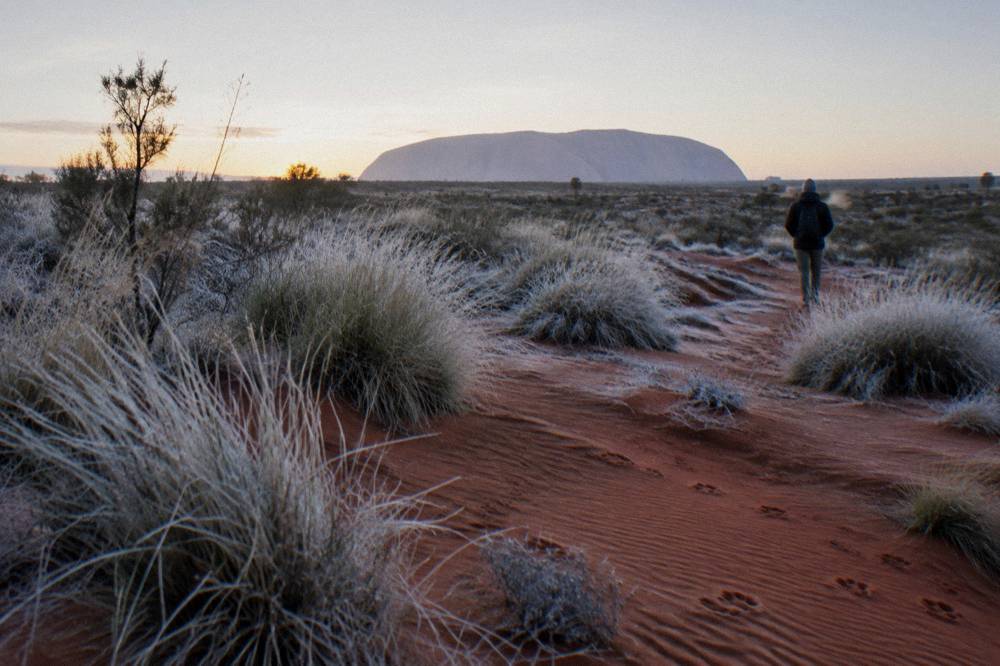
One winter trade-off is daylight. The park's 6.30 am June and July opening compresses the pre-sunrise window, and the sunset viewing areas close earlier with a 7.30 pm gate. Tour operators schedule around this, so the five-hour products simply start and finish earlier in June than in October. If a long golden evening at the sunset area is the centrepiece of your trip, the shoulder months of April and October, open until 8.00 pm, give you more of it.
Should You Visit In The Shoulder Months Of April And October?
April and October are strong compromise months at Uluru: average maximums of 29.9 C and 32.3 C, morning minimums of 14.5 C and 14.9 C, and park hours that stretch to 8.00 pm, giving longer evenings than midwinter. April is the milder of the two, October the warmer, and both carry more tour-friendly daylight than the peak without the full summer heat penalty.
October sits at the hot edge of comfortable. Its 32.3 C average maximum means walking tours still want an early start, but its 14.9 C mornings are pleasant, and October falls inside piriyakutu, the August-to-October season when the park's seasons page says food plants flower. October also sits at the boundary of the fly season, which the fresh data places from September to April, so a fly net earns its packing space.
The sunset and dining formats are the shoulder-month sweet spot. The Uluru and Kata Tjuta Sunset Helicopter Tour, rated 4.8 from 175 reviews and from A$415 for a 36-minute flight, pairs naturally with an October evening, and the Outback BBQ Dinner and Star Talk, rated 4.2 from 445 reviews and from A$328, runs its stargazing segment in the last hour of the park's day. One guest review of that dinner notes the barbecue "was really good and the star gazing was good even though the clouds didn't cooperate", which is a fair reminder that skies, like everything else here, are not guaranteed.
For a fuller run through the evening options, the Uluru sunset tours guide compares every roster product that ends at the viewing areas, and for readers deciding how many days the whole trip needs, the three-day Uluru itinerary question is a natural next read.
How Do Seasons Affect Tour Prices And Availability?
The roster's printed "from" prices do not change with the season, but availability does: June and July fill the small-group formats first, and multi-day camping tours carry the longest booking horizons with cancellation cutoffs of 6 to 14 days before start. Booking early matters most for winter dates and for any small-group product, while summer dates often have same-week seats.
The cancellation detail is where season planning meets money. Most roster listings allow free cancellation, but the cutoff differs tour by tour: the coach products generally list 24 hours, the SEIT small-group walks list up to 6 days, and the multi-day camping tours list 6 to 14 days. A winter trip booked months ahead needs those dates right, because changing a 3-day camping tour inside its cutoff is not free. Read the booking page for the specific tour, never assume a blanket rule.
| Roster tour | Format | From price | Duration | Free-cancellation cutoff |
|---|---|---|---|---|
| Bus Sunrise, Kata Tjuta Combo | Coach, large group | A$186 | 5 hours | 24 hours before start |
| Kata Tjuta Sunrise, Breakfast | Small group | A$249 | 5 hours | 6 days before start |
| Field Of Light Sunrise, Hot Drinks | Coach, large group | A$115 | 2 hours | 24 hours before start |
| 3-Day Camping, Swag Nights | Camping tour | A$795 | 3 days | 7 days before start |
| Kings Canyon Rim Walk Day | Coach, large group | A$345 | 12 hours | 24 hours before start |
Season also changes what a tour is worth. The Field of Light, an installation of more than 50,000 solar-powered spheres by artist Bruce Munro that has run since 2016 and is extended through 2029, is a dusk-and-dark experience in every month, and the resort's direct-sold General Admission runs from $50 per adult alongside the roster's own AAT Kings sunrise pass at from A$115 with hot drinks. On a winter evening you will want every layer you own for it; in summer it pairs with a much warmer night. The Field of Light guide compares the passes in detail.
Putting It Together: Choosing Your Month
Choose May to September for walking and comfort, August and September for wildflowers and the best balance, June and July for the coolest days if you accept peak crowds and cold sunrises, April and October for long evenings at the milder edges, and November to March only if you plan the day around dawn, dusk and air-conditioning. Every month has a workable itinerary, but the itinerary looks different in each.
The single most useful habit, whatever month you pick, is checking the park's official when to come guidance and its opening hours page close to your travel dates, because conditions change and the park occasionally closes areas in extreme heat or for cultural reasons. The Bureau of Meteorology's Uluru forecast page is the live weather source. A little reading before you book beats a heat-shortened walk after.
Common Questions About The Best Time To Visit Uluru
What is the best time of year to visit Uluru?
May to September, when Yulara's average daytime maximums run 20.4 C to 28.7 C and rainfall is light. August and September add wildflowers and are the park's own noted bloom season.
Is Uluru too hot in summer?
October to March regularly exceeds 35 C, and the park advises avoiding walking between 2.30 pm and 6.30 pm and carrying at least one litre of water per person per hour. Summer visits work around dawn, dusk and short-exposure tours such as flights and the Field of Light.
How cold does Uluru get at night in winter?
June and July average overnight minimums of 5.6 C and 4.4 C, and sunrise viewing areas can feel colder with wind. Pack a jacket, beanie and warm layers for pre-dawn tours.
When is wildflower season at Uluru?
August and September are usually best for wildflowers, and the park's piriyakutu season, when food plants flower, usually runs August to October.
When are the flies worst at Uluru?
Bush flies are present from September to April, and the park notes they are heavy in summer, with head nets sold on arrival. May to August is largely fly-free.
Do Uluru tours run all year?
Yes, the roster products run year round, departing Yulara except the 2-day camping tour from Alice Springs. What changes by season is how much of each tour is comfortable: walking formats shift entirely into early mornings in the hotter months.