Can You Climb Uluru? The Ban, The Date And What To Do Instead
The Uluru climb closed for good on 26 October 2019. Climbing now breaches federal environment law, and Anangu, the Traditional Owners, had asked visitors not to climb for decades before that. Here is the full story of the ban and what to do at the rock instead.
Short answer
No. The Uluru climb closed permanently on 26 October 2019, and attempting it is a breach of the EPBC Act with penalties issued. Anangu, the Traditional Owners, had long asked visitors not to climb under Tjukurpa. The alternatives are strong: the 10 km base walk, guided sunrise walks and a Segway loop around the whole rock.
No, you cannot climb Uluru, and you have not been able to since 26 October 2019. The closure is permanent and unanimous: the park's Board of Management decided in November 2017, and the date chosen was the 34th anniversary of Handback. Attempting the climb today is a breach of the Environment Protection and Biodiversity Conservation Act, known as the EPBC Act, and the park states plainly that penalties will be issued to visitors who try.
That single fact redirects most of the searches that land on this page. People arrive expecting a hike to the summit and leave, hopefully, with a better plan: the 10 km base walk that circles the whole rock, the ranger-guided Mala walk, small-group sunrise tours, and a Segway loop that covers the full base without the blisters. Anangu, the Traditional Owners of Uluru-Kata Tjuta National Park, had asked visitors not to climb for decades before the closure. Understanding why changes how the alternative experience reads.
This guide sets out the closure date and the law behind it, the cultural reasons Anangu gave, and the practical options that have replaced the climb. Every tour price and rating below comes from the current verified roster of Uluru tours, and park facts come from the park's own pages.
Can You Still Climb Uluru?
No. The climb closed permanently on 26 October 2019, chosen because it was the 34th anniversary of Handback, and the decision was made unanimously by the park's Board of Management in November 2017. The park's own history page states that climbing is a breach of the EPBC Act and that penalties will be issued to visitors attempting it. There is no reopening clause, no seasonal window and no permit.
The chain that once ran up the steep western face was removed, and the climbing route is no longer presented as an option in any form. The park's official closure page is the primary source for all of this, and it is worth reading in full if the history interests you: the Uluru climb closure page on the park's site.
A few stubborn myths circulate alongside the facts. Some pages still imply the climb "was open until recently", which is wrong by any measure: the closure decision was announced two years before it took effect, and the first chain section on the route dates to 1964. Others hint the climb "may reopen". It will not. The board's 2017 vote was unanimous, and the cultural basis for it has not changed.
What follows is the short version of everything the park publishes on the topic, in one place.
| Question | Answer |
|---|---|
| Is the Uluru climb open? | No, closed permanently since 26 October 2019 |
| Who decided? | Board of Management, unanimous vote, November 2017 |
| Why that date? | 34th anniversary of Handback |
| Is climbing illegal? | Yes, a breach of the EPBC Act; penalties are issued |
| Was climbing permitted under Anangu law? | No, not generally permitted under Tjukurpa |
| Could it reopen? | No reopening provision exists |
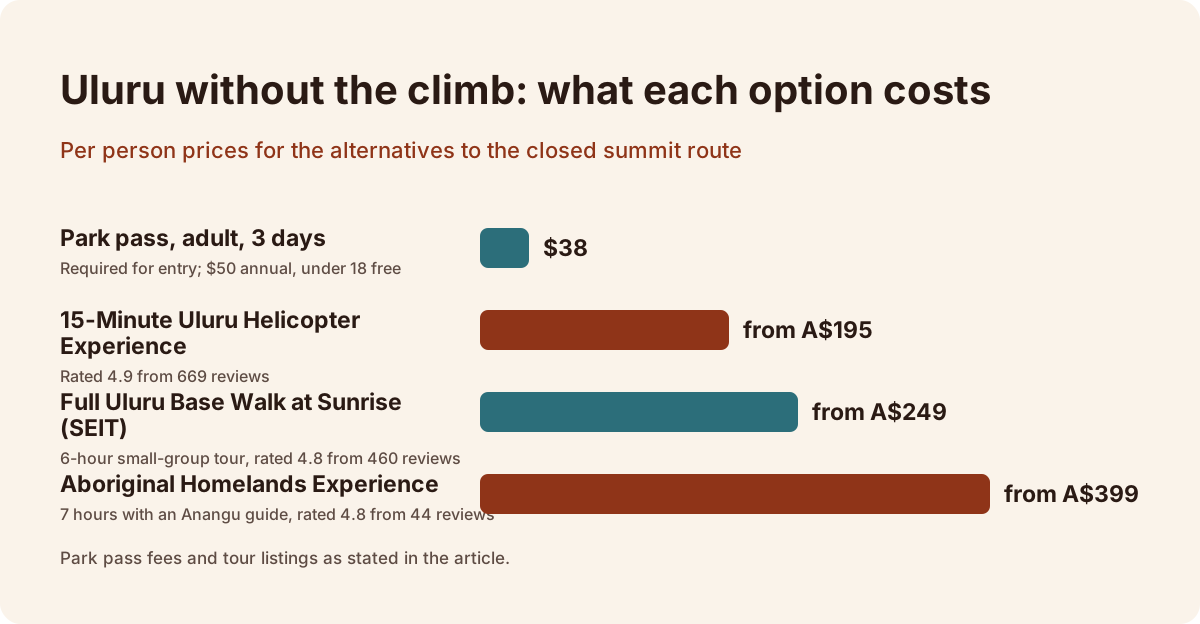
If you had your heart set on a summit view, the closest legal equivalent is aerial: the 15-Minute Uluru Helicopter Experience, from A$195 per person, rated 4.9 from 669 reviews, puts the whole rock and its scale into frame within a quarter of an hour of leaving Yulara.
Why Did The Climb Close And Why That Date?
The Board of Management voted unanimously in November 2017 to close the climb from 26 October 2019, the 34th anniversary of Handback, the day ownership of the park was returned to Anangu. Climbing was not generally permitted under Tjukurpa, Anangu law and culture, and visitors had been asked not to climb for decades. The two-year gap between decision and closure gave operators and travellers time to adjust.
Handback is the anniversary that matters here. On the closure date's calendar equivalent in the year of Handback, title to the land was handed back to Anangu, who then leased it back to be jointly managed as a national park. Choosing that anniversary for the closure was deliberate: it tied the end of climbing to the beginning of joint management, the partnership under which Anangu and Parks Australia run the park together.
The chain itself was a legacy of a different era. The first chain section went up in 1964, decades before Handback, when the rock was promoted to a market that measured destinations by what could be conquered. Anangu never endorsed it. They posted signs, asked visitors not to climb, and waited, and the proportion of visitors choosing to climb fell steadily over the years before the board acted. For a fuller treatment of how Anangu law, Tjukurpa and joint management actually work at the park, see the dedicated guide to Aboriginal culture at Uluru.
There is a practical footnote that matters to trip planning: the closure removed the last reason to treat Uluru as a half-day conquest. The experiences that replaced it, walking the base, watching first light strike the rock, flying over the domes of Kata Tjuta, are slower and, by most accounts from the guest reviews on the current listings, better.
If you are building that replacement plan now, these three are the strongest fits for people who once considered the climb: a guided small-group walk of the full base, a coach-based sunrise walk with breakfast, and a Segway loop around the whole circumference.
Why Do Anangu Ask Visitors Not To Climb?
Anangu ask visitors not to climb because the climbing route crosses country of deep significance under Tjukurpa, Anangu law and culture, in which the landscape itself carries creation stories and obligations. The park frames it as a matter of respect: visitors were guests being asked by their hosts, and the permanent closure turned that request into law. Climbing was never generally permitted under Tjukurpa.
Tjukurpa is often translated loosely as Dreamtime, but the park's own material treats it as a living system of law, religion and knowledge that connects people, plants, animals and rock. Specific sites at Uluru carry specific stories, and the climbing route passed over country where Anangu feel a direct responsibility. When visitors climbed against that request, Anangu described a feeling akin to grief, a point the park's interpretation makes without elaborating the story content itself, and this guide follows the same restraint.
The same logic shapes behaviour on the ground today. Culturally sensitive sites at Uluru and Kata Tjuta are clearly signed, and photographing those specific places is prohibited. That is not a ban on photographing Uluru: wide shots from a distance are fine, and the north-east face simply asks for wide framing with the top-left detail excluded, best in the one to two hours before sunset when shadows do the work. Drones are prohibited throughout the park under the EPBC Act, with penalties.
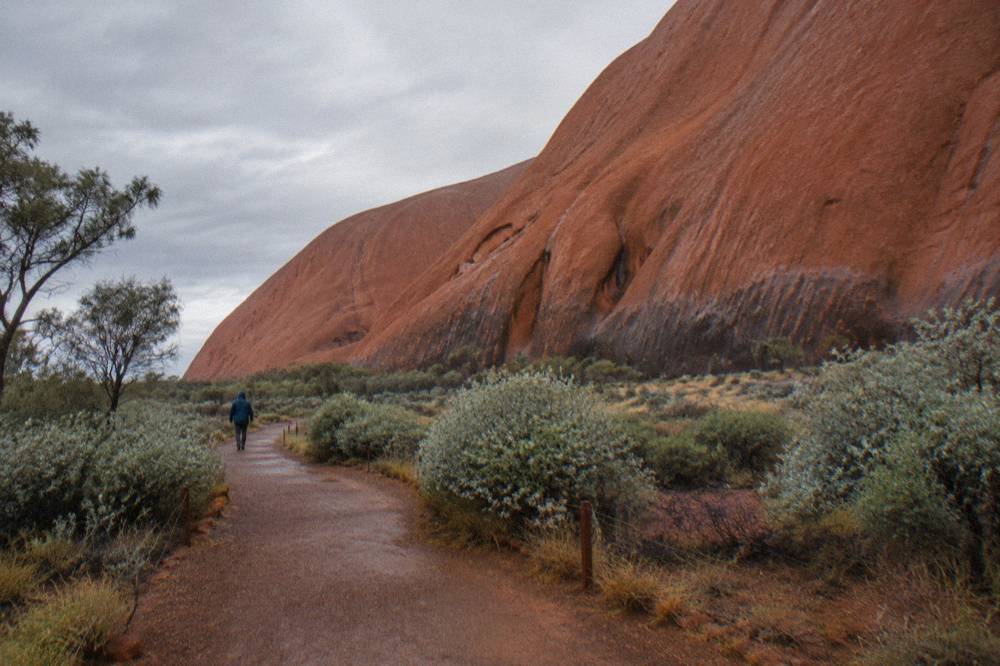
Respect also has a listening component. Conditions at the park change for cultural reasons from time to time, and the park occasionally closes areas or the whole park accordingly; sections of tracks also close in extreme heat, as the park pages state. Before you travel, it is worth scanning the park's news page so a planned walk does not collide with a closure you could have read about in advance.
The clearest way to walk this country with respect is with a guide who can read it. The Aboriginal Homelands Experience, run by SEIT Tours, spends a full day, 7 hours, on private Aboriginal land with an Anangu guide, from A$399 per person, rated 4.8 from 44 reviews. One guest review calls it "a true privilege to spend time on private Aboriginal land with an Anangu guide sharing stories."
What Are The Penalties For Climbing Uluru?
Attempting the climb is a breach of the EPBC Act, the federal Environment Protection and Biodiversity Conservation Act, and the park states that penalties will be issued to visitors attempting it. The route has no chain, no signage as an attraction and no access point presented to visitors. In practice the question is settled: there is nothing to attempt legally, and the offence is treated seriously.
The park does not publish a schedule of fine amounts on its climb closure page, and this guide will not invent one. What the park does publish is the framing: breach of federal law, penalties issued. The same act covers the drone prohibition and the photography restrictions at sensitive sites, so the legal baseline at Uluru-Kata Tjuta is consistent rather than a one-off rule aimed at walkers.
For context on scale, the park's rangers and emergency systems exist for the risks that remain, which are heat and exertion on the legitimate walks. Park safety guidance is explicit: temperatures regularly reach 30 C or more and can exceed 40 C in summer, avoid walking between 2.30 pm and 6.30 pm, carry at least one litre of water per person per hour, and in an emergency call 000 or 112. Emergency radios sit along most walks.
Before the closure, climbing injuries and deaths were a recurring tragedy that Anangu also carried, since rescues happened on country they are responsible for. That burden, alongside the cultural objections, formed part of the case the board weighed. The full history is on the official climb closure history page.
One more planning fact belongs here rather than buried later: entry to the park requires a pass, $38 for an adult for 3 days or $50 annual, under 18 free, valid for Uluru-Kata Tjuta National Park only. Tour listings state the fee separately and say it must be pre-purchased online. The details, including how to buy, are in the guide to the Uluru national park pass.
What To Do Instead: The Full Base Walk?
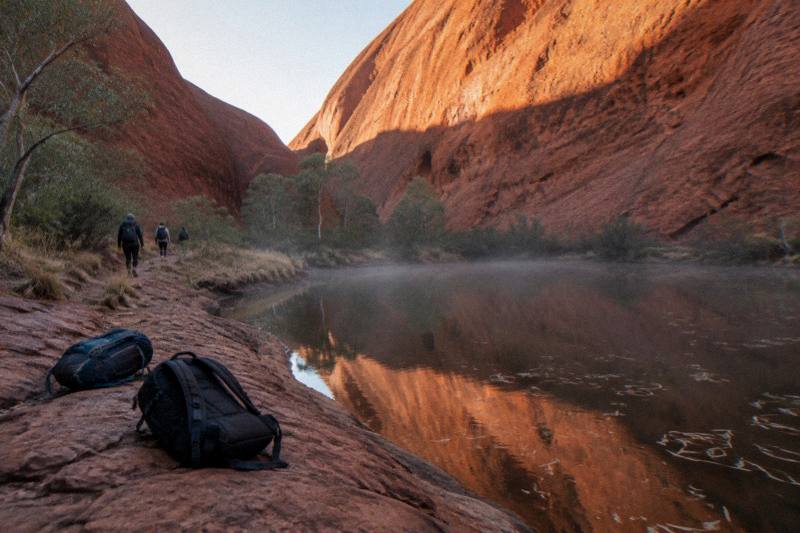
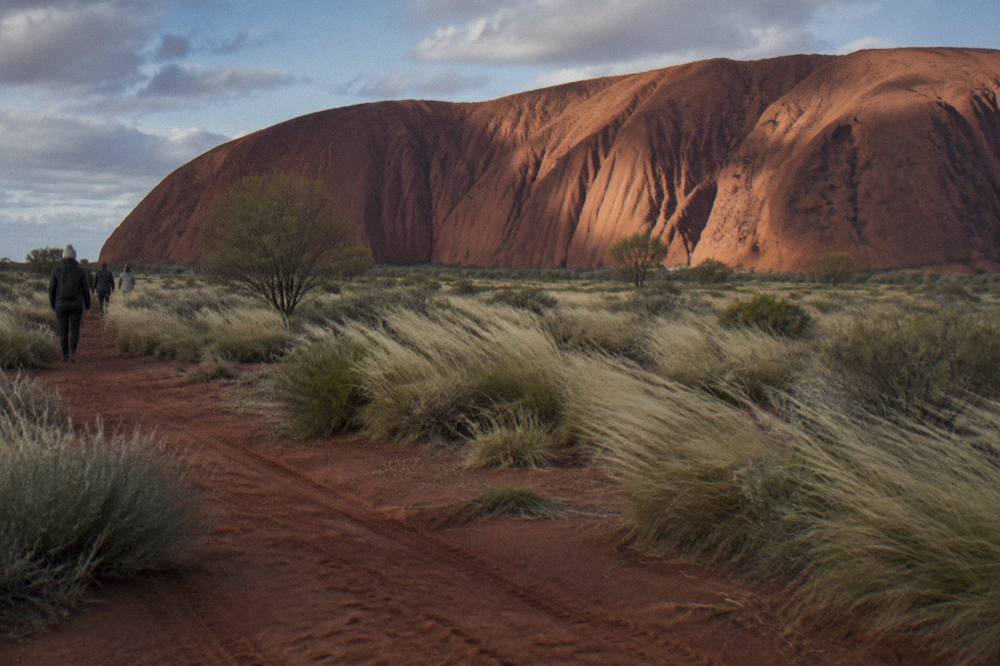
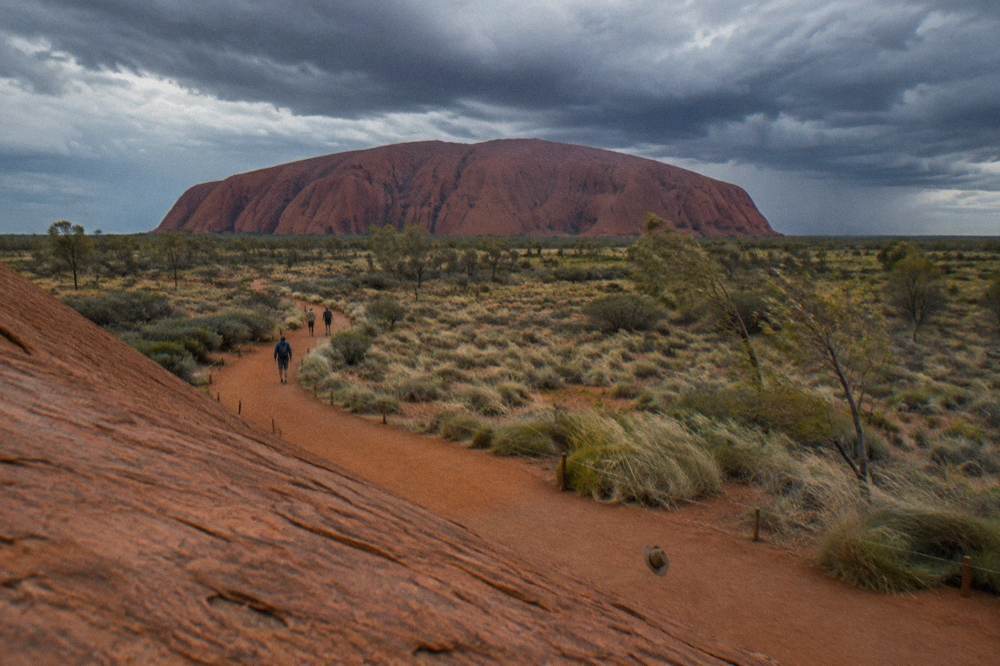
Walk around Uluru rather than up it. The base walk runs about 10 km around the entire circumference, starting from the Mala carpark, clockwise, in the early morning. It passes the Mala walk, the north-east face, the Kuniya walk to Mutitjulu Waterhole, the Lungkata walk and the Liru walk, and in hot weather the park says to finish before 11.00 am.
The base walk is the single best answer to the climb's absence, and it is free once you hold the park pass. It converts the rock from an object you summit into a landscape you read: waterholes, rock art contexts, changes in texture and colour that a summit view never shows. The park's walks page is the authority on sections and conditions: the official park walks page.
If 10 km self-guided sounds like a lot, or you want the interpretation, the roster's strongest match is the Full Uluru Base Walk at Sunrise Including Breakfast, run by SEIT Tours: a 6-hour small-group tour from A$249 per person, rated 4.8 from 460 reviews, with pickup in Yulara and free cancellation with a cutoff of 6 days before start, so read the booking page carefully. One guest review reads: "This was an excellent tour. The guide was incredibly knowledgeable and enjoyable. I would highly recommend this wonderful experience."
The two ways to do the base, side by side:
| Option | Distance | Cost | What you get |
|---|---|---|---|
| Self-guided base walk | About 10 km | Park pass only ($38 adult, 3 days) | Your own pace, no interpretation |
| Mala ranger walk | 2 km return | Free for park visitors | Ranger commentary, 8.00 am Oct to Apr, 10.00 am May to Sep |
| Full Uluru Base Walk at Sunrise (SEIT) | Full base, 6 hours | From A$249 per person | Guide, breakfast, pickup, small group |
| Guided Walking Tour at Sunrise (AAT Kings) | Walk segment, 5.5 hours | From A$186 per person | Coach transport, light breakfast, large group |
| Segway the FULL base of Uluru | Full base, 5 hours | From A$259 per person | Training, guide, full loop on a Segway |
Which Guided And Segway Tours Cover The Base?
Three roster tours now cover the ground the climb once promised, each differently: the SEIT small-group base walk from A$249, the AAT Kings guided sunrise walk from A$186 with coach transport and a light breakfast, and the Uluru Segway Tours full-base loop from A$259, rated 4.9 from 499 reviews. All three depart Yulara with hotel pickup, and all three include a guide who reads the rock for you.
The Segway option deserves its own word because it surprises people. Uluru Segway Tours runs the full-base loop, every metre of the circumference, in a 5-hour small-group format from A$259 per person, and the listing holds a 4.9 rating from 499 reviews, one of the strongest review pools on the entire roster for its size. Training is included before the loop starts, and no prior experience is assumed. A guest review says: "I wasn't sure I could manage the Segway but it became very comfortable. The team were very helpful and info. So, so pleased we did it!"
There is also a hybrid. Best of Uluru, the Segway and Walking Tour combination from the same operator, mixes ridden stretches with walked sections into cultural sites where wheels do not belong, from A$219 per person, rated 4.8 from 294 reviews. A guest review notes the guides were "very relaxed and knowledgeable, and highly respectful of the local culture."
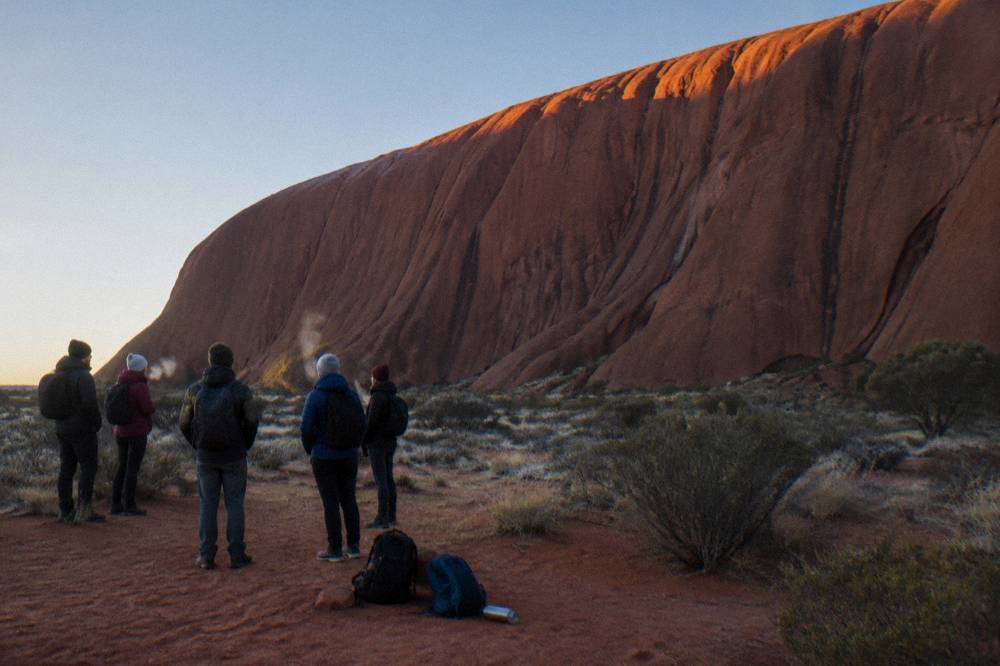
For a shorter commitment, Highlights of Uluru Including Sunrise and Breakfast compresses the essentials into 3 hours from A$189 per person, rated 4.8 from 220 reviews. And for walkers who want Kata Tjuta's famous circuit instead, the Valley of the Winds hike, a 5-hour small-group tour from A$249, is covered in detail in the guide to the Valley of the Winds walk.
One caution that applies across every option: cancellation cutoffs differ listing by listing, even within the same operator. The roster shows cutoffs ranging from 24 hours to 14 days depending on the tour. Check the booking page for the specific tour and date before you plan around a refund.
What About Sunrise, Sunset And Viewing Areas?
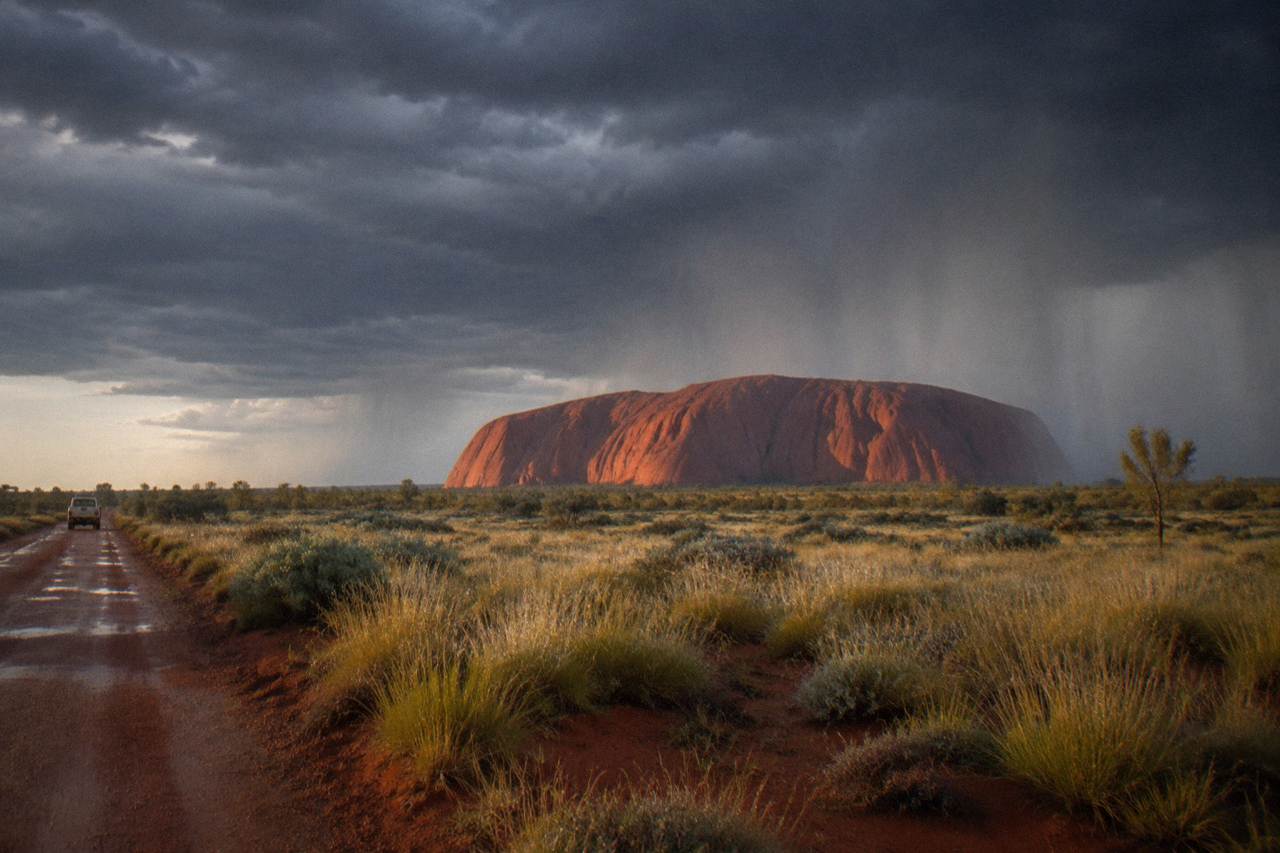
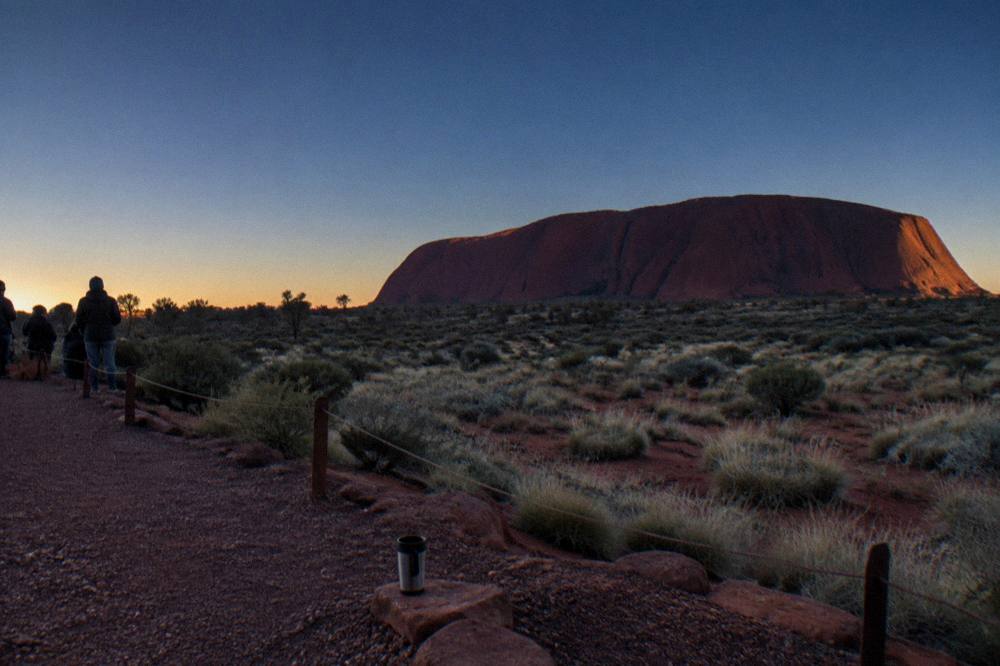
The park provides five dedicated viewing areas: Talinguru Nyakunytjaku and the Kata Tjuta dune for sunrise, and the Uluru car and bus sunset areas plus the Kata Tjuta sunset area for sunset. All are inside the pass, reachable by tour, hire car or the hop-on hop-off bus, and the first and last light on the rock is the experience most visitors now travel for.
First light has quietly replaced the summit as Uluru's signature moment. The sunrise-side tours run early: coaches leave Yulara in the dark, deliver you to a viewing platform or a walk start, and the rock changes colour in front of everyone at once. The Bus Sunrise, Kata Tjuta Combo, a 5-hour coach tour from A$186 per person rated 4.6 from 603 reviews, pairs the sunrise viewing with a Kata Tjuta stop in one morning, which suits travellers on a tight schedule.
On the sunset side, the Sunset Wine And Cheeseboard tour, from A$186 per person and rated 4.5 from 515 reviews, does what its name says, and the Outback BBQ Dinner with Star Talk extends the evening from A$328. A guest on that dinner review wrote that "the barbecue was really good and the star gazing was good even though the clouds didn't cooperate", an honest reminder that weather decides, not the itinerary.
For independent travellers, the Uluru and Kata Tjuta Hop on Hop Off Pass, from A$140 per person and rated 4.5 from 154 reviews, loops the key stops including the viewing areas and the Cultural Centre, which is free to enter and open 7.00 am to 5.45 pm daily. The trade-offs between going alone and going guided are laid out in the guide to Uluru sunrise tours, and the deeper timing question, sunrise versus sunset, is argued out in the piece on whether Uluru is better for sunrise or sunset.
How Should You Plan A Trip Around The Ban?
Plan for mornings, book the base or a guided loop in advance, and treat the climb as ancient history. The practical sequence: buy the park pass online ($38 adult, 3 days), pick one circumnavigation option, add a sunrise or sunset viewing, and check the park's news page before travel since conditions and occasional cultural closures change what is open.
Timing matters more than it did in the climbing era, because walking is heat-limited. The park's guidance says May to September is the best window, with daytime maxima usually 20 to 30 C; from October to March temperatures can exceed 35 C daily, summer walkers should not walk after 11.00 am, and the park advises avoiding the 2.30 pm to 6.30 pm band entirely in hot weather. Overnight winter temperatures can be very cold, so pack for both ends of the day; the monthly picture is in the guide to the best time to visit Uluru.
| Plan | Morning | Midday | Evening |
|---|---|---|---|
| One full day | Sunrise viewing or guided walk | Cultural Centre, Mala walk | Sunset area, dinner tour |
| Two days | Base walk or Segway loop | Kata Tjuta afternoon tour | BBQ dinner and star talk |
| Three days | Add Valley of the Winds hike | Resort and pool | Field of Light or Sounds of Silence (sold direct by the resort) |
Budget-wise, the replacement experiences for the climb span a wide band: from the free ranger-guided Mala walk, to the hop-on hop-off pass at A$140, to the 15-minute helicopter flight at A$195, to the full small-group base walk at A$249. The breakdown of where the money goes is in the guide to how much an Uluru tour costs.
However you assemble the days, the shift the ban created is worth naming. Uluru was once sold as something to stand on top of. It is now, in the words of the site you are reading and of Uluru Australia Tours generally, something to walk around, learn from and look at properly at first and last light. The guest reviews on the replacement tours, base walks, Segway loops, homelands experiences, suggest few travellers feel shortchanged.
These three remain the strongest replacements for the climb, whichever way you lean on budget and style.
Common Questions About The Uluru Climb Ban
Can you climb Uluru?
No. The climb closed permanently on 26 October 2019 and attempting it is a breach of the EPBC Act, with penalties issued to visitors who try.
Why did the Uluru climb close?
The Board of Management voted unanimously in November 2017 to close it from 26 October 2019. Anangu, the Traditional Owners, had asked visitors not to climb for decades because the route crosses country of deep significance under Tjukurpa, Anangu law and culture.
When exactly did the Uluru climb close?
On 26 October 2019, the 34th anniversary of Handback, the day title to the land was returned to Anangu.
What can I do instead of climbing Uluru?
Walk the 10 km base walk, join the free ranger-guided Mala walk, take a guided sunrise base walk or a Segway loop around the full circumference, or see the rock from above on a scenic flight.
Can the Uluru climb ever reopen?
No reopening provision exists. The closure was permanent by unanimous board decision and reflects standing Anangu cultural law, so treat any claim of a reopening as false.
Can you walk around Uluru without a tour?
Yes. The base walk is free once you hold the park pass, $38 for an adult for 3 days, and is best started early from the Mala carpark, clockwise, finishing before 11.00 am in hot weather.