Uluru Hop-On Hop-Off And Getting Around Without A Car
Most visitors never drive at Uluru. The hop-on hop-off pass, coach tours and a small airport at Yulara cover nearly every car-free plan.
Short answer
The Uluru & Kata Tjuta Hop on Hop Off Pass costs from A$140 per person and rates 4.5 from 154 reviews, with pickup from Ayers Rock Resort. Rental cars at Yulara are limited and should be booked weeks ahead. The park sits 465 km from Alice Springs, about 5.5 hours by road, and a park pass of A$38 for adults is separate.
Most people who visit Uluru never sit behind a steering wheel. The resort town of Yulara, the airport, the park entry station and the rock itself sit within a short shuttle radius, and the roster of coach tours, small-group walks and scenic flights covers nearly everything a rental car would. The one product built specifically for independent, car-free exploring is the Uluru & Kata Tjuta: Hop on Hop Off Pass, run by Uluru Hop on Hop Off, listing pickup from Ayers Rock Resort and a 4.5 rating from 154 reviews. This guide explains what the pass does, what it costs next to guided tours, and how the rest of a car-free Uluru trip fits together, from flights into Yulara to the park pass you buy separately.
One framing note before the detail: distances here defeat the usual city logic of hop-on hop-off sightseeing. Uluru-Kata Tjuta National Park is 465 km from Alice Springs by road, about a 5.5 hour drive, and Kata Tjuta lies roughly 50 km by road from Uluru itself, according to the park's own pages. Nothing is walkable between towns. The pass and the shuttle network exist precisely because of those gaps, and because rental cars at Yulara are limited enough that the park's getting-there page advises booking a few weeks ahead.
What Is The Uluru Hop-On Hop-Off Pass And What Does It Cover?
The pass is a dedicated hop-on hop-off bus product covering Uluru and Kata Tjuta from Ayers Rock Resort, listing hotel pickup, a 4.5 rating from 154 reviews and a from price of A$140 per person, with free cancellation listed and the cutoff varying by booking, shown as 24 hours before start on the listing. It is the roster's only bus product designed for riders to board and disembark at stops rather than follow a single fixed commentary circuit, which is what separates it from every coach tour on the site. The operator is Uluru Hop on Hop Off, a specialist shuttle operator rather than a tour company, and the product sits in the cultural and activity transport category alongside the guided options.
What that means practically: you buy a pass, you board at the resort, and you use the bus to reach the sights you want at the times you want within the pass's operating window. The specific stops, loop frequency and timetable live on the operator's live listing and change with the seasons and park hours, so this guide deliberately does not reprint a route or a schedule. Confirm current running times on the booking page before you plan a day around a tight connection, because park opening hours shift month to month and shuttle timetables follow them.
The pass suits a particular traveller. If you want the sunrise viewing area at dawn, the Cultural Centre mid-morning, and a second stop later without paying for a guided commentary at each one, this is the product built for that. If you would rather have a guide, breakfast and a fixed itinerary, the coach and small-group tours on the sunrise and sunset tours hub do that job, and several cost only marginally more per hour.
What the pass does not cover is the park entry fee. An adult park pass costs $38 for three days and must be pre-purchased online, per the park's official pass page; children under 18 enter free, and the pass is valid for Uluru-Kata Tjuta National Park only. Budget for it on top of every option in this guide, bus or tour alike, because tour listings also state the fee separately.
How Much Does The Pass Cost Compared With Guided Tours?
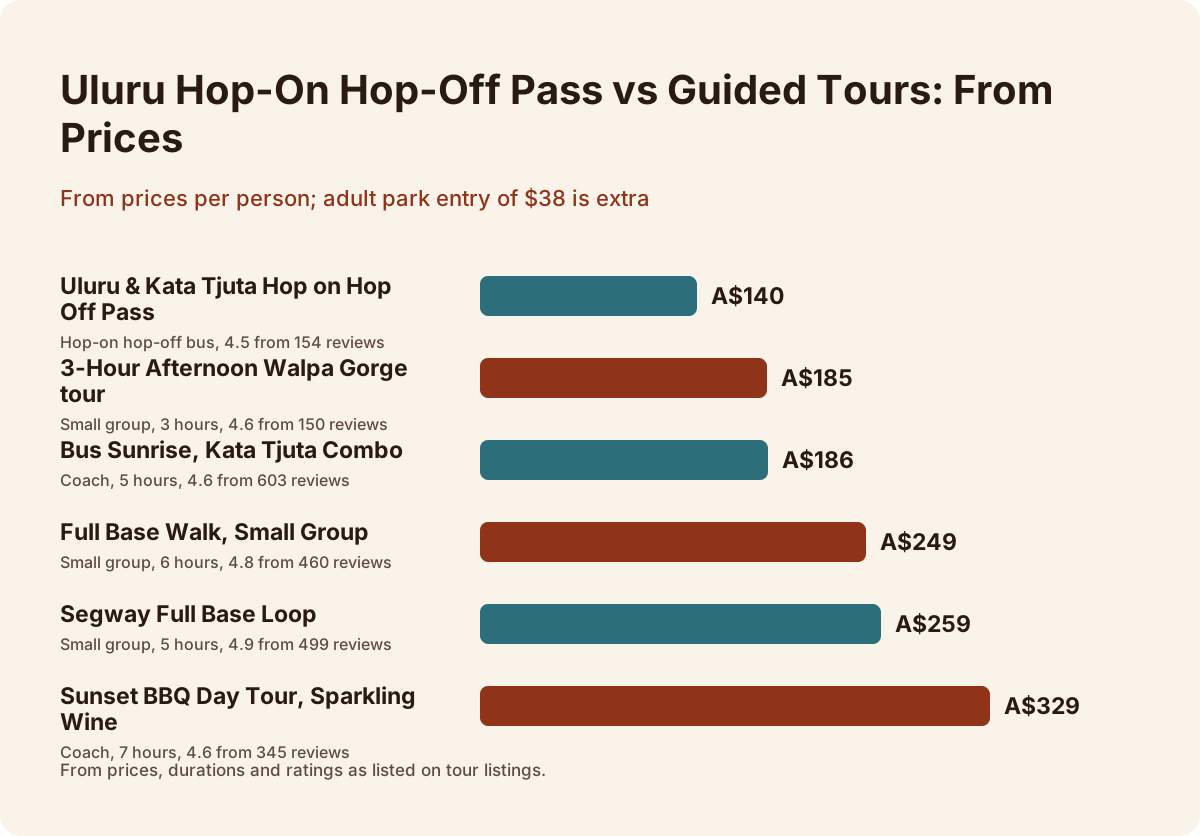
At from A$140 per person, the hop-on hop-off pass is the cheapest way in this roster to get from Yulara to both Uluru and Kata Tjuta with transport included, sitting below every guided tour, which run from A$185 for the 3-Hour Afternoon Walpa Gorge small-group tour up to A$1,195 for the 4-day camping adventure. The trade is simple: the pass buys mobility, the tours buy interpretation, food and a fixed program. The table below compares the pass with a spread of guided alternatives at different price points, using only the from prices and ratings printed in the roster.
| Product | Operator | Format | Duration | From price | Rating |
|---|---|---|---|---|---|
| Uluru & Kata Tjuta: Hop on Hop Off Pass | Uluru Hop on Hop Off | Hop-on hop-off bus | 1, 2 or 3-day pass | A$140 | 4.5 from 154 reviews |
| 3-Hour Afternoon Walpa Gorge tour | SEIT | Small group | 3 hours | A$185 | 4.6 from 150 reviews |
| Bus Sunrise, Kata Tjuta Combo | AAT Kings | Coach, large group | 5 hours | A$186 | 4.6 from 603 reviews |
| Segway Full Base Loop | Uluru Segway Tours | Small group on Segways | 5 hours | A$259 | 4.9 from 499 reviews |
| Sunset BBQ Day Tour, Sparkling Wine | Emu Run Experience | Coach, mixed group | 7 hours | A$329 | 4.6 from 345 reviews |
| Full Base Walk, Small Group | SEIT Tours | Small group | 6 hours | A$249 | 4.8 from 460 reviews |
Read that as a ladder. The pass is the base rung: transport and flexibility. About A$45 to A$50 more buys a fully guided half-day, either the coach sunrise combo or the small-group Walpa Gorge afternoon, both with a guide and one concentrated sight. Another A$60 to A$70 over the pass buys the Segway Full Base Loop, which wraps the entire 10 km base walk into a five-hour small-group ride, or the Sunset BBQ Day Tour, a seven-hour coach day with sparkling wine and a barbecue dinner that the pass simply cannot replicate. None of these figures include the $38 adult park pass.
The rating columns deserve honest reading rather than ranking. The pass's 4.5 from 154 reviews is a solid mid-roster score with a decent sample. The Segway Full Base Loop's 4.9 from 499 reviews is among the strongest pools on the site, and a guest review on that listing sums up the format: "I wasn't sure I could manage the Segway but it became very comfortable. The team were very helpful and info. So, so pleased we did it!" A pass rider comparing the two should understand the difference is not quality but product type: one sells freedom, the other sells a guided lap of the whole rock.
If the comparison has you leaning toward the pass, pairing it with one or two single-experience add-ons is the pattern that works best: the pass for daytime movement, then one sunset dinner tour or one guided walk where commentary genuinely adds something. Cancellation terms differ listing by listing, so while most roster products allow free cancellation, the cutoff ranges from 24 hours on the pass and the coach tours to several days on the SEIT small-group rows, and the booking page for each product is the only authoritative source.
Do You Need A Car At Uluru?
No, most visitors do not need a car at Uluru: every tour on this roster departs from Yulara with hotel pickup included, the hop-on hop-off pass covers independent travel to the two rock sites, and the airport sits at Yulara itself, though a rental car helps if you want to set your own hours for Kata Tjuta or day-trip toward Kings Canyon. The car question really turns on independence versus convenience. A car lets you arrive at the Kata Tjuta dune lookout at an empty hour and linger; the pass and tours tie you to schedules and group settings.
Rental supply is the practical constraint. The park's getting-there guidance notes that rental cars in Yulara are limited and should be booked a few weeks ahead, and rental desks operate at the airport and around the resort, with the national brands represented at both. In peak travel months the local fleet can sell out entirely, which pushes late bookers toward exactly the products on this page: the pass, the coach tours and the shuttle-based experiences. If you are travelling in the busy cooler months and want a car, book it before you book anything else.
For a full picture of flights, driving times and the airport, the companion guide on how to get to Uluru covers the arrival side in detail, and the things to do at Uluru overview shows how much of the activity list is pickup-based. The short version for car-free planning: if every product you want has pickup from Ayers Rock Resort, and the roster's do, a car is an optional extra rather than a requirement.
There is one honest exception worth naming. Visitors combining Uluru with Kings Canyon under their own steam often prefer a car for the driving day, though the roster also offers a fully guided alternative: the Kings Canyon Rim Walk day tour from Ayers Rock Resort, a 12-hour coach day from A$345 rated 4.7 from 666 reviews, which removes the driving question entirely. We compared the two approaches across the roster and the guided day wins on effort, the car wins on schedule control, and neither wins on cost once fuel and a day of parking are counted.
How Do You Get To Yulara Without Driving?
Fly into Ayers Rock Airport at Yulara: Qantas, Virgin Australia and Jetstar operate direct flights from Sydney, Melbourne, Brisbane and Cairns, with flight times of roughly three hours from Sydney and under three from the eastern capitals, and the airport lies at Yulara minutes from the resort, removing any need for a long transfer. The alternative is Alice Springs, 465 km away by road, about a 5.5 hour drive or coach ride, which suits travellers combining the Red Centre's two hubs rather than anyone targeting Uluru alone.
The flight network is small but well connected. Qantas flies the Cairns route, Jetstar and Qantas serve Sydney, Jetstar and Virgin Australia serve Melbourne, and Virgin Australia flies from Brisbane, per the schedule data gathered in the site's fresh research. Schedules vary by day of week and season, so treat that as the route map rather than a timetable. Car hire desks operate at the airport terminal for arrivals who do want wheels, from providers including Avis, Thrifty, Dollar and Hertz.
Arriving via Alice Springs changes the arithmetic. Road distance is fixed at 465 km, and daily coach transfers from Alice Springs to Ayers Rock Resort take about five hours with hotel pickups and a comfort stop, according to operator listings; these transfers exist but are not products on this roster, so book them direct. The Uluru from Alice Springs guide covers that corridor in full, including the two-day camping option that departs Alice Springs rather than Yulara, a rare roster exception.
What The Park Pass And Opening Hours Mean For Bus Days?
An adult park pass costs $38 for three days, under 18s are free, it must be pre-purchased online and scanned at the entry station, and the park opens every day of the year with hours that shift by month, from 5.00 am to 8.00 pm in October to 6.30 am to 7.30 pm in the June and July winter, which directly shapes when any bus or tour can run. Because tour and pass listings state the park fee separately, no price in this guide or on a booking page includes it. The three-day adult pass matches the typical two-to-four night Yulara stay neatly, and a $50 annual pass exists for longer or return visits.
The hours table matters more for hop-on hop-off riders than for tour guests, because a tour operator plans around the gates automatically while an independent rider plans alone. Sunrise shuttles must clear the entry station after opening, and the last return must beat the closing time, with all visitors required to leave the park by close. The Cultural Centre, a natural mid-day pass stop, keeps its own hours of 7.00 am to 5.45 pm daily, per the park's official hours page.
| Month | Park hours |
|---|---|
| December, January, February | 5.00 am to 9.00 pm |
| March | 5.30 am to 8.30 pm |
| April | 5.30 am to 8.00 pm |
| May | 6.00 am to 7.30 pm |
| June, July | 6.30 am to 7.30 pm |
| August | 6.00 am to 7.30 pm |
| September | 5.30 am to 7.30 pm |
| October | 5.00 am to 8.00 pm |
| November | 5.00 am to 8.30 pm |
Summer riders should also note the park's own heat rules: sections of walking tracks close in extreme heat, the north-east walk closes from 11 am when the temperature reaches 40 C, and the safety guidance says to avoid walking between 2.30 pm and 6.30 pm and to carry at least one litre of water per person per hour. A bus-based day is actually a good hot-weather format because the vehicle carries your water and shade between stops. Conditions can change and the park occasionally closes areas for cultural reasons, so check the park's news page before travelling.
When Does A Guided Tour Beat The Bus?
A guided tour beats the bus whenever interpretation, food or access is the point: the pass cannot explain the rock's cultural meaning, serve breakfast at sunrise, or walk you into a gorge with a guide, and the roster's guided products start at A$185, only A$45 above the pass price, for exactly those additions. The pass moves you; the tours move you and teach you. For many travellers the honest answer is both: the pass as a base, one or two guided experiences layered on top.
The clearest upgrade case is the full base walk. The 10 km circuit around Uluru is free to walk with your park pass, but the Full Base Walk at Sunrise run by SEIT Tours, from A$249, rated 4.8 from 460 reviews, delivers it as a six-hour small-group experience with breakfast and a guide, and a guest review on that listing is direct: "This was an excellent tour. The guide was incredibly knowledgeable and enjoyable. I would highly recommend this wonderful experience." A rider who has spent a day on the bus often wants exactly this depth on day two.
The other layer the bus cannot provide is aerial. A 15-minute shared helicopter flight from A$195, rated 4.9 from 669 reviews with Professional Helicopter Services, shows the scale of the rock and the surrounding country in a way no ground product matches, and one review puts it plainly: "being able to view Uluru by air gave a true perspective of the size." For car-free visitors this is the ultimate schedule-independent add-on, departing from Yulara with pickup listed.
Planning A Car-Free Itinerary Around The Pass
A workable car-free plan is two or three nights at Yulara with the pass as your daytime backbone, one guided sunrise or sunset experience for depth, and either a scenic flight or a Kings Canyon day trip as the third pillar, with every element pickup-based from Ayers Rock Resort so no transfer is ever your problem. The pass's multi-stop freedom works best spread across two days rather than crammed into one: Uluru and the Cultural Centre on the first, Kata Tjuta and the sunset viewing area on the second, respecting the roughly 50 km road distance between the two sites.
Layer the paid experiences around that spine. A sunrise combo or a small-group walk on one morning, a Field of Light or dining experience one evening, and, if the wider Red Centre is on the list, the Kings Canyon full-day coach tour from A$345, rated 4.7 from 666 reviews with AAT Kings, which handles the long driving day entirely. Multi-day travellers can also skip the day-by-day assembly altogether: the camping tours from Adventure Tours Australia, from A$795 for three days rated 4.8 from 455 reviews, bundle transport, guiding, food and campsites into one booking, the logical endpoint of going car-free.
Budget the whole picture, not just the pass. The table below sketches a car-free three-day framework using only figures printed in the roster and the resort's own direct-sold products, so every number is sourced rather than estimated.
| Item | From price | Notes |
|---|---|---|
| Park pass, adult 3-day | $38 | Pre-purchased online, under 18 free |
| Hop on Hop Off Pass | A$140 | 4.5 from 154 reviews, pickup included |
| One guided sunrise or walk | A$186 to A$249 | Coach combo or small-group base walk |
| One dining or light-show evening | A$219 to A$329 | Roster BBQ dinners, or resort-direct options from $50 |
| Optional scenic flight | A$180 to A$195 | Fixed-wing or 15-minute helicopter |
Timing your visit also changes what the bus day feels like. The cooler May to September window brings daytime maximums usually between 20 and 30 C and the biggest crowds, while October to March can exceed 35 C daily and shifts sensible touring firmly to the sunrise and sunset shoulders, as the best time to visit Uluru guide details. Whichever window you choose, this site, Uluru Australia Tours, keeps the full roster of pickup-based options in one place so the car-free plan stays a plan rather than a puzzle.
Common Questions About Getting Around Uluru
Is there a hop-on hop-off bus at Uluru?
Yes. The Uluru & Kata Tjuta: Hop on Hop Off Pass is a dedicated shuttle product from Ayers Rock Resort, from A$140 per person, rated 4.5 from 154 reviews, with pickup included and free cancellation listed, the cutoff shown on the booking page.
Do I need a car at Uluru?
No. Every tour on this roster departs Yulara with hotel pickup, the pass covers independent travel to Uluru and Kata Tjuta, and the airport is at Yulara itself. A car only helps if you want full schedule independence, and rental cars there are limited, so the park advises booking weeks ahead.
Does the hop-on hop-off pass include the park entry fee?
No. An adult park pass costs $38 for three days and must be pre-purchased online separately, per the park's official page. Children under 18 enter free, and the pass covers Uluru-Kata Tjuta National Park only.
How far is Uluru from Alice Springs without a car?
About 465 km, roughly 5.5 hours by road. Daily coach transfers from Alice Springs to Ayers Rock Resort take around five hours with hotel pickups, and a two-day camping tour departing Alice Springs is also on the roster.
Can I get from the airport to the resort without driving?
Yes. Ayers Rock Airport sits at Yulara, minutes from the resort, served by direct Qantas, Virgin Australia and Jetstar flights from Sydney, Melbourne, Brisbane and Cairns, with transfer and car hire options on arrival.
Is the pass cheaper than taking tours every day?
Yes, as a base. At from A$140 it undercuts every guided tour on the roster, which start at A$185, but tours add guiding, food and fixed programs, so many travellers combine the pass with one or two guided experiences.