What Is So Special About Uluru?
Uluru is a half-billion-year-old sandstone monolith, 348 metres high with a 9.4 km circumference, sacred to Anangu and jointly managed as a World Heritage site. Here is what makes it extraordinary.
What Is So Special About Uluru?
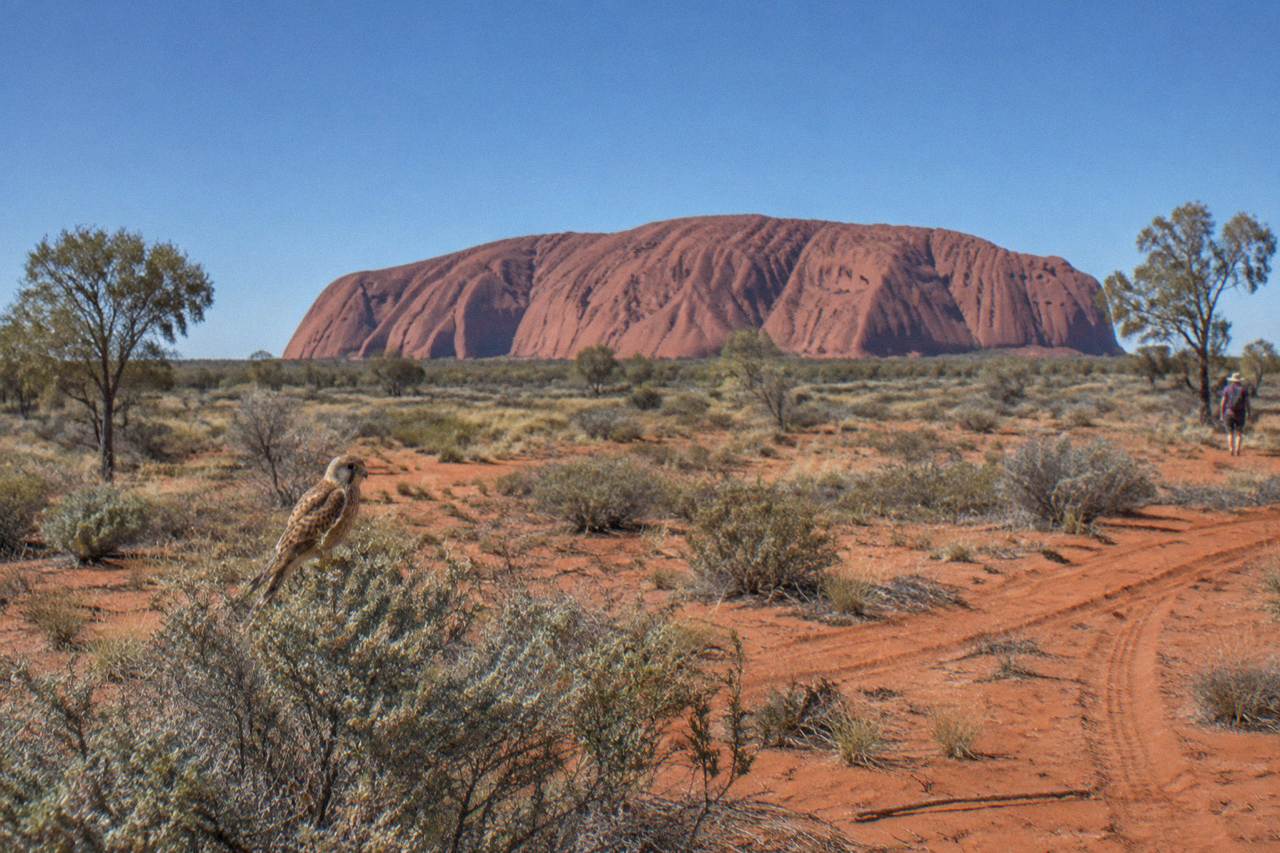
Uluru is special because three superlatives sit on one site: it is sandstone about half a billion years old, it stands 348 metres high with a circumference of 9.4 km, and it is a living cultural landscape that Anangu, the Traditional Owners, have cared for under Tjukurpa, their law and Culture, for tens of thousands of years. No other place on earth combines that age, that scale and that continuous living tradition in a single landmark. The rock is not a museum piece; it is a working part of an ongoing Culture, jointly managed by Anangu and Parks Australia, and recognised on the World Heritage list for both natural and cultural values.
The obvious starting point is the physical fact that stops every first-time visitor. Uluru, formerly known as Ayers Rock, is a single mass of arkose sandstone, and the park's own page gives its age as about half a billion years, its height as 348 metres and its circumference as 9.4 km. What you see from the sunset viewing area is only the top of a formation that continues far below the surface. There is no skyscraper in Australia that reaches 348 metres, and Uluru does it as a natural monolith in the middle of a desert plain.
But the numbers alone would make it a geological curiosity, not a global icon. What lifts Uluru is that every cave, waterhole and scar on its surface carries meaning under Tjukurpa, the belief system that governs Anangu life. Visitors are guests on Country, and that relationship shapes everything from the permanent closure of the climb to the way photographs are taken around the base. The pages here at Uluru Australia Tours break that down tour by tour, but this article explains the substance behind the question.
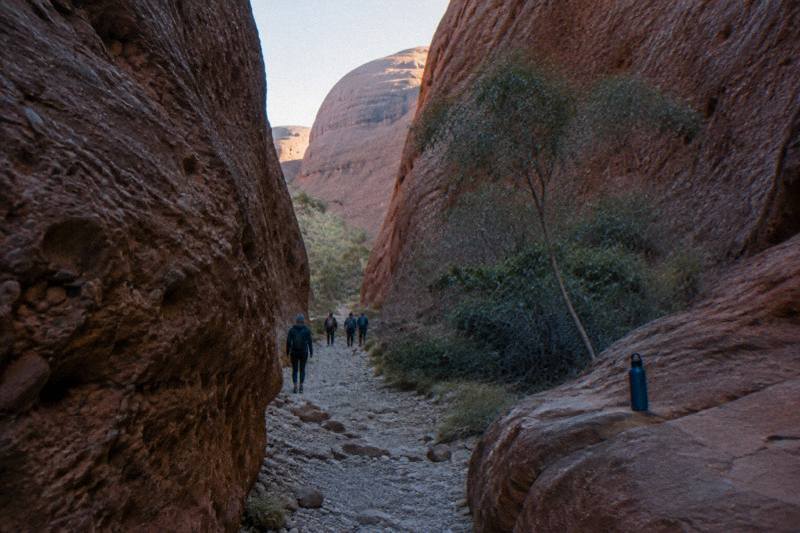
Three ways to meet the rock suit three kinds of traveller. The small-group Full Uluru Base Walk at Sunrise Including Breakfast covers the entire 9.4 km circuit on foot with a guide; the Aboriginal Homelands Experience, rated 4.8 from 44 reviews, takes a small group onto private Aboriginal land with an Anangu guide; and the five-hour Bus Sunrise, Kata Tjuta Combo pairs sunrise at Uluru with the domes 50 km away. Each one frames the same monolith differently.
How Old Is Uluru And How Big Is It Really?
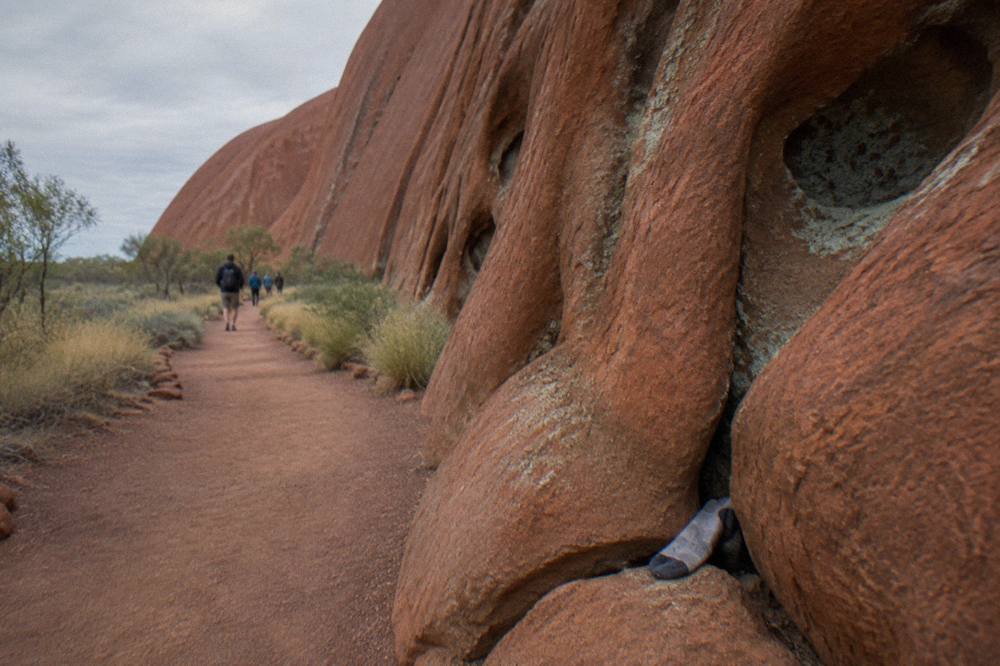
Uluru is sandstone roughly half a billion years old, standing 348 metres tall with a circumference of 9.4 km, so the full base walk covers about 10 km. Those numbers come from the park's official pages, and they rank Uluru among the oldest and largest exposed rock formations on Earth; nearby Kata Tjuta's tallest dome actually reaches 546 metres, higher still. For a sense of just how ancient that makes it, our look at whether Uluru is older than the dinosaurs puts the timescale in everyday terms.
Half a billion years deserves a moment of reflection. The sandstone was laid down as sediment, buried, folded and tilted over geological time, then exposed by millions of years of erosion that stripped away the softer rock around it. The rust-red colour comes from iron oxide in the rock; freshly broken surfaces are grey, and they redden as they weather. That is why the rock can look almost purple at dawn, blazing orange at sunset and a deep brown under cloud: the surface chemistry and the light angle are doing the work together.
| Measurement | Uluru | Kata Tjuta |
|---|---|---|
| Age | About half a billion years | Same geological province |
| Height | 348 m | Up to 546 m above the plain |
| Circumference | 9.4 km | 36 domes over more than 20 sq km |
| Former name | Ayers Rock | The Olgas |
| Distance apart | 50 km by road | 50 km by road |
The name question matters too. Uluru is the Anangu name; Ayers Rock is the older colonial name and still the one many international travellers search for. Both names appear on official signage and in the park's own materials, which use "Uluru, formerly known as Ayers Rock" as a matter of course. More on the naming story sits in our guide to why the name changed.
Because the circumference is 9.4 km and the walking track adds approach distance, the full base circuit runs about 10 km, which is why guided versions, like the six-hour Full Uluru Base Walk at Sunrise Including Breakfast from SEIT Tours, from A$249 per person, start before dawn and finish before the heat builds.
Why Is Uluru Sacred To Anangu?
Uluru is sacred to Anangu because it is a physical record of Tjukurpa, the Creation period whose law still governs Anangu life, and because specific sites around its base are associated with specific ancestral beings and events. The rock is not a backdrop to Culture; it is Culture made visible, shaped by the ancestors whose journeys Tjukurpa records.
Respectful writing about Tjukurpa stays general, and this article will too. The park's public materials explain that Tjukurpa covers the Creation ancestors, the landscape they shaped, and the rules for living that flow from those events. Certain caves, waterholes and rock faces are sacred to men or to women specifically, which is why some areas are fenced or signed, and why some parts of the rock may not be photographed. The Cultural Centre, open 7.00 am to 5.45 pm daily and free to enter, is the best on-site place to learn this properly rather than in fragments from a coach window.
The joint management story is itself part of what makes Uluru special. Anangu hold the majority on the park's Board of Management, the body whose unanimous decision closed the climb permanently in 2019. Visitors who want to understand the Culture rather than just see the rock have real options: our guide to Aboriginal culture at Uluru covers the principles, and a small-group tour with an Anangu guide does it in person.
One guest review of the Aboriginal Homelands Experience, rated 4.8 from 44 reviews, captures what that feels like: "This tour is a true privilege to spend time on private Aboriginal land with an Anangu guide sharing stories. The experience is just so phenomenal culminating in a stunning sun set and nibbles." That tour, from A$399 per person for a seven-hour small-group day, is one of the few ways to step beyond the public park boundary onto Country itself.
Why Did The Climb Close Forever?
The Uluru climb closed permanently on 26 October 2019, the 34th anniversary of the Handback, after the Board of Management voted unanimously in November 2017 to end it. Climbing was not generally permitted under Tjukurpa, and Anangu had asked visitors not to climb for decades before the legal closure took effect. Today, attempting the climb is a breach of the EPBC Act, and the park's closure page states plainly that penalties apply to anyone who tries.
The closure matters to the "what is so special" question because it marks the moment the story of Uluru changed. For generations the climb was marketed as the main experience: a chain was bolted to the rock face as early as 1964 to help visitors up, and the park's own history page records it. The reframe since 2019 is complete. What is promoted now is the base walk, the Cultural Centre, the ranger-guided Mala walk, and the tours that explain what visitors are actually looking at. We have a full guide to the climb ban for the history.
Practically, nothing about visiting got worse when the climb closed. The best experiences at Uluru were never on top of it. They are around it: the 10 km base circuit past Mutitjulu Waterhole and Kantju Gorge, the sunrise platforms at Talinguru Nyakunytjaku, and the guided walks that decode the rock art and the waterholes. A review of the guided base walk, rated 4.8 from 460 reviews, reads: "This was an excellent tour. The guide was incredibly knowledgeable and enjoyable. I would highly recommend this wonderful experience."
What Can You Actually See And Do Around The Base?
Around the base you can walk the full 9.4 km circuit, visit Mutitjulu Waterhole, see rock art at several sheltered sites, walk the accessible 2 km Mala walk to Kantju Gorge, and join a free ranger-guided Mala walk if your timing fits. The base walk starts at the Mala carpark, and the park advises walking clockwise in the early morning, finishing before 11.00 am in hot weather. None of this requires a tour, though a guide adds context that the signage alone cannot.
The park lists five dedicated sunrise and sunset viewing areas: Talinguru Nyakunytjaku and the Kata Tjuta dune for sunrise, and the Uluru car and bus sunset areas and the Kata Tjuta sunset area for sunset. In summer the practical rules tighten: the north-east walk closes from 11 am when the temperature reaches 40 C, and safety guidance says to avoid walking between 2.30 pm and 6.30 pm and to carry at least one litre of water per person per hour. Emergency numbers are 000 or 112.
Tours earn their place at Uluru by adding what a self-drive cannot: a guide, transport from Yulara, breakfast, and a schedule that beats the heat. Some visitors also cover the base loop without walking it, on two wheels rather than four.
The Segway Full Base Loop from Uluru Segway Tours, rated 4.9 from 499 reviews and from A$259 per person, rides the full base in about five hours with training included. A guest review puts it simply: "I wasn't sure I could manage the Segway but it became very comfortable. The team were very helpful and info. So, so pleased we did it!"
For readers planning the whole stay, the wider things to do in Uluru guide maps every category, from sunrise coach tours to the light shows sold direct by the resort.
Why Does Uluru Look Different Every Hour?
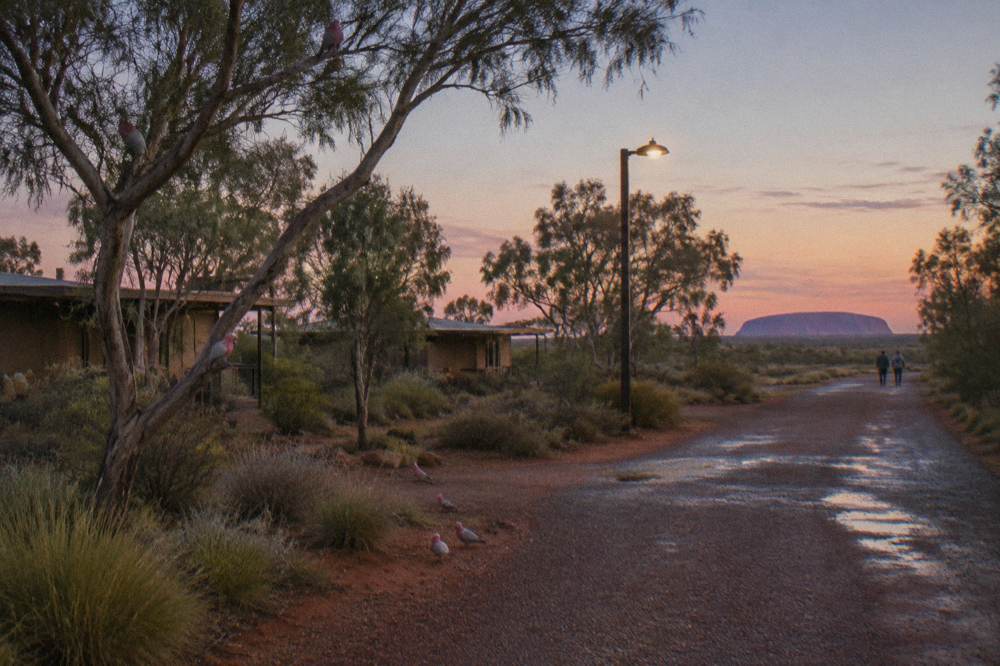
Uluru changes colour dramatically through the day because its iron-oxide-coated sandstone surface reflects low-angle light differently at dawn and dusk, and because shadows from caves, ridges and water channels carve the face into new shapes as the sun moves. At sunrise the rock can glow deep red or even purple; at midday it flattens to a bright rust; and in the hour or two before sunset the colour saturates while shadows lengthen across the north-east face. This daily performance is why sunrise and sunset tours exist at all.
The photography rules tie into the same effect. Culturally sensitive sites around the base are clearly signed, and photographing those specific spots is prohibited; that is not a ban on photographing Uluru, and wide shots from a distance are fine. The park asks that the north-east face be shot wide only, with nothing showing detail on the top-left side, and the best light for that is one to two hours before sunset, when shadows naturally obscure the sensitive areas. Drones are prohibited throughout the park under the EPBC Act, with penalties.
This is also the honest answer to a common question about whether sunrise or sunset is the better slot. There is no guarantee of any particular colour; cloud, dust and seasonal light decide on the day. What tours can guarantee is that you are standing in the right place, at the right hour, with someone who can explain what the changing light is revealing. Our comparison of sunrise versus sunset works through the trade-offs.
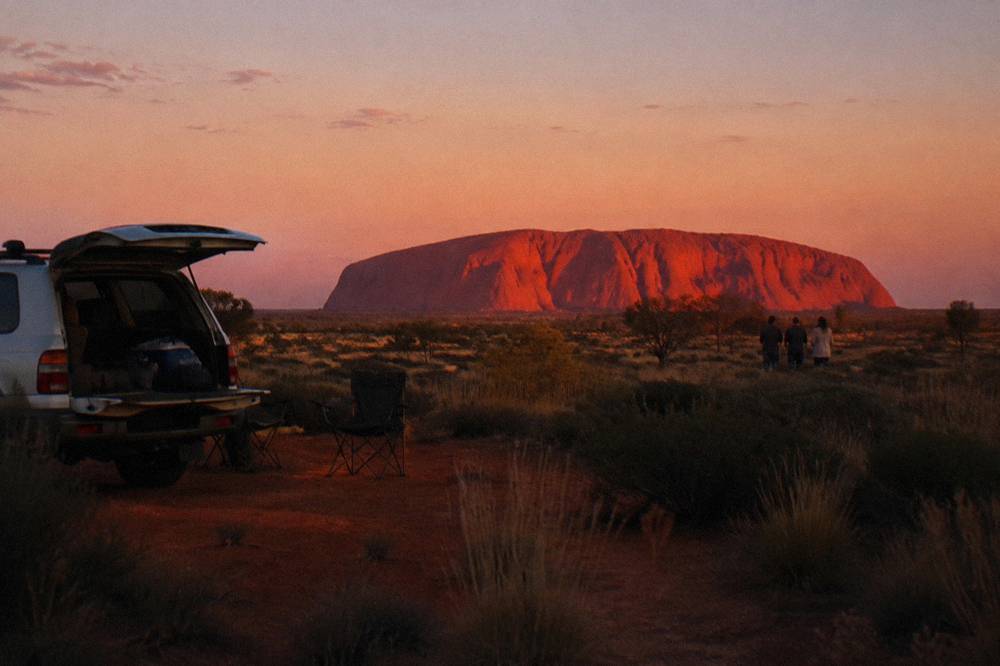
The five-hour coach tour pairing the rock with the nearby domes, the Bus Sunrise, Kata Tjuta Combo from AAT Kings, rated 4.6 from 603 reviews and from A$186 per person, is built entirely around this light schedule. One review reads: "Very good tour and the guides, Dani and Regi, were amazing. They were knowledgeable and friendly, and made sure the tour was prompt so we could visit everywhere with enough time to enjoy ourselves."
Is Seeing Uluru From The Air Worth It?
Yes, seeing Uluru from the air is worth it. The perspective you gain from above simply cannot be replicated from the ground, where the rock's full scale and setting are impossible to take in at once, and the ratings from travellers who have flown over it suggest plenty of others feel exactly the same. A guest review of the 15-minute helicopter flight says it best: "being able to view Uluru by air gave a true perspective of the size." From the ground you get 348 metres of height and 9.4 km of circumference in sections; from above, the aerial view reveals the monolith as a single form sitting in its plain, with Kata Tjuta's 36 domes on the horizon. If that distant line of domes leaves you wondering which formation actually stands taller, our comparison of Uluru and Kata Tjuta by height has the answer.
The roster's scenic flight options span a real price range. The 15-Minute Uluru Helicopter from Professional Helicopter Services is rated 4.9 from 669 reviews and starts at A$195 per person. The 25-minute version adds Kata Tjuta for A$315, rated 4.8 from 616 reviews. A fixed-wing alternative, the Scenic Plane Flight Uluru Rock Blast from Ayers Rock Scenic Plane Flights, is rated 4.8 from 113 reviews and starts at A$180 per person, making it the cheapest way into the air over the park.
| Flight | Operator | Duration | From (per person) | Rating |
|---|---|---|---|---|
| 15-Minute Uluru Helicopter | Professional Helicopter Services | 15 minutes | A$195 | 4.9 from 669 reviews |
| 25-Minute Heli, Both Rock Sites | Professional Helicopter Services | 1 hour | A$315 | 4.8 from 616 reviews |
| Sunset Heli, 36 Minutes | Professional Helicopter Services | 36 minutes | A$415 | 4.8 from 175 reviews |
| Fixed-Wing Scenic Flight | Ayers Rock Scenic Plane Flights | 1 hour 30 minutes | A$180 | 4.8 from 113 reviews |
Flights are weather-dependent, and no operator can promise a flight will run on any given day; heat, wind and visibility decide. The fixed-wing review above, from Carlos B, notes a pilot who "made me feel very safe and comfortable during this flight," which is the reassurance most nervous flyers want to hear. Full detail on every option is in our Uluru helicopter flights guide.
What Should Every Visitor Know Before Going?
Every visitor needs a park pass, which costs $38 for an adult for 3 days or $50 for an annual pass, with under 18s free, valid for Uluru-Kata Tjuta National Park only, and tour listings state this fee separately rather than including it. The park is open every day of the year with seasonal hours: 5.00 am to 8.00 pm in October, shifting to 5.00 am to 8.30 pm in November and 6.30 am to 7.30 pm in the June and July winter. There is no overnight camping inside the park, and everyone must be out by closing time.
Timing shapes the whole trip. May to September is the comfortable window, with daytime maximums usually 20 to 30 C; October to March can exceed 35 C daily. Winter nights are genuinely cold, a surprise for many, and our piece on night temperatures at Uluru covers what to pack. Conditions also change for cultural reasons from time to time, so reading the park's news page before travelling is advice worth following.
| Month | Park hours | Typical max / min C |
|---|---|---|
| January | 5.00 am to 9.00 pm | 38.4 / 22.8 |
| April | 5.30 am to 8.00 pm | 29.9 / 14.5 |
| July | 6.30 am to 7.30 pm | 20.6 / 4.4 |
| October | 5.00 am to 8.00 pm | 32.3 / 14.9 |
Booking terms vary tour by tour, and it pays to read the listing rather than assume. The Full Uluru Base Walk at Sunrise Including Breakfast lists free cancellation with a cutoff of 6 days before start, while several coach tours list 24 hours; most roster listings allow free cancellation, but the cutoff differs, so check the booking page for the specific tour you choose.
The three cards below are the natural starting points for turning all of this into a booked day: the guided base walk for depth, the homelands experience for Culture, and the sunrise coach combo for coverage.
Common Questions About What Makes Uluru Special
What Is So Special About Uluru?
Uluru combines sandstone about half a billion years old, 348 metres of height and a 9.4 km circumference with a living Culture: it is sacred to Anangu under Tjukurpa, jointly managed by Anangu and Parks Australia, and World Heritage listed for both natural and cultural values. The rock is both a geological giant and a place of ongoing law and story.
Is Uluru older than dinosaurs?
Yes, far older. The sandstone is about half a billion years old, which predates the dinosaurs by hundreds of millions of years. We cover the comparison in detail in our piece on Uluru's age.
Can you still climb Uluru?
No. The climb closed permanently on 26 October 2019 after a unanimous Board of Management decision, and attempting it now breaches the EPBC Act, with penalties. The base walk, the Mala walk and the guided tours are the experiences promoted today.
Is Kata Tjuta taller than Uluru?
Its highest dome is. Kata Tjuta's 36 domes rise up to 546 metres above the surrounding plain, while Uluru stands 348 metres high. Uluru is the single largest individual rock mass, Kata Tjuta the taller formation.
Why does Uluru change colour?
The iron-oxide coating on the sandstone reflects low-angle light strongly at dawn and dusk, and shadows from caves and ridges reshape the face as the sun moves. Cloud and dust affect it too, so no two sunrises look alike.
Do I need a park pass to visit?
Yes. An adult pass is $38 for 3 days or $50 annually, under 18s are free, and it is valid only for Uluru-Kata Tjuta National Park. Tour listings state the fee separately, so buy the pass online before you go.