Aboriginal Culture At Uluru: Cultural Centre, Ranger Walks And Guided Experiences
Aboriginal culture is woven into every visit to Uluru-Kata Tjuta National Park, from the free Cultural Centre and ranger talks to guided walks that share Anangu knowledge. This guide covers the experiences that connect you with the world's oldest living culture.
Short answer
The Uluru-Kata Tjuta Cultural Centre is free to enter and open 7.00 am to 5.45 pm daily, with displays on Tjukurpa and Anangu art. The ranger-guided Mala walk runs free each morning, and the full-day Aboriginal Homelands Experience (from A$399) takes small groups onto private Aboriginal land with an Anangu guide. Photography is restricted at sacred sites, and the Uluru climb has been closed since 2019.
Anangu culture is the reason Uluru-Kata Tjuta National Park is a living cultural landscape rather than simply a set of red-rock landmarks. The Traditional Owners have welcomed visitors for decades, and today the park offers free and paid ways to learn about Tjukurpa, the foundation of Anangu law and knowledge. Uluru Australia Tours has compared the cultural experiences on the roster and in the park itself, so you can plan a visit that respects Country and leaves you with a deeper understanding of this place. The park is jointly managed by the Anangu Traditional Owners and Parks Australia, a partnership that shapes every walking track, every sign and every tour that operates here.
What Is The Uluru-Kata Tjuta Cultural Centre?
The Uluru-Kata Tjuta Cultural Centre is the free, air-conditioned information hub inside the park, open every day from 7.00 am to 5.45 pm. It houses the Tjukurpa Tunnel, an art gallery, a ranger desk and the Nintiringkupai Information Room, and it is the best first stop for any visitor wanting to understand Anangu culture before walking the rock or the domes.
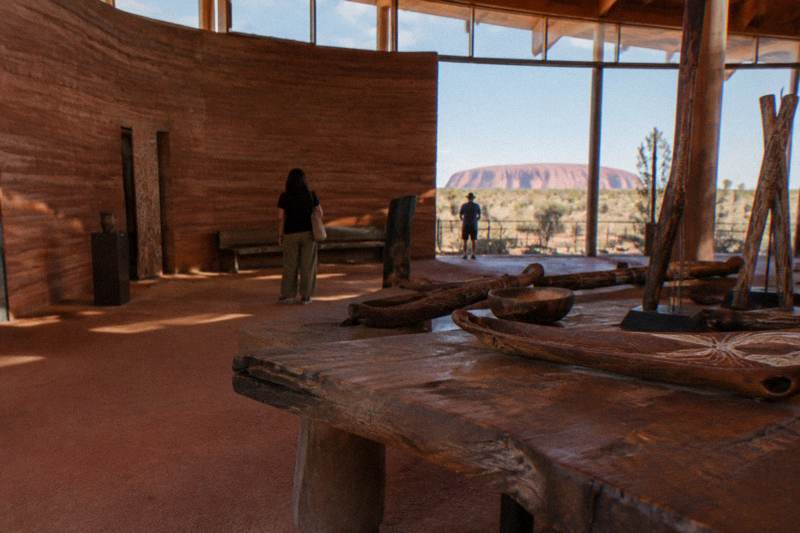
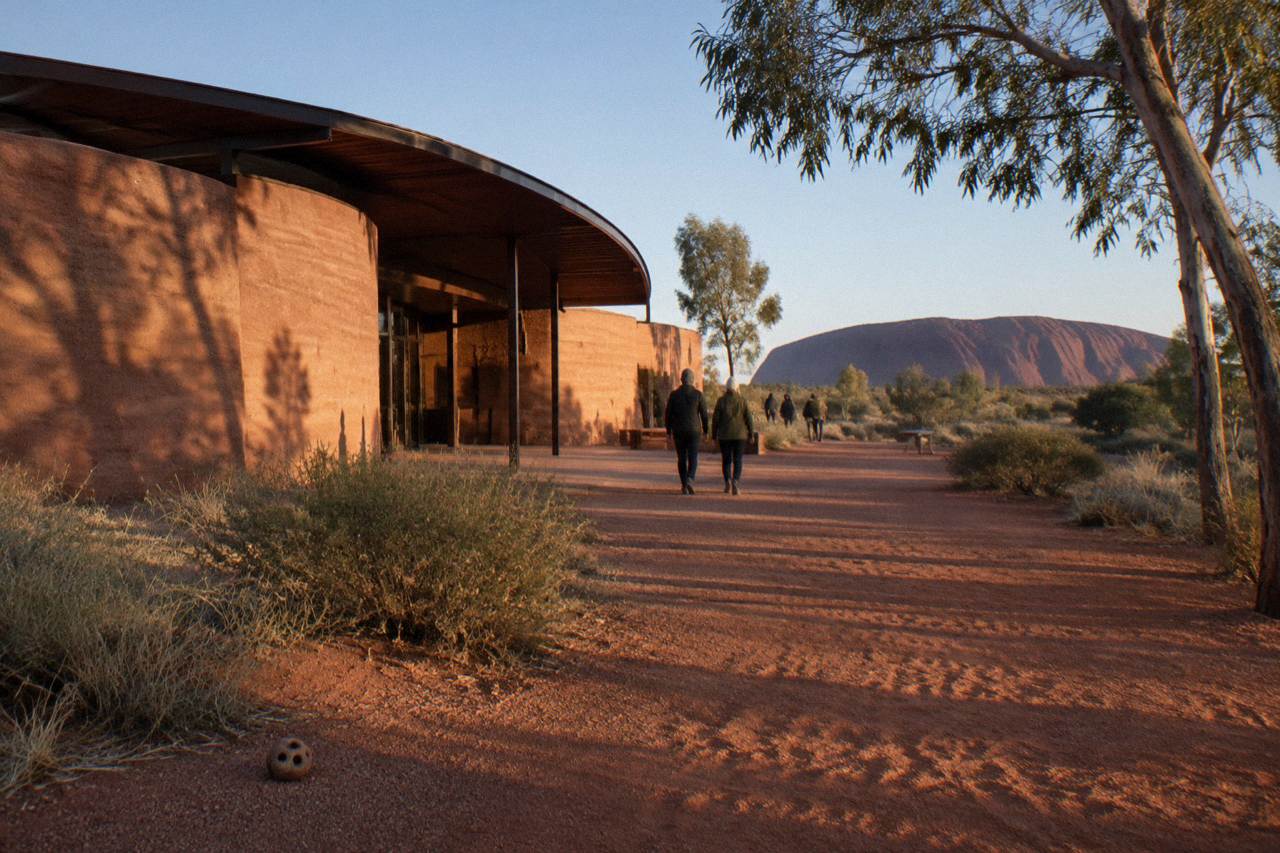
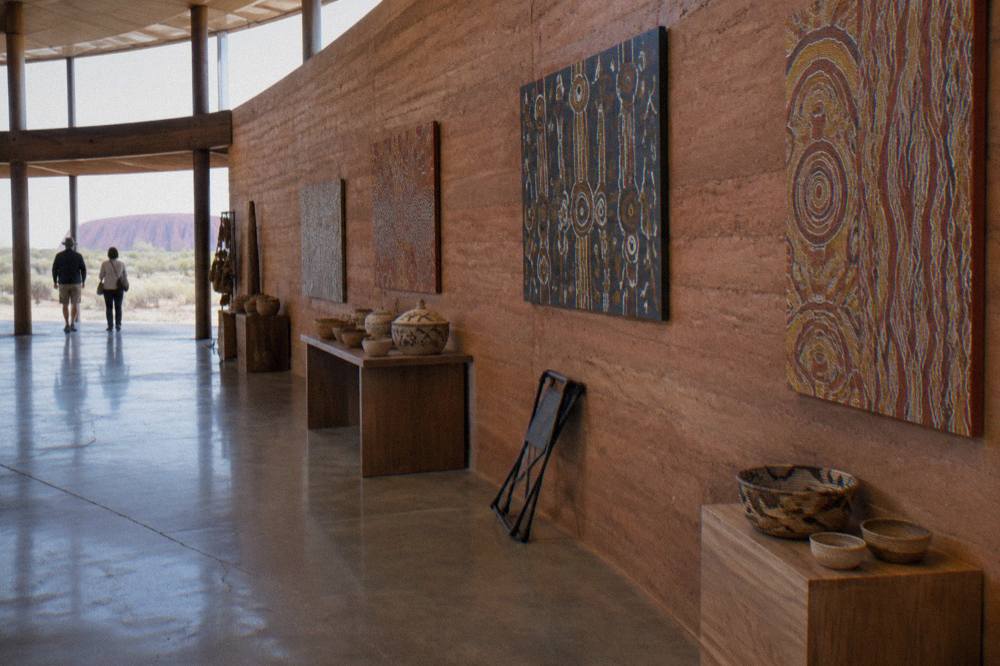
The Cultural Centre sits just inside the park entry station, a low building of mud-brick and timber designed with Anangu input. Inside, the Tjukurpa Tunnel uses audio and visual displays to explain the creation stories that govern life here. The displays are in Pitjantjatjara, Yankunytjatjara and English, and they cover everything from the Mala story to bush food seasons. Rangers are on hand to answer questions, and the Maruku Arts gallery sells authentic dot paintings and punu (wood carvings) made by local artists. The gallery is one of the few places in the park where you can buy artwork directly from Anangu-owned enterprises, and every purchase supports the local community.
Entry to the Cultural Centre is free, though you need a valid park pass to reach it. The current 3-day adult pass costs $38, with an annual option at $50; children under 18 enter free. The pass is only valid for Uluru-Kata Tjuta National Park, and you can buy it online ahead of time to scan at the entry station. The centre also has a small cafe and toilets, and it is the meeting point for the free ranger-guided Mala walk each morning. If you want a full breakdown of park pass options and how to buy them, the Uluru National Park Pass guide covers the fees, validity and online purchase steps in detail.
| Feature | Detail |
|---|---|
| Entry cost | Free with valid park pass |
| Opening hours | 7.00 am to 5.45 pm daily |
| Key displays | Tjukurpa Tunnel, art gallery, Nintiringkupai Information Room |
| Facilities | Cafe, toilets, ranger desk, Maruku Arts shop |
| Best for | First-time visitors, families, anyone wanting cultural context |
What Is The Ranger-Guided Mala Walk?
The ranger-guided Mala walk is a free 2 km return walk along the base of Uluru, led by a Parks Australia ranger who explains the Mala story and the cultural significance of the rock's north-west face. It runs every morning, departing from the Mala carpark at 8.00 am from October to April and at 10.00 am from May to September, and it is the most accessible cultural experience inside the park.
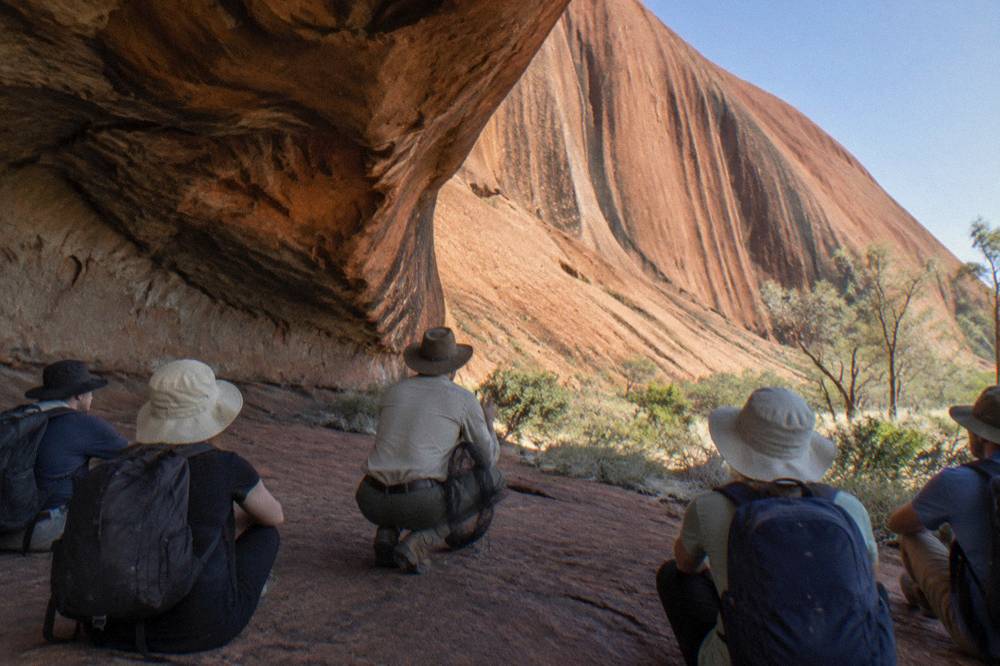
The Mala walk is wheelchair-accessible and takes about 90 minutes at a gentle pace. Rangers stop at rock art sites, caves and waterholes to tell the story of the Mala (rufous hare-wallaby) people, a Tjukurpa narrative that teaches law, ceremony and proper behaviour. The walk ends at Kantju Gorge, a sheer rock face that holds a quiet, cathedral-like stillness. No booking is needed, but numbers can swell in peak season, so arriving 10 to 15 minutes early is wise.
Because the walk covers the north-west face, it also passes through areas where photography is restricted. Rangers will point out the specific sites where cameras should be put away, and they explain why those places are treated as private under Anangu law. The walk is a good companion to a longer base walk or a guided cultural tour later in the day, and it gives you the vocabulary to understand what you are seeing elsewhere in the park. If you plan to walk the full 10 km circuit on your own, the Uluru Base Walk guide covers the route, safety advice and what each section reveals.
The ranger program is one of the few free activities inside the park that directly connects you with an authoritative cultural voice. If you want to go deeper, the Aboriginal Homelands Experience takes a small group onto private Aboriginal land with an Anangu guide, a step beyond what any free walk can offer.
What Is Tjukurpa And Why Is It Important?
Tjukurpa is the foundation of Anangu law, culture and knowledge, encompassing creation stories, moral codes, kinship rules and land management practices. It is not a single story but a vast body of law that has been passed down orally for tens of thousands of years, and it governs everything from which sites can be visited to how the park is jointly managed today.
Tjukurpa is often translated as "Dreaming" in English, but that word can be misleading. It is not a dream in the Western sense; it is an ongoing reality that connects the ancestral beings who created the landscape with the people living today. The physical features of Uluru and Kata Tjuta are the marks left by those beings, and the stories attached to them are both history and law. Anangu say "Tjukurpa palya" (Tjukurpa is good) as a way of affirming that the law holds.
In the park, Tjukurpa shapes the visitor experience directly. The Uluru climb was closed permanently in 2019 because the route crossed a sacred men's area, and climbing was never permitted under Tjukurpa. Photography restrictions at certain sites exist because those places contain sensitive ceremonial knowledge that should not be shared outside the community. Even the walking tracks are routed to avoid disturbing sacred areas, and the joint management board of Anangu and Parks Australia makes every decision with Tjukurpa as the guiding principle. The board's statement in October 2025 reaffirmed the commitment to ngapartji ngapartji, meaning sharing and learning together, a philosophy that runs through every cultural program in the park.
The Aboriginal Homelands Experience is the only roster tour that takes guests onto private Aboriginal land, where an Anangu guide shares Tjukurpa stories directly. It is a full-day, small-group tour priced from A$399 per person, and it includes a sunset picnic with views across Country. Reviews describe it as a privilege: one guest, Jessica H, called it "a true privilege to spend time on private Aboriginal land with an Anangu guide sharing stories. The experience is just so phenomenal culminating in a stunning sun set and nibbles."
What Are The Photography Rules At Uluru?
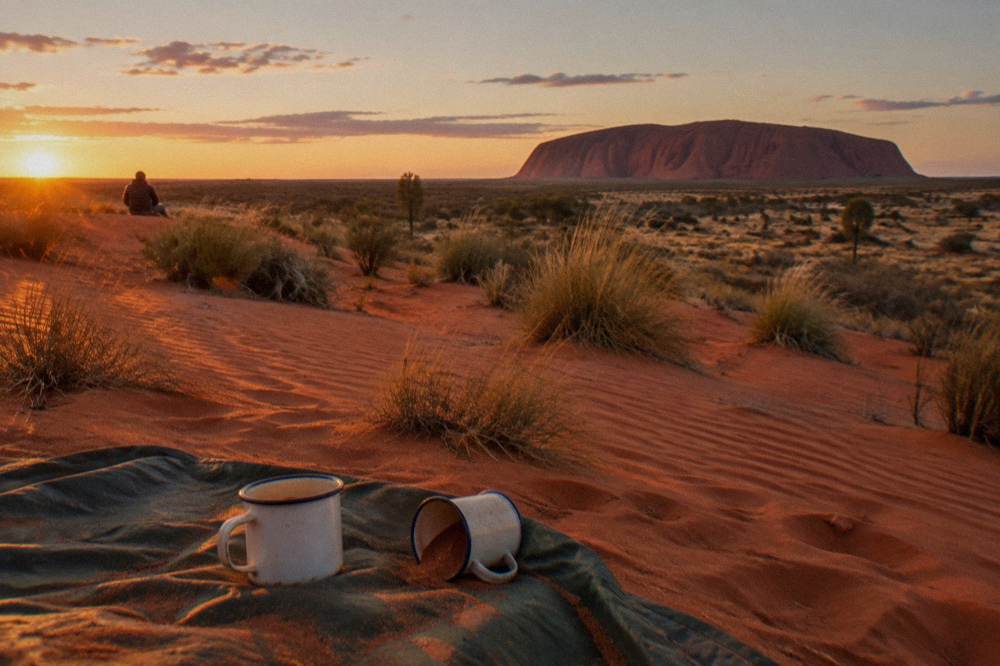
Photography is permitted across most of the park, but culturally sensitive sites at Uluru and Kata Tjuta are clearly signed and must not be photographed. The north-east face of Uluru should be captured only in wide shots from a distance, and the Valley of the Winds walk at Kata Tjuta is a no-photography zone for the rock formations themselves. Drones are prohibited everywhere under the EPBC Act.
The rules exist because some sites contain imagery that is restricted under Tjukurpa. At the north-east face, Anangu ask that photographers avoid showing the detail on the top-left side, and the best light for wide shots is one to two hours before sunset when shadows obscure the sacred areas. At Kata Tjuta, the Valley of the Winds circuit passes through a men's ceremonial area, and photographs of the domes along the walk are not allowed; close-ups of plants, birds and people are fine. Walpa Gorge, the shorter Kata Tjuta walk, is less restricted, but the guidance is to keep both sides of the gorge in frame.
Drones and remote-controlled devices are illegal inside the park, and commercial photography, including influencer work, requires a media permit. Night-sky photography is done outside the park boundary, typically from the dune lookout beside the Lasseter Highway between the entry station and Ayers Rock Resort, because all visitors must leave the park by closing time.
| Location | Photography allowed? | Notes |
|---|---|---|
| General views of Uluru from a distance | Yes | Wide shots encouraged |
| North-east face of Uluru | Wide shots only | Avoid detail on top-left side; best 1-2 hours before sunset |
| Valley of the Winds (Kata Tjuta) | No photos of rock formations | Close-ups of flora, fauna and people allowed |
| Walpa Gorge (Kata Tjuta) | Yes, with care | Keep both sides of gorge in frame |
| Cultural Centre interior | Check with staff | Some displays may be restricted |
| Drones anywhere in park | Prohibited | EPBC Act penalties apply |
The Segway Full Base Loop covers the entire 10 km circumference of Uluru without entering the restricted north-east face zone, and the guides are trained on where cameras must be switched off.
What Is The Cultural Significance Of Kata Tjuta?
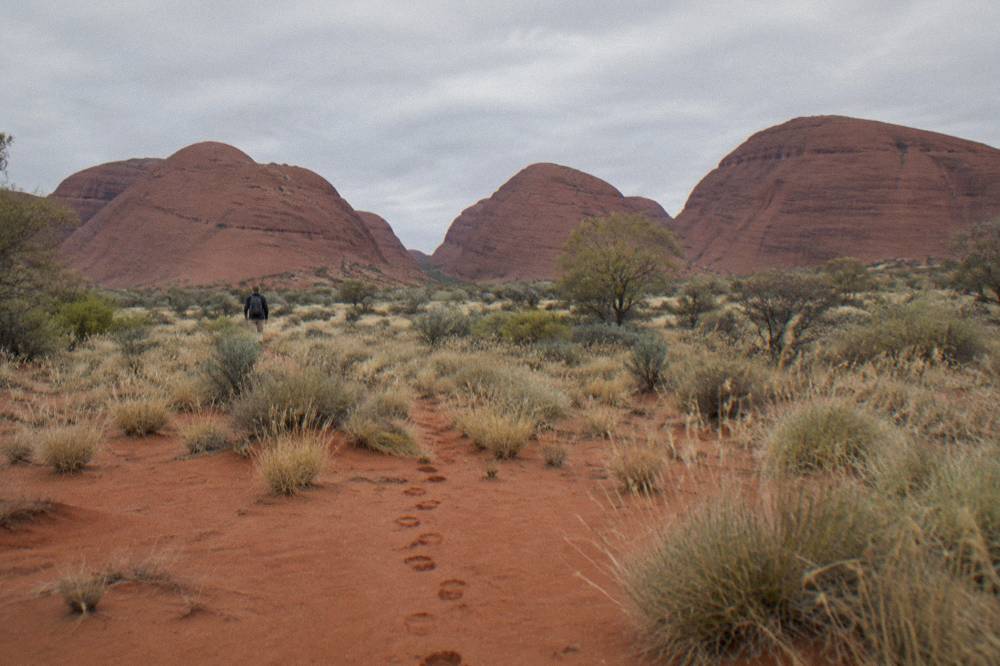
Kata Tjuta, meaning "many heads" in Pitjantjatjara, is a men's ceremonial site of profound importance to Anangu, and much of its Tjukurpa is restricted knowledge that cannot be shared publicly. The Valley of the Winds walk passes through this area, which is why photography of the rock formations is prohibited along the circuit, and why visitors are asked to stay on the marked track at all times.
Unlike Uluru, where several stories are shared openly, the cultural knowledge tied to Kata Tjuta is largely kept within the Anangu community. The 36 domes rise up to 546 metres above the plain, taller than Uluru, and their steep walls and hidden gorges have been used for men's initiation ceremonies for thousands of years. The park's joint management plan protects these sites by limiting access to two main walking trails: the Valley of the Winds circuit and the shorter Walpa Gorge walk.
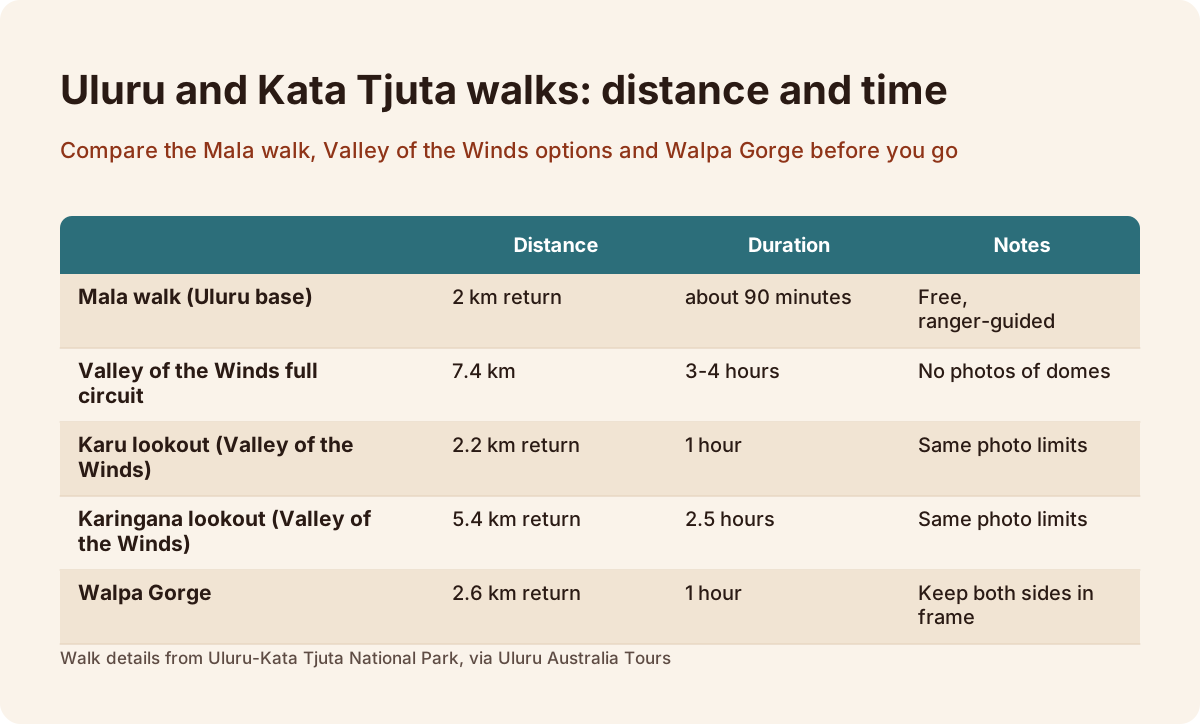
The Valley of the Winds is a Grade 4 hike that takes 3 to 4 hours for the full circuit, with shorter options to Karu lookout (1 hour return) and Karingana lookout (2.5 hours return). The trail is closed when the forecast reaches 36°C, and in summer the park recommends finishing all walks before 11.00 am. Walpa Gorge is a gentler 2.6 km return walk that stays between two domes and is open in hotter conditions. Both walks are covered in detail in the Kata Tjuta Tours guide, which compares the self-guided and small-group options available on the roster.
| Walk | Distance | Duration | Cultural notes |
|---|---|---|---|
| Valley of the Winds full circuit | 7.4 km | 3-4 hours | No photography of domes; men's ceremonial area |
| Karu lookout (Valley of the Winds) | 2.2 km return | 1 hour | Same photography restrictions apply |
| Karingana lookout (Valley of the Winds) | 5.4 km return | 2.5 hours | Same photography restrictions apply |
| Walpa Gorge | 2.6 km return | 1 hour | Keep both gorge sides in frame; less restricted |
The name Kata Tjuta is now the official term used by the park, though many visitors still know the domes as the Olgas. The shift from the colonial name to the Anangu name is part of a broader recognition of Traditional Owner sovereignty, a topic explored in the blog post Why Isn't It Called Ayers Rock Anymore?.
What Is The Aboriginal Homelands Experience?
The Aboriginal Homelands Experience is a full-day, small-group tour operated by SEIT Tours that takes you onto private Aboriginal land outside the national park boundary, where an Anangu guide shares stories, bush food knowledge and a sunset picnic. It is priced from A$399 per person and runs with a maximum of 11 guests, making it the most intimate cultural tour on the Uluru roster.
The day starts with a pickup from Ayers Rock Resort, then a drive to a remote homeland community where the Anangu family lives. The guide, a Traditional Owner, walks you through the landscape, pointing out bush tucker plants, animal tracks and rock art that holds stories going back generations. The tour is not a performance; it is a conversation, and the format changes depending on what the guide wants to share that day. Guests consistently report that the experience feels unscripted and deeply personal.
Lunch and afternoon tea are provided, and the day ends with a sunset picnic on a dune overlooking the desert. Because the tour operates on private land, the photography rules are set by the Anangu hosts, and guests are told what can and cannot be photographed at each stop. The tour has a 4.8 rating from 44 reviews, and the cancellation policy allows free cancellation up to 6 days before departure. Spaces are limited, and the tour often sells out in the cooler months, so booking ahead is recommended. You can see the full itinerary and check availability on the Aboriginal Homelands Experience tour page.
How Can You Experience Aboriginal Culture On A Tour?
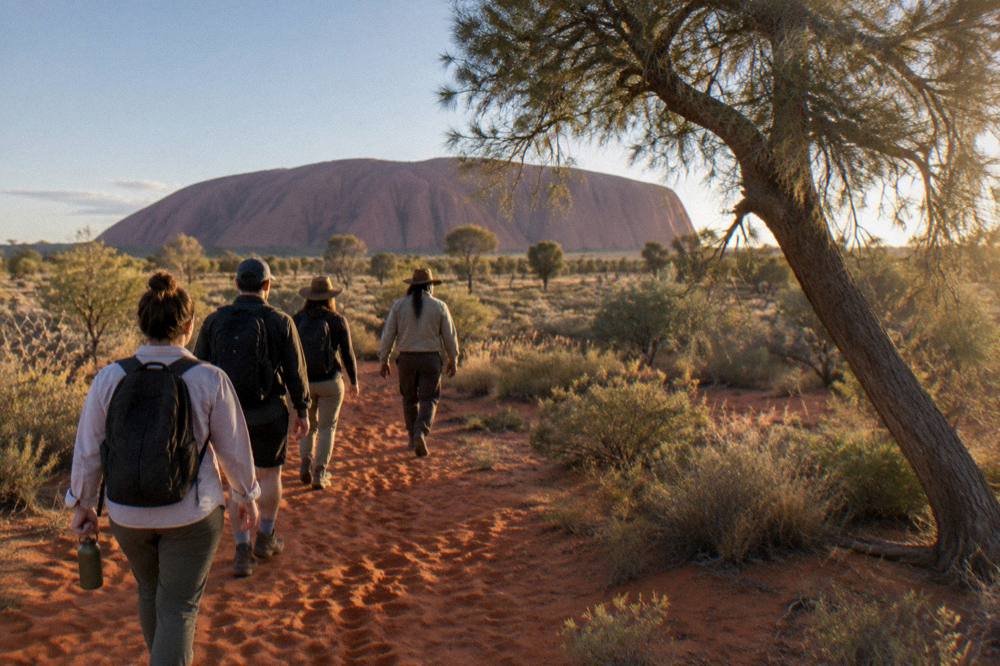
Cultural tours at Uluru range from free ranger walks to full-day Aboriginal homelands visits, and the roster includes several guided experiences that pair cultural storytelling with walks, Segway rides or hop-on hop-off bus loops. Each format suits a different pace and budget, and the best choice depends on how much time you have and how deep you want to go. If you're still weighing which format suits you, our comparison of Uluru tours by price, rating and style breaks down how the main options stack up.
The free ranger-guided Mala walk is the obvious starting point, and it works well as a morning primer before a paid tour later in the day. For visitors who want to cover more ground, the Best of Uluru Segway and Walking Tour combines a Segway ride along the base with a guided walk, and the guides are trained in cultural protocols and photography rules. The tour runs 4 to 5 hours, costs from A$219 per person and has a 4.8 rating from 294 reviews.
If you prefer to explore independently but still want cultural context, the Uluru and Kata Tjuta Hop-On Hop-Off Pass gives you a full loop of the park with recorded commentary and the freedom to stop at the Cultural Centre, the Mala walk carpark and the Kata Tjuta viewing areas. The pass costs from A$140 per person and is valid for the day, with buses running on a regular circuit.
The table below compares the four main cultural experiences available, from the free ranger walk to the premium homelands tour, so you can see at a glance which one fits your travel style.
| Experience | Type | Duration | Cost (from) | Cultural depth |
|---|---|---|---|---|
| Ranger-guided Mala walk | Free park activity | 1.5 hours | Free (park pass required) | Introductory; ranger-led Tjukurpa stories |
| Uluru Hop-On Hop-Off Pass | Self-guided bus loop | Full day | A$140 | Recorded commentary; stop at Cultural Centre |
| Best of Uluru Segway and Walking Tour | Guided small group | 4-5 hours | A$219 | Guide-trained cultural protocols; base walk |
| Aboriginal Homelands Experience | Guided small group | Full day | A$399 | Anangu guide; private land; sunset picnic |
The Aboriginal Homelands Experience is the only tour where you spend the day with an Anangu Traditional Owner on their own Country, and it is the closest you can get to a direct cultural exchange. The Segway tour gives you a broader sweep of the rock's base with cultural commentary, and the hop-on hop-off bus is the most flexible option for independent travellers. Each one respects the photography rules and the closure of the climb, and all operators work within the guidelines set by the park's joint management board.
Common Questions About Aboriginal Culture At Uluru
Is The Uluru Climb Open?
No. The Uluru climb closed permanently on 26 October 2019, a decision made unanimously by the Uluru-Kata Tjuta Board of Management. Climbing is a breach of the EPBC Act, and penalties apply to anyone attempting it. The closure respects Tjukurpa and the wishes of the Anangu Traditional Owners.
Can I Touch Uluru?
Yes, you can touch the rock in many places along the base walk. The Anangu ask that you do not climb, and that you avoid touching areas that are clearly signed as sacred sites. The Mala walk and the Kuniya walk to Mutitjulu Waterhole are two places where touching the rock is part of the experience.
Do I Need A Guide To Learn About Aboriginal Culture?
No, but a guide adds depth. The Cultural Centre and the free ranger walk give you a solid foundation, and the signed walks include interpretive panels. A guided tour, particularly one led by an Anangu guide, provides stories and context that are not available in print or audio.
What Is The Best Time To Visit The Cultural Centre?
The Cultural Centre is open 7.00 am to 5.45 pm every day. Mornings are quieter, especially before 9.00 am, and the ranger desk is staffed throughout the day. If you plan to join the ranger-guided Mala walk, arrive at the Cultural Centre about 30 minutes before the walk starts to browse the displays first.
Are There Any Aboriginal Tours That Run In The Evening?
The Aboriginal Homelands Experience finishes with a sunset picnic, so it runs into the early evening. Most other cultural tours are daytime experiences. The park closes at night, and no tours operate inside the park after closing hours.