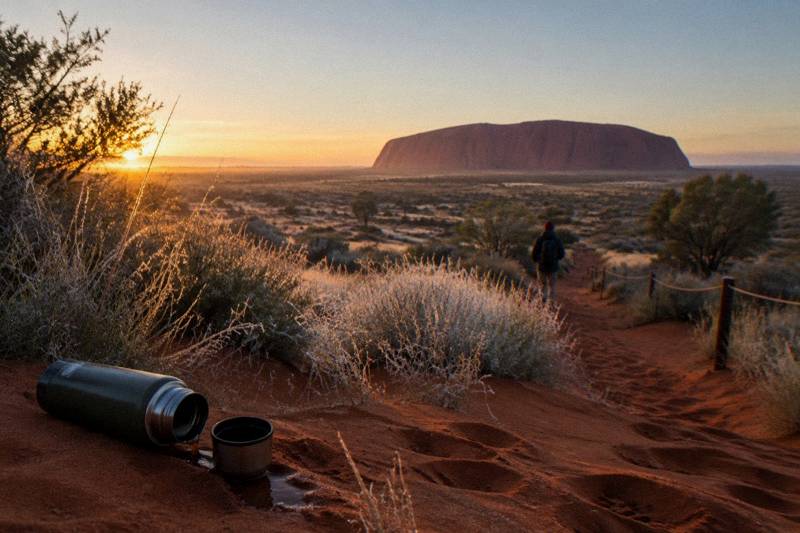
What Do You Wear To Uluru Field Of Light?
Practical clothing advice for Uluru Field of Light: cool desert nights, flies from September to April, sturdy shoes and sun protection, with month-by-month temperature guidance.
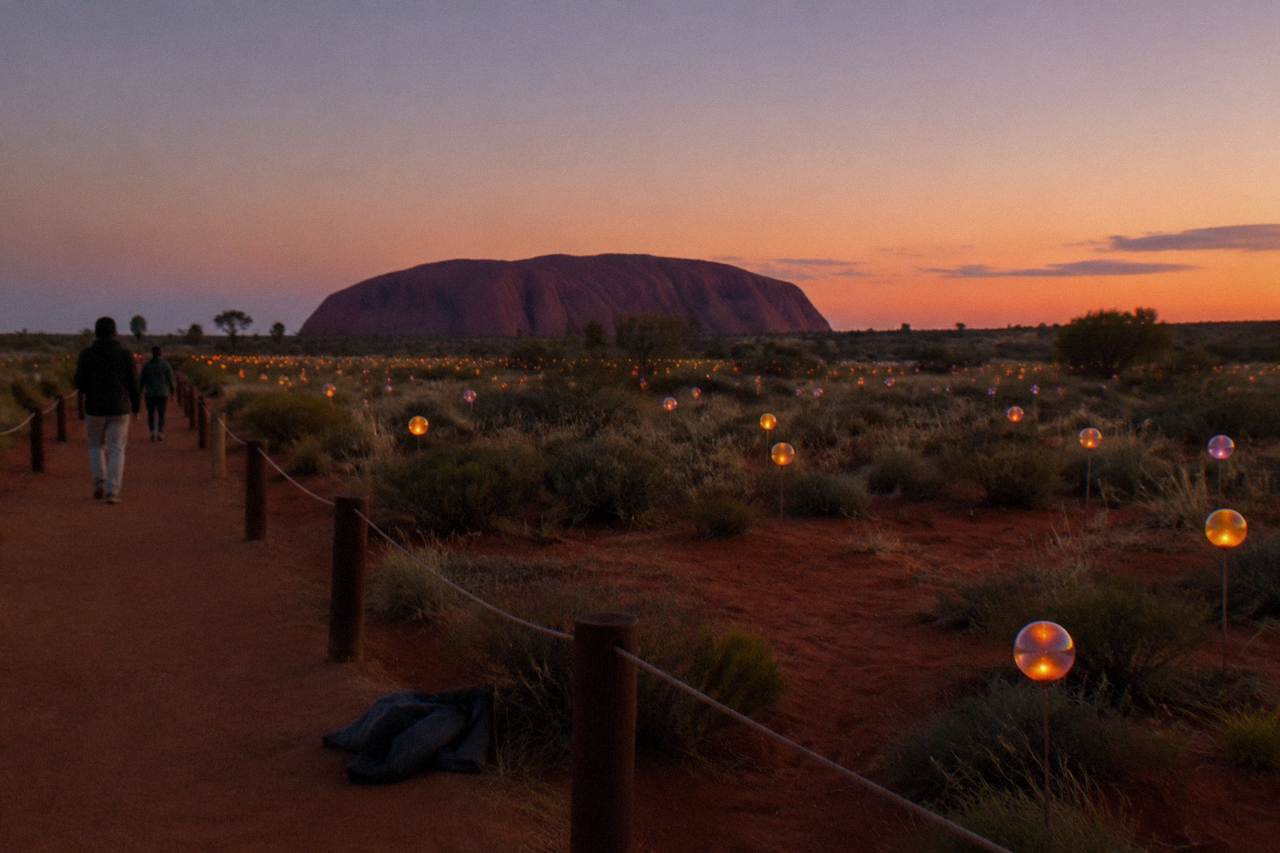
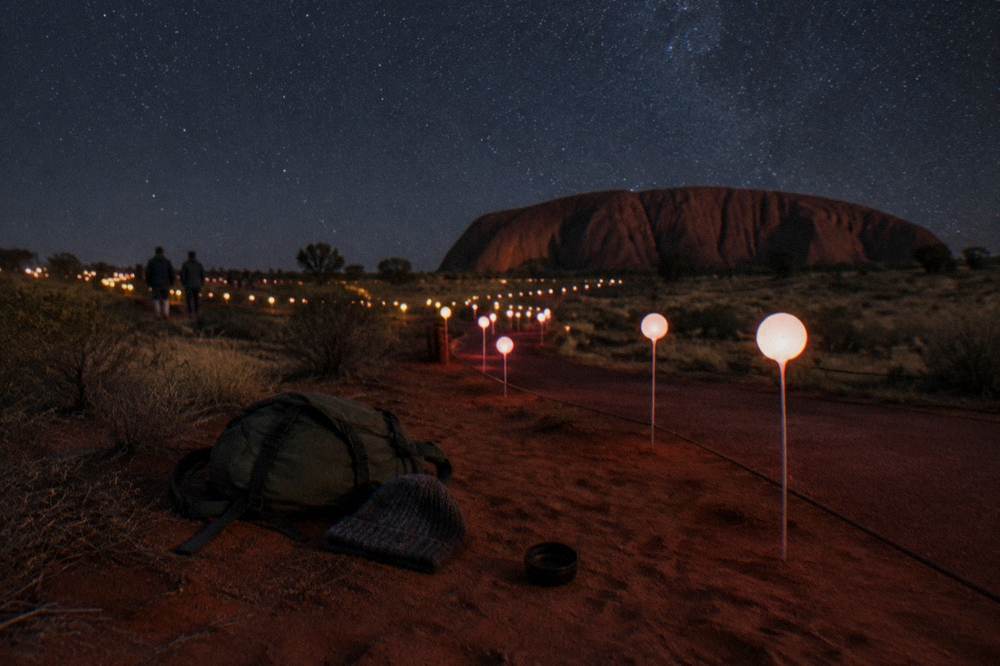
Field of Light is an open-desert installation of more than 50,000 solar-powered spheres by artist Bruce Munro, laid out over an area the resort describes as bigger than seven football fields, with Uluru on the horizon. It has run since 2016 and is extended through 2029, so plenty of visitors are still standing in the red sand at dusk wondering the same practical thing: what do I actually wear to this? The short, honest answer is that there is no dress code, but the desert has one. Evenings cool fast, winter nights are genuinely cold, and from September to April bush flies are part of the experience. To see just how far those desert temperatures drop after sunset and what to pack for it, our guide to Uluru's cold nights has you covered.
The installation is visited after dark, which changes the clothing maths completely compared with a daytime Uluru itinerary. General Admission runs from A$50 per adult and A$39 per child for travel 1 April 2026 to 31 March 2027, sold direct by Ayers Rock Resort, and lasts roughly one to two hours on your feet in open country. The Star Pass sunset entry is from A$137 per adult and A$87 per child, and the seated Field of Light Dinner from A$360 per adult and A$180 per child. Whatever tier you choose, you will be outdoors, on sand and compacted paths, as the temperature drops.
This article works through the clothing question season by season, using the Bureau of Meteorology averages published by the park itself, plus the park's own safety guidance on heat, sun and flies. It also covers shoes, the broader wardrobe for your Uluru days, and what to pack beyond clothing. For the full background on the installation itself, the Field of Light Uluru guide covers passes, timing and how the tiers differ.
What Do You Wear To Uluru Field Of Light?
Wear layers you can add as the desert cools, closed walking shoes for sand and uneven ground, and long sleeves or insect-repellent clothing for flies in the warmer months. There is no dress code at Field of Light; the constraint is the climate. Winter nights at Yulara average around 4 to 6 degrees, and even summer evenings fall 15 to 20 degrees below the daytime peak, so almost every visitor underdresses.
Start with the base: trousers or leggings rather than shorts for the fly season, and a t-shirt or shirt you can keep a jumper over. Add a warm mid-layer, a fleece or insulated jacket, especially from May to September. A windproof outer layer helps because the desert evening can bring a breeze with nothing to block it. In the hottest months, November to February, you might start the evening in short sleeves, but bring the layer anyway; a 38 degree January day still averages an overnight minimum of 22.8 degrees, and the drop catches people out.
Footwear matters more than most visitors expect. You will walk from the drop-off point through sand and along paths between the spheres, in the dark, on ground that is not a paved plaza. The park's general walking advice for the area is sturdy, closed shoes, and that applies here too. Thongs and heels are the two things that consistently ruin the experience; sandals with a back strap are workable but not ideal.
A small day pack or crossbody bag is worth having for the layer you shed on arrival at sunset sessions. Hat and sunglasses are for your daytime hours rather than the installation itself, though the Star Pass entry begins before the sun is down, so a hat and sunscreen still earn their place in the bag for the transition hour. The park's sun protection guidance recommends covering up and using sunscreen whenever the UV forecast is high, and at Uluru the warm-month UV index reaches Extreme levels.
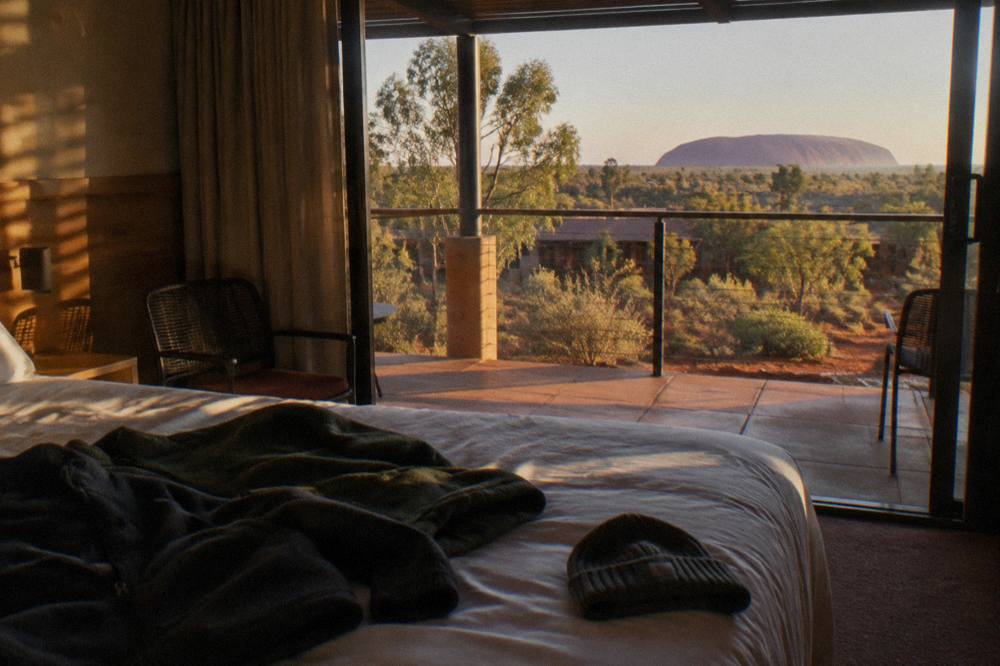
If you are booking a guided visit rather than self-driving, transport, timing and a hot drink are what a tour adds over the free-of-guides experience. The Field of Light Sunrise Tour with Hot Drinks from AAT Kings runs about two hours, lists from A$115 per person, and includes pickup from Yulara plus a hot drink while the spheres catch the first light; it lists free cancellation with a cutoff of 24 hours before start. You can Check availability on the live listing, and the same clothing logic applies, with one addition: sunrise sessions end in daylight, so sun protection becomes non-negotiable, a hat and sunscreen for the final half hour.
How Cold Does It Get At Night At Uluru?
Genuinely cold in winter and pleasantly cool in summer, with overnight minimums at Yulara averaging from 4.4 degrees in July to 22.8 degrees in January. The Bureau of Meteorology averages published by the park show the coldest stretch is June and July, when minimums sit in the mid single digits, and frost on clear mornings is possible. Field of Light visitors in the cooler half of the year need a real jacket, not a cardigan.
The numbers deserve a table, because the swing between months is large and the gap between day and night is larger still. These are monthly averages for Yulara as printed on the park's own when-to-come page.
| Month | Average max (C) | Average min (C) | Average rain (mm) |
|---|---|---|---|
| January | 38.4 | 22.8 | 28.8 |
| February | 37.0 | 22.1 | 38.4 |
| March | 34.5 | 19.3 | 32.6 |
| April | 29.9 | 14.5 | 15.7 |
| May | 24.3 | 9.3 | 14.3 |
| June | 20.4 | 5.6 | 18.2 |
| July | 20.6 | 4.4 | 17.6 |
| August | 23.7 | 5.9 | 5.0 |
| September | 28.7 | 10.7 | 9.0 |
| October | 32.3 | 14.9 | 21.1 |
| November | 35.1 | 18.4 | 33.1 |
| December | 36.5 | 20.8 | 45.5 |
Read the July row twice if you are travelling in the school holidays: a 20.6 degree average maximum day drops to a 4.4 degree average night. Field of Light sessions run after sunset, so you experience the bottom of that curve, standing still, which feels colder than the same temperature on a walk. A beanie and a scarf stop being jokes in June and July, and closed shoes keep the cold sand from becoming the thing you remember.
In the shoulder months, April, May, September and October, the evening sits somewhere in the low teens, which is light-jacket weather for most people. Even in the warmest months the layer rule holds, because a summer evening that begins at 30 degrees will be closer to 24 by the end of a two-hour session, and the difference is enough to notice in a t-shirt. For a fuller picture of the seasons, including which months the park itself recommends, the best time to visit Uluru guide breaks the year down in detail.
One more planning note for the cooler half of the year: the BoM outlook to December 2026 favours above-average temperatures for the southern Northern Territory, but averages are still averages, and a warmer-than-usual winter night at Uluru is still a cold night by city standards.
What About Flies, Insects And Sun?
Bush flies are present at Uluru from September to April, they are persistent rather than dangerous, and head nets are sold on arrival at Yulara because locals know they work better than repellent alone. For sun, the park's own safety page is blunt: UV in the warm months reaches Extreme, so sun protection is a daytime requirement even on the same day as an after-dark Field of Light visit.
The fly situation shapes clothing more than any single temperature figure. Flies go for faces, which is why the head net is the standard local answer; long sleeves and trousers reduce the landing area, and light colours attract slightly less attention than dark. Repellent helps for the exposed bits. The flies quieten down after sunset as the air cools, so an after-dark General Admission session gets the mild end of the problem, but a sunset Star Pass entry sits right in the fly window, and visitors there benefit most from the net.
Sun protection belongs to your daytime itinerary but belongs in the same suitcase. The park advises sun protection whenever the UV index is forecast at 3 or above, and at Uluru the warm-month forecast regularly reaches 11, classified Extreme. A broad-brimmed hat, sunglasses, sunscreen and covering clothing for the shoulders are the standard kit for sunrise viewpoints and afternoon walks. The park's staying safe page carries the full guidance, including the water rule: at least one litre per person per hour of walking.
Mosquitoes are a minor consideration rather than a headline one, but the warmer, wetter months, January to March and November to December, carry the odd evening mosquito, so a repellent in the bag covers both flies and mosquitoes without extra weight.
What Shoes Work Best For Field Of Light?
Closed, comfortable walking shoes with a grippy sole are the right choice, because the installation is experienced on foot over sand, compacted earth and paths, in low light. Running shoes or lightweight trail shoes are ideal. Thongs, heels and stiff new leather shoes are the three failures reported most often, and the Star Pass and Dinner tiers involve standing or walking for the full session.
Think of the ground as an easy bushwalk rather than a stadium concourse. Between the viewing platform and the furthest reaches of the sphere field, the surface varies, and after dark the light comes from the artwork itself, which is beautiful but uneven underfoot. A sole with some tread handles the sand patches. If your Uluru trip includes more than the installation, the same shoes should carry you through the base walk, about 10 km around Uluru's circumference, and the Kata Tjuta walks, so one pair of broken-in walking shoes serves the whole itinerary. The rest of the planning pages sit on Uluru Australia Tours.
| Footwear | Works at Field of Light? | Why |
|---|---|---|
| Running or trail shoes | Yes | Grip, comfort, sand-friendly |
| Lightweight hiking boots | Yes | Best if also doing longer walks |
| Back-strap sandals | Tolerable | Fine in summer, cold and sandy otherwise |
| Thongs | No | Sand, darkness, cold nights |
| Heels | No | Uneven ground, no benefit |
For visitors pairing the installation with a broader evening, footwear consistency pays off. The Australian BBQ Dinner Under the Stars, from A$219 per person with a 4.5 rating from 79 reviews, runs about three hours outdoors, and one guest review describes it plainly: "Nice afternoon/evening to see different areas of Uluru and watch the sunset. The barbecue was really good and the star gazing was good even though the clouds didn't cooperate." Same shoes, same layers, same head-net logic; the two experiences share a wardrobe.
What Should You Wear During The Day At Uluru?
Loose, light-coloured, covering clothing by day, with a hat, sunglasses and sunscreen, plus far more water than feels reasonable: the park advises at least one litre per person per hour of walking. Daytime maximums exceed 35 degrees from October to March and can pass 40 degrees in summer, when the park says not to walk after 11 am and to avoid the 2.30 pm to 6.30 pm window entirely.
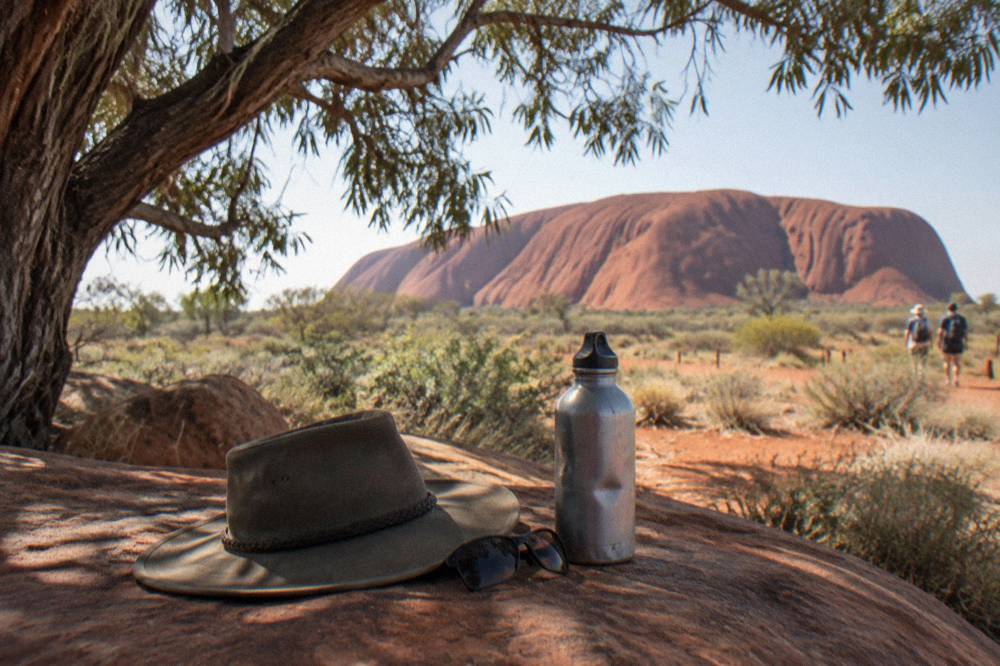
Long, loose sleeves beat bare skin in the desert: they shade you from the sun and reduce the fly landing area at the same time. A light long-sleeved shirt, trousers or long shorts to the knee, a wide-brimmed hat and sunglasses are the daytime uniform. In winter, the same wardrobe flips: a warm jacket for morning sunrise viewpoints, when June and July starts can be near zero, shed by mid-morning as the day climbs toward the low twenties.
If a small-group evening tour is on your list alongside the installation, the wardrobe overlaps almost entirely. The Small Group Guided Tour with Sunset Refreshments from SEIT runs about five hours, lists from A$249 per person with a 4.8 rating from 218 reviews, and spends the last stretch at a sunset viewing area where the same layers and closed shoes apply; its listing shows free cancellation with a cutoff of 3 days before start, which is worth knowing before you lock in dates.
Most roster listings allow free cancellation but the cutoff differs from tour to tour, from 24 hours on some coach products to several days on the small-group ones, so read the booking page for whichever evening you add.
Does Field Of Light Have A Dress Code?
No. Field of Light is an outdoor art installation in a national park resort setting, and neither the resort's own experience pages nor any tour listing states a dress code. The Field of Light Dinner, from A$360 per adult, is the only tier where smart-casual clothing is a reasonable choice rather than hiking gear, simply because it is a seated dinner service, but even there nothing is enforced beyond practicality.
This matters because a surprising number of first-time visitors assume a ticketed evening event means dressing up. It does not, and the people who arrive in cocktail attire at a desert installation tend to be the coldest people there. The practical hierarchy is temperature first, ground second, appearance a distant third. For General Admission and the Star Pass, hiking-adjacent clothing is completely normal and genuinely correct.
Photography is worth one sentence here, because clothing choices meet camera choices at the same spot: the park prohibits drones everywhere inside Uluru-Kata Tjuta National Park, and culturally sensitive sites are signed where photography is restricted, but wide shots of Uluru itself from a distance are fine, and Field of Light is photographed freely by visitors. Nothing about your outfit affects that, but the head net does appear in selfies, so clip it to a pocket between photos rather than wearing it in every frame.
What Else Should You Pack For A Field Of Light Evening?
Beyond clothing: a head net from September to April, a torch or phone light for the walk out, a water bottle, sunscreen and a hat if your session starts before dark, and any medication you might need across two hours away from your room. A light scarf or buff doubles as fly protection and a wind layer, and a small bag keeps the shed layers together.
The torch point sounds odd for an artwork made of light, but the walk back to the bus or car is genuinely dark once you leave the sphere field, and phone torches work but annoy fellow visitors less when aimed down. A filled water bottle matters more than people expect; the evening is cooler, but the desert air is dry year round and the session plus travel runs two to three hours end to end.
| Season | Clothing base | Extras |
|---|---|---|
| May to September (winter) | T-shirt, fleece, warm jacket, trousers, beanie | Scarf, closed shoes, gloves for June and July |
| April, October (shoulder) | Long sleeves, light jacket | Layer to shed, head net in October |
| November to March (summer) | Light shirt, trousers or long shorts | Head net, repellent, water bottle, sunscreen for sunset entry |
One item to leave behind: the drone. The park prohibits drones and remote controlled devices under national environmental law, with penalties, so the aerial shot of the sphere field is not an option, and packing the drone invites a fine. The aerial alternative that does exist is a scenic flight, and the 15-Minute Uluru Helicopter Experience from A$195 per person, rated 4.9 from 669 reviews, is a daytime wardrobe proposition entirely, hat and sunglasses, no evening layers needed.
For readers planning a longer stay around the installation, the question of how many days to allow has its own answer: the how many days are enough for Uluru blog post works through two-night and three-night itineraries, which is the usual window for a Field of Light evening plus a sunrise tour and a Kata Tjuta walk.
If you are still weighing which evening product to attach to the installation, the trio below covers the three most common pairings: the sunrise Field of Light tour with hot drinks, an outdoor barbecue dinner under the stars, and the five-hour coach sunrise combo with Kata Tjuta, each bookable from Yulara.
Common Questions About What To Wear To Field Of Light
What Do You Wear To Uluru Field Of Light?
Layers, closed walking shoes, and fly protection in the warmer months. There is no dress code; the climate is the constraint. Winter evenings average 4 to 6 degrees at Yulara, summer evenings still drop well below the daytime peak, and bush flies are present from September to April.
Do I need warm clothes for Field of Light in summer?
Yes, a light layer is still worth bringing. January nights at Yulara average a minimum of 22.8 degrees, but a two-hour after-dark session at the end of a 38 degree day feels cooler than the number suggests, and a breeze can drop the felt temperature further.
Are the flies bad at Field of Light?
Bush flies are present at Uluru from September to April and are most persistent in the daylight hours. After-dark sessions get the mild end, but sunset Star Pass entries sit in the fly window. Head nets are sold on arrival at Yulara and work better than repellent alone.
Can I wear thongs to Field of Light?
You can, but you will regret it. The ground is sand and compacted earth, the light after dark comes from the artwork itself, and in winter the night is cold. Closed shoes with grip are the reliable choice for every tier, including the seated dinner.
Is there a dress code for the Field of Light Dinner?
No code is stated. The Field of Light Dinner, from A$360 per adult for travel 1 April 2026 to 31 March 2027, is a seated outdoor dinner service, so smart-casual is a reasonable choice, but warm layers matter more than appearance, and sturdy shoes still beat heels on the sand.
What should I wear to a sunrise Field of Light tour?
The same layers as the evening version, plus full sun protection for the last half hour. The Field of Light Sunrise Tour with Hot Drinks from AAT Kings runs about two hours and includes a hot drink, so gloves and a beanie in winter are a comfortable addition.