Field Of Light Uluru: Tickets, Tours And When To Go
Field of Light is Bruce Munro's installation of more than 50,000 solar-powered spheres laid out across the desert a short drive from Uluru, running since 2016 and extended through 2029. Here is how the passes work, what the tour options cost, and when to go.
Short answer
Field of Light Uluru is an after-dark light installation of more than 50,000 spheres by artist Bruce Munro, installed in 2016 and extended through 2029. Resort-sold General Admission starts from $50 adult. Roster tour options start from A$115 for the sunrise tour with hot drinks and A$219 for the BBQ dinner under the stars.
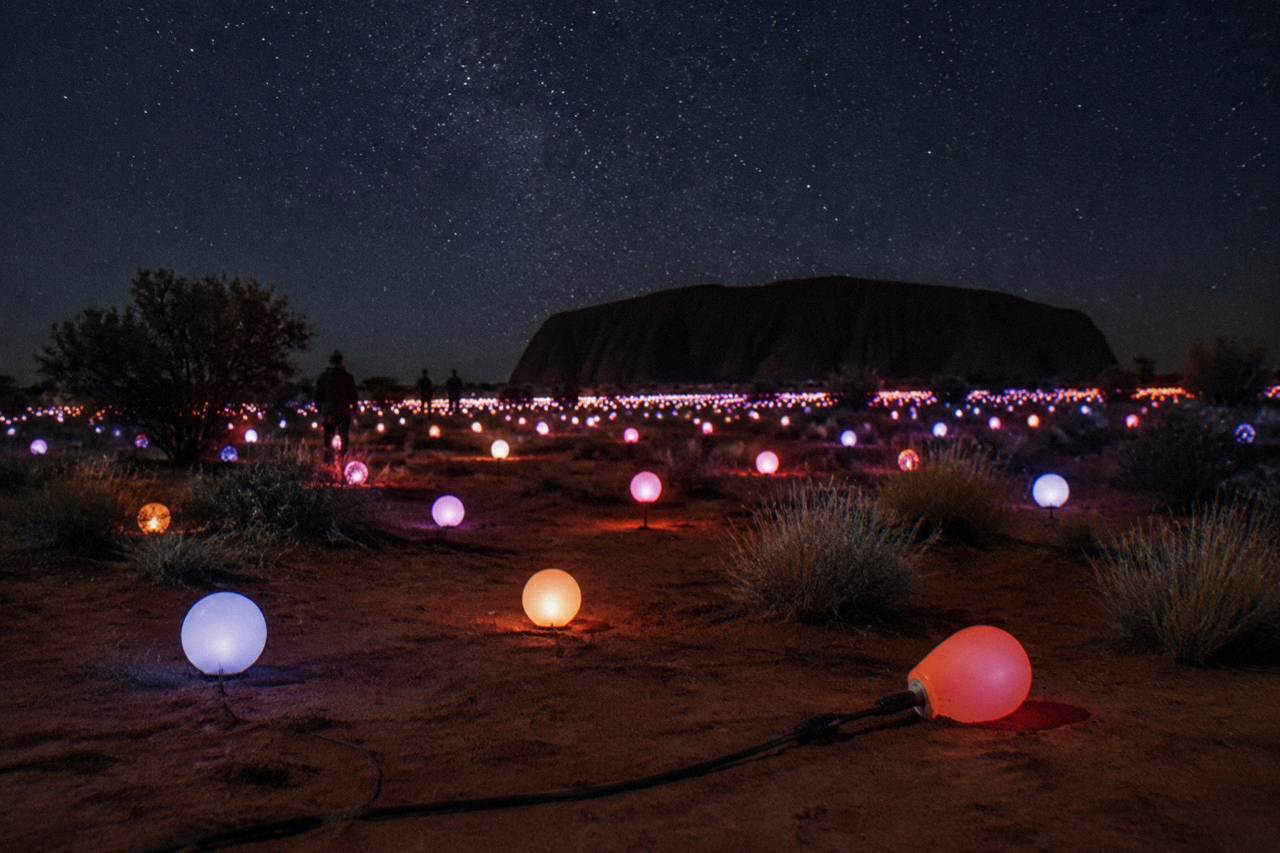
Field of Light Uluru is an after-dark artwork of more than 50,000 solar-powered glass spheres, spread across desert country near the rock in an area said to cover more than seven football fields. The artist Bruce Munro installed it in 2016, and 2026 marks its 10-year anniversary. It has been extended through 2029, so it is a long-running fixture of the Uluru experience, not a pop-up.
That longevity matters for planning. Some visitors assume a light show in the desert is a seasonal novelty and try to squeeze it in at the last minute. In practice there are several ways to see it, from a bare-bones resort pass to a guided sunrise arrival with hot drinks, and the right choice depends on your budget, your evenings and how much of Uluru you want to build around it. This guide lays out the passes, the two roster tours that connect to it, and the practical timing questions that decide whether you see it well or briefly.
What Is The Field Of Light At Uluru?
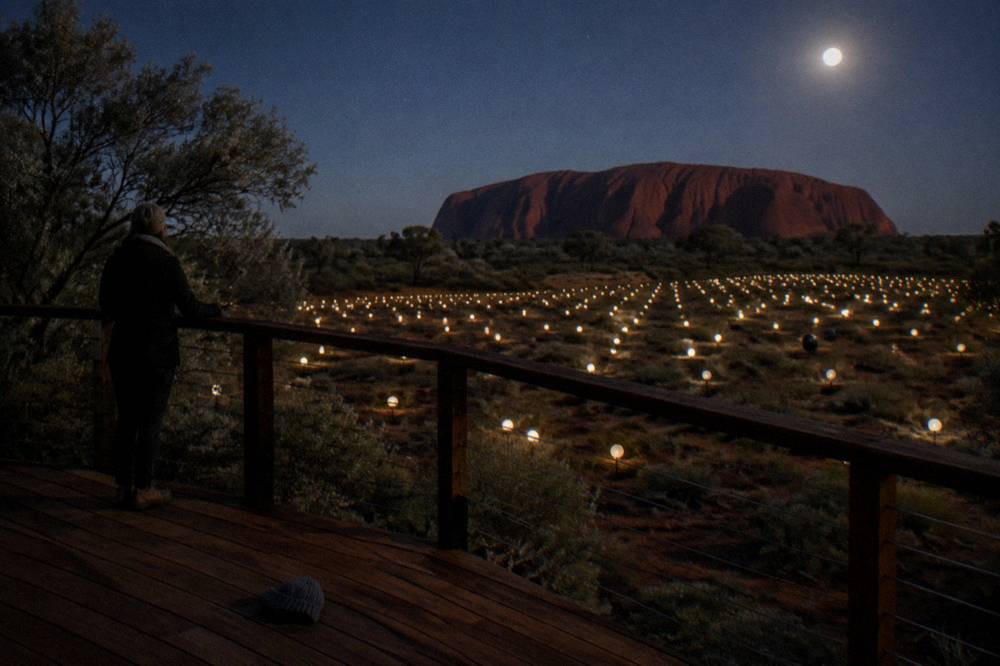
Field of Light is a large-scale installation by the British artist Bruce Munro, made up of more than 50,000 solar-powered, colour-shifting spheres laid out across the sand a short drive from Ayers Rock Resort. It was installed in 2016, 2026 is its 10-year anniversary, and it has been extended to run through 2029. Viewing happens after dark, on paths through the installation.
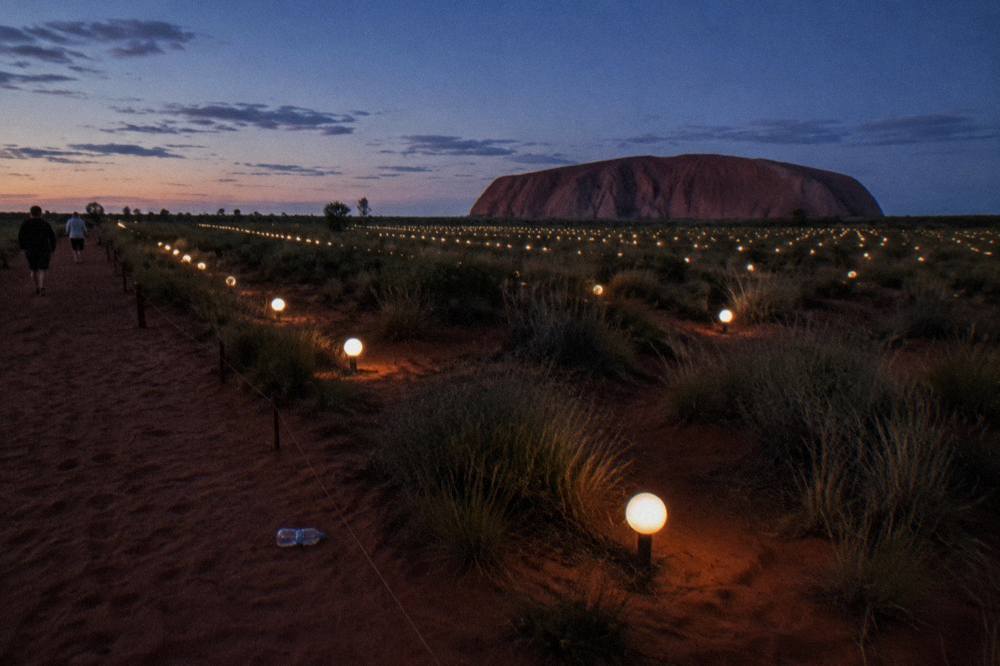
The spheres light up as the desert goes from dusk to full night, cycling slowly through colours: ochres, deep purples, cool whites and frosted blues that echo the landscape's own palette at different times of day. The resort's own experience page describes the concept as echoing the landscape, and the scale is the point. From a raised viewing platform you take in the field as a whole; walking the path among the stems puts you inside it, with light stretching away in every direction on flat ground.
It sits in country with views toward Uluru and Kata Tjuta, and that setting does a lot of the work. This is Anangu land, and Uluru-Kata Tjuta National Park is jointly managed by Anangu Traditional Owners and Parks Australia. The installation itself is outside the park boundary, which is one reason it can run after the park's nightly closing time, and one reason it is sold by Ayers Rock Resort rather than through a park pass.
Two practical points follow from that. First, your park entry pass does not cover Field of Light; an adult park pass is $38 for 3 days and is a separate purchase, listed separately on tour listings too. Second, because the field sits in open desert, weather can affect the experience: wind, cloud and dust change what you see, and nobody can promise a clear sky or a particular view. Operators decide on the night whether conditions allow the experience to run as planned.
For context on the other after-dark options, our guides to Sounds of Silence dining and the Wintjiri Wiru drone show cover the resort's two other big evening experiences, which some travellers combine with a Field of Light night on a multi-day stay.
What Are The Field Of Light Pass Options And Prices?
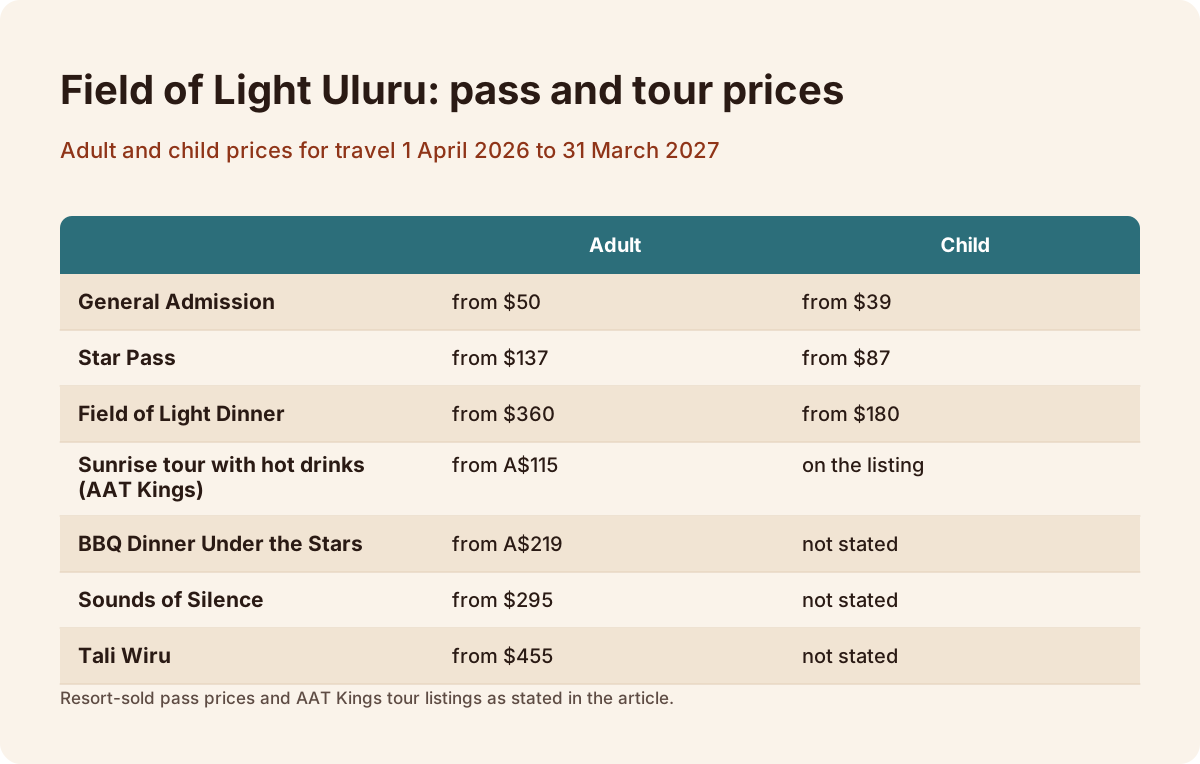
Resort-sold passes start from $50 per adult for General Admission, rising to a Star Pass from $137 and a full Field of Light Dinner from $360, with child prices at $39, $87 and $180 respectively for travel 1 April 2026 to 31 March 2027. The resort sells these direct; the tour options bookable through this site are the sunrise tour with hot drinks from A$115 and the BBQ dinner under the stars from A$219. Before you commit to a tier, our honest verdict on whether Field of Light is worth the money weighs up what each pass actually gets you and which format suits which traveller.
The resort's own pass ladder is straightforward, and the prices below are the resort's printed "from" figures for the travel window above. Note that these are the resort's direct-sale reference prices for its light-and-dining products; check the resort's own pages for live availability.
| Pass | Includes | Adult | Child |
|---|---|---|---|
| General Admission | After-dark entry, about 1 to 2 hours | from $50 | from $39 |
| Star Pass | Sunset viewing with the field, extras | from $137 | from $87 |
| Field of Light Dinner | Dinner within the installation | from $360 | from $180 |
| AAT Kings Sunrise tour (roster) | Dawn viewing, hot drinks, transfers | from A$115 | on the listing |
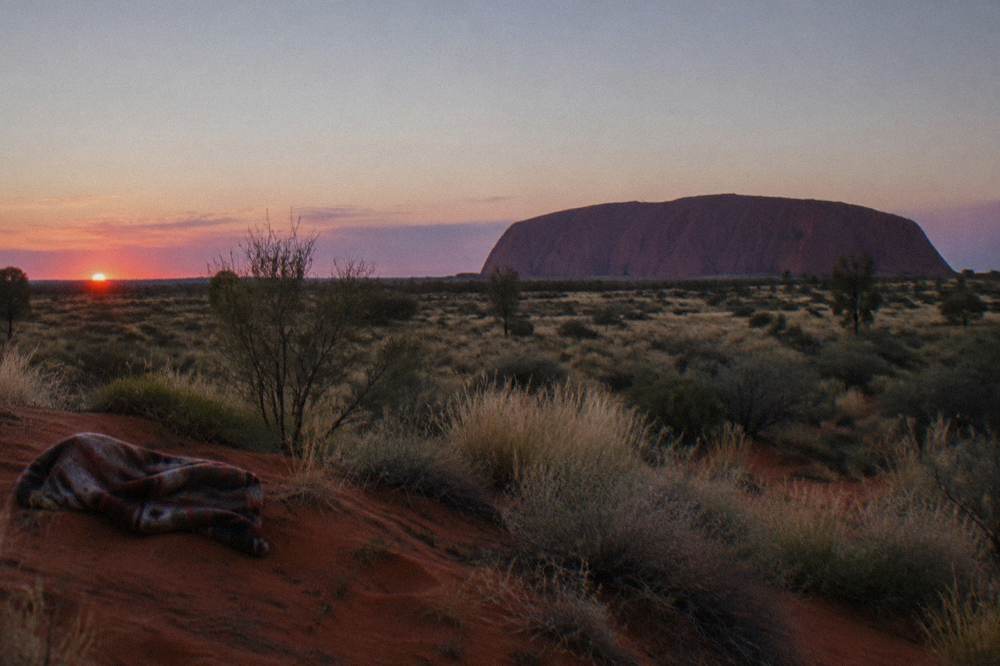
The distinction that trips people up is this: the resort passes are evening experiences sold direct, while the roster tour, the Field of Light Sunrise Tour with Hot Drinks, is a different product entirely. It brings you to the installation at dawn rather than after dark, with the spheres still lit against first light and Uluru catching the sunrise, and it is bookable through a live listing. One traveller photo opportunity does not replace the other: the after-dark pass is about the field against night sky, the sunrise tour is about the field against daybreak and the rock.
For a wider frame on what Uluru evenings cost across the board, our Uluru sunset tours guide compares the coach, small-group and dining formats side by side.
Is The Sunrise Tour With Hot Drinks Worth Booking?
The Field of Light Sunrise Tour with Hot Drinks, run by AAT Kings, costs from A$115 per person, rates 4.6 from 677 reviews, and takes about 2 hours with hotel pickup from Yulara. It is the cheapest way on the roster to see the installation with a guide and transport included, and it adds a dawn Uluru sunrise viewing that the evening passes do not.
The mechanics are simple. A coach collects you at Ayers Rock Resort before first light, drives you to the installation while the spheres are still glowing, and gives you time on the walkway with a hot drink in hand as day breaks. The tour then moves to a sunrise viewing area to watch light hit Uluru and Kata Tjuta, before returning you to your accommodation. The full listing, Uluru: Field of Light Sunrise Tour with Hot Drinks, prints a 2-hour duration, coach format and free cancellation with a cutoff that varies, listed on the booking page at 24 hours before start.
Why choose dawn over dusk? Three reasons come up again and again. The field at sunrise has a different character: the lights fade as the sky brightens, so you watch the artwork dissolve into the desert rather than appear out of it. You are out early enough to keep the rest of your day free for a walk or a Kata Tjuta trip. And the price is close to the bare resort pass while adding transport, a guide and a hot drink, which matters if you have no rental car, since the installation is not walkable from the resort hotels.
If you are weighing it against other sunrise formats, the Uluru sunrise tours guide compares the coach combos, small-group walks and this installation visit in one table.
The full tour listing is worth a read before you commit, since duration details and the child price sit on the Field of Light sunrise tour page. Booking in advance matters more in the peak May to September window, when Yulara's rooms and the popular departures both tighten up. Readers planning a longer stay sometimes pair the sunrise tour with an evening elsewhere: the Sacred Sites and Sunset Tour with Wine and Cheeseboard, from A$186 with a 4.5 rating from 515 reviews, covers the sunset side of Uluru with sparkling wine at the viewing area, a natural companion if your mornings are given to Field of Light and your evenings to the rock.
What Does The BBQ Dinner Under The Stars Add?
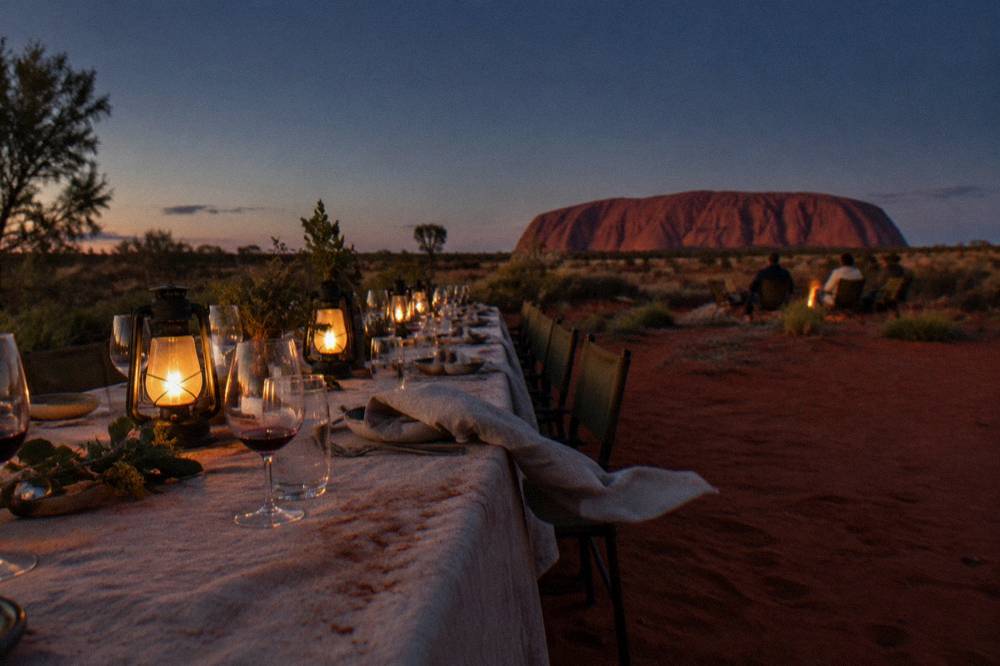
The Australian BBQ Dinner Under the Stars, an AAT Kings experience from A$219 per person with a 4.5 rating from 79 reviews, is a 3-hour coach evening combining Uluru viewing at dusk with an outback barbecue dinner, wine included, under the night sky. It does not enter the Field of Light installation, but it delivers the desert-dinner atmosphere at a lower price than the resort's $360 dinner pass.
The evening runs from Yulara with pickup, takes in a sunset or dusk viewing stop near Uluru, and finishes at a barbecue setup where the meal and wine are served with the night sky overhead. A guest review describes a "really good" barbecue and star gazing that held up even when clouds did not cooperate, which is an honest reminder that the sky is never guaranteed. Where the resort's Field of Light Dinner places the meal inside Munro's installation at $360, this roster tour trades the installation for the rock itself and saves roughly $140 per adult.
That trade is the real decision. If the artwork is the reason you are here, the sunrise tour plus a resort pass is the stronger combination. If it is the outback-dinner-in-the-desert experience you want, and Uluru at dusk is the backdrop you care about, the BBQ dinner is the better spend. Reviews are the honest check here: 79 reviews is a much smaller pool than the sunrise tour's 677, so read a handful yourself on the live listing before deciding.
One more framing helps. Field of Light is one thread of an evening economy that also includes Sounds of Silence from $295 and Tali Wiru from $455, both resort-direct. Our Field of Light worth-it analysis works through the value question for travellers who want the full evening laid out on paper.
When Is The Best Time To See Field Of Light?
May to September is the comfortable window at Uluru, with daytime maximums usually 20 to 30 C and cold nights; October to March regularly exceeds 35 C. Field of Light runs year round at the resort level, and the sunrise tour runs to its published schedule, so the question is less availability than comfort, flies and what the night sky gives you.
The park's climate guidance and the Yulara averages tell the story month by month. Winter nights drop to an average minimum of 4.4 C in July, so the sunrise tour in June or July means a genuine jacket and the hot drinks earn their name. Summer brings heat above 35 C through the day, heavy bush flies between September and April, and UV that reaches extreme levels in warm months, with the Bureau of Meteorology's outlook favouring above-average temperatures for the southern Northern Territory through late 2026. Other pages covering the same trip are gathered on Uluru Australia Tours.
| Month | Average max / min (C) | Average rain (mm) | Notes for Field of Light |
|---|---|---|---|
| January | 38.4 / 22.8 | 28.8 | Hot nights, storm risk |
| April | 29.9 / 14.5 | 15.7 | Warm evenings, fewer flies |
| July | 20.6 / 4.4 | 17.6 | Cold dawn tours, bring layers |
| September | 28.7 / 10.7 | 9.0 | Peak season, dry, busy |
| October | 32.3 / 14.9 | 21.1 | Warming fast, fly season starts |
The Bureau's seasonal outlook for October to December 2026 favours above-average maximum temperatures across most of Australia and above-average rainfall for the southern two-thirds of the Northern Territory, so late-2026 travellers should plan for heat and the possibility that desert storms reshuffle an evening. The park's own advice in hot conditions is blunt: carry at least one litre of water per person per hour of walking, avoid walking between 2.30 pm and 6.30 pm in summer, and call 000 or 112 in an emergency.
Winter has its own drawcard. Cold, dry winter nights tend toward the clear skies the Red Centre is famous for, which is exactly what an after-dark installation and a star talk want. Our full best time to visit Uluru guide works through the seasons in more depth, including the Anangu seasonal calendar: the piriyakutu season, usually August to October, is when food plants flower in the park.
How Do You Get To The Field Of Light?
The installation sits a short drive from Ayers Rock Resort at Yulara and is not walkable from the hotels; every pass and tour includes transport, either a resort shuttle or, on the roster tours, a coach with hotel pickup. Most travellers reach Yulara by flying direct to Ayers Rock Airport from Sydney, Melbourne, Brisbane or Cairns, or by road from Alice Springs, 465 km away.
Direct flights to Ayers Rock (Connellan) Airport are operated by Qantas, Virgin Australia and Jetstar from those four cities, with flight times from about 2 h 40 min to 3 h 15 min, and rental cars are available at the airport and in Yulara, though supply is limited and the park's own page advises booking weeks ahead. If you are driving from Alice Springs, allow about 5.5 hours each way, which is why most Field of Light visitors stay at least one night in Yulara rather than attempting a day trip. Our how to get to Uluru guide covers the routes in detail.
Because every option includes transfers, a rental car is not required for Field of Light itself. It only becomes useful for the rest of your stay, the sunrise and sunset viewing areas inside the park, Kata Tjuta 50 km by road from Uluru, and the freedom to move at dawn and dusk when the coach tours are already moving you. Travellers who would rather not drive sometimes combine the sunrise tour with the Uluru and Kata Tjuta Hop on Hop Off Pass, from A$140 with a 4.5 rating from 154 reviews, which covers in-park movement on a shuttle circuit.
What Should You Know About Photos, Culture And Park Rules?
Photographing Uluru and the Field of Light installation is generally fine, but culturally sensitive sites at Uluru and Kata Tjuta are signed and photographing those specific places is prohibited, drones are banned in the park under the EPBC Act, and the park closes nightly so night-sky photography happens outside it. The installation itself sits outside the park, so the after-dark session is unaffected by closing time.
The photography rules are specific rather than sweeping. Wide shots of Uluru from a distance are welcome; what Anangu ask is that certain sacred detail, particularly on the north-east face, not be photographed closely, and the park asks for wide shots only there, ideally in the one to two hours before sunset when shadow hides the sensitive areas. At Kata Tjuta, the Valley of the Winds walk is a no-photography zone for the formations themselves. Inside Field of Light, low light and tripods are the practical challenge rather than rules, and the resort's guidance on the night applies.
Two more rules shape an Uluru visit. The climb closed permanently on 26 October 2019, and attempting it breaches the EPBC Act with penalties issued, so no tour or plan should involve it; the cultural framing is that climbing was never generally permitted under Tjukurpa, Anangu law and culture. And the park occasionally closes temporarily for cultural reasons, with conditions and track sections also closing in extreme heat, so read the park's news page before you travel.
The Cultural Centre, open 7.00 am to 5.45 pm daily and free to enter, is the best hour you can spend grounding the artwork in its setting. To understand the joint management of the park and Anangu life around Uluru more fully, see our guide to Aboriginal culture at Uluru.
How Do You Build Field Of Light Into A Full Uluru Trip?
A common pattern is two nights in Yulara: evening one for a sunset coach tour or the BBQ dinner under the stars, morning two for the Field of Light sunrise tour with hot drinks, and the gaps filled with the base walk, Kata Tjuta and a scenic flight. The two roster tours around the installation cost from A$115 and A$219, so the pair still comes in below the resort's $360 dinner pass alone.
Budget-wise, the whole Uluru stack adds up fast, and the park pass belongs in the sum. An adult 3-day pass is $38, under 18s are free, and tour listings print the fee separately because it must be pre-purchased online. Our Uluru tour cost breakdown works through a full sample budget, and the pattern below is a typical three-day shape.
| Slot | Option | From (per adult) | Format |
|---|---|---|---|
| Evening 1 | BBQ Dinner Under the Stars | A$219 | Coach, dinner, wine |
| Dawn 2 | Field of Light Sunrise Tour | A$115 | Coach, hot drinks |
| Day 2 | Full Base Walk at Sunrise | A$249 | Small group, breakfast |
| Day 3 | 15-Minute Helicopter Experience | A$195 | Shared flight |
The helicopter minute in that table is not a gimmick. A review on the 15-minute flight's listing says viewing Uluru by air "gave a true perspective of the size", and that scale is exactly what the ground-level Field of Light walk plays with in reverse: an artwork you walk inside versus a monolith you can only see whole from above. The flight rates 4.9 from 669 reviews, from A$195 per person.
If three days feels generous, it is roughly right; our how many days are enough for Uluru piece argues the case, and longer-stay travellers often fold in a Kings Canyon day or a multi-day camping loop, covered in our Kings Canyon tours guide. Whatever the shape, book the Field of Light elements early in peak season: the installation runs through 2029, but the popular departures on any given week do not stretch that far.
Common Questions About Field Of Light Uluru
Is Field of Light Uluru worth it?
Most travellers who enjoy it combine the scale of the installation with the desert setting, and the resort's General Admission from $50 is a low-commitment entry point. The sunrise tour from A$115 adds a guide, transfers and dawn light for a modest premium. Our detailed worth-it analysis works through the trade-offs.
How long does Field of Light go for?
The installation has run since 2016 and is extended through 2029. 2026 is its 10-year anniversary, not an opening date. General Admission lasts about 1 to 2 hours on site.
What does Field of Light cost?
Resort passes run from $50 adult for General Admission, from $137 for the Star Pass and from $360 for the Field of Light Dinner, with child prices from $39, $87 and $180, sold direct by Ayers Rock Resort for travel 1 April 2026 to 31 March 2027. The roster sunrise tour costs from A$115 per person.
Does the park pass include Field of Light?
No. The $38 adult 3-day park pass covers Uluru-Kata Tjuta National Park only, and tour listings state the fee separately and require it to be pre-purchased online. The installation sits outside the park and is ticketed separately.
Is Field of Light better at sunrise or after dark?
After dark you see the field against the night sky at full intensity; at sunrise you watch it fade as day breaks, with Uluru catching first light. They are different experiences, and both the resort's evening passes and the AAT Kings sunrise tour are legitimate ways in.
Can you photograph Field of Light?
Yes, the installation is photographed freely and low-light ability matters more than rules. Inside the national park, culturally sensitive sites at Uluru and Kata Tjuta are signed no-photography zones, and drones are prohibited under the EPBC Act.