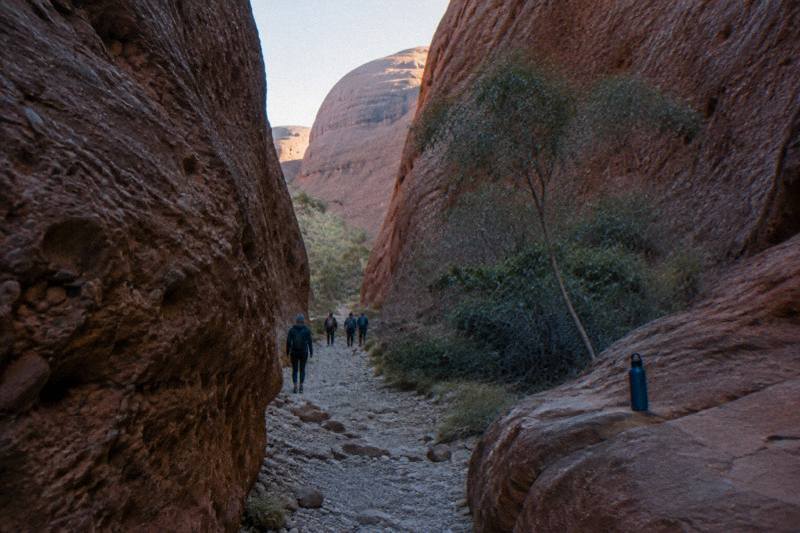
How Many Days Are Enough For Uluru?
A practical guide to choosing one, two, three or four days at Uluru and Kata Tjuta, with itinerary options, tour durations and travel-time realities.
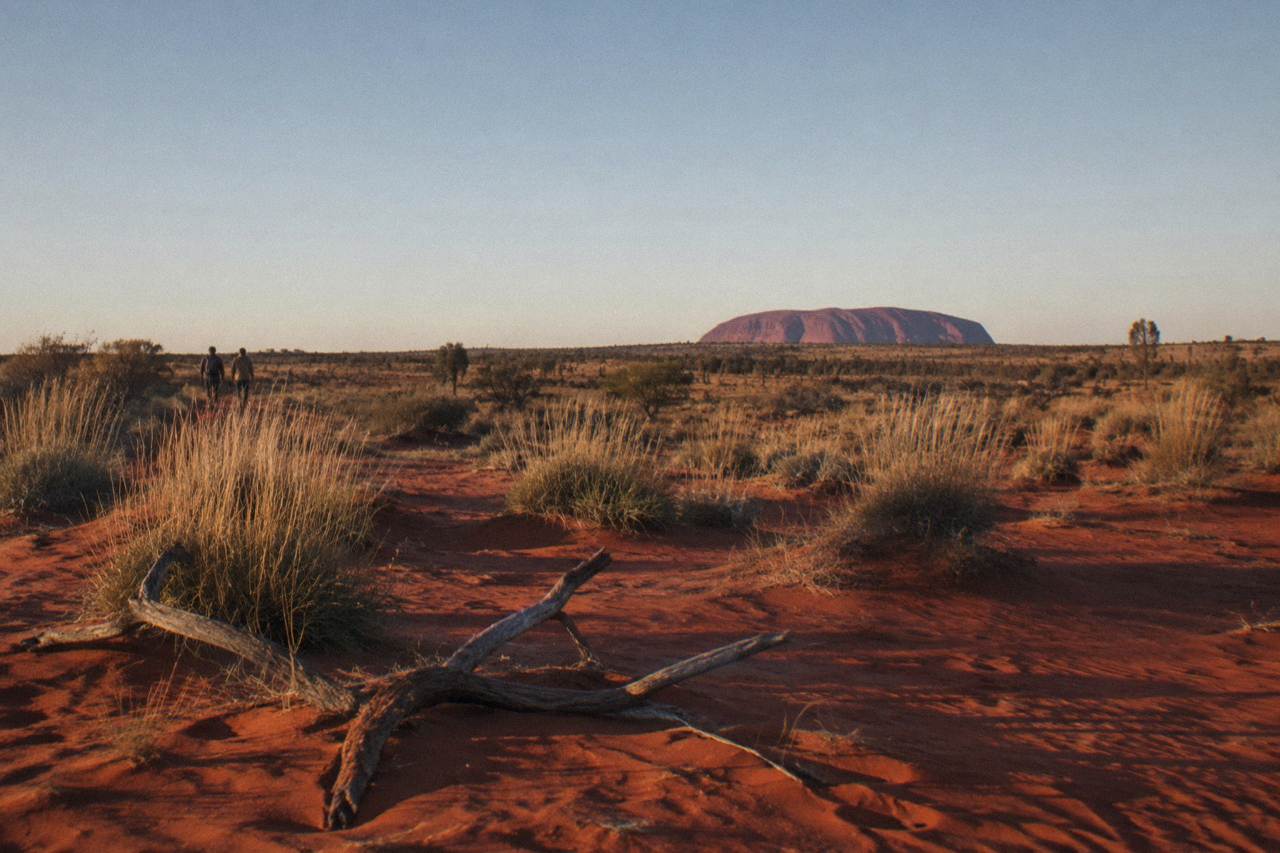
Uluru sits 465 km by road from Alice Springs, inside a national park that closes every night, in a town, Yulara, that exists almost entirely to service visitors. That geography is the reason the "how many days" question matters more here than almost anywhere else in Australia. Every hour of your trip has to be spent deliberately, because nothing at Uluru is walking distance from anything else, and the two headline sights, Uluru and Kata Tjuta, are 50 km apart by road.
The honest answer, based on the tour schedules and the park's own guidance, is that three days is the comfortable number for most travellers. Two days works if you are efficient and accept some early starts. One day covers the essentials only, and four days or more opens up Kings Canyon, the resort's dining experiences and a slower pace. The variables that push the number up are whether you want to do the full base walk, whether you want to see Kata Tjuta properly rather than from a lookout, and whether Kings Canyon is on your list at all.
How Many Days Are Enough For Uluru?
Three days is the sweet spot for most visitors, two days is a workable minimum if you start early, and one day only covers the headline sights. The park's own pages list a full base walk of about 10 km, a Kata Tjuta Valley of the Winds circuit of 3 to 4 hours, and five dedicated sunrise and sunset viewing areas, and none of those overlap neatly into a single day. Day trips, flights and resort experiences stack on top.
The arithmetic is simple once you look at what the days actually contain. Sunrise and sunset each consume one end of the day. The park is open every day of the year but closes at night, and hours shift by month: in October it is open 5.00 am to 8.00 pm, while in June and July it opens at 6.30 am. In the hottest months the park's safety guidance says to finish walks before 11.00 am, which compresses everything into a narrow morning window.
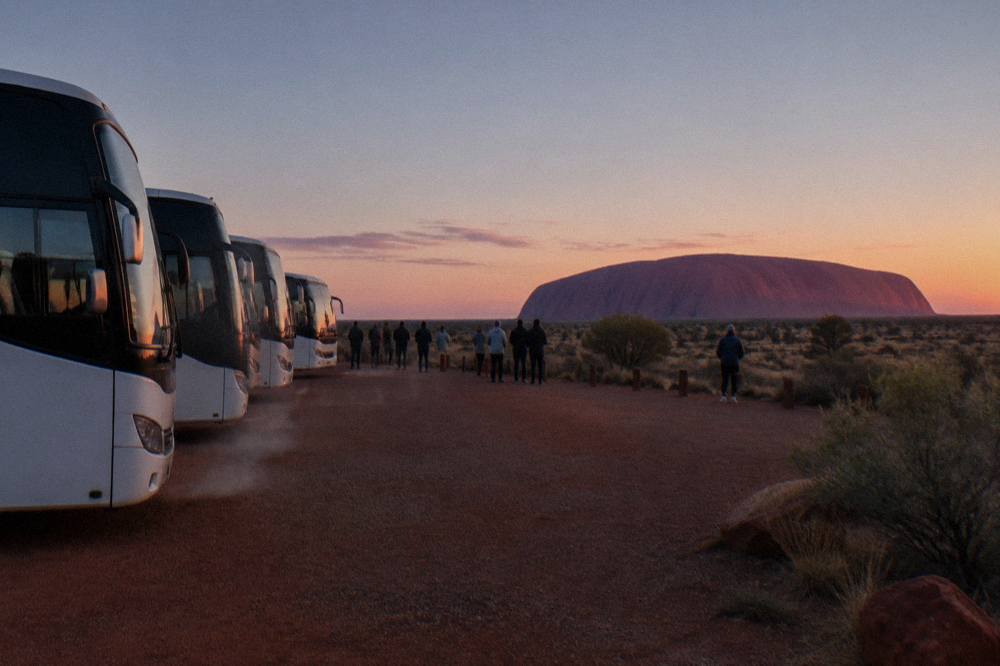
There is also a hard travel-time floor. If you fly into Ayers Rock Airport at Yulara, you are minutes from the resort and the park gate. If you come from Alice Springs, the drive is about 5.5 hours each way, which effectively burns a day of your trip in each direction unless you book a multi-day tour that turns the drive into part of the itinerary. Our Uluru Australia Tours coverage is organised around this exact problem: the tours that leave from Yulara are short and stackable, while the ones that leave from Alice Springs are multi-day by definition.
Here is a quick comparison of what each trip length realistically holds, built from the tour durations on the roster and the park's walk times:
| Trip length | What fits comfortably | What you sacrifice |
|---|---|---|
| 1 day | One sunrise or sunset tour, one short walk, the Cultural Centre | Kata Tjuta, the full base walk, Field of Light, any flight |
| 2 days | Sunrise and sunset tours on day one, Kata Tjuta and a flight on day two | Kings Canyon, slower pace, a second base-walk attempt if weather turns |
| 3 days | Both rock sites, the base walk, a scenic flight, Field of Light, resort dining | Kings Canyon, unless day three runs long |
| 4 days or more | Everything above plus Kings Canyon, at 12 hours as a day tour, or a multi-day camping itinerary | Very little |
What Can You Actually See In One Day At Uluru?
One day gives you a sunrise or sunset experience, one walk, and the Cultural Centre, and that is about the limit. The base walk alone is about 10 km and takes most of a morning, and Kata Tjuta is a 50 km drive each way, so a single day forces hard choices. The one-day visitor should pick one guided tour that bundles the most into the fewest hours.
The most efficient one-day play is a combined tour rather than separate bookings. The Uluru Sunrise and Kata Tjuta Day Trip by Bus, run by AAT Kings, is a five-hour coach itinerary from Yulara that takes in the sunrise viewing area and Kata Tjuta in one move, from A$186 per person with a 4.6 rating from 603 reviews. It is the sunrise and Kata Tjuta combination tour we point short-stay readers toward most often, because it clears the two headline sights in a single morning. A guest named Maddison left a five-star review: "Very good tour and the guides, Dani and Regi, were amazing. They were knowledgeable and friendly, and made sure the tour was prompt so we could visit everywhere with enough time to enjoy ourselves."
If a coach sunrise is not your style, the Segway the FULL base of Uluru tour from Uluru Segway Tours covers the entire base loop in five hours, from A$259 per person, rated 4.9 from 499 reviews. It replaces the walking effort with wheels and frees the afternoon. The 15-minute helicopter experience from Professional Helicopter Services, from A$195 per person, adds an aerial perspective without consuming half a day. A one-day itinerary can genuinely combine a morning coach tour and an afternoon flight if you plan the pickups carefully.
What one day cannot absorb: the resort's evening experiences. Sounds of Silence runs about four hours and is sold direct by Ayers Rock Resort from $295 adult. Field of Light General Admission runs one to two hours after dark, from $50 adult. Both consume your evening, which is exactly the window a one-day visitor usually loses to a departure flight.
Is Two Days The Sweet Spot For Uluru?
Two days is the minimum that lets you see Uluru and Kata Tjuta properly without rushing, and for many travellers it is genuinely enough. Day one holds a sunrise tour and the base walk or a sunset experience, day two holds Kata Tjuta and a scenic flight. What two days cannot hold is Kings Canyon, which needs a 12-hour day tour or an overnight.
The two-day structure works because the park's experiences split cleanly into Uluru-side and Kata Tjuta-side. On the Uluru side the anchor options are the small-group tours: the Full Uluru Base Walk at Sunrise Including breakfast from SEIT Tours is six hours, from A$249, rated 4.8 from 460 reviews, and walks the whole 10 km circumference with a guide. One guest, Ian S, called it "an excellent tour" with an "incredibly knowledgeable and enjoyable" guide. That is the deepest Uluru experience on the roster, and it needs a full morning.
On the Kata Tjuta side, the Kata Tjuta Small-Group Tour Including Sunrise and Breakfast, also from SEIT Tours, is five hours from A$249 and rated 4.8 from 255 reviews. A guest named Virginia L described it as a "beautiful way to wake up", praising the gorge hike and the breakfast. Slot that into your second morning and you have covered both rock sites, both sunrise slots and one sunset. Fill the first evening with a sunset tour, the Sunset Wine And Cheeseboard from AAT Kings is five hours from A$186, or an outback barbecue dinner with star talk from A$328.
A two-day trip also needs slack thinking. The park's safety pages warn that temperatures can exceed 40 C in summer and that some walks close in extreme heat, so a plan with zero buffer risks losing a walk to the forecast. Two days with a built-in alternative, say swapping a hot-afternoon walk for a helicopter flight, survives better than a rigid schedule.
What Does A Three-Day Uluru Itinerary Look Like?
Three days is the number that fits everything on most visitors' lists without heroics: both rock sites, the full base walk, a scenic flight, Field of Light and one resort dining experience. A typical shape is day one Uluru sunrise plus base walk, day two Kata Tjuta sunrise plus an afternoon flight, day three the Cultural Centre, shorter walks and a sunset dinner. Three days also survives one bad-weather morning. To see how those days look once you slot in real tours, the day-by-day Uluru itinerary covers sunrise viewing, Kata Tjuta, the Field of Light and scenic flights with current prices and timings.
Day one is the Uluru day. Morning belongs to a sunrise tour, and the Full Base Walk, Small Group option from SEIT Tours at six hours is the strongest choice because it combines the viewing moment with the 10 km loop and breakfast. Afternoon belongs to the Cultural Centre, open 7.00 am to 5.45 pm daily and free to enter, and the shorter Kuniya walk to Mutitjulu Waterhole. Evening belongs to light: Field of Light, Bruce Munro's installation of more than 50,000 solar-powered spheres, has run since 2016 and is extended through 2029.
Day two is the Kata Tjuta and air day. The small-group Kata Tjuta sunrise tour takes the morning; the afternoon can carry the 15-minute or 25-minute helicopter flight. The 25-minute version from Professional Helicopter Services covers both Uluru and Kata Tjuta, from A$315, rated 4.8 from 616 reviews, and a reviewer named Stuart Lindsay said of the shorter flight that seeing Uluru by air "gave a true perspective of the size". A fixed-wing alternative, the Scenic Plane Flight: Uluru Rock Blast from Ayers Rock Scenic Plane Flights, is from A$180 and rated 4.8 from 113 reviews.
Day three is the flexible day. Use it for the ranger-guided Mala walk, free for park visitors, the Segway combo, or a lie-in and a second sunset. Our three-day itinerary breakdown walks through a full day-by-day version of exactly this shape, and the Uluru base walk guide covers the walking side in detail.
Should You Add Kings Canyon To Your Trip?
Kings Canyon adds a full extra day, minimum, because the Kings Canyon: Full-Day Tour from Ayers Rock Resort runs 12 hours and from A$345, rated 4.7 from 666 reviews. The rim walk is the reason to go, and it cannot be compressed into an evening. Treat Kings Canyon as a fourth-day add-on or as part of a multi-day camping tour.
The geography decides this. Kings Canyon sits roughly 300 km from Yulara, and a day tour is nearly half a day of driving wrapped around the canyon itself. If your trip is three days and you add Kings Canyon, you are really on a four-day trip with one overloaded day. The cleaner options are either a dedicated fourth day built around the AAT Kings tour, or one of the camping itineraries that string the three headline sights together with transport, guiding and camping gear included.
The camping alternative is worth taking seriously. The Uluru, Kata Tjuta & Kings Canyon Camping Tour from Adventure Tours Australia is three days from A$795, rated 4.8 from 455 reviews, with swag nights under the stars. The four-day version is from A$1,195 and rated 4.9 from 355 reviews; a guest named Warren S praised his guide Sophie as "a fantastic guide, with great knowledge. And a terrific cook!" Both depart Yulara. If you are starting in Alice Springs instead, the 2-day Uluru-Kata Tjuta Overnight Camping tour from Autopia Tours, from A$765, converts the 5.5-hour drive into part of the experience.
Do You Need A Tour Or Can You Explore Independently?
You can explore Uluru and Kata Tjuta without a tour if you have your own transport: the base walk, the viewing areas, the Mala walk and the Cultural Centre are all open to any park pass holder. A park pass is $38 for an adult for 3 days, under 18 free. Tours earn their price by adding guiding, transport from Yulara, food and knowledge you will not get from signs alone.
The independent route needs a car. Rental cars are available at Ayers Rock Airport and in limited supply in Yulara, and the official advice is to book a few weeks ahead. With wheels, the free and pass-included list is genuinely good: sunrise and sunset viewing areas, the 2 km wheelchair-accessible Mala walk, the ranger-guided Mala walk at 8.00 am from October to April, and the Cultural Centre. Our free things to do at Uluru guide runs through that list in full.
What a tour adds is context and logistics. Anangu are the Traditional Owners of this country, and the cultural information a guide carries, especially on culturally focused products like the Aboriginal Homelands Experience, cannot be replicated by reading signs. Tours also solve the pre-dawn transport problem: every roster tour from Yulara includes pickup, and sunrise departures from the resort happen well before any casual visitor wants to organise a car.
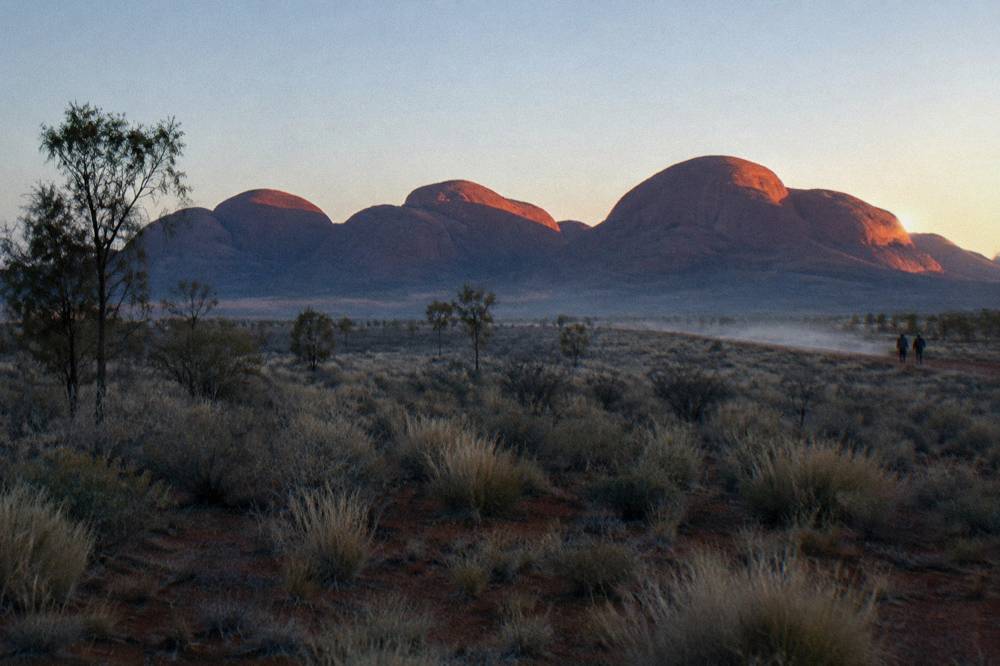
One middle path is the Uluru and Kata Tjuta hop-on hop-off pass, from A$140, rated 4.5 from 154 reviews, which gives scheduled transport without a fixed itinerary. It suits travellers who want independence without a rental car.
How Do Flights And Travel Time Affect Your Day Count?
Flying direct to Ayers Rock Airport from Sydney, Melbourne, Brisbane or Cairns protects your day count, because the airport sits at Yulara minutes from the resort, while arriving via Alice Springs costs most of a day each way across the 465 km drive. How you arrive is effectively a day of your trip, so a "three-day trip" via Alice Springs is really two days on the ground plus two travel days.
Qantas, Virgin Australia and Jetstar fly direct to Ayers Rock (Connellan) Airport, roughly three hours from Sydney, 2 hours 40 from Melbourne, 3 hours 15 from Brisbane and 2 hours 50 from Cairns, per the park's getting there page. If your flights land mid-morning and leave mid-afternoon, as many do, count an arrival day as a half day for tour purposes: you will usually make a sunset experience but rarely a sunrise.
The road option is not a poor cousin. Driving the Lasseter Highway, or taking a coach transfer from Alice Springs, is its own outback experience, and road conditions should be checked on the NT government's road report before setting out. Our getting to Uluru guide compares the flight and drive routes in detail, including the trade-offs on cost and time.
Which Season Changes The Answer?
Summer shortens your usable days. From October to March, daytime maximums at Yulara average above 29 C and regularly exceed 35 C, and the park advises avoiding walking between 2.30 pm and 6.30 pm and carrying at least one litre of water per person per hour. In practice a hot-month itinerary needs more days to achieve less. Winter, May to September, with maximums usually 20 to 30 C, lets you pack far more into each day.
The Bureau of Meteorology averages for Yulara make the case plainly: January sits at an average maximum of 38.4 C, July at 20.6 C. Overnight winter minimums drop to an average of 4.4 C in July, so the same trip can hand you a frosty dawn and a warm afternoon. Bush flies are heavy from September to April, and head nets are sold on arrival. The park's own when to come page identifies May to September as the comfortable window.
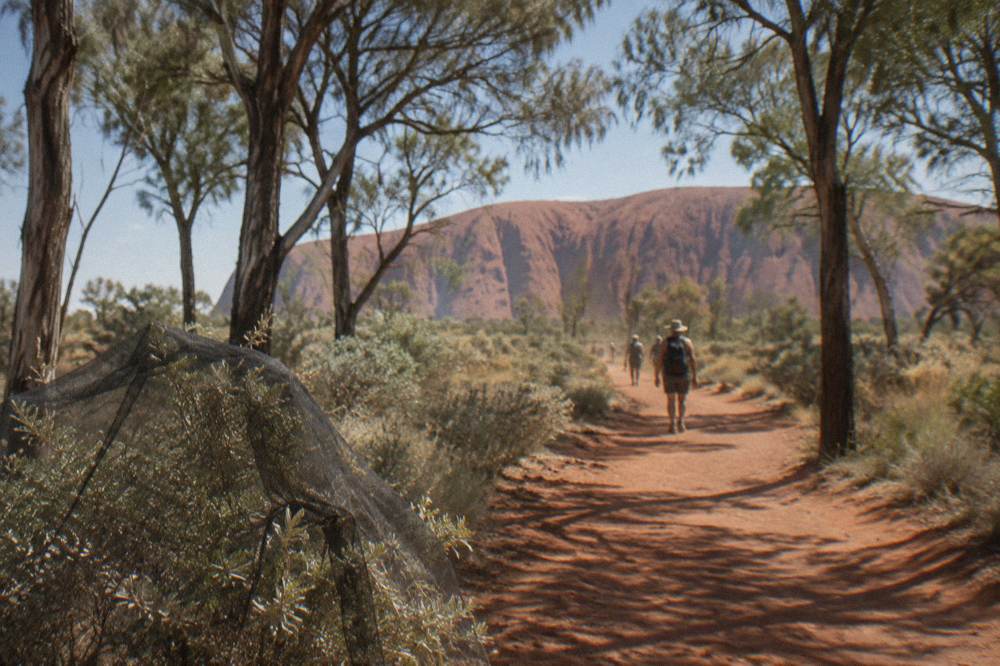
Season also changes what each day can hold. In winter, the longer walk options, the full base walk and the Valley of the Winds circuit, are pleasant all morning. In summer, those same walks need to finish before 11.00 am, and the afternoon belongs to air-conditioned coaches, helicopters and swimming pools. If you are travelling in the hotter months, add a day to whatever number the itinerary below suggests, and lean on coach and flight products rather than walking ones.
| Month group | Average max / min at Yulara | Walking window | Days needed for a full itinerary |
|---|---|---|---|
| May to July | 20.4 to 24.3 C / 4.4 to 9.3 C | Most of the day | 3 |
| August to September | 23.7 to 28.7 C / 5.9 to 10.7 C | Morning and late afternoon | 3 |
| April, October | 29.9 to 32.3 C / 14.5 to 14.9 C | Early morning only | 3 to 4 |
| November to March | 34.5 to 38.4 C / 19.3 to 22.8 C | Before 11.00 am | 4 to 5 |
The final answer, then, is a sliding scale. Two days if you are flying in and out of Yulara and happy with the headline sights. Three days if the base walk, Kata Tjuta and an evening experience all matter to you, which describes most first-time visitors. Four days or a multi-day camping tour if Kings Canyon is on the list, or if you are travelling in the hot months and need the buffer. Whatever number you land on, book the sunrise and sunset tours first, because those fixed windows are the one thing no itinerary can reorder.
Common Questions About How Many Days Are Enough For Uluru
How Many Days Are Enough For Uluru?
Three days covers both rock sites, the full base walk, a scenic flight and an evening light or dining experience for most travellers. Two days works with early starts, one day covers only the headline sights, and four days or a multi-day tour adds Kings Canyon.
Can You Do Uluru And Kata Tjuta In One Day?
Yes, but only with a combined tour. The Uluru Sunrise and Kata Tjuta Day Trip by Bus covers both in five hours from A$186 per person. Independent travellers can drive to both, but the 50 km between them plus walk times make a single day tight.
Is Two Days In Uluru Enough?
For many visitors, yes. Day one can hold a sunrise base-walk tour and a sunset experience, day two a Kata Tjuta sunrise tour and a scenic flight. The trade-off is no Kings Canyon and little slack if heat or weather closes a walk.
Do You Need Extra Days For Kings Canyon?
Yes. The full-day Kings Canyon tour from Ayers Rock Resort runs 12 hours from A$345, so it consumes an entire day. Alternatively, a three or four-day camping tour links Kings Canyon with Uluru and Kata Tjuta in one itinerary.
Does Flying Via Alice Springs Cost Me A Day?
Effectively, yes. Alice Springs is 465 km from Uluru, about 5.5 hours by road, so a Yulara-based trip via Alice Springs loses most of a day in each direction. Direct flights into Ayers Rock Airport at Yulara protect your days on the ground.
Does The Season Change How Many Days I Need?
It does. From November to March, average maximums at Yulara run above 34 C and the park advises against walking in the mid-afternoon, so each day holds less and a full itinerary needs four or five days. From May to September, three days is comfortable.