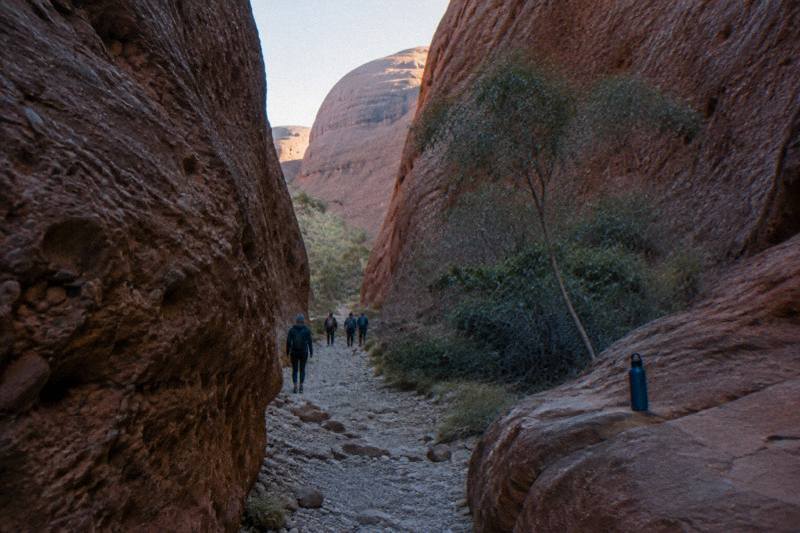
Is Uluru Better For Sunrise Or Sunset?
A practical comparison of sunrise and sunset at Uluru: crowds, light, heat, photo rules and which roster tour fits each slot.
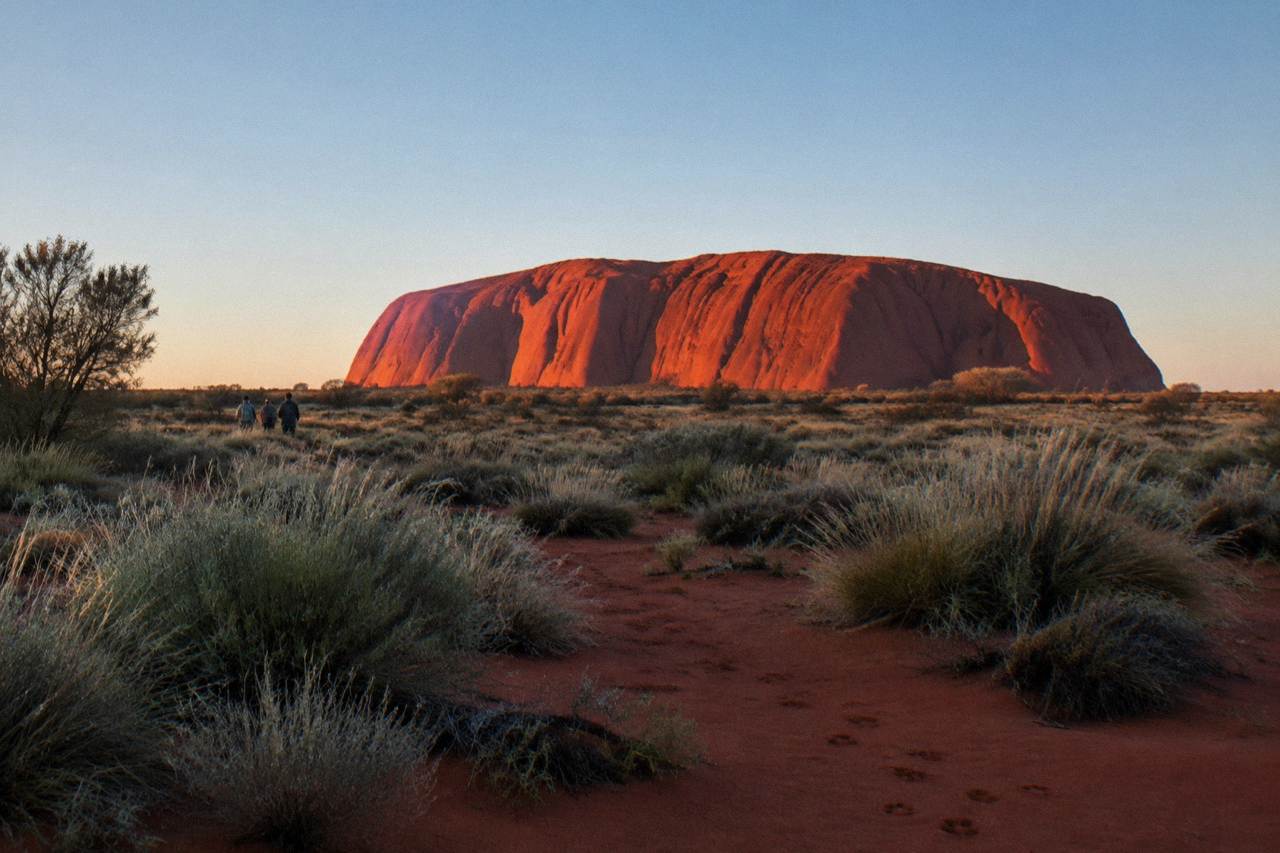
Most visitors to Uluru get one, maybe two, mornings and evenings at the rock, so the question of which slot to protect is a real planning decision rather than a matter of taste. The park itself treats the two differently: it maintains five dedicated viewing areas, and the two sunrise platforms and the three sunset platforms are not interchangeable, because Uluru's colour, shadow and even the direction you face change completely between the ends of the day. Heat, crowd flow and the photography rules that apply to the rock's north-east face all push the answer one way or the other depending on the season you travel in.
This comparison draws on the park's own viewing-area and photography pages, the Bureau of Meteorology climate record for Yulara, and the verified tour roster for this site. The short version: sunrise wins on crowds, temperature and the calm of the Kata Tjuta dune platform, while sunset wins on colour intensity, the photography window the Anangu ask for, and the sheer number of roster tours built around it. The honest answer for most travellers is to do one of each, and the sunrise and sunset tours hub on this site lays out the full menu for both slots.
Is Uluru Better For Sunrise Or Sunset?
Neither time is objectively better, but each suits a different traveller: sunrise brings cooler air, thinner crowds and a quiet start before the day's heat, while sunset delivers the strongest colour on the rock, the photography window Anangu request for the north-east face, and the widest choice of dining and small-group tours. Your decision comes down to the season, whether you can manage a pre-dawn start, and which of the five official viewing areas you can reach.
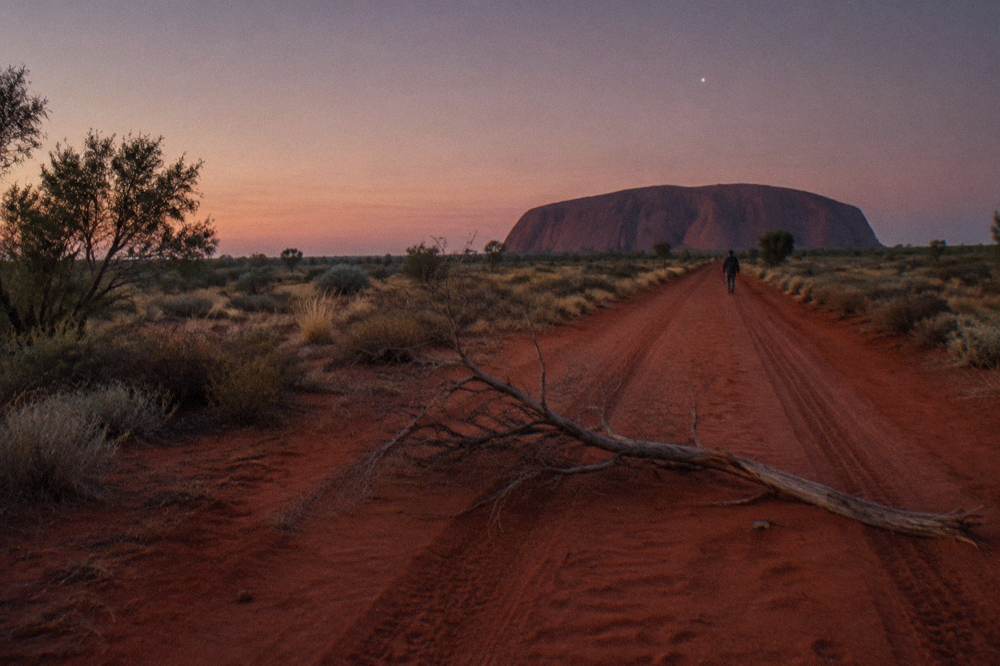
The park's own pages split the viewing areas by slot. Talinguru Nyakunytjaku and the Kata Tjuta dune area are the sunrise platforms; the Uluru car and bus sunset areas and the Kata Tjuta sunset area are the sunset spots, as the park's official sunrise and sunset page states. That division is not arbitrary. At sunrise you stand east of Uluru looking west, with the rock backlit and the sky doing the colour work; at sunset you watch the sun drop behind the rock's western side, and the sandstone itself turns through orange and deep red as the light angle flattens.
Crowd flow is the biggest practical difference. Sunset at the Uluru bus and car areas is the single busiest visitor moment in the park on most days, because it is the easy one: no alarm clock, a short drive, a drink in hand. Sunrise platforms fill too, but a larger share of the crowd simply does not make the pre-dawn start, especially in winter when the morning air in the desert is genuinely cold. Travellers who want the rock more to themselves, even for ten minutes, are usually better served by the alarm clock.
The season tilts the answer hard. The park's climate guidance names May to September as the best visiting window, with daytime maximums usually 20 to 30 C, and warns that October to March can exceed 35 C daily, with a standing instruction not to walk after 11.00 am in the hotter months. In that hotter half of the year sunrise is not just nicer, it is the only comfortable slot for anything on foot, and the park's safety page tells walkers to avoid the 2.30 pm to 6.30 pm window entirely and to carry at least one litre of water per person per hour.
For travellers booking rather than self-driving, the roster reflects the split. The sunrise side is anchored by the five-hour coach combo that pairs a sunrise viewing stop with a Kata Tjuta walk, the Uluru Sunrise and Kata Tjuta Day Trip by Bus, rated 4.6 from 603 reviews and from A$186 per person, alongside a guided sunrise walking tour with a light breakfast at the same from-price. The sunset side runs deeper: a wine and cheeseboard coach tour, a small-group sunset tour with sparkling wine, a sunset barbecue dinner with a star talk, and a full day tour that finishes with a barbecue and sparkling wine. One guest review of the bus sunrise combo sums up the slot: "Very good tour and the guides, Dani and Regi, were amazing. They were knowledgeable and friendly, and made sure the tour was prompt so we could visit everywhere with enough time to enjoy ourselves."
What Makes Sunrise Different At Uluru?
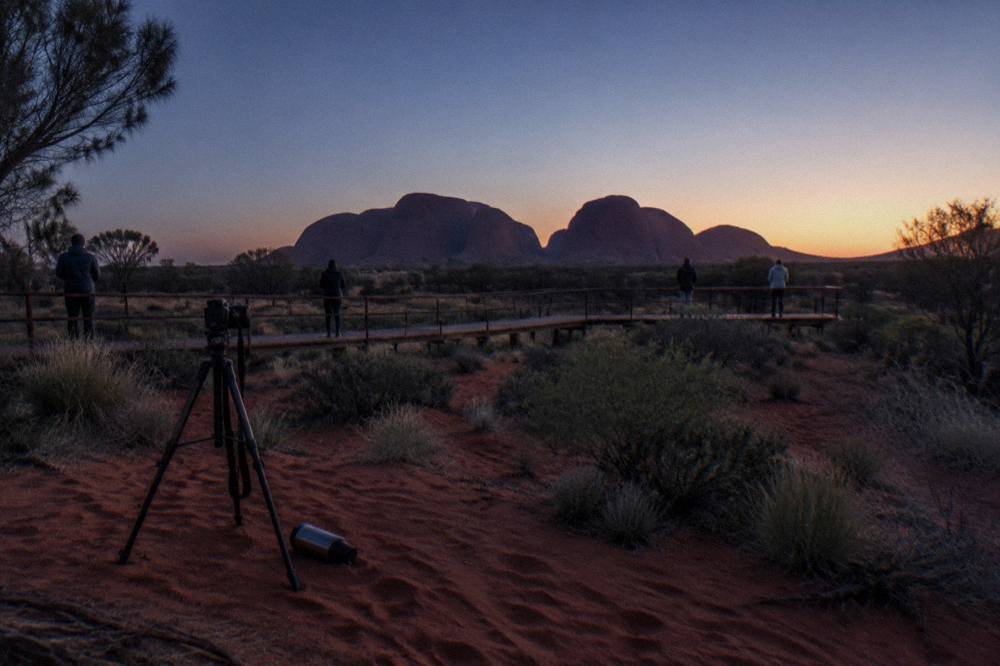
Sunrise at Uluru means cooler air, a backlit rock framed by sky colour rather than rock colour, and noticeably thinner crowds at the two official sunrise platforms, Talinguru Nyakunjtaku and the Kata Tjuta dune area. The trade-offs are a pre-dawn start, winter mornings that can sit near 5 C in Yulara, and a colour payoff that lives mostly in the sky and the silhouette rather than on the sandstone itself.
Talinguru Nyakunjtaku is the park's purpose-built sunrise area, with raised viewing decks and walking paths laid out so that several hundred people can watch without blocking each other. The Kata Tjuta dune area is the other sunrise platform, and it faces the domes rather than Uluru: at dawn the 36 domes of Kata Tjuta catch the first light while Uluru sits in shadow behind you to the east. Some sunrise tours deliberately use the dune area for that reason, and the Kata Tjuta sunrise tour with breakfast, a small-group SEIT product rated 4.8 from 255 reviews and from A$249 per person, builds its whole morning around it.
The temperature argument for sunrise is strongest from October to April. Yulara's Bureau of Meteorology averages put October at a 32.3 C maximum and a 14.9 C minimum, January at 38.4 and 22.8, and the park's heat rules bite on the walking tracks well before noon in those months. A sunrise start puts the base walk, the Mala walk or any guided walking tour inside the safe window; a sunset start in summer puts the same walk inside the 2.30 pm to 6.30 pm window the park explicitly tells visitors to avoid. In the May to September window, with maximums of 20 to 30 C, the heat argument fades and the choice becomes purely about light and crowds. Whichever end of the day you choose, the desert cools quickly once the sun drops, so the guide to what you should wear to Uluru Field of Light is worth reading before you pack.
The cold is real, though, and it surprises people. Winter minimums at Yulara average 4.4 C in July and 5.6 C in June, and the park's own guidance notes overnight temperatures in winter can be very cold. Standing still on a viewing deck for forty minutes before dawn in that air is a different experience from the brochures, so the sunrise slot earns a jacket, a beanie and closed shoes. The sunset tours hub covers the warmer alternative in detail.
The roster's sunrise products cluster around three formats. The coach combo described above is the large-group, fixed-itinerary option with pickup from Ayers Rock Resort hotels. The guided walking tour at sunrise with a light breakfast, from A$186 per person and rated 4.6 from 318 reviews, trades the viewing deck for the track, walking the rock's base while the light comes up. The Field of Light sunrise tour with hot drinks, from A$115 per person and rated 4.6 from 677 reviews, threads the 50,000-sphere installation as the sun rises behind it, and is one of the most-booked sunrise products on the roster. There is also a three-hour highlights tour with sunrise and breakfast for travellers who want the slot without the full morning, from A$189 per person, rated 4.8 from 220 reviews.
One structural point worth knowing: sunrise tours at Uluru are almost all morning-only products, so pairing sunrise with a free afternoon is easy. Sunset products, by contrast, tend to consume the evening whole, especially the dining ones. A traveller with two nights in Yulara can do both slots without strain, which is exactly what the how many days are enough for Uluru question usually resolves to.
What Makes Sunset Different At Uluru?
Sunset at Uluru is the stronger colour experience: the sun drops behind the rock's western side and the sandstone itself shifts through orange to deep red, which is the image most people came for. It is also the busier slot, the warmer slot in summer, and the slot where the Anangu photography requests for the north-east face are easiest to honour, because the park states the best time for those wide shots is one to two hours before sunset.
The colour mechanics explain the popularity. At sunrise the rock is a silhouette against the sky; at sunset the light hits the rock, and the fine-grained arkose sandstone, about half a billion years old, does the glowing. The Uluru car and bus sunset areas sit west of the rock for exactly this reason, and the Kata Tjuta sunset area gives the same show on the domes. No tour can promise the colour: haze, dust and cloud all mute it, and the park and every operator on the roster are careful not to guarantee a red rock on any given evening.
The photography etiquette fits sunset best. The park's photography page states that culturally sensitive sites at Uluru and Kata Tjuta are clearly signed and must not be photographed, and that this is not a ban on photographing Uluru: wide shots from a distance are fine. For the north-east face specifically, Anangu ask for wide shots from a distance only, with nothing showing the detail on the top-left side, and the park notes the best time is one to two hours before sunset, when shadows obscure the sacred sites. A sunset-side visit naturally lands in that window. The is it illegal to take a photo of Ayers Rock question on this site unpacks the rules in full.
The sunset roster is where the dining lives. The Sacred Sites and Sunset Tour with Wine and Cheeseboard, an AAT Kings coach product rated 4.5 from 515 reviews and from A$186 per person, is the entry point: sacred-site stops, a sunset viewing stop, and a glass of wine with a cheeseboard. The small-group version, SEIT's Small Group Guided Tour with Sunset Refreshments, rated 4.8 from 218 reviews and from A$249 per person, runs the same slot with fewer people and sparkling wine. Above those sit the barbecue dinners: the Sunset and Outback Barbecue Dinner with Star Talk, from A$328 per person and rated 4.2 from 445 reviews, and Emu Run's day tour with sunset barbecue and sparkling wine at from A$329 per person, rated 4.6 from 345 reviews. One guest review of the barbecue evening reads: "Nice afternoon/evening to see different areas of Uluru and watch the sunset. The barbecue was really good and the star gazing was good even though the clouds didn't cooperate."
Beyond the tour roster, Ayers Rock Resort sells its own sunset-adjacent dining direct: Sounds of Silence from A$295 adult, Tali Wiru from A$455 adult, and the Field of Light dinner from A$360 adult for travel 1 April 2026 to 31 March 2027. Those have no booking card on this site; the resort's own pages are the place to check them. The star-talk and dinner products share one honest caveat the review above captures: the evening's quality depends on the sky, and no operator can promise stars.
Crowds are the cost. The bus sunset area fills with coach groups and the car area with self-drivers, and on peak evenings the decks at the front are claimed early. Travellers who want a quieter sunset generally book a small-group product, which uses the same public platforms but arrives with a guide, a table and a drink rather than joining the general scrum, or drive out to the Kata Tjuta sunset area, which draws fewer people because it is 50 km further out.
Which Tours Run At Each Slot?
The verified roster splits into two slots: five sunrise-format tours priced from A$115 to A$249 per person, and four sunset-format tours priced from A$186 to A$329, with all nine departing Yulara with hotel pickup and free cancellation, though the cancellation cutoff varies by listing from 24 hours to 6 days before start. The table below lists every slot tour with its firm price, rating and review count.
| Tour | Slot | Format | From price | Rating | Reviews |
|---|---|---|---|---|---|
| Uluru Sunrise and Kata Tjuta Day Trip by Bus (AAT Kings) | Sunrise | Coach, large group | A$186 | 4.6 | 603 |
| Guided Walking Tour at Sunrise with Light Breakfast (AAT Kings) | Sunrise | Coach plus walk | A$186 | 4.6 | 318 |
| Highlights of Uluru Including Sunrise and Breakfast (SEIT) | Sunrise | Small group, 3 hours | A$189 | 4.8 | 220 |
| Field of Light Sunrise Tour with Hot Drinks (AAT Kings) | Sunrise | Coach, 2 hours | A$115 | 4.6 | 677 |
| Kata Tjuta Small-Group Tour Including Sunrise and Breakfast (SEIT) | Sunrise | Small group | A$249 | 4.8 | 255 |
| Sacred Sites and Sunset Tour with Wine and Cheeseboard (AAT Kings) | Sunset | Coach, large group | A$186 | 4.5 | 515 |
| Small Group Guided Tour with Sunset Refreshments (SEIT) | Sunset | Small group | A$249 | 4.8 | 218 |
| Sunset plus Outback Barbecue Dinner and Star Talk (AAT Kings) | Sunset | Coach plus dinner | A$328 | 4.2 | 445 |
| Uluru Day Tour with Sunset BBQ (Emu Run Experience) | Sunset | Coach, full day | A$329 | 4.6 | 345 |
Two patterns stand out in the numbers. First, the floor for either slot is the same, A$186 for the big-coach sunrise combo and the same for the wine and cheeseboard sunset coach, so budget alone does not decide the slot. Second, the small-group premium is consistent: SEIT's small-group sunrise and sunset tours both sit at from A$249 per person, roughly A$60 above their coach equivalents, and both carry 4.8 ratings, the highest consistent scores on the slot roster. The Field of Light sunrise tour is the outlier, the cheapest slot product on the roster at from A$115, because it is a two-hour coach transfer and viewing stop rather than a walk or a meal. The wider set of guides lives on Uluru Australia Tours.
Cancellation terms deserve a read before booking, because they differ sharply. The AAT Kings coach products allow free cancellation with a cutoff that varies but sits around 24 hours before start, which suits travellers holding a loose plan. The SEIT small-group products cut off earlier, up to 6 days before start on several of them, because small groups commit vehicles and guides. A traveller booking the small-group sunset tour on arrival in Yulara may find the free-cancellation window already closed, so the booking page, not this article, is the authority on the day.
How Do Heat And Season Affect The Choice?
Season decides the slot more than any preference does: from May to September both slots are comfortable and the choice is about light and crowds, while from October to March the park's own heat rules, no walking after 11.00 am and avoid the 2.30 pm to 6.30 pm window, push nearly everything worth doing on foot into the sunrise side, with sunset best enjoyed from a vehicle, a deck or a dinner table rather than a track.
The Yulara climate record is blunt about the hot half of the year. October averages a 32.3 C maximum, November 35.1, December 36.5, January 38.4. The park's safety page states temperatures can exceed 40 C in summer, tells walkers to carry at least one litre of water per person per hour, and names 000 or 112 as the emergency numbers, with radios on most walks. In those conditions a sunset base walk is not a preference question, it is the wrong plan, while a sunrise base walk finishing before 11.00 am fits the park's own advice exactly. The full base walk at sunrise with breakfast, SEIT's six-hour small-group product rated 4.8 from 460 reviews and from A$249 per person, is built around precisely that timing.
The current outlook sharpens the point. The Bureau of Meteorology's outlook to December 2026 favours above-average temperatures and above-average rainfall across the southern two-thirds of the Northern Territory, so heat planning matters even into the shoulder months, and UV in the warm months is rated extreme, with protection recommended through the middle of the day. Bush flies are present from September to April, which is a small annoyance at a sunset deck and a bigger one on a hot walk.
Winter flips the comfort argument. June and July minimums average 5.6 C and 4.4 C, so the sunrise slot in midwinter is a cold wait and the sunset slot, with maximums near 20 C, is close to perfect. Travellers visiting in the June-July school-holiday window who hate cold mornings have a legitimate reason to pick sunset and sleep in, and the best time to visit Uluru guide works through the whole calendar in detail.
Which Photos Are Allowed At Each Slot?
Photographing Uluru is allowed and always has been; the park only prohibits photographing specific culturally sensitive sites, which are clearly signed, and at Kata Tjuta's Valley of the Winds the formations along the walk may not be photographed at all. Wide shots from a distance are fine everywhere else, and the sunset slot falls one to two hours before sunset, the window the park describes as best for the north-east face, when shadows obscure the sacred detail. For the full picture on what you can and cannot point your camera at, our guide to whether it is actually illegal to photograph Ayers Rock covers the drone ban, media permits and the best legal photo spots around the base.
The distinction trips people up because it is a site rule, not a rock rule. The park's photography page is explicit that the north-east face of Uluru carries a request for wide shots from a distance only, with nothing showing the top-left detail, and that at Valley of the Winds, a men's area, no photographs or video of the Kata Tjuta formations are permitted along the walk, while close-ups of flora, fauna and people are welcome. Drones are prohibited in the park under the EPBC Act, with penalties, and commercial and influencer photography needs a media permit. None of this is secret: the signs at the sensitive sites do the work, and a guided tour guide will repeat it.
The slot connection is practical. A sunset tour that drives the rock's full base loop, as the wine and cheeseboard tour does, passes the north-east face inside the requested photography window, so the guide can time the stop. A sunrise tour approaches from the east with the face in flat early light, which is also workable for wide shots. Self-drivers chasing the classic postcard angle should simply remember the request is about distance and framing, not about hiding the rock, and that the best light for the north-east face comes late in the day.
So Which Slot Should You Actually Pick?
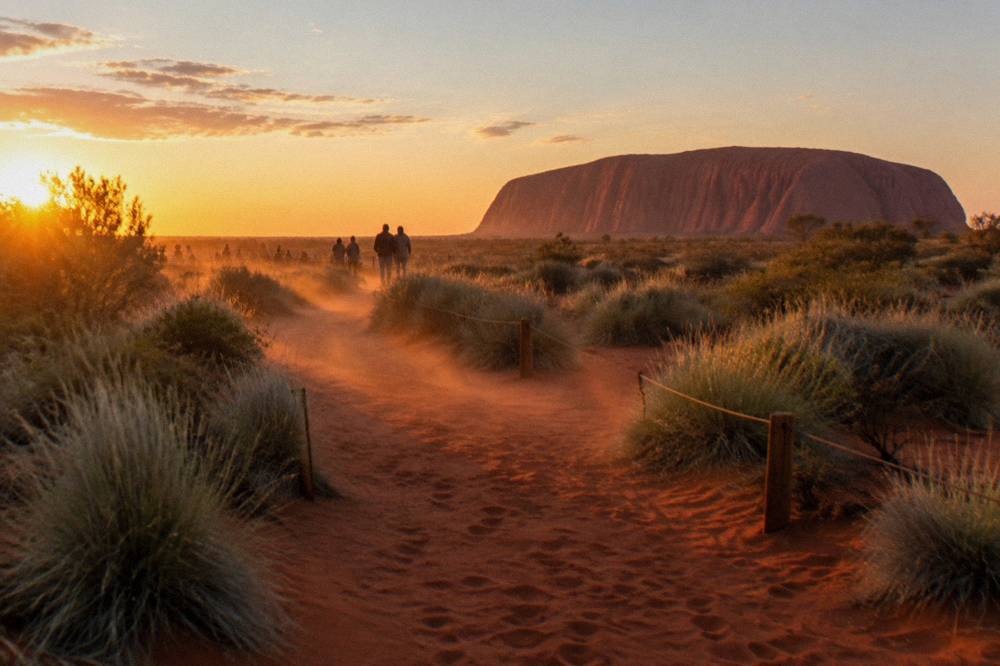
Choose sunrise if you are travelling October to April, want fewer people and cooler air, or plan to build your day around walking; choose sunset if you are visiting in deep winter, the glowing-red photograph is the whole point, or you want the evening to include wine or dinner. With two nights in Yulara, simply book one of each, because the two experiences do not substitute for each other.
The strongest single argument for sunrise is seasonal and structural: the heat rules make the walking side of Uluru a morning activity for half the year, and the walking side, the base walk, the Mala walk to Kantju Gorge, the Mutitjulu Waterhole, is where the rock stops being a postcard and becomes a landscape. The strongest single argument for sunset is optical: the colour lives on the rock, not the sky, and the dining products, from the A$186 cheeseboard coach tour to the A$329 barbecue day, are all built to end in it.
The compromise most two-night visitors land on is a sunrise tour on the first morning, when the jet lag or the road-trip early start is doing the work of the alarm clock, and a sunset product on the second evening. The bus sunrise combo with Kata Tjuta, from A$186 per person, covers the sunrise platform, a Kata Tjuta gorge walk and a resort return inside five hours, leaving the afternoon free; the small-group sunset tour with sparkling wine, from A$249, or the cheeseboard coach tour at from A$186, closes the trip at the other end. Travellers with only one evening sometimes skip the tour entirely and drive to the public sunset car area, which costs nothing beyond the park pass, A$38 for an adult for 3 days, and then put the saved budget into a scenic flight or a dinner product instead. If the pre-dawn starts and gorge walks sound like more than you want, the best Uluru tours for seniors rounds up coach sightseeing, hop-on hop-off buses and sunset dining at a gentler pace.
One last honest note on promises: no tour on the roster, and no page in the park, will guarantee a red rock, a clear sky or a visible sun, because weather decides. What the roster does guarantee, in the printed terms, is the pickup, the guide, the format and the free-cancellation window, and those are the terms worth reading on the booking page before the day.
For travellers who want the question settled by itinerary rather than argument, the deeper comparisons on this site help: the Uluru sunrise tours guide works through every morning product on the roster, the Uluru sunset tours guide does the same for the evening side, and the Field of Light Uluru guide covers the installation that straddles both, a decade of more than 50,000 spheres by Bruce Munro, extended through 2029 and viewable at sunrise with hot drinks on the cheapest slot tour this site lists. Whatever slot wins your morning or evening, book it with the cutoff in mind, carry the water the park tells you to carry, and let the sky do the deciding it always does.
Common Questions About Sunrise Or Sunset At Uluru
Is Uluru Better For Sunrise Or Sunset?
Neither is objectively better. Sunrise offers cooler air, thinner crowds and the walking window in the hot months; sunset offers the strongest colour on the rock itself, the requested photography window for the north-east face and the dining tours. Most travellers with two nights do one of each.
Which Uluru Viewing Area Is Best For Sunrise?
The park names Talinguru Nyakunjtaku and the Kata Tjuta dune area as the sunrise platforms. Talinguru Nyakunjtaku is the purpose-built deck close to the rock; the Kata Tjuta dune area faces the domes and suits the sunrise tours built around Kata Tjuta.
Do I Need A Park Pass For Sunrise And Sunset Viewing?
Yes. The pass costs $38 for an adult for 3 days, $50 annual, under 18 free, and is valid for Uluru-Kata Tjuta National Park only. Tour listings state the fee separately and say it must be pre-purchased online, so no tour on the roster includes it.
Is It Too Hot For Sunset Tours In Summer?
Sunset viewing from a deck or vehicle is fine, but the park advises avoiding walking between 2.30 pm and 6.30 pm in summer heat and carrying at least one litre of water per person per hour. Sunset tours that include short walks follow the cooler parts of the evening.
Can I Photograph Uluru At Sunrise And Sunset?
Yes, wide shots from a distance are welcome. The prohibition is on photographing the clearly signed culturally sensitive sites, and at Valley of the Winds no photographs of the Kata Tjuta formations are allowed along the walk. The park describes one to two hours before sunset as the best time for wide shots of the north-east face.
What Is The Cheapest Tour For Either Slot?
The Field of Light sunrise tour with hot drinks is the cheapest slot tour on the roster at from A$115 per person, rated 4.6 from 677 reviews. On the sunset side the floor is from A$186 per person for the wine and cheeseboard coach tour, rated 4.5 from 515 reviews.