Uluru Sunrise Tours: Which One To Book
Four very different ways to watch the sun come up over Uluru, compared on format, duration, group size and price, with the park facts that decide which one fits.
Short answer
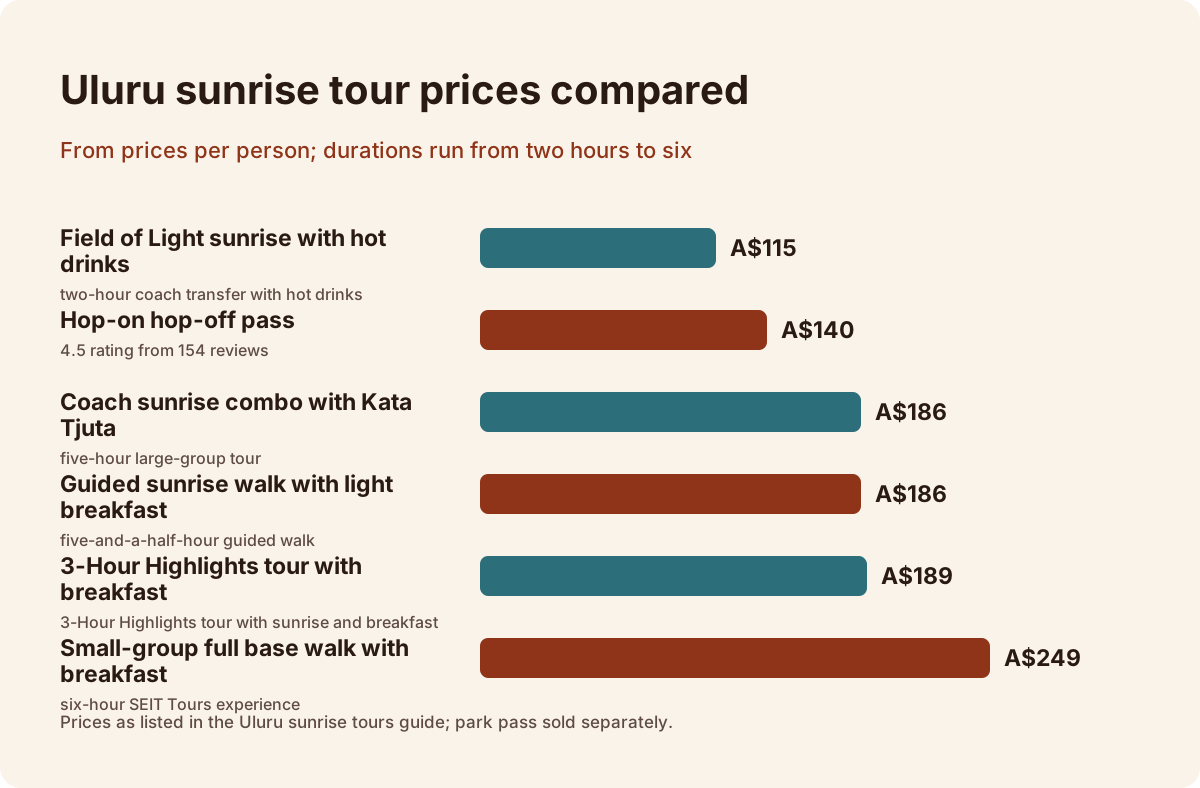
The main sunrise formats are a five-hour coach combo with Kata Tjuta from A$186, a six-hour small-group base walk from A$249, a guided sunrise walk with light breakfast from A$186, and a two-hour Field of Light sunrise tour from A$115. All depart Yulara, all include pickup, and the park pass is separate.
Sunrise at Uluru is not one experience but several, and the tour you book decides which one you get. Some options park you at a viewing platform with a hot drink and let the rock do the work. Others put you on the base walk with a guide while the first light hits the sandstone, or wrap in a side trip to Kata Tjuta before the day heats up. Every sunrise tour on this site's roster departs from Yulara, includes hotel pickup, and requires a park pass bought separately, so the real choice is about format, duration and how much walking you want to do before breakfast.
We compared the listings side by side to make that choice easier. The headline formats are the five-hour coach sunrise combo with Kata Tjuta from A$186 per person, the six-hour small-group full base walk from A$249, the five-and-a-half-hour guided sunrise walk with a light breakfast from A$186, and the two-hour Field of Light sunrise tour with hot drinks from A$115. Beyond those, there are shorter highlights tours, a Kata Tjuta sunrise option and a hop-on hop-off pass that covers the sunrise viewing areas on your own schedule. This guide lays out what each one actually delivers, what it costs, and which traveller each format suits.
One framing fact before the comparisons: the climb is closed, permanently, since 26 October 2019, so every sunrise experience here happens at ground level or in the air. The park's own pages are clear that climbing breaches the EPBC Act and penalties apply. That closure is exactly why the sunrise tour market has grown so specific: with the summit off the table, the differences between tours come down to where you stand, who explains the rock to you, and how far you walk. If the rock's age is part of why you came, our article on whether Uluru predates the dinosaurs lays out what the park itself says about it.
What Are The Uluru Sunrise Tour Options?
The sunrise roster covers four formats: a large-group coach combo that adds Kata Tjuta, a small-group full base walk with breakfast, a guided sunrise walk with a light breakfast on a coach, and a short Field of Light sunrise transfer with hot drinks. Prices run from A$115 to A$249 per person, durations from two hours to six, and every listing includes Yulara pickup and states the park pass separately.
The park's own sunrise infrastructure is the backbone of all of them. There are five dedicated viewing areas: Talinguru Nyakunytjaku and the Kata Tjuta dune area for sunrise, and the Uluru car and bus sunset areas plus the Kata Tjuta sunset area for the evening, as the park's sunrise and sunset page states. Talinguru Nyakunytjaku is the raised platform most coach tours use, with walking paths and viewing decks that let a large group spread out. Tours that walk the base instead skip the platform crowds and meet the rock directly.
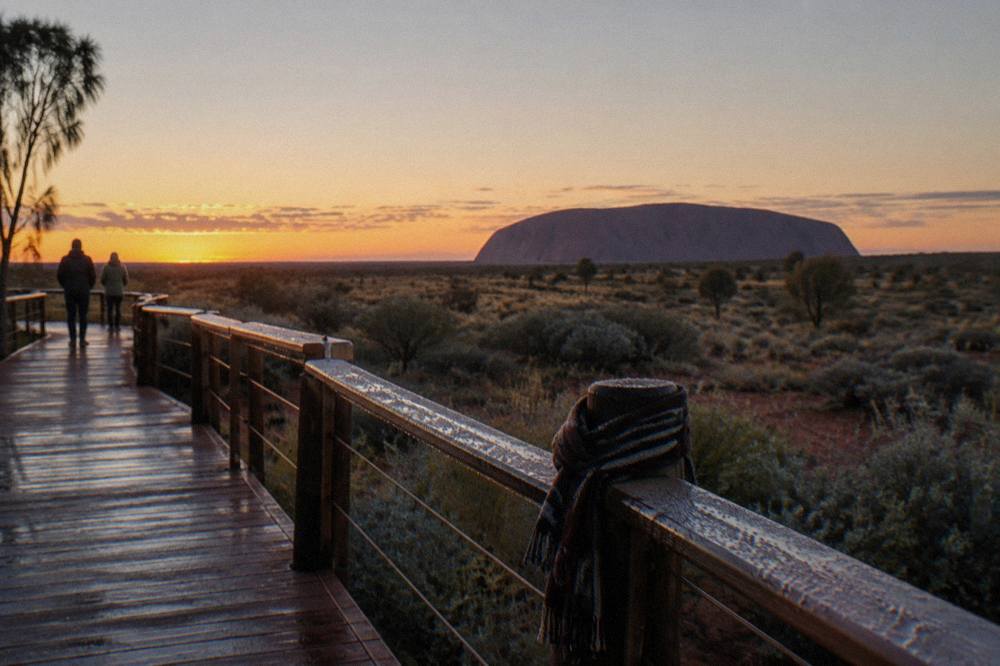
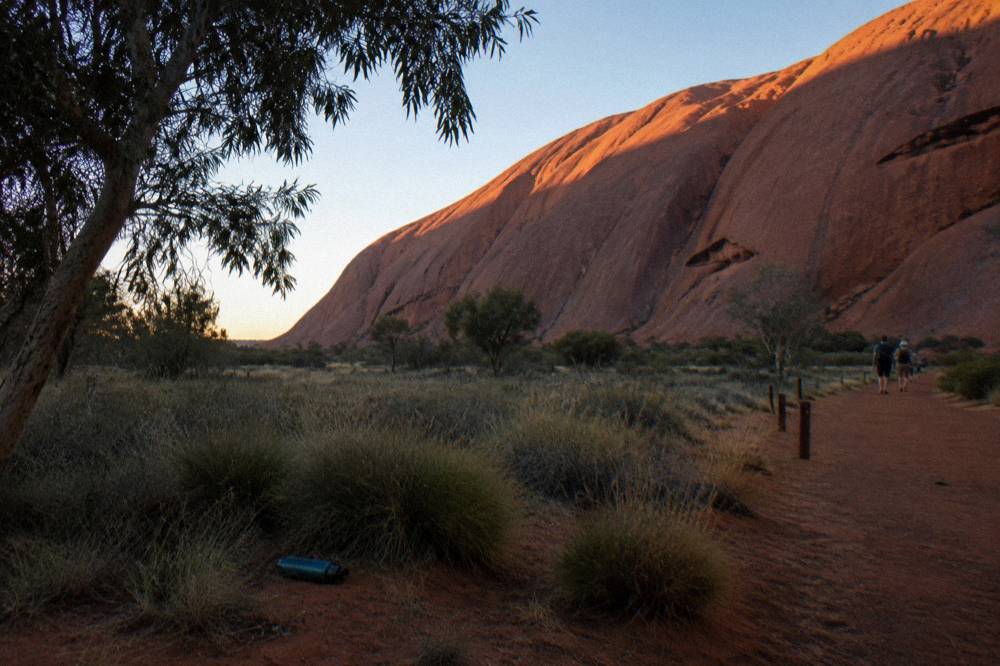
The distinction that matters most is coach-and-platform versus walk-the-base. The coach options, like the Bus Sunrise, Kata Tjuta Combo, drive you to a viewing area, give you time to watch the light change, then move on to walks and lookouts with a guide narrating from the front of the bus. The walking options, like the small-group base walk, put you on the 10 km circumference path at first light with a guide beside you, covering the Mala walk, the north-east face, the Kuniya walk to Mutitjulu Waterhole and more, at a pace the group sets together. Both work. They just suit different mornings.
A third lane exists for travellers who want the sunrise moment without a five-hour commitment. The Field of Light sunrise tour is a two-hour coach transfer that arrives while the 50,000 spheres of Bruce Munro's installation are still lit, with hot drinks served as the sun comes up behind the art. And the hop-on hop-off pass, from A$140 per person with a 4.5 rating from 154 reviews, lets you reach the sunrise viewing area on a shuttle without a guide at all. Our things to do in Uluru guide covers where each of these sits in a fuller itinerary.
Coach Sunrise Tours: The Kata Tjuta Combo Explained
The coach format's flagship is the Ul Sunrise and Kata Tjuta Day Trip by Bus, a five-hour large-group tour from A$186 per person, rated 4.6 from 603 reviews, with free cancellation and a cutoff that varies, listed as 24 hours before start. It pairs the Talinguru Nyakunytjaku sunrise with a walk among the Kata Tjuta domes, all with Yulara hotel pickup.
The appeal is efficiency. Kata Tjuta sits 50 km by road from Uluru, and doing both rock sites in one morning with a driver, a guide and breakfast logistics handled is genuinely hard to self-drive, especially if you want to be at the sunrise platform and still beat the heat at the domes. The listing states the itinerary covers the sunrise viewing area, then Kata Tjuta, with guide commentary through both. A guest review calls it "a very good tour" and praises the guides by name: "the guides, Dani and Regi, were amazing. They were knowledgeable and friendly, and made sure the tour was prompt so we could visit everywhere with enough time to enjoy ourselves."
The trade-off is group size. A large coach means you share the sunrise platform with your own bus load plus every other tour and self-driver there that morning, and the Kata Tjuta walk is a group walk, not a private ramble. For many travellers that is a fair exchange for the price and the two-site coverage. The same A$186 price point also buys the Guided Sunrise Walk with Light Breakfast, rated 4.6 from 318 reviews, which uses a coach for transport but spends its walking time at Uluru itself with a guide and a light breakfast after the walk.
If the combo sounds right but you want to compare it against the evening equivalent first, our Uluru sunset tours guide breaks down the wine-and-cheeseboard and barbecue options on the same roster, several of them run by the same operators. The choice between sunrise and sunset is really a choice between walking temperatures and colour: mornings start cool and get hot, evenings start hot and cool down.
Small Group Sunrise Tours: The Full Base Walk
The small-group alternative is the Full Uluru Base Walk at Sunrise Including Breakfast, a six-hour SEIT Tours experience from A$249 per person, rated 4.8 from 460 reviews. It covers the full 10 km base circuit with a guide at dawn, includes breakfast, and lists a free-cancellation cutoff of 6 days before start, the longest on the sunrise roster.
This is the tour for walkers. The base walk is about 10 km around the whole circumference, and the park's own walks page advises starting at the Mala carpark in the early morning, clockwise, and finishing before the heat builds. Doing it with a small group and a guide adds the things a self-walk cannot: interpretation of the rock's cultural sites, knowledge of which sections to linger in, and the safety of numbers in a landscape where the park tells visitors to carry at least one litre of water per person per hour and avoid walking between 2.30 pm and 6.30 pm in the heat. A guest review sums up the format: "This was an excellent tour. The guide was incredibly knowledgeable and enjoyable. I would highly recommend this wonderful experience."
The 6-day cancellation cutoff deserves a flag. This tour lists a 6-day cancellation cutoff. Cutoffs vary from tour to tour, so read the live booking page for the exact terms before you book. If your travel dates are still loose, that difference alone might decide between formats. The same operator runs a 3-Hour Highlights tour with sunrise and breakfast from A$189, rated 4.8 from 220 reviews, which covers the sunrise viewing and key base sites without the full circuit, on the same 6-day cutoff.
That highlights tour is the honest middle option: more walking than the coach combo, less than the full base circuit, and a price between the two. Our Uluru base walk guide covers the self-guided version of the same circuit, including the free ranger-guided Mala walk option for park visitors, which is worth knowing about even if you book a paid tour, because the ranger program is free and the park pass is the only cost.
Field Of Light Sunrise: The Short Option
The Field of Light Sunrise Tour with Hot Drinks is a two-hour large-group coach experience from A$115 per person, rated 4.6 from 677 reviews, the largest review pool on the sunrise roster. It arrives at Bruce Munro's installation of more than 50,000 spheres while they are still lit, serves hot drinks, and finishes as the sun rises, with a 24-hour free-cancellation cutoff.
This is the tour for the morning you do not have five or six hours. The installation has run since 2016 and has been extended through 2029, and 2026 marks its tenth year, a decade since it was first installed. Seeing the spheres glowing in pre-dawn darkness and then watching the sunrise behind them compresses two of the region's signature sights into one short outing. The AAT Kings listing is a transfer-and-viewing product: coach from Yulara, time among the lights, hot drinks, and back to the resort with the whole morning still ahead of you.
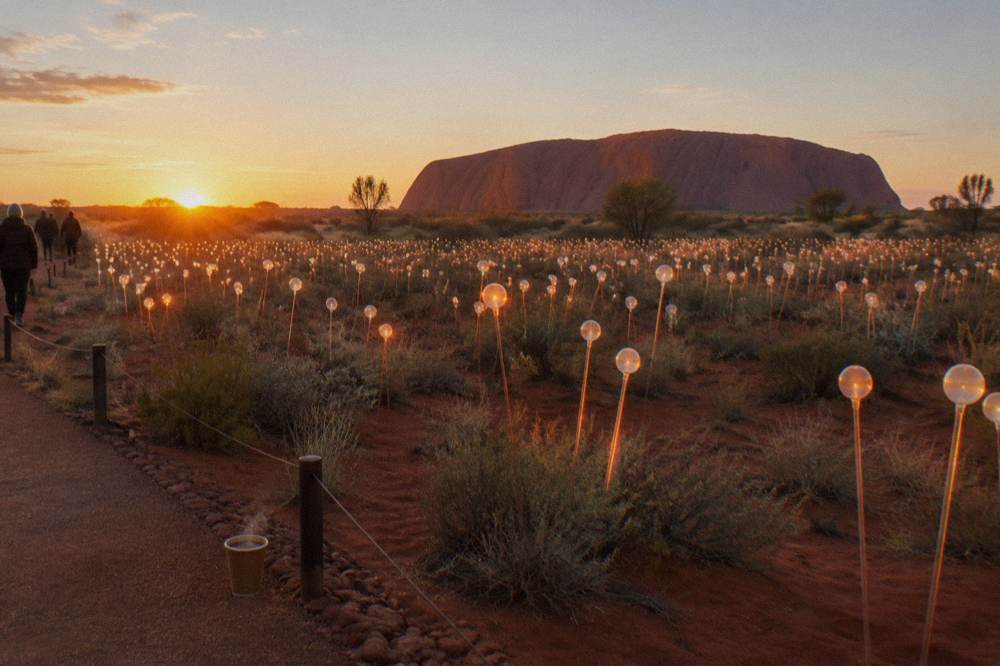
There is a resort-direct alternative worth knowing about before you book anything. Ayers Rock Resort sells its own sunrise Field of Light experiences direct, with the AAT Kings sunrise version listed from $135 adult and $95 child for travel 1 April 2026 to 31 March 2027, and General Admission from $50 adult and $39 child. Those resort passes are not on this site's roster and have no booking card here, but they are the direct-sale comparison point for the A$115 roster listing. Our Field of Light Uluru guide works through the whole product family, including the dinner and Star Pass options.
The short duration is the whole point, but note what it is not: there is no base walking, no guide interpretation of the rock's cultural sites, and no Kata Tjuta. If your aim is to understand Uluru rather than to see it beautifully lit, a walking or coach tour serves that better, and the Field of Light morning works well as a second or third day add-on rather than your only sunrise.
How Much Does An Uluru Sunrise Tour Cost?
Sunrise tour prices on this roster run from A$115 to A$249 per person, and the park pass is always extra: $38 for an adult 3-day pass, $50 annual, under 18 free, valid for Uluru-Kata Tjuta National Park only. Tour listings state the fee separately and the park requires it to be pre-purchased online, so budget it on top of every price below.
The price ladder is mostly a duration ladder. Two hours at the Field of Light costs A$115; five hours on a coach with Kata Tjuta costs A$186; six hours walking the full base with breakfast costs A$249. The table below shows every sunrise-relevant roster listing with its printed figures. Other pages covering the same trip are gathered on Uluru Australia Tours.
| Tour | Operator | From (per person) | Duration | Rating | Reviews |
|---|---|---|---|---|---|
| Field Of Light Sunrise, Hot Drinks | AAT Kings | A$115 | 2 hours | 4.6 | 677 |
| Bus Sunrise, Kata Tjuta Combo | AAT Kings | A$186 | 5 hours | 4.6 | 603 |
| Guided Sunrise Walk, Light Breakfast | AAT Kings | A$186 | 5.5 hours | 4.6 | 318 |
| Highlights, Sunrise Breakfast (3 hours) | SEIT Tours | A$189 | 3 hours | 4.8 | 220 |
| Full Base Walk, Small Group | SEIT Tours | A$249 | 6 hours | 4.8 | 460 |
| Kata Tjuta Sunrise, Breakfast | SEIT Tours | A$249 | 5 hours | 4.8 | 255 |
| Hop-On Hop-Off Bus Pass | Uluru Hop on Hop Off | A$140 | 1, 2 or 3-day pass | 4.5 | 154 |
A few notes on reading it. The two A$186 tours are the same price for very different mornings: one is a coach-and-platform experience with Kata Tjuta, the other a guided walk at Uluru with a light breakfast. The two A$249 SEIT tours are also the same price: one walks the full Uluru base, the other takes you to Kata Tjuta for sunrise instead. And the hop-on hop-off pass is not a guided tour at all, it is transport, which is why it sits at A$140 with the shortest effective commitment.
Cancellation is where the prices hide a difference. The cutoffs vary by listing: the Full Uluru Base Walk at Sunrise lists 6 days, the Small Group Guided Tour with Sunset Refreshments lists 3 days, and the Sunrise and Kata Tjuta Day Trip by Bus lists 24 hours. Never assume a blanket rule; read the booking page for the specific tour. Our how much does an Uluru tour cost breakdown extends this comparison across the whole roster, including sunset and dining products.
Which Sunrise Tour Fits Which Traveller?
Choose the coach combo if you want both rock sites in one morning, the full base walk if walking is the point, the Field of Light sunrise if your morning is short, and the highlights tour if you want a middle path. Families and photographers lean coach; active travellers and culture-focused visitors lean small-group walking.
The table below matches formats to traveller types. It is a planning aid built from the roster's own formats and durations, not an operator promise.
| If you are... | Best-fit format | Why | Roster example |
|---|---|---|---|
| Short on time | Field of Light sunrise | Two hours, back by mid-morning | Field Of Light Sunrise, Hot Drinks |
| Wanting both rock sites | Coach combo | Uluru sunrise plus Kata Tjuta in one tour | Bus Sunrise, Kata Tjuta Combo |
| A keen walker | Small-group base walk | Full 10 km circuit with a guide at dawn | Full Base Walk, Small Group |
| On a tighter budget | Hop-on hop-off pass | Sunrise viewing without a guide fee | Hop-On Hop-Off Bus Pass |
| Culture-focused | Small-group guided tours | Deeper interpretation, fewer people | Highlights, Sunrise Breakfast |
| Undecided on walking distance | 3-hour highlights | Sunrise plus key sites, no full circuit | Highlights, Sunrise Breakfast |
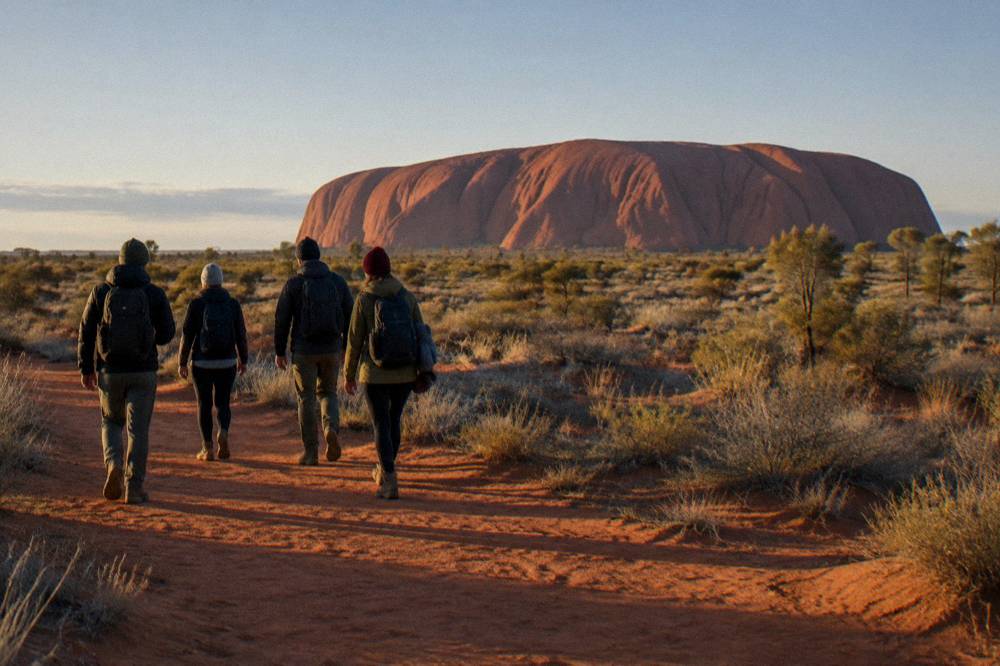
Two practical notes cut across every row. First, group size shapes the morning more than most travellers expect: a large coach at the sunrise platform shares the moment with dozens of others, while a small group on the base path may have a stretch of rock to itself. Second, breakfast differs by listing: the guided walk includes a light breakfast, the SEIT tours include breakfast, and the Field of Light tour includes hot drinks only, so check what the listing states for the tour you pick rather than assuming.
For seniors and slower walkers, the coach formats and the Field of Light morning are the gentlest entries, and our best Uluru tours for seniors piece works through accessibility in more detail. The base walk is flat but long, and the park's own advice about heat hours applies to everyone.
When Is The Best Time Of Year For A Sunrise Tour?
May to September is the park's own best-time window, with daytime maximums usually 20 to 30 C and winter nights that can drop close to freezing at Yulara. Sunrise tours run year round, but summer mornings matter more: the park closes some walks in extreme heat, and its safety advice is to avoid walking between 2.30 pm and 6.30 pm and carry at least one litre of water per person per hour.
The Yulara averages tell the story month by month. June and July sit at 20.4 and 20.6 C maximums with minimums of 5.6 and 4.4 C, which means a June sunrise tour starts in genuinely cold air, and layering is not optional. October climbs to a 32.3 C maximum, January to 38.4 C. A sunrise start is the correct strategy in every month, but in the hotter ones it is the only strategy: the park states that in hot weather you should walk only in the cooler morning hours and finish before 11.00 am.
| Month | Average max (C) | Average min (C) | Average rain (mm) | Sunrise tour note |
|---|---|---|---|---|
| January | 38.4 | 22.8 | 28.8 | Heat is the main factor; earliest starts |
| March | 34.5 | 19.3 | 32.6 | Warm mornings, possible rain |
| May | 24.3 | 9.3 | 14.3 | Comfortable walking weather |
| June | 20.4 | 5.6 | 18.2 | Cold starts, mild by mid-morning |
| July | 20.6 | 4.4 | 17.6 | Coldest mornings of the year |
| August | 23.7 | 5.9 | 5.0 | Dry, cool starts, wildflower season begins |
| September | 28.7 | 10.7 | 9.0 | Warm days, usually best for wildflowers |
| October | 32.3 | 14.9 | 21.1 | Warm to hot; flies increase |
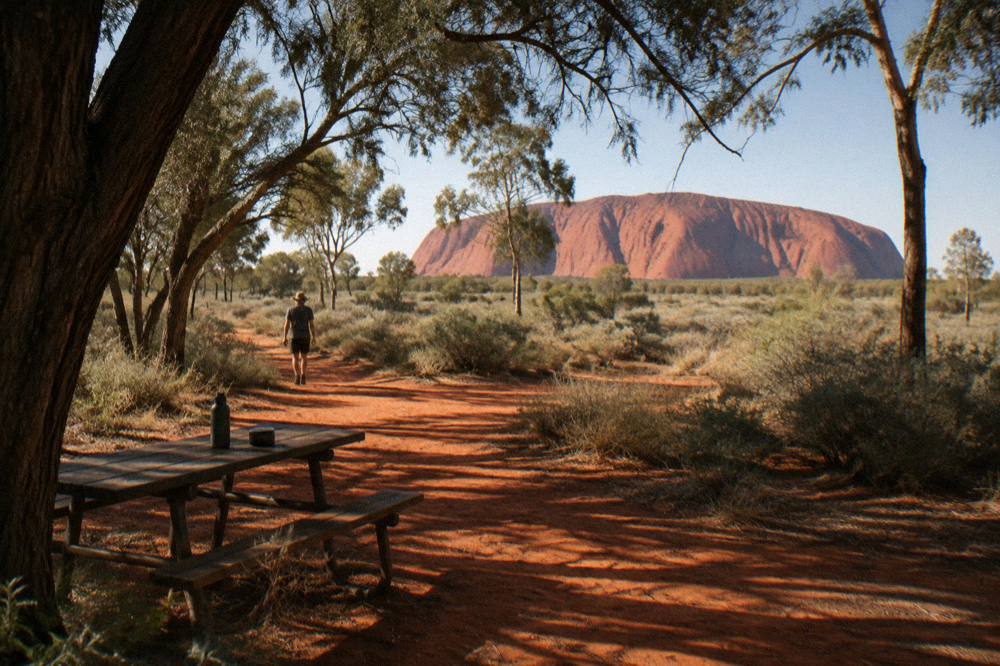
The park's staying safe page carries the full safety guidance, and its news page is the place to check before travelling, because the park occasionally closes areas for cultural reasons and conditions change. Never plan around a promise of clear skies: sunrise colour depends entirely on the cloud cover that morning, and no tour can guarantee it. Our best time to visit Uluru guide extends the seasonal picture for the whole trip.
Sunrise At Uluru Versus Sunrise At Kata Tjuta
Most sunrise tours face Uluru, but one roster listing gives the dawn to Kata Tjuta: the Kata Tjuta Small-Group Tour Including Sunrise and Breakfast, from A$249, rated 4.8 from 255 reviews, five hours with a 6-day cancellation cutoff. Kata Tjuta's highest dome rises up to 546 metres, taller than Uluru's 348, and its 36 domes cover more than 20 square kilometres.
The swap changes the photograph and the walk. The park's Kata Tjuta page describes the name as a Pitjantjatjara term meaning 'many heads', and the sunrise light across 36 steep-sided domes reads very differently from the single mass of Uluru. A guest review on the Kata Tjuta sunrise listing captures the morning: "Beautiful way to wake up. The sunrise was a magical experience and the hike through the gorge was stunning. Andy was a great guide and having a light breakfast was fun."
Choosing between the two rocks at sunrise usually comes down to what else your trip includes. If a Kata Tjuta afternoon tour or the Valley of the Winds hike is already on your plan, do your sunrise at Uluru and save the domes for later in the day. If you have two mornings, the combo tour covers Uluru sunrise plus a Kata Tjuta walk in one, and a dedicated Kata Tjuta sunrise tour makes a strong second morning. The park's Kata Tjuta highlights page has the official numbers on the domes, and our Kata Tjuta tours guide compares every roster option for the domes, including the afternoon and full-circuit hikes.
Common Questions About Uluru Sunrise Tours
Do Uluru sunrise tours include the park pass?
No. Every sunrise listing on the roster states the park fee separately, and the pass must be pre-purchased online. It costs $38 for an adult 3-day pass or $50 for an annual pass, children under 18 are free, and it is valid for Uluru-Kata Tjuta National Park only.
What is the cheapest Uluru sunrise tour?
The Field of Light Sunrise Tour with Hot Drinks is the cheapest rostered sunrise option at from A$115 per person for two hours. The hop-on hop-off pass is cheaper still at from A$140, but it is transport to the viewing area rather than a guided tour, and it can cover multiple sights.
Can you see sunrise at Uluru without a tour?
Yes. The sunrise viewing areas, including Talinguru Nyakunytjaku, are open to any park visitor, and the only cost is the park pass. A tour adds a guide, transport from Yulara, breakfast or hot drinks, and in the combo tours' case, a second rock site in the same morning. Our free things to do at Uluru guide covers the self-drive and shuttle options.
Is sunrise or sunset better at Uluru?
Both work, and the light differs. Sunrise tours start in cool air and suit walkers, since the park advises finishing walks before the heat builds. Sunset tours suit diners and photographers who want the colour without an early start. Our is Uluru better for sunrise or sunset piece works through the trade-offs.
How cold is an Uluru sunrise in winter?
Cold. Yulara's average June minimum is 5.6 C and July's is 4.4 C, and sunrise tours start before dawn, so you will be standing outside in near-single-digit temperatures. Bring a warm layer you can shed as the day warms; the same June days average a 20.4 C maximum.
Which sunrise tour is best for families?
The coach combo suits families well: hotel pickup, a five-hour duration that fits around naps and meals, and a Kata Tjuta walk that is shorter than the full Uluru base circuit. Children under 18 pay no park pass fee, though tour pricing for children is stated on each listing, so check the booking page.
Whichever format you land on, book the park pass before the morning of the tour and read the cancellation terms on the specific listing, because the cutoffs genuinely differ. The sunrise itself is free; the tour is how you get there with a guide, a breakfast and a story worth repeating.