Is It Illegal To Take A Photo Of Ayers Rock?
No, photographing Uluru is not illegal: only signed culturally sensitive sites are off limits. This guide explains the photo rules, the drone ban, media permits and the best legal sunrise and sunset photo spots.
Is It Illegal To Take A Photo Of Ayers Rock?
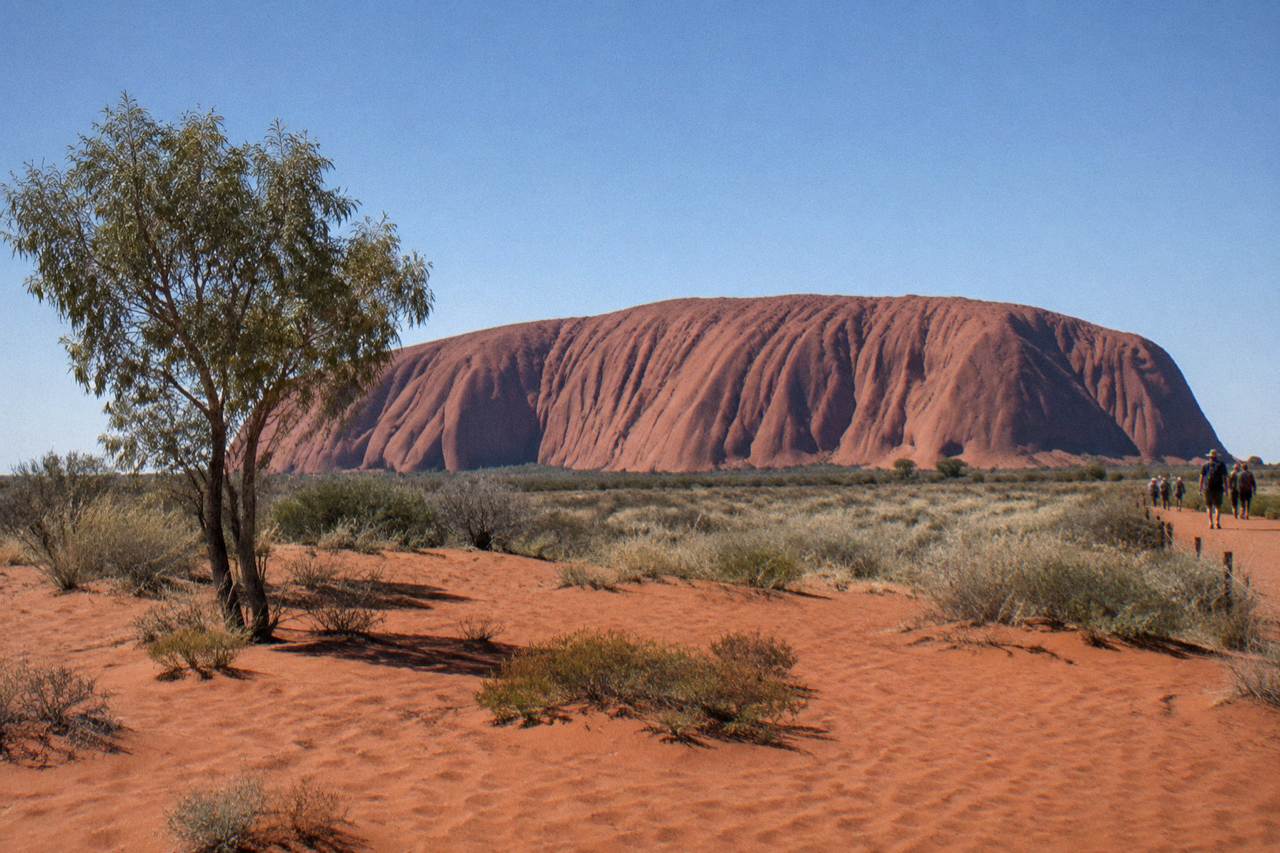
No, it is not illegal to take a photo of Uluru, the monolith formerly and still widely known as Ayers Rock. Wide landscape shots of the rock from the public viewing areas, the base walk and the sunset and sunrise platforms are expressly fine. What is prohibited is photographing specific culturally sensitive sites that are clearly signposted around Uluru and Kata Tjuta, flying drones anywhere in the national park, and shooting commercial content without a media permit. If you're wondering whether the same restrictions apply to laying a hand on the rock itself, our guide to where you can and can't touch Uluru explains which sections of the base walk are off limits and why.
That distinction trips up a surprising number of travellers, partly because the rules are genuinely unusual compared with most tourist destinations, and partly because a lot of second-hand advice online flattens them into "you can't photograph Uluru", which is simply wrong. The park's own photography page is clear on this point: the restrictions apply to particular signed locations, not to the rock as a whole, and wide shots taken from a distance are welcome. Anangu, the Traditional Owners of the land, ask visitors to respect Tjukurpa, their law and culture, at places where the landscape itself holds information that is not for public display. If you want more time to chase those golden-hour wide shots, the guide to camping at Uluru and picking a tour lays out where to base yourself overnight.
The confusion has a history. For decades the headline question about Uluru was whether you could climb it, and that ended permanently on 26 October 2019, when the climb closed for good by unanimous decision of the park's Board of Management. Since then, photography is the question visitors most often get half right. Some arrive convinced that pointing any camera at the rock risks a fine; others blithely fly a drone off the sunset carpark, which actually is an offence under the Environment Protection and Biodiversity Conservation Act, with penalties attached. The truth sits in the middle and is worth understanding before you plan your sunrise stop. Once you know where you can and cannot point a camera, the guide to bookable Uluru camel tours offers a slower way to take in the rock at dawn, well away from the drone-spotting crowds at the carpark.
For most visitors the practical upshot is liberating rather than limiting. The classic postcard shots, the silhouette from Talinguru Nyakunytjaku at dawn, the deep red glow from the sunset viewing areas, the textures along the base walk, are all not just legal but encouraged. The rules only bite at signed sites, at Kata Tjuta's Valley of the Winds walk, and in the air. If your plan is a guided golden-hour experience, the kind that drops you at the right vantage with a guide who knows which sections to photograph respectfully, the small-group sunset options below are built exactly around that window, including the Sacred Sites & Sunset Tour with Wine & Cheeseboard from AAT Kings, from A$186 per person.
Which Places At Uluru Can You Not Photograph?
The off-limits spots are specific, signed locations: culturally sensitive sites around Uluru marked with clear signage, the detail on the top-left side of the north-east face, and the Kata Tjuta formations seen along the Valley of the Winds circuit, which is a men's area under Anangu law. Everywhere else, including wide shots of both rock masses and close-ups of flora, fauna and people, is fine to photograph. The park lists these rules plainly on its official photography page, and the signage on the ground matches it.
The way the restrictions work is geographical rather than blanket. Around Uluru itself, certain sections of the rock face hold Tjukurpa that Anangu do not permit to be recorded or shared, and those sections carry signs telling you exactly that. The restrictions are not about secrecy in a general sense; they are about which knowledge belongs where. A wide shot that includes the whole rock from a distance is acceptable because the sensitive detail is not legible in the image. A close-up of a prohibited face or site is not, and the signage makes the boundary clear at eye level.
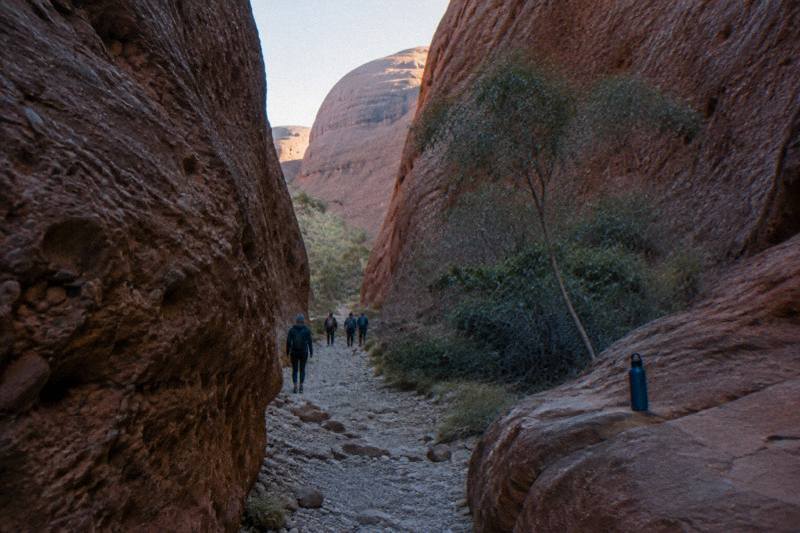
Kata Tjuta, the 36 domes 50 km by road from Uluru, carries the strictest rule of all. The Valley of the Winds walk passes through a men's area, and no photographs or video of the Kata Tjuta formations are allowed along that walk. Close-ups of plants, animals and the people you are walking with are still welcome, so the walk is not a camera-free zone, it is a landscape-free one. The shorter Walpa Gorge walk has a gentler rule: keep both sides of the gorge in frame. That framing guidance, oddly, produces better photographs than a chaotic lens full of rock anyway.
| Location | Photography allowed? | The rule in practice |
|---|---|---|
| Uluru wide shots from a distance | Yes | Expressly fine; the classic sunrise and sunset images fall here |
| Signed culturally sensitive sites at Uluru | No | Signage marks each prohibited site; do not photograph it |
| Uluru north-east face | Partially | Wide shots only; nothing showing the top-left side detail |
| Kata Tjuta Valley of the Winds walk | No formations | Men's area; no photos or video of the domes, flora and fauna fine |
| Kata Tjuta Walpa Gorge | Yes, framed | Keep both sides of the gorge in frame |
| Drones anywhere in the park | No | Prohibited under the EPBC Act, penalties apply |
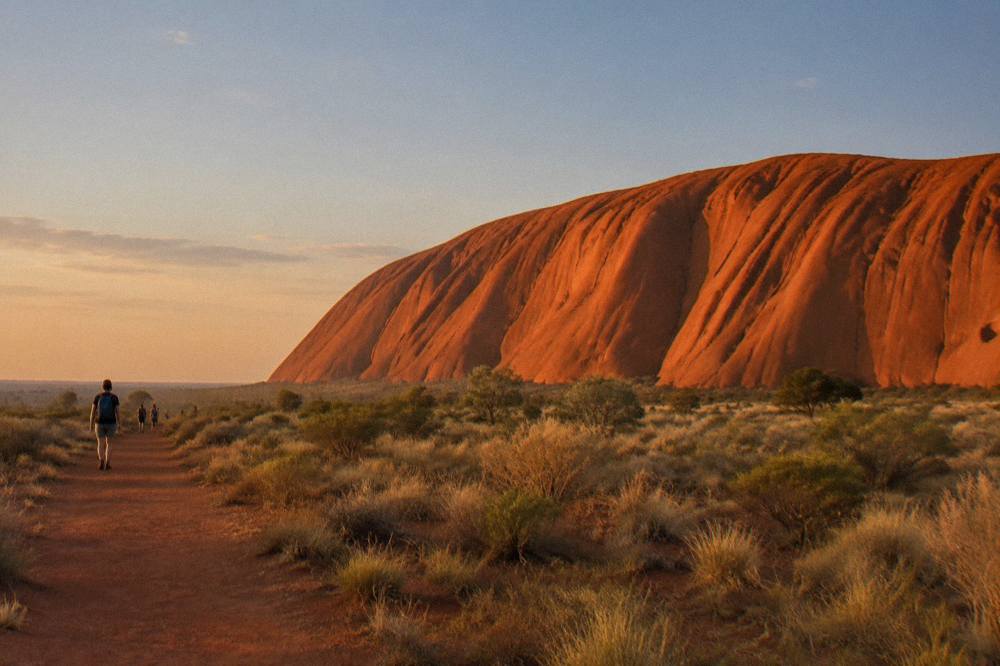
The north-east face deserves its own explanation because it is the one rule people break by accident. Anangu ask for wide shots from a distance only, and specifically ask that nothing show the detail on the top-left side of that face. Helpfully, the best light for photographing the north-east face is one to two hours before sunset, when the low sun throws the sacred detail into shadow and the face reads as pure form. Time your shot right and following the rule costs you nothing photographically.
A sensible habit anywhere in the park is simple: shoot wide, read every sign before raising a camera, and when in doubt, ask a ranger or a guide. Guides on the rostered tours, like the small-group sunset tours and the guided sunrise walks, know precisely which stretches of the base are fine to photograph and which are not, which is one of the quiet arguments for taking a guided option rather than guessing on your own. If a guided golden-hour stop with a cheeseboard and a glass of wine sounds like your pace, check availability on the Sacred Sites & Sunset Tour with Wine & Cheeseboard before your dates fill.
Can You Fly A Drone Over Uluru?
No. Drones and any remotely controlled devices are prohibited throughout Uluru-Kata Tjuta National Park under the Environment Protection and Biodiversity Conservation Act, and penalties apply to visitors who fly them. There is no recreational drone licence, no altitude exemption and no sunrise loophole; the ban is park-wide and absolute. Travellers who want aerial images of Uluru and Kata Tjuta need to either buy a scenic flight or look at imagery from permitted operators.
The drone ban is the one photography rule that is a straightforward legal prohibition rather than a request rooted in Tjukurpa, and it is enforced accordingly. The park is a World Heritage area with heavy air traffic around it, from scenic helicopters and light aircraft to, in recent years, the 1,200 drones that animate the Wintjiri Wiru show outside the park boundary at Yulara. A visitor drone anywhere inside the park risks both penalties and interference with operations. The park's photography page states the prohibition without qualification. If you still want to see drones in the sky around Uluru without breaking the law, our guide to the Wintjiri Wiru drone show at Uluru covers what the experience involves and how to get a spot.
The good news is that the aerial photographs people try to capture with drones are available legally, comfortably and from higher up, through the scenic flights on the roster. Professional Helicopter Services runs a 15-minute Uluru flight from A$195 per person, rated 4.9 from 669 reviews, and a 25-minute Uluru and Kata Tjuta experience from A$315, rated 4.8 from 616 reviews. One guest review on the 15-minute flight notes that "being able to view Uluru by air gave a true perspective of the size", which is exactly the image a drone shot was never going to give you anyway. There is also a fixed-wing option, the Scenic Plane Flight Uluru Rock Blast from A$180 per person, rated 4.8 from 113 reviews.
For planning purposes, note that every scenic flight on the roster departs from Yulara, includes pickup, and lists free cancellation, with the cutoff printed on each listing. Weather and operations decide whether a flight runs on any given day, so no operator can promise a flight time in advance, and haze or heat haze can change what the camera sees. More detail on the flight options is in the helicopter and scenic flights guide.
When Do You Need A Media Permit To Photograph Uluru?
You need a media permit if you are shooting commercially: film crews, photographers working for publication or advertising, and, in the park's own wording, influencers and content creators. Ordinary holiday photography and video, including images you later post publicly on social media, do not require a permit. The line the park draws is between personal holiday content and content produced for commercial purposes, and if money, sponsorship or a brand brief is involved, the permit applies.
This is the rule that has changed most visibly over the past decade, as the number of visitors describing themselves as content creators has grown. A family photo at the sunrise platform is personal use even if it reaches thousands of people. A shoot with a client's product, a sponsored campaign, or footage destined for a commercial publication is not, and the park asks those operators to apply in advance. The practical risk for a typical traveller is low, but travellers who run monetised channels sometimes assume follower counts create an exemption; they do not, and the permit category exists precisely to capture that grey zone.
Two neighbouring rules are worth knowing at the same time. Night-sky photography is affected by park opening hours, since all visitors must be out by closing time; astrophotographers work from the dune lookout beside the Lasseter Highway, outside the park, between the entry station and Ayers Rock Resort. And the climb closure remains the clearest legal line of all: the climb closed permanently on 26 October 2019, climbing breaches the EPBC Act, and penalties are issued. Nobody should plan any photograph that involves standing on top of the rock. If you'd rather base yourself near the dune lookout for those after-dark shots, this Uluru accommodation guide walks through where to stay at Ayers Rock Resort and beyond.
For holiday photographers the summary is short. Bring the camera, bring a wide lens, shoot the rock from the viewing areas and the base walk to your heart's content, respect every sign, leave the drone at home, and apply for a permit only if money is attached to the images. The remaining question is where the best legal photographs actually come from, and that is a matter of light and geography rather than law.
Where Are The Best Legal Sunrise And Sunset Photo Spots?
The park maintains five dedicated viewing areas, and they divide cleanly by light: Talinguru Nyakunytjaku and the Kata Tjuta dune area are the sunrise platforms, while the Uluru car and bus sunset areas and the Kata Tjuta sunset area are the sunset platforms. All five are legal to photograph from, all are reached by road from Yulara, and the choice between them is about which rock you want in frame and how much walking you want before it. The park's sunrise and sunset page maps them all.
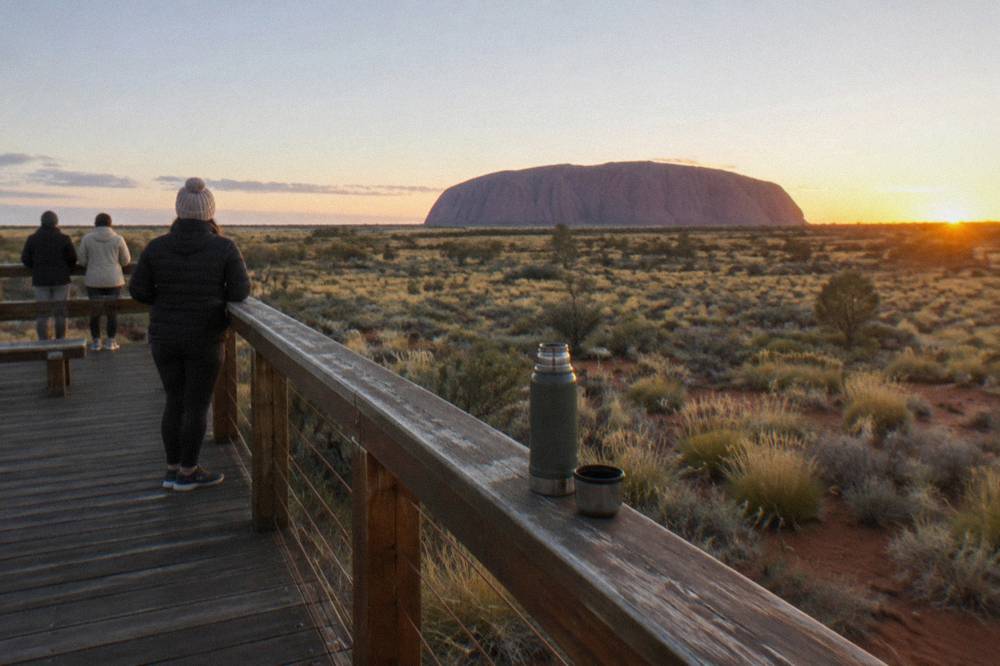
Talinguru Nyakunytjaku is the main sunrise platform: raised dune viewing structures facing Uluru, with the rock catching first light while the desert around it stays blue-grey. It fills quickly at dawn, which matters for photographers who want a clean foreground, and it is the standard drop-off for the sunrise roster tours, including the guided sunrise walk with light breakfast from A$186 per person. The Kata Tjuta dune area is the quieter sunrise alternative and gives you the 36 domes instead, which photograph wonderfully at dawn because their west-facing walls stay in shadow longer.
At the other end of the day, the Uluru car and bus sunset areas are the classic golden-hour stops, and the difference between them is crowd and angle rather than legality. Guides on the sunset roster tours time their arrivals deliberately. The Sacred Sites & Sunset Tour with Wine & Cheeseboard spends its first hours on rock art and cultural sites, then settles at the sunset area with a drink, while the Emu Run Experience day tour with sunset BBQ, from A$329 per person, builds a full day toward the same light. No operator can promise the sky will perform; sunset colour at Uluru ranges from fierce orange to soft rose depending on cloud, and the photographs worth taking exist in every version of it.
| Viewing area | Best light | What you photograph | Notes for photographers |
|---|---|---|---|
| Talinguru Nyakunytjaku | Sunrise | Uluru from raised dunes | Main sunrise platform, busy at dawn |
| Kata Tjuta dune area | Sunrise | The 36 domes of Kata Tjuta | Quieter, domes hold shadow longer |
| Uluru car sunset area | Sunset | Uluru full silhouette | Drive-up access, wide shots fine |
| Uluru bus sunset area | Sunset | Uluru full silhouette | Standard coach-tour stop |
| Kata Tjuta sunset area | Sunset | Domes against western sky | Pairs with an afternoon Kata Tjuta visit |
Beyond the platforms, the base walk itself is a photographer's corridor, about 10 km of constantly changing rock face, and the legal-and-rewarding way to cover it with a camera in limited time is the Segway full base loop from A$259 per person, rated 4.9 from 499 reviews. The ride covers the whole circumference with stops for the photogenic sections, and a guide to flag the signed areas. One guest review notes, "I wasn't sure I could manage the Segway but it became very comfortable", which speaks to how accessible it is. For Kata Tjuta specifically, the Kata Tjuta tours guide breaks down the walks and the photo rules around each.
How Do The Photo Rules Change The Way You Plan A Visit?
The photo rules turn planning from a chore into an advantage: you pick viewing areas for their light, save the north-east face for late afternoon when shadow does the compliance work for you, fly drones only where permitted, and let a guide handle signed-site questions on guided stretches. Since most accidental breaches happen at unread signs, guided tours and the ranger-guided Mala walk are the safest way to start.
The ranger-guided Mala walk deserves a special mention here. It is free for park visitors, departing 8.00 am from October to April and 10.00 am from May to September, and a ranger walks you through the Mala story and the landscape it belongs to, including the parts that cannot be photographed. It is the single best orientation to the logic behind the rules. Note the park pass still applies, $38 for an adult for 3 days, under 18 free, and the pass covers Uluru-Kata Tjuta National Park only; tour listings state the fee separately and it must be pre-purchased online. The Cultural Centre, open 7.00 am to 5.45 pm daily, adds context on Tjukurpa and is free to enter.
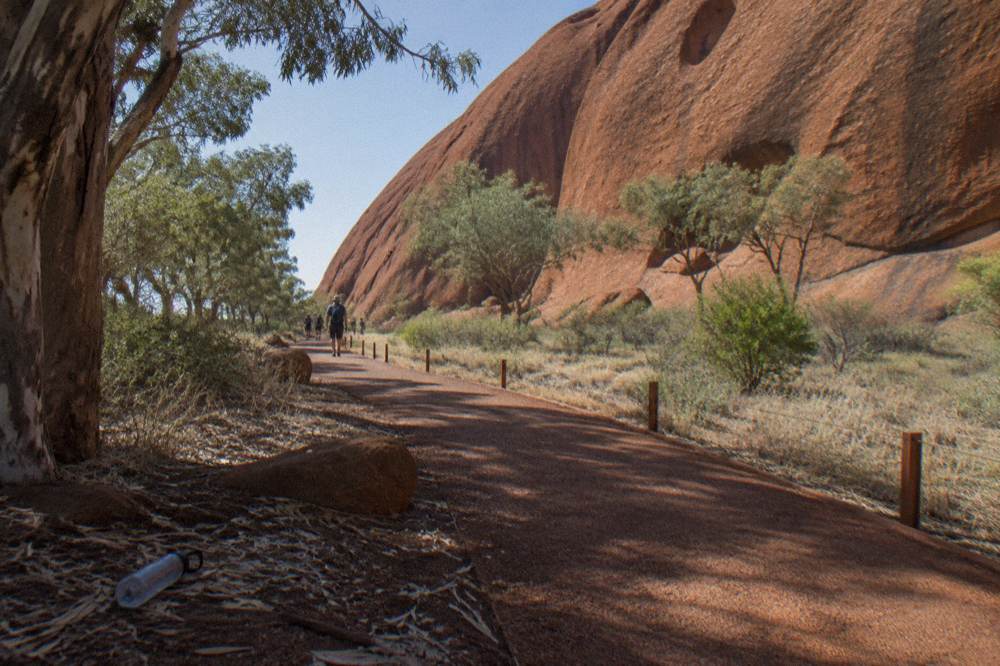
Conditions change, too, and not only the light. The park occasionally closes areas or the whole park for cultural reasons, and sections of walking tracks close in extreme heat, with the north-east walk closing from 11 am and the Lungkata walk from 2 pm when the temperature reaches 40 C. The park asks summer walkers to finish before 11.00 am, to avoid walking between 2.30 pm and 6.30 pm, and to carry at least one litre of water per person per hour. Before you travel, read the park's news page for current conditions; never assume a named sight is open on any given day.
For travellers who want the photography handled end to end, the guided sunset formats do the most lifting. We compared the listings on Uluru Australia Tours and the pattern is consistent: the coach options from A$186 per person cover the big sights economically, the SEIT small-group sunset tour with sparkling wine at A$249 adds intimacy and a guide's eye for vantage points, and the SEIT Kata Tjuta sunrise tour with breakfast, rated 4.8 from 255 reviews, gets you to the domes for the light most visitors sleep through. Cancellation terms differ listing by listing, most allow free cancellation but the cutoff differs, so read the booking page for whichever you choose. You can also compare sunrise against sunset light before committing.
Common Questions About Photographing Ayers Rock
Is It Illegal To Take A Photo Of Ayers Rock?
No. Wide shots of Uluru from the viewing areas, the base walk and the air on a licensed scenic flight are all legal. The prohibitions apply to signed culturally sensitive sites, the detail on the top-left side of the north-east face, the Kata Tjuta formations along the Valley of the Winds walk, drones anywhere in the park, and commercial shooting without a media permit.
Can You Photograph The Whole Of Uluru In One Shot?
Yes. A wide shot from a distance that includes the whole rock is expressly fine, and the five dedicated viewing areas exist for exactly that image. The north-east face rule asks for wide shots only, with nothing showing the top-left side detail, which the pre-sunset light largely handles by throwing that detail into shadow.
Why Can't You Photograph Parts Of Kata Tjuta?
The Valley of the Winds circuit passes through a men's area under Anangu law, so no photographs or video of the Kata Tjuta formations are allowed along that walk. Close-ups of flora, fauna and people remain welcome. On the shorter Walpa Gorge walk, photography is allowed with both sides of the gorge kept in frame.
Can I Fly My Drone At Uluru If I Have A Licence?
No. Drones and remote controlled devices are prohibited throughout Uluru-Kata Tjuta National Park under the EPBC Act regardless of any licence, and penalties apply. Legal aerial photography is available through the rostered scenic flights, including a 15-minute helicopter experience from A$195 per person and a fixed-wing flight from A$180 per person.
Do I Need A Permit To Post My Uluru Photos Online?
No, ordinary holiday photos and videos posted to personal social media do not require a permit. Commercial photography, including work by influencers and content creators, does need a media permit. If money, sponsorship or a brand brief is attached to the images, apply in advance.