What Are The Best Uluru Tours For Seniors?
A practical comparison of Uluru tours for senior travellers: coach sightseeing, hop-on hop-off buses, sunset dining and scenic flights, with heat and park pass advice.
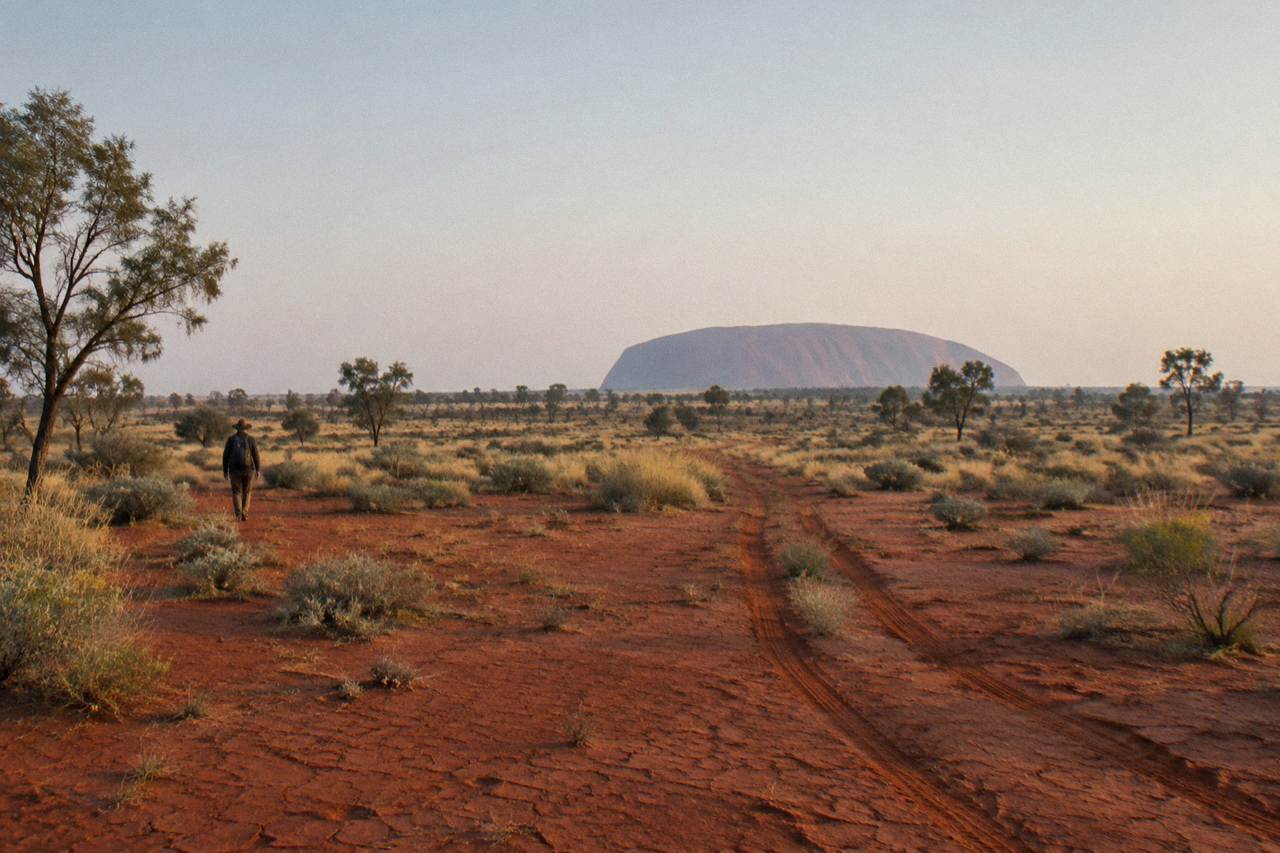
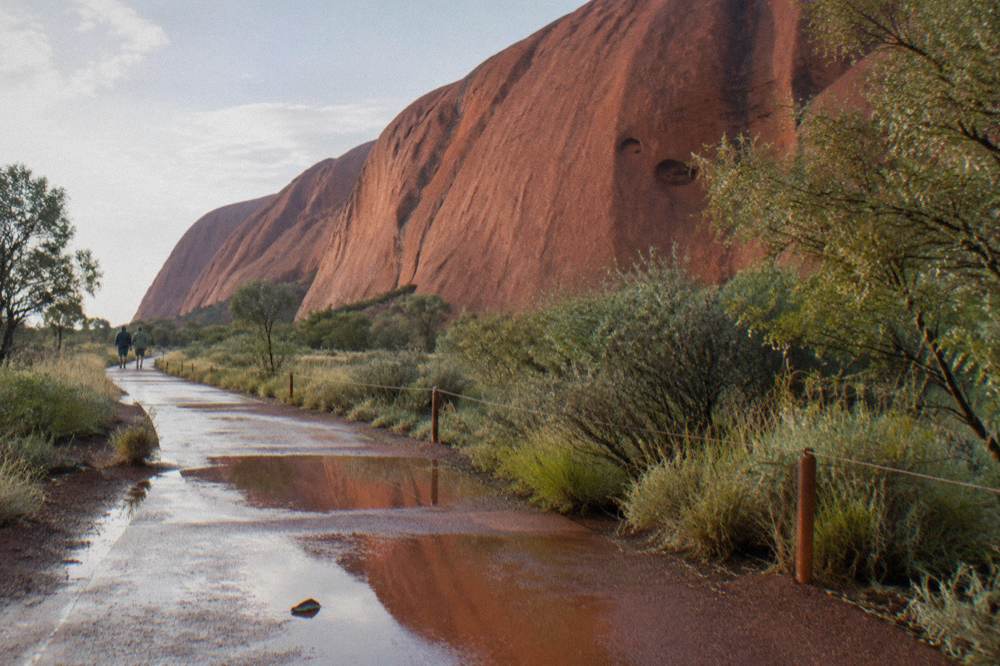
Uluru rewards the seated traveller as much as the walking one. The rock stands 348 metres high with a circumference of 9.4 kilometres, and the single best thing most visitors do here, watching the colour change at sunrise or sunset from a viewing area, requires no walking at all beyond a short path from a car park. The park's own pages list five dedicated sunrise and sunset viewing areas, and tour operators run a full spread of coach, dining and flight products built around them. If you'd rather not drive yourself, the hop-on hop-off bus guide explains how the loop links the main viewing areas.
The question for many older travellers is therefore not whether Uluru is accessible, but which of the 25 verified listings here suit a slower pace. This article compares the options that keep physical effort low: large-coach sightseeing with hotel pickup, the hop-on hop-off bus pass, sunset dining tours, and fixed-wing and helicopter flights. It also covers the park's own heat safety advice, because that advice shapes any senior itinerary more than fitness does.
What Are The Best Uluru Tours For Seniors?
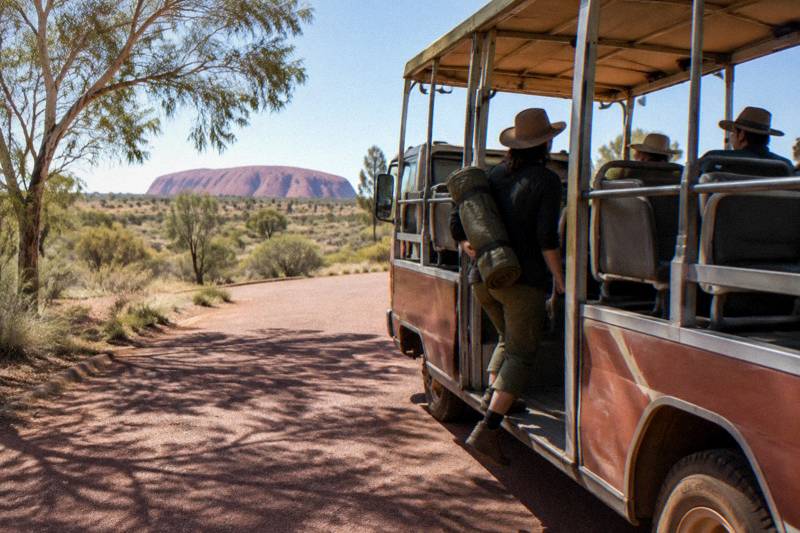
The best Uluru tours for seniors are the seated, pickup-included products: the hop-on hop-off bus pass from A$140 per person, the Sacred Sites and Sunset Tour with wine and cheeseboard from A$186, the Uluru Sunrise and Kata Tjuta Day Trip by Bus from A$186, and the 15-minute helicopter experience from A$195. Each departs Yulara, includes pickup, and involves minimal walking.
That shortlist comes from comparing every listing on the roster for three things: format, duration and walking demand. Coach products with pickup from Ayers Rock Resort remove the two hardest parts of a desert day, driving on unfamiliar roads in the dark and standing around before and after a viewpoint. Flights remove even the desert heat from the equation. Walking-based products are not excluded here, but they are treated honestly: the full base walk covers about 10 kilometres, which is a commitment regardless of age.
The listings below are the trio we would put in front of any senior traveller first. One is a flexibility pick, one is a guided sunset pick, and one is a splurge aerial pick, so the spread covers three quite different travel styles.
A quick word on what "senior friendly" means in this article. We are not making medical claims and we cannot know any reader's health. We are comparing the listings as their operators present them: group size, format, duration, and how much of the product happens on foot versus seated. If a listing describes itself as small group on Segways, we report that and leave the judgement to you and your doctor. What the data does show is that Uluru has more genuinely low-effort options than most visitors expect before they arrive.
Which Coach Tours Suit Travellers Who Prefer Not To Walk Far?
Coach tours are the backbone of low-effort Uluru sightseeing. Four roster listings run from Yulara with pickup included, from A$186 to A$329 per person, in two to seven hours, with ratings between 4.2 and 4.6. The five-hour Uluru Sunrise and Kata Tjuta Day Trip by Bus, 4.6 from 603 reviews, is the standard large-coach choice, and these tours watch sunset or sunrise from vehicle-served viewing areas.
The large-coach format is the most forgiving. You are collected at the resort, seated for the drives between Uluru and Kata Tjuta, and deposited at short walking distance from the sights. The Uluru Sunrise and Kata Tjuta Day Trip by Bus from AAT Kings runs five hours from A$186 per person, rated 4.6 from 603 reviews, and covers both rock sites in one morning. A guest review praises the guides by name: "Very good tour and the guides, Dani and Regi, were amazing. They were knowledgeable and friendly, and made sure the tour was prompt so we could visit everywhere with enough time to enjoy ourselves."
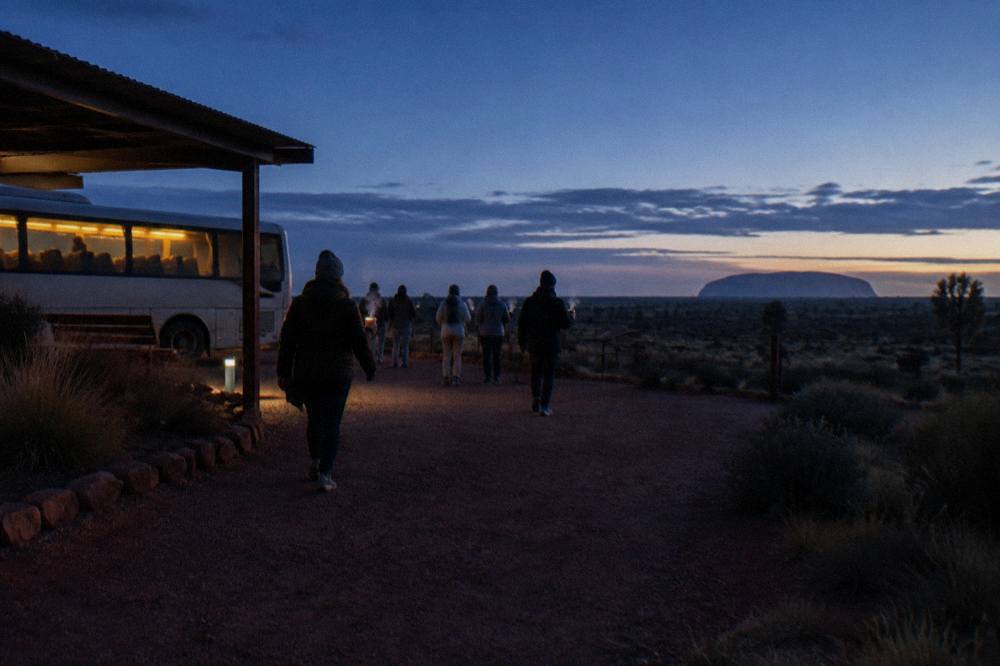
The sunset side of the same format is even lower effort. The Sacred Sites and Sunset Tour with Wine and Cheeseboard, also AAT Kings, runs five hours from A$186 per person, rated 4.5 from 515 reviews, and finishes with sparkling wine and a cheeseboard at a sunset viewing area. The Uluru Sunset plus Outback Barbecue Dinner and Star Talk version, 4.2 from 445 reviews from A$328, stretches the evening to three hours 30 minutes with a sit-down barbecue and a guided look at the night sky. Clouds decide the star viewing, as one guest review notes plainly: "The barbecue was really good and the star gazing was good even though the clouds didn't cooperate."
One trade-off deserves a mention before you book. Coach tours carry large groups, which means scheduled stops on a fixed timetable rather than a pace you set. For many older travellers that structure is the appeal; for some it is the frustration. If you would rather linger at a viewpoint and skip another, the next section covers the product built exactly for that.
| Tour (decision name) | Format | Duration | From price | Rating and reviews |
|---|---|---|---|---|
| Bus Sunrise, Kata Tjuta Combo | Coach, large group | 5 hours | A$186 | 4.6 from 603 |
| Sunset Wine And Cheeseboard | Coach, large group | 5 hours | A$186 | 4.5 from 515 |
| Outback BBQ Dinner, Star Talk | Coach, large group | 3 hours 30 minutes | A$328 | 4.2 from 445 |
| Sunset BBQ Day Tour, Sparkling Wine | Coach, mixed group | 7 hours | A$329 | 4.6 from 345 |
| Field Of Light Sunrise, Hot Drinks | Coach, large group | 2 hours | A$115 | 4.6 from 677 |
For seated evening viewing at the gentlest duration of all, the Field of Light Sunrise Tour with Hot Drinks deserves its own line: two hours from A$115 per person, 4.6 from 677 reviews, the deepest review pool of any coach product on the roster. It visits the Bruce Munro installation of more than 50,000 light spheres, which has run since 2016 and was extended through 2029, and it does so with a hot drink in hand.
Is The Hop-On Hop-Off Bus Pass A Good Fit For Independent Seniors?
Yes, for confident travellers who want control over their own day. The Uluru and Kata Tjuta hop-on hop-off pass, from A$140 per person and rated 4.5 from 154 reviews, is the most flexible low-effort option at Uluru: you board and alight at the stops that interest you, spend as long as you like at each, and walk exactly as much or as little as you choose.
The pass, listed as Uluru & Kata Tjuta: Hop on Hop Off Pass, removes the biggest hidden burden of a self-drive day, which is the driving itself. Distances inside the park are not trivial: Kata Tjuta sits 50 kilometres by road from Uluru, and the sunrise and sunset viewing areas sit at different points around the rock. A pass that shuttles between them means no desert roads, no parking, and no walking from overflow car parks.
Its freedom cuts both ways, so plan honestly. Nothing on a hop-on hop-off day forces you to rest, and nothing forces you to move either; the pass works best when you commit in advance to the two or three stops that matter most to you and treat the rest as scenery. Pairing it with one short guided product, such as the free ranger-guided Mala walk for park visitors, gives the day some structure without adding cost. The Mala walk is 2 kilometres return, wheelchair accessible, and has drinking water available, which the park's own walk pages state directly.
The pass is also the natural companion piece to the free things to do at Uluru guide, since the Cultural Centre, the viewing areas and the shorter walks cost nothing beyond the park pass. More on that pass later in this article, because the fee catches many first-time visitors off guard.
Thinking about how a flexible bus day compares with a fully guided coach morning? It comes down to whether you want a commentary or a timetable of your own.
How Do Helicopter And Scenic Flights Compare For Older Travellers?
Flights are the lowest physical effort of any Uluru product. The 15-minute helicopter experience from A$195 per person, 4.9 from 669 reviews, the 25-minute Uluru and Kata Tjuta version from A$315, 4.8 from 616, and the 36-minute sunset helicopter tour from A$415, 4.8 from 175, all include pickup and transfer to the heliport. The fixed-wing Rock Blast runs from A$180 with a 4.8 rating from 113 reviews.
A helicopter or light-aircraft flight compresses the whole of Uluru and Kata Tjuta into a seated quarter hour or half hour, and it delivers a sense of scale that ground viewpoints cannot. A guest review on the 15-minute listing puts it well: "being able to view Uluru by air gave a true perspective of the size." Kata Tjuta reads especially well from above, because its 36 domes cover more than 20 square kilometres and rise up to 546 metres above the plain, taller than Uluru's 348 metres.
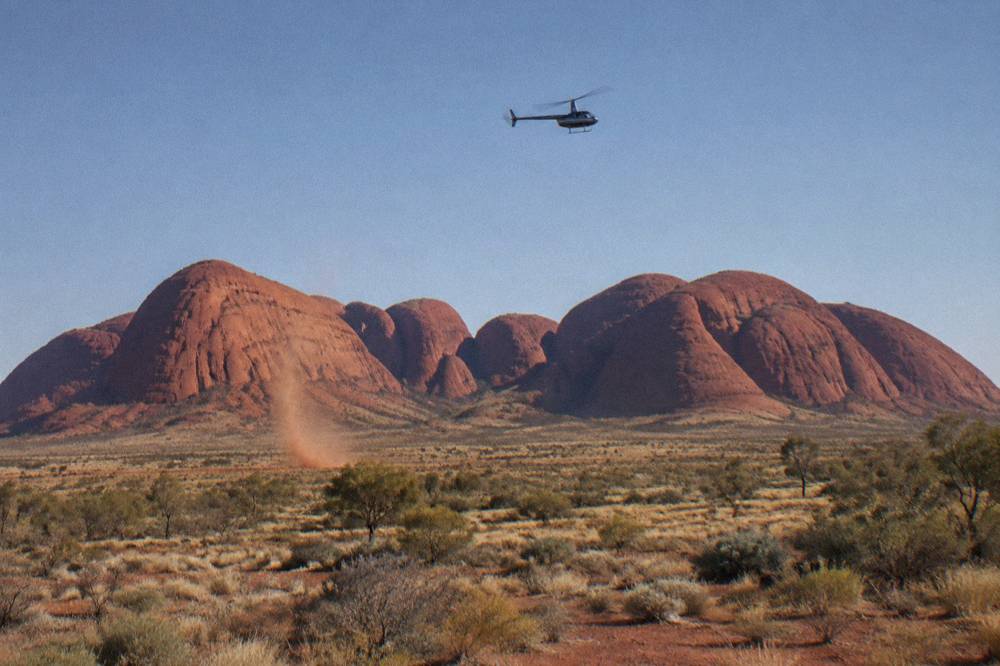
Two practical notes temper the choice. Shared flights mean boarding steps into the aircraft, and the operators' listings, not this site, govern who can fly; any question about mobility aids or assistance belongs on the booking page before you pay. Weather and operations decide whether a flight runs at all, so keep one flexible morning in the itinerary rather than booking a flight on your only day.
The fixed-wing option splits the difference on price. The Scenic Plane Flight, Rock Blast, from A$180 per person and rated 4.8 from 113 reviews, runs about an hour and a half all-in in a light aircraft with a shared cabin. A guest review calls it a "Fun and affordable way to see Ayers Rock," praising the pilot. Cabin doors and windows stay closed on a plane, which some travellers prefer over an open-door feel; others find helicopters the more comfortable ride. Both get you the view without a single step on desert ground.
The sunset helicopter tour, from A$415 per person, is the flight version of the sunset coach tradition: 36 minutes over both rock sites in the low light, 4.8 from 175 reviews. It is the priciest single experience in this comparison and, for a traveller who wants one memorable splurge with no walking attached, arguably the cleanest way to spend it. Just as with every other product here, no operator can promise what the sky will do on the night.
What About Small-Group Walking And Segway Options?
Yes, small-group options split neatly by effort: the 3-hour Highlights of Uluru Including Sunrise and Breakfast (from A$189, 4.8 from 220 reviews) keeps walking short, while the Full Base Walk at Sunrise covers about 10 kilometres in 6 hours from A$249, 4.8 from 460 reviews, for a genuine hike. Segway tours from A$219 replace walking with riding, rated 4.9 from 499 and 4.8 from 294 reviews.
SEIT Tours runs the small-group side of the roster, and its shorter products fit many older travellers well. The three-hour Highlights of Uluru Including Sunrise and Breakfast, from A$189 per person, combines the sunrise viewing area with breakfast and selected close-up stops, rated 4.8 from 220 reviews. The Sacred Sites and Sunset small-group version with sparkling wine, from A$249, carries fewer passengers than the coach equivalent and includes sunset refreshments, 4.8 from 218 reviews. The rest of the planning pages sit on Uluru Australia Tours.
The Segway listings deserve a fair hearing rather than a dismissal. Uluru Segway Tours describes both products as small group on Segways: the full base loop at 5 hours from A$259, rated 4.9 from 499 reviews, and the Best of Uluru Segway and Walking Tour at 4 to 5 hours from A$219, rated 4.8 from 294. A guest review on the full-base product suggests the barrier is lower than people fear: "I wasn't sure I could manage the Segway but it became very comfortable." Riding still requires balance and standing throughout, so treat it as an option to consider, not a recommendation, and read the listing's own requirements.
Cancellation terms on the small-group side differ sharply from the coach side, and this matters when plans are uncertain. The SEIT small group tours above list cutoffs of 3 or 6 days before start depending on the tour, while the AAT Kings coach tours above list 24 hours. Check each listing for its own cutoff. Cutoffs differ listing by listing, so read the booking page for whichever specific tour you choose rather than assuming a pattern.
For a longer day trip at a comfortable pace, the Kings Canyon full-day tour from Ayers Rock Resort is the roster's main out-and-back option: 12 hours by coach from A$345, rated 4.7 from 666 reviews. Be clear-eyed about it, though: its centrepiece is the Kings Canyon rim walk, a steep, sustained walk that is the most demanding thing on this page. Some older travellers take the tour for the drive, the guide and the canyon floor alternatives; others give it a miss entirely.
When Is The Best Time Of Year For A Lower-Effort Uluru Visit?
May to September is the park's own stated best window, with daytime maximums usually 20 to 30 C. October to March can exceed 35 C daily, and summer walking guidance says finish before 11.00 am. For a viewpoint, flight and coach itinerary, winter also brings very cold nights, so pack layers: Yulara's average July minimum is 4.4 C while the July average maximum is 20.6 C.
The climate table from the Bureau of Meteorology, as printed on the park's planning pages, tells the story month by month. The sweet spot for comfort sits in the shoulder months either side of winter: April and May, then August through October, when daytime temperatures sit in the mid 20s to low 30s and the mornings are cool rather than bitter. Wildflowers favour August and September.
| Month | Average max C | Average min C | Average rain mm |
|---|---|---|---|
| April | 29.9 | 14.5 | 15.7 |
| May | 24.3 | 9.3 | 14.3 |
| June | 20.4 | 5.6 | 18.2 |
| July | 20.6 | 4.4 | 17.6 |
| August | 23.7 | 5.9 | 5.0 |
| September | 28.7 | 10.7 | 9.0 |
| October | 32.3 | 14.9 | 21.1 |
Two seasonal irritants round out the picture. Bush flies are present from September to April, and head nets are sold on arrival at the resort for a reason. The Bureau's current outlook for October to December favours above-average temperatures and rainfall for the southern Northern Territory, which makes heat planning more relevant, not less, for late-spring travel. There is also an upside window in the local seasonal calendar: the piriyakutu season, usually August to October, is when food plants flower in the park. The best time to visit Uluru guide unpacks the whole year in more detail.
What Should Seniors Know About Heat, Safety And The Park Pass?
Carry at least one litre of water per person per hour of walking, avoid walking between 2.30 pm and 6.30 pm, and call 000 or 112 in an emergency; all three figures come from the park's own safety page. The park pass costs $38 for an adult for 3 days, or $50 annual, under 18 free, is valid for this park only, and must be pre-purchased online separately from any tour, as the tour listings themselves state.
The heat rules deserve to be taken literally rather than as general advice. The park states that temperatures regularly reach 30 C or more and can exceed 40 C in summer, that sections of walking tracks close in extreme heat, and that the ranger-guided Mala walk runs at 8.00 am from October to April and 10.00 am from May to September. Emergency radios sit on most walks. For a senior itinerary, the practical translation is simple: put anything on foot in the first hours of the day and give the afternoon to a seat, a shade structure or a flight.
The park pass catches more arriving visitors than any other cost here. Tour listings state the fee separately from the tour price, and the pass is bought online and scanned at the entry station. Buy it before your first tour morning, because sunrise pickups leave in the dark and there is no comfortable moment to sort a pass at 5.00 am at the gate. None of the tours in this article include it.
Photography rules are gentler than the rumours suggest. Culturally sensitive sites at Uluru and Kata Tjuta are clearly signed and must not be photographed, and there is no photographing or video of Kata Tjuta's formations along the Valley of the Winds walk. Wide shots of Uluru from a distance are fine, which is exactly what a viewpoint-based senior itinerary produces. The is it illegal to take a photo of Ayers Rock article covers the detail, and the drone ban is total inside the park.
Putting The Day Together
A senior-friendly Uluru itinerary works as one sunrise coach morning, one sunset coach evening with food attached, and a flexible hop-on hop-off day between them, with a flight added if the budget allows. Using the roster's from prices, that core builds out from A$186 plus A$186 plus A$140, before the $38 park pass, meals and any flying. Book the tight-cancellation products first and hold the rest.
The pattern behind that answer runs like this. One sunrise morning on a coach product, either the Bus Sunrise, Kata Tjuta Combo or the shorter Highlights tour, when the day is coolest. One sunset evening with food and wine attached, from the Sacred Sites and Sunset Tour with Wine and Cheeseboard through to the barbecue dinner with star talk. One hop-on hop-off day in between for the Cultural Centre and whichever viewpoints the coach day skipped. A flight, if the budget allows, slotted into whichever morning has the best forecast, and it is always the forecast that decides.
Budget realistically across that pattern. Using the roster's from prices, a coach sunrise at A$186, a sunset coach evening at A$186 and a two-hour Field of Light sunrise coach visit at A$115 already build a varied three-day core, before the park pass, food and any flight. The how much does an Uluru tour cost guide breaks the whole budget down, and the choice between a fixed itinerary and a flexible one is covered in what is the best Uluru tour. Once you have that core priced out, the complete Uluru tour cost breakdown helps you judge whether pricier add-ons like a scenic flight are worth stretching for.
Booking order matters as much as product choice. Cancellation cutoffs are set tour by tour: AAT Kings coaches and the scenic flights sit at 24 hours, some SEIT walks need 6 days, camping trips up to 14 days. Check each listing's cutoff before booking firm dates. So book the small-group and flying products first, once your dates are firm, and hold the flexible coach decisions for later, when the forecast starts to mean something. Every product here departs Yulara, so staying at Ayers Rock Resort keeps every pickup a short one.
Three picks carry that whole strategy in one view, which is why they anchor this article: the flexible bus pass, the guided sunset coach evening, and the 15-minute flight.
Common Questions About Uluru Tours For Seniors
What Are The Best Uluru Tours For Seniors?
The seated, pickup-included listings: the hop-on hop-off bus pass from A$140 per person, the Sacred Sites and Sunset Tour with Wine and Cheeseboard from A$186, the Uluru Sunrise and Kata Tjuta Day Trip by Bus from A$186, and the 15-minute helicopter experience from A$195. All depart Yulara with pickup and keep walking to a minimum.
Do I need to walk a lot on an Uluru tour?
Not on the coach, dining or flight products. Viewing areas sit a short distance from where vehicles stop, and the Field of Light sunrise coach tour runs just two hours with hot drinks. Walking demand rises only on the small-group walking and Segway products, and the full base walk covers about 10 kilometres.
Is the Uluru climb an option for fit seniors?
No. The climb closed permanently on 26 October 2019 by decision of the park's Board of Management, climbing breaches the EPBC Act, and penalties apply to anyone who attempts it. No tour on this site offers or implies it.
Does the tour price include the park pass?
No. The park pass costs $38 for an adult for 3 days, or $50 as an annual pass, with under 18 free, and it is valid for Uluru-Kata Tjuta National Park only. Tour listings state the fee separately and say it must be pre-purchased online.
Are Segway tours suitable for older travellers?
Some are, and the listings themselves govern suitability. The Segway products require balance and standing for 4 to 5 hours. A guest review on the full-base Segway tour says the writer was unsure at first but found it very comfortable. Consider it honestly against your own mobility, and read the listing's requirements before booking.
Can seniors visit Uluru without a tour at all?
Yes. The park's sunrise and sunset viewing areas, the Cultural Centre and the shorter walks are all accessible with a hire car or the hop-on hop-off bus, though the park pass still applies. The free ranger-guided Mala walk, 2 kilometres return and wheelchair accessible, runs daily for park visitors.