Camping At Uluru: Ayers Rock Campground And Camping Tours
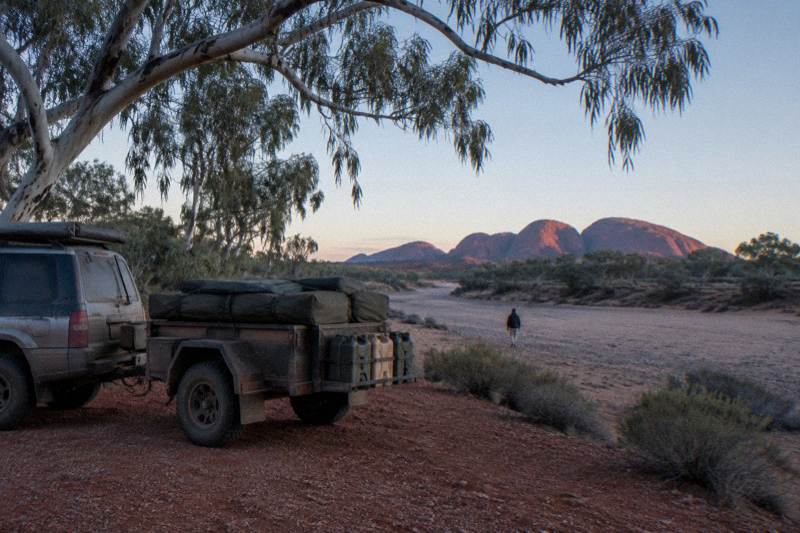
You cannot camp inside Uluru-Kata Tjuta National Park. Camping happens at Ayers Rock Campground in Yulara, at Curtin Springs further out, or on a guided camping tour that moves between Uluru, Kata Tjuta and Kings Canyon.
Short answer
Overnight camping is not permitted inside Uluru-Kata Tjuta National Park, which closes each night. The listed camping options are Ayers Rock Campground at the resort and Curtin Springs beyond the park. Guided camping tours on the roster run from A$765 per person for 2 days to A$1195 for 4 days.
Uluru-Kata Tjuta National Park closes at night and no camping is permitted inside it. That single rule shapes every camping trip to the rock: you sleep at Ayers Rock Campground in the resort township of Yulara, at Curtin Springs on the Lasseter Highway further out, or on a guided camping tour whose crew handles the tent, the swag and the cooking. This guide lays out the campground options, the tour choices on this site's roster including the Uluru, Kata Tjuta & Kings Canyon Camping Tour, and the planning details that matter, drawn from the park's own pages and the tour listings themselves. Since maps, road signs and the campground itself still use both names, it helps to know why Uluru replaced Ayers Rock as the official name before you arrive.
Where Can You Camp Near Uluru?
The park itself has no camping and closes every night, so the practical camping options are Ayers Rock Campground inside the resort township of Yulara and Curtin Springs, a roadhouse around 100 km by road from the rock on the way in from Alice Springs. Both appear on the official list of park-area places to stay, and neither lets you wake up inside the national park boundary. Everything else about camping near Uluru follows from that.
The official accommodation list for the area, published by the park, names seven hotels and lodges plus Ayers Rock Campground at the resort and Curtin Springs as the camping choices (the park's stay page). That is the complete picture. There is no free bush camping on the park fringe, no overnight parking at the sunrise viewing areas, and no campground hidden in the dunes. Visitors must be out of the park by closing time each evening, which in October means out by 8.00 pm.
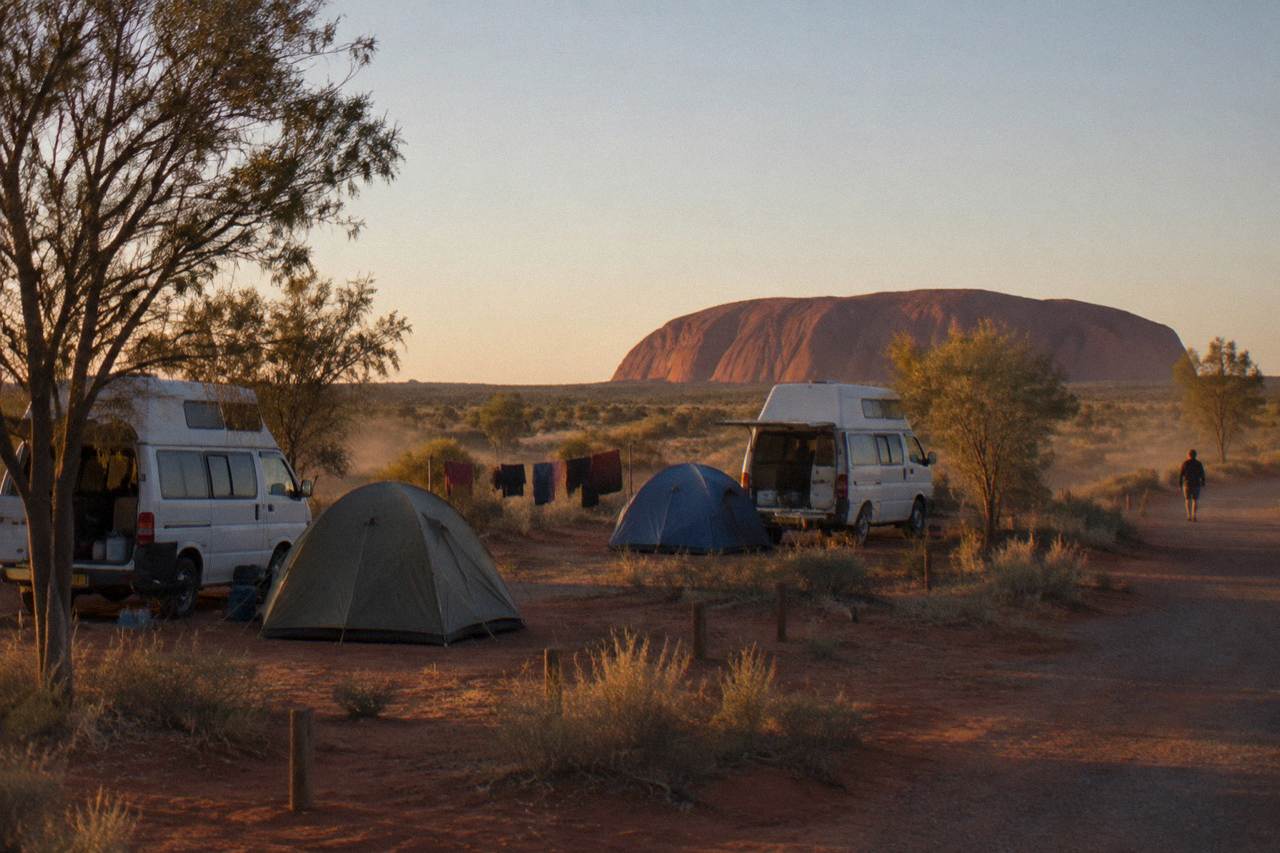
Ayers Rock Campground sits inside the resort precinct, which puts it within a short drive of the park entry station, the sunset viewing areas and the tour pickup points that nearly every roster tour uses. Campers there share the resort's facilities and can join the same commercial tours as hotel guests. Curtin Springs is a different proposition: a working cattle station roadhouse with camping, much further from the rock, best suited to self-driving travellers arriving from Alice Springs who want to break the 465 km drive.
Fees, site types and availability at both campgrounds change with the season and are not printed here, so check each property's own page before planning nights. What can be said firmly is the structural fact: the resort campground is the only camping at Yulara, and Curtin Springs is the other listed option in the wider area. If camping at the rock is the goal, and packing a tent is not, the multi-day Uluru camping tours guide covers the guided alternative in depth.
Why The Park Closes At Night, And What That Means For Campers
The park closes at night under published seasonal hours, and every visitor must be out by closing time, with no overnight stays of any kind inside the boundary. It opens 6.30 am to 7.30 pm in June and July, and 5.00 am to as late as 9.00 pm in the hottest months, so campers base themselves at Yulara or beyond and shoot the night sky outside the park, not beside the rock.
The park's own hours table, on its opening hours page, is the planning baseline:
| Months | Park Hours |
|---|---|
| January, February, December | 5.00 am to 9.00 pm |
| March | 5.30 am to 8.30 pm |
| April | 5.30 am to 8.00 pm |
| May | 6.00 am to 7.30 pm |
| June, July | 6.30 am to 7.30 pm |
| August | 6.00 am to 7.30 pm |
| September | 5.30 am to 7.30 pm |
| October | 5.00 am to 8.00 pm |
| November | 5.00 am to 8.30 pm |
The Cultural Centre keeps its own hours, 7.00 am to 5.45 pm daily. Conditions also change for cultural reasons from time to time, so the park's news page is worth a read before any trip.
For campers the nightly closure is less a hardship than a nudge. Sunset and the hours after it are when the resort's own evening experiences run, from the Field of Light installation of more than 50,000 spheres, in its tenth year in 2026 and extended through 2029, to the Sounds of Silence dinner at from A$295 per adult, sold direct by Ayers Rock Resort. Campers who want stars over the rock itself use the dune lookout beside the Lasseter Highway, outside the park, which is exactly where the park's photography guidance points night-sky shooters.
Camping at Yulara also means being on the spot for the roster's early departures. Nearly every tour on this site leaves from Yulara, and the 3-day camping tour, the 4-day adventure and the day tours all pick up at the resort. A camper at Ayers Rock Campground is, logistically, in the same position as a guest at any of the resort hotels.
Ayers Rock Campground Or Curtin Springs: Which Suits Your Trip?
Ayers Rock Campground suits you if you are flying into Yulara or touring without your own vehicle, since it sits in the resort precinct where every roster tour picks up and the airport is minutes away; Curtin Springs fits self-drivers breaking the 465 km, roughly 5.5-hour haul from Alice Springs who want a stop near the park, though most visitors staying two or more nights pick the campground.
The two properties serve genuinely different trips, and the comparison is mostly about position:
| Ayers Rock Campground | Curtin Springs | |
|---|---|---|
| Location | Inside the resort township of Yulara | On the Lasseter Highway, well before the park turn-off |
| Distance to Uluru viewing areas | Short drive to the entry station | A significant drive each way |
| Best for | Flyers, tour takers, campervan nights near the rock | Self-drivers splitting the Alice Springs to Yulara run |
| Tour pickup | Standard for roster tours departing Yulara | Not a pickup point for the roster's Yulara tours |
| Setting | Resort precinct with shops and facilities | Working cattle station roadhouse |
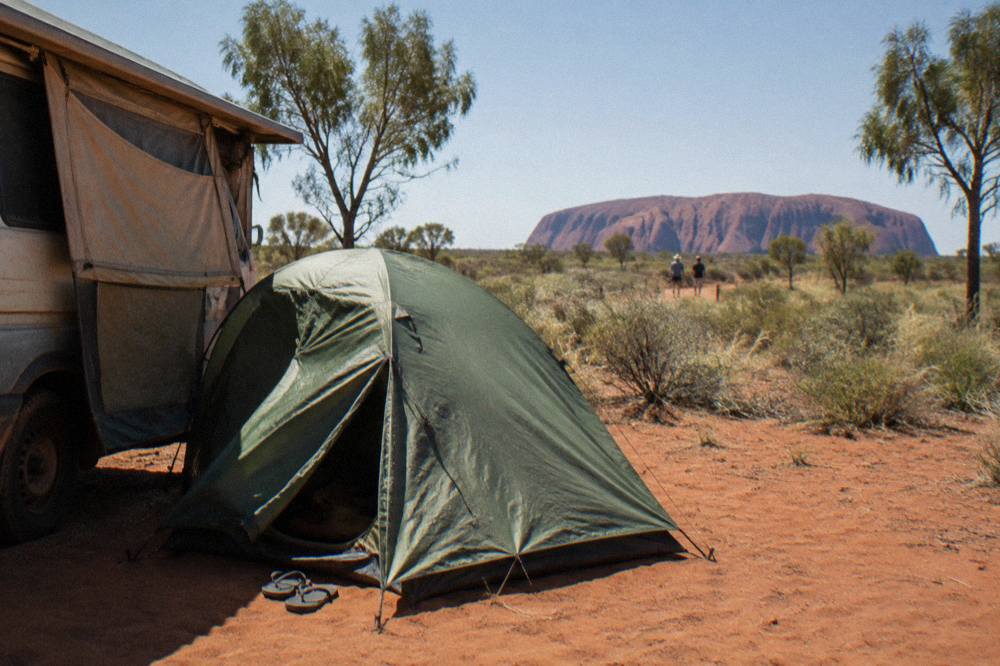
Neither property is a backcountry experience, and that is the point. Camping near Uluru is camping near a small tourist township with a big natural attraction attached, not camping in wilderness. Travellers who want the swag-under-the-stars version of the Red Centre get it not from a campground but from a guided camping tour, where the operator camps at designated sites beyond the park on the route between Uluru, Kata Tjuta and Kings Canyon.
For a fuller sense of what a non-camping base looks like, the Uluru accommodation guide covers the resort hotels, and the free things to do guide lists what costs nothing once the park pass is sorted. Camping searchers are usually one step from the guided tours, though, and that step is worth taking seriously.
Which Camping Tour On The Roster Fits Your Trip?
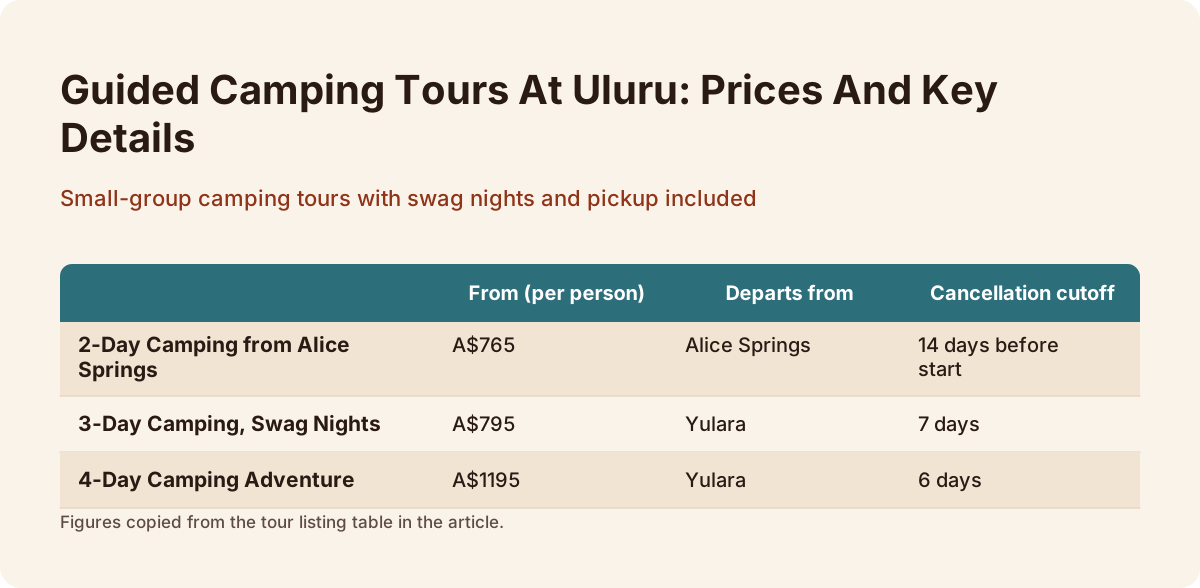
Three guided camping tours fit the Red Centre circuit: a 2-day Uluru and Kata Tjuta overnight trip from Alice Springs from A$765 per person, a 3-day Uluru, Kata Tjuta and Kings Canyon tour from Yulara from A$795, and a 4-day, 3-night version from A$1195. Small-group camping tours with pickup included; the 3-day trip sleeps in swags, the 4-day in eco tents; only the 2-day trip departs Alice Springs, while the others leave from Yulara.
The differences that matter are duration, departure point and how much of the circuit you see:
| Tour | Operator | Days | From (per person) | Rating | Departure |
|---|---|---|---|---|---|
| 2-Day Camping From Alice Springs | Autopia Tours | 2 | A$765 | 4.8 from 59 reviews | Alice Springs |
| 3-Day Camping, Swag Nights | Adventure Tours Australia | 3 | A$795 | 4.8 from 455 reviews | Yulara |
| 4-Day Camping Adventure | Adventure Tours Australia | 4 | A$1195 | 4.9 from 355 reviews | Yulara |
The Uluru, Kata Tjuta & Kings Canyon Camping Tour is the middle option and, for most travellers, the balance point. Three days covers sunrise and sunset at Uluru, the Kata Tjuta walks and the Kings Canyon rim, with two nights under canvas and swags. A guest review of the 4-day version reads: "Amazing experience! Sophie was a fantastic guide, with great knowledge. And a terrific cook! Highly recommended if you want to see the great sites and learn as well." (Warren S, 5 stars). You can Check availability on the live listing, and read more in the Uluru and Kings Canyon tours guide.
The 2-day trip from Alice Springs suits travellers already in the Centre's second town who want the camping format without the Kings Canyon leg. Note its cancellation cutoff is the strictest on this shortlist, 14 days before start, copied from its roster row. The 3-day tour lists 7 days and the 4-day lists 6 days; cutoffs differ listing to listing, so always read the booking page for the specific tour.
Travellers weighing the camping format against day tours from a hotel bed can compare the 12-hour Kings Canyon rim walk day tour, from A$345 per person with a 4.7 rating from 666 reviews, as a non-camping way to reach the canyon from Yulara. It is a long day, but there is no tent to pitch at the end of it.
What Is Swag Camping Actually Like?
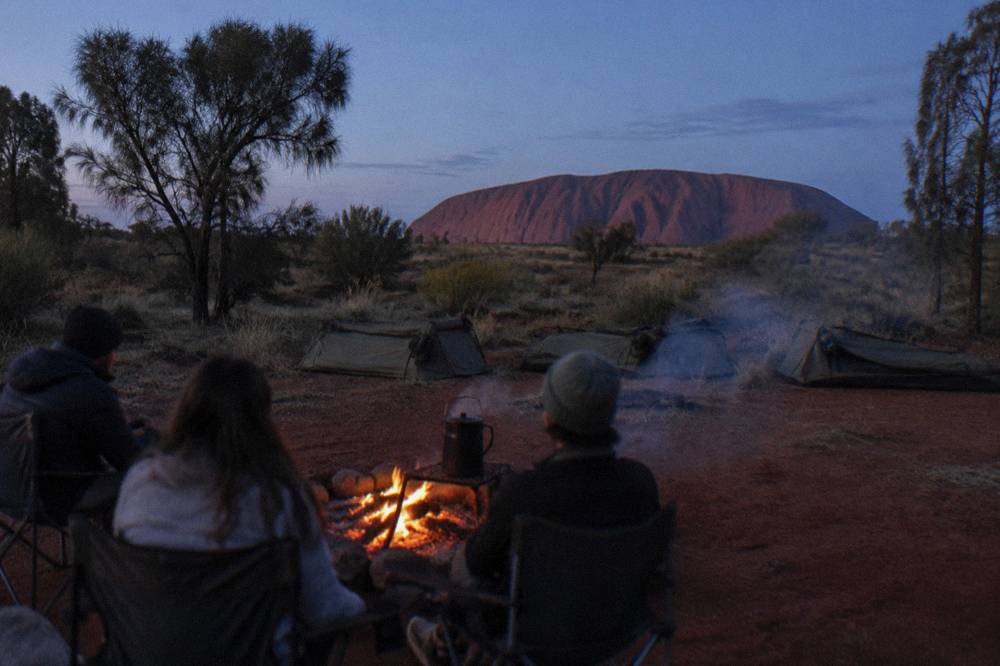
Swag camping is simple by design: you sleep in a canvas bedroll with a mattress inside, either under the open sky or in a basic dome tent, at designated camps beyond the national park on the touring route. Expect shared group travel, camp cooking, no en suites and no Wi-Fi promises, and in exchange you get the desert at night, which is why most people book these trips.
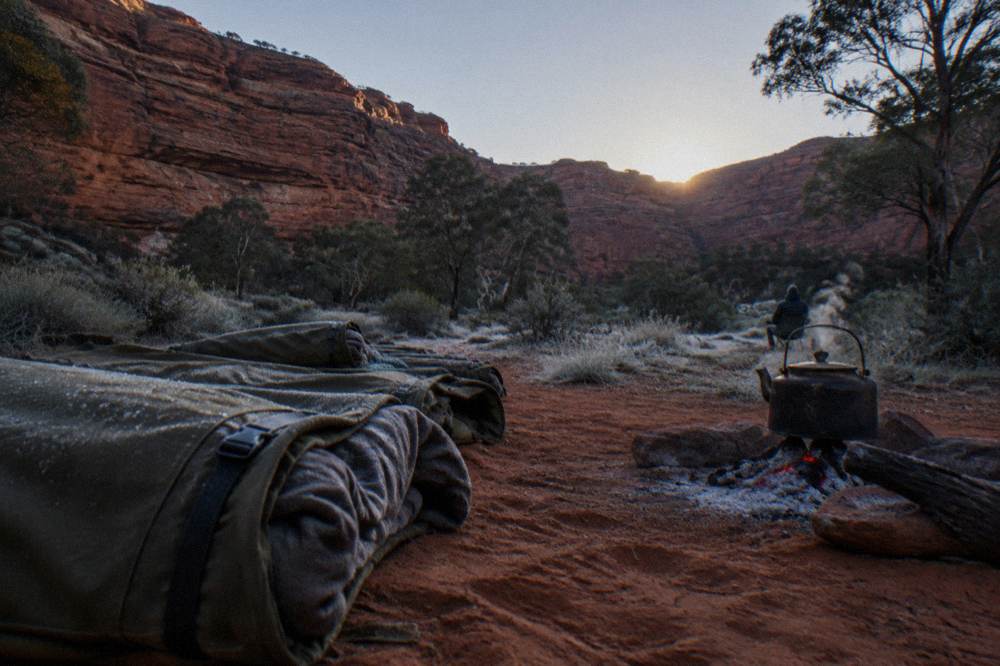
The practicalities are straightforward. Nights in the Red Centre can be genuinely cold, especially from May to August, when Yulara's average overnight lows run from 4.4 to 9.3 degrees according to the Bureau of Meteorology figures the park prints. Days in the same months peak at a comfortable 20 to 30 degrees. Swag camping in winter means a real sleeping bag and layers; in summer it means heat planning of a different order, with daytime maxima above 35 degrees common from October to March.
The tours handle the gear and the food, which is the quiet advantage over independent camping at the campground. A solo traveller at Ayers Rock Campground needs a tent, a stove or resort meals, and a way to reach the walks and viewing areas. A guest on a camping tour needs a bag of clothes and a water bottle. The trade is comfort and independence for logistics handled, and most first-time Red Centre visitors land on the tour side of that trade.
Water and heat safety are worth stating plainly because the park states them plainly: carry at least one litre of water per person per hour of walking, and avoid walking between 2.30 pm and 6.30 pm in summer. Emergency numbers are 000 or 112. Guided tours schedule around the heat, but the rules apply on every walk regardless of who planned it.
Which Months Work Best For Camping At Uluru?
May to September is the park's own stated best window, with daytime maximums usually 20 to 30 degrees and campground nights cold but manageable. October to March can exceed 35 degrees daily, flies are heavy in the warmer months, and the Bureau of Meteorology outlook to December 2026 favours above-average temperatures and rainfall for the southern Northern Territory, so summer campers should plan around heat rather than hope.
The Yulara monthly averages printed by the park, from Bureau of Meteorology data:
| Month | Avg Max (C) | Avg Min (C) | Avg Rain (mm) |
|---|---|---|---|
| January | 38.4 | 22.8 | 28.8 |
| February | 37.0 | 22.1 | 38.4 |
| March | 34.5 | 19.3 | 32.6 |
| April | 29.9 | 14.5 | 15.7 |
| May | 24.3 | 9.3 | 14.3 |
| June | 20.4 | 5.6 | 18.2 |
| July | 20.6 | 4.4 | 17.6 |
| August | 23.7 | 5.9 | 5.0 |
| September | 28.7 | 10.7 | 9.0 |
| October | 32.3 | 14.9 | 21.1 |
| November | 35.1 | 18.4 | 33.1 |
| December | 36.5 | 20.8 | 45.5 |
Winter camping here rewards a proper sleeping bag. Summer camping rewards nothing except an evening-only routine and a very good hat; UV in the warm months is extreme, and bush flies are present from September to April, which is why head nets are sold on arrival at the resort. August to October also overlaps the piriyakutu season, when food plants flower, a detail the park's seasons page notes for travellers timing a spring visit.
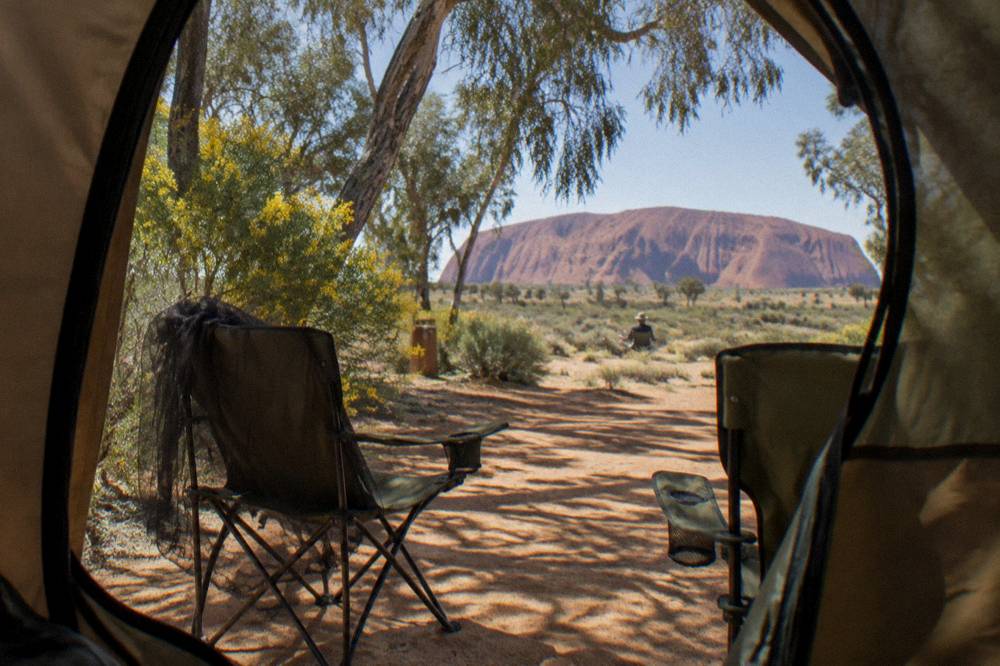
Camping tours run year round, so the calendar question is less about availability and more about what kind of trip you want. A June swag night under a heavy sky of stars, with a 5-degree morning and a hot breakfast from the camp kitchen, is a different experience from a November night when the overnight low barely drops below 20. Both are real Red Centre trips; only one of them is comfortable for a first-time camper.
What Should You Pack For Camping At Uluru?
Pack for two climates in one day: a warm sleeping bag and layers for winter nights that average near 5 degrees, plus a hat, sunscreen and a refillable bottle for days that can still hit 30. Add closed walking shoes for rocky tracks, a fly net from September to April, a head torch for camp after dark, and cooking gear unless your tour crew cooks.
A short list covers almost everything:
| Item | Why It Matters |
|---|---|
| Sleeping bag rated for cold nights | Winter overnight lows average 4.4 to 5.9 degrees from June to August |
| One litre of water per hour of walking | The park's own safety rule for all walkers |
| Hat, sunscreen, long sleeves | UV reaches extreme levels in the warm months |
| Fly net | Bush flies are present September to April |
| Closed walking shoes | Valley of the Winds is a Grade 4 track with rocky sections |
| Head torch | Campsites and campground facilities after dark |
| Layers for mornings and evenings | Desert temperature swings are large in every season |
Independent campers should also remember the park pass, which is separate from every tour and campground fee: $38 for an adult for 3 days, $50 for an annual pass, free for under 18s, and valid for this park only. The pass must be pre-purchased online, as the tour listings themselves note. The Uluru national park pass guide walks through the detail.
Can You Camp At Uluru Without Joining A Tour?
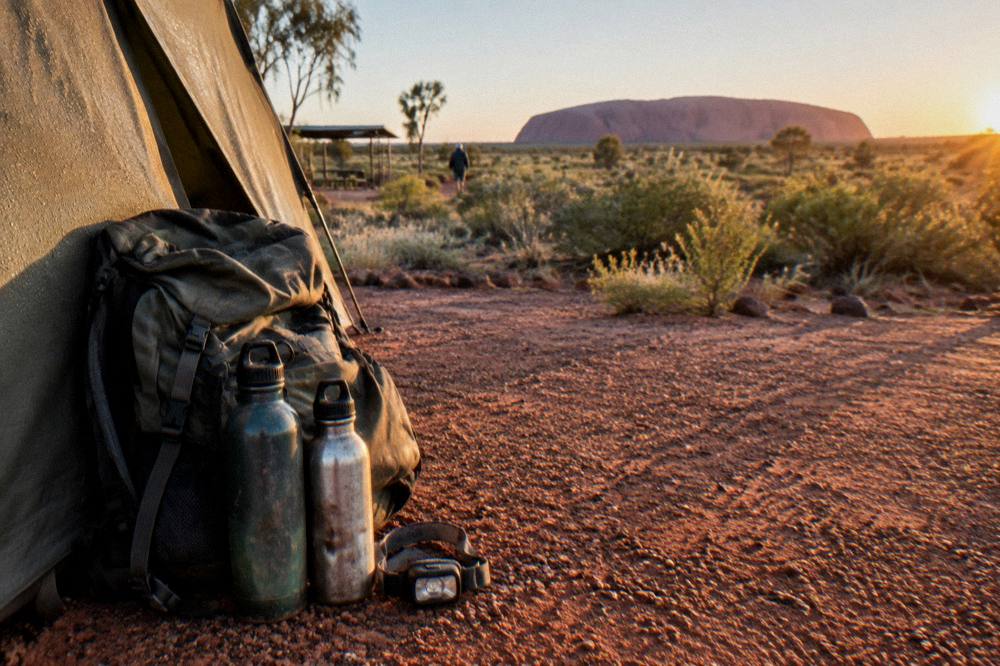
Yes. Ayers Rock Campground accepts independent campers and campervans, the base walk and the ranger-guided Mala walk are free once you hold a park pass, and the sunrise and sunset viewing areas cost nothing beyond entry. What independent camping cannot give you is transport to Kings Canyon, a guide at Kata Tjuta, or a swag and dinner waiting after a long walk, which is exactly the gap the guided camping tours fill.
The self-directed version works best with your own vehicle. Rental cars are available at Ayers Rock (Connellan) Airport from several providers, though supply at Yulara is limited and the park advises booking weeks ahead. Direct flights reach the airport from Sydney, Melbourne, Brisbane and Cairns. Without a car, the hop-on hop-off bus pass, from A$140 per person with a 4.5 rating from 154 reviews, connects Yulara with the park's key stops and is the budget bridge between campground and rock.
For walkers, the free options are real but bounded. The base walk is about 10 km around the full circumference, best started early and clockwise from the Mala carpark, and the ranger-guided Mala walk is free for park visitors at set times of year. The Uluru base walk guide covers the sections and the heat rules. Travellers who want the full circuit with a guide, breakfast included, can look at the small-group full base walk at sunrise, from A$249 per person, rated 4.8 from 460 reviews, with a 6-day cancellation cutoff on its listing.
The honest summary is that camping at Uluru splits cleanly. If you own gear, drive yourself and like cooking outside, the campground plus your own legs covers Uluru and Kata Tjuta well, with Kings Canyon as a long day tour. If you own none of that, or you want the canyon country and the swag nights without the logistics, the guided tours exist for precisely that reason, and Uluru Australia Tours keeps the full roster, from 2-day Alice Springs overnights to the 4-day adventure, in one place for comparison.
Common Questions About Camping At Uluru
Can you camp inside Uluru-Kata Tjuta National Park?
No. The park closes every night, hours vary by month, and no overnight camping is permitted inside the boundary. Camping options are Ayers Rock Campground at the resort in Yulara and Curtin Springs on the Lasseter Highway.
How much do Uluru camping tours cost?
On this site's roster, from A$765 per person for the 2-day Uluru and Kata Tjuta overnight camping tour from Alice Springs, from A$795 for the 3-day Uluru, Kata Tjuta and Kings Canyon camping tour, and from A$1195 for the 4-day, 3-night version. All are per-person "from" prices and vary by date.
Do I need to bring a tent on a camping tour?
No. The camping tours supply the camping equipment, including the swags the listings describe, and handle the cooking. You bring clothes, a sleeping bag if the listing asks for one, and your water bottle.
Is camping at Uluru cold at night?
It can be. Yulara's average overnight lows run 4.4 to 5.9 degrees from June to August, so winter campers need a properly rated sleeping bag and warm layers. Summer nights stay warm, with January averaging an overnight low of 22.8 degrees.
Can I camp at Uluru without a tour?
Yes. Ayers Rock Campground takes independent campers and campervans, and the base walk, the ranger-guided Mala walk and the viewing areas are free with a park pass, which costs $38 for an adult for 3 days. A vehicle or the hop-on hop-off bus covers transport.
Which camping tour includes Kings Canyon?
The 3-day Uluru, Kata Tjuta and Kings Canyon Camping Tour and the 4-day, 3-night Camping Adventure both include Kings Canyon and depart Yulara. The 2-day overnight tour from Alice Springs covers Uluru and Kata Tjuta without the canyon.