Multi-Day Uluru Camping Tours: 2, 3 And 4 Day Trips Compared
Three camping tours cover Uluru, Kata Tjuta and Kings Canyon in two, three or four days. Here is how their prices, ratings, group style and departure cities actually compare.
Short answer
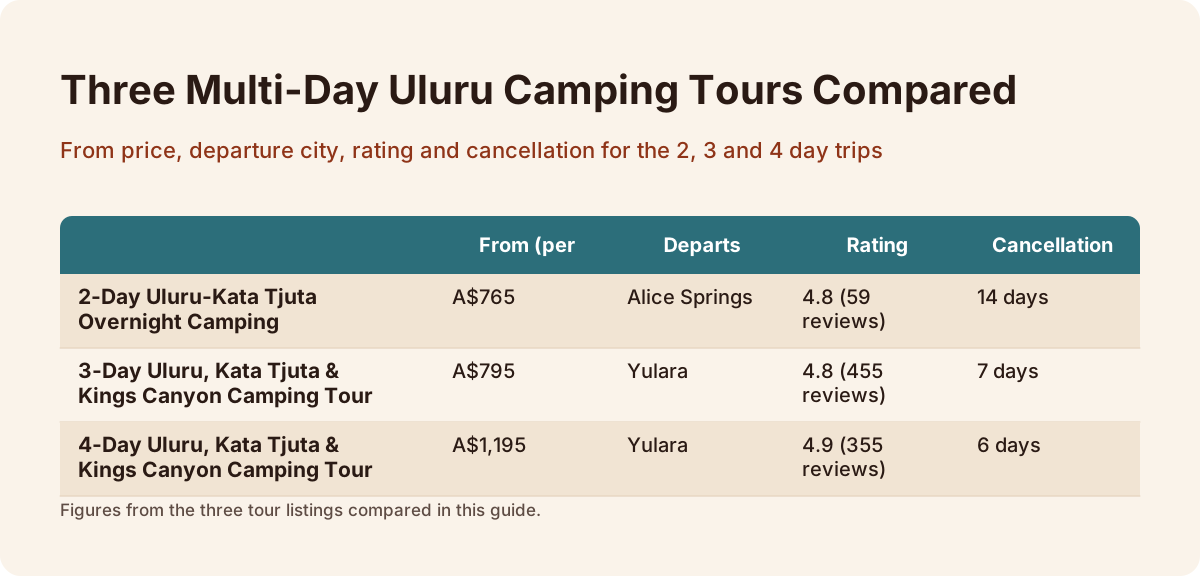
The roster holds three multi-day camping tours: a 2-day trip from Alice Springs from A$765 per person, a 3-day trip from Yulara from A$795 and a 4-day trip from Yulara from A$1195. All three are swag-based camping tours rated 4.8 or 4.9, and all include walks at Uluru and Kata Tjuta; Kings Canyon features on the 3- and 4-day trips only.
Multi-day camping is the cheapest way to see all three of Central Australia's headline sights in one booking: Uluru, Kata Tjuta and Kings Canyon. The roster carries exactly three of these tours, run by two operators, and they differ in ways that matter more than the headline price: where you start, how many nights you sleep in a swag under the stars, and how much driving is packed into each day. This guide compares the three listings side by side using only what the listings themselves state.
The three-day Uluru, Kata Tjuta and Kings Canyon camping tour from Adventure Tours Australia is the category's anchor: from A$795 per person, rated 4.8 from 455 reviews, departing Yulara. Around it sit a two-day option that starts in Alice Springs and a four-day version that adds an extra night and a slower rhythm. We compared every line of those three listings, plus the park rules and climate data that decide whether a camping tour in this region is comfortable or a grind.
What Is A Multi-Day Uluru Camping Tour?
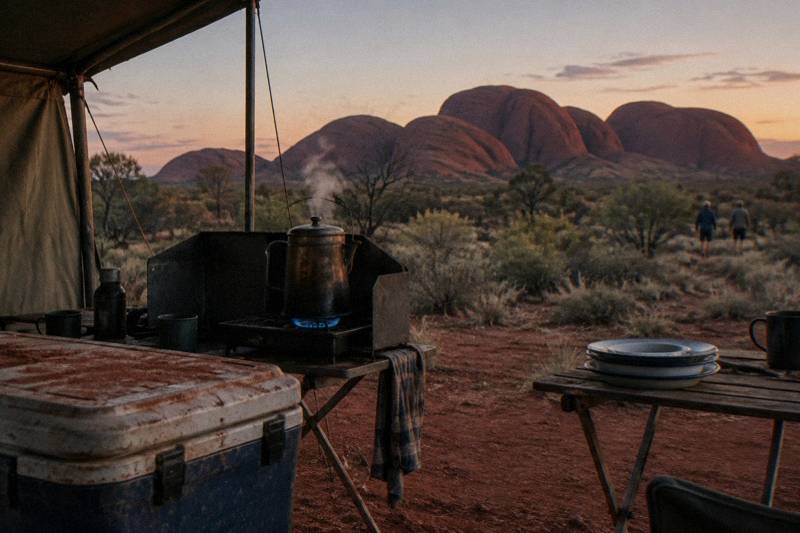
A multi-day Uluru camping tour is a guided small-group trip that visits Uluru, Kata Tjuta and Kings Canyon over two, three or four days, with overnight stops at campgrounds rather than hotels, and travellers sleeping in swags, the canvas bed-roll used across outback Australia. The roster's three versions cost from A$765 to A$1,195 per person and are rated between 4.8 and 4.9 by past guests.
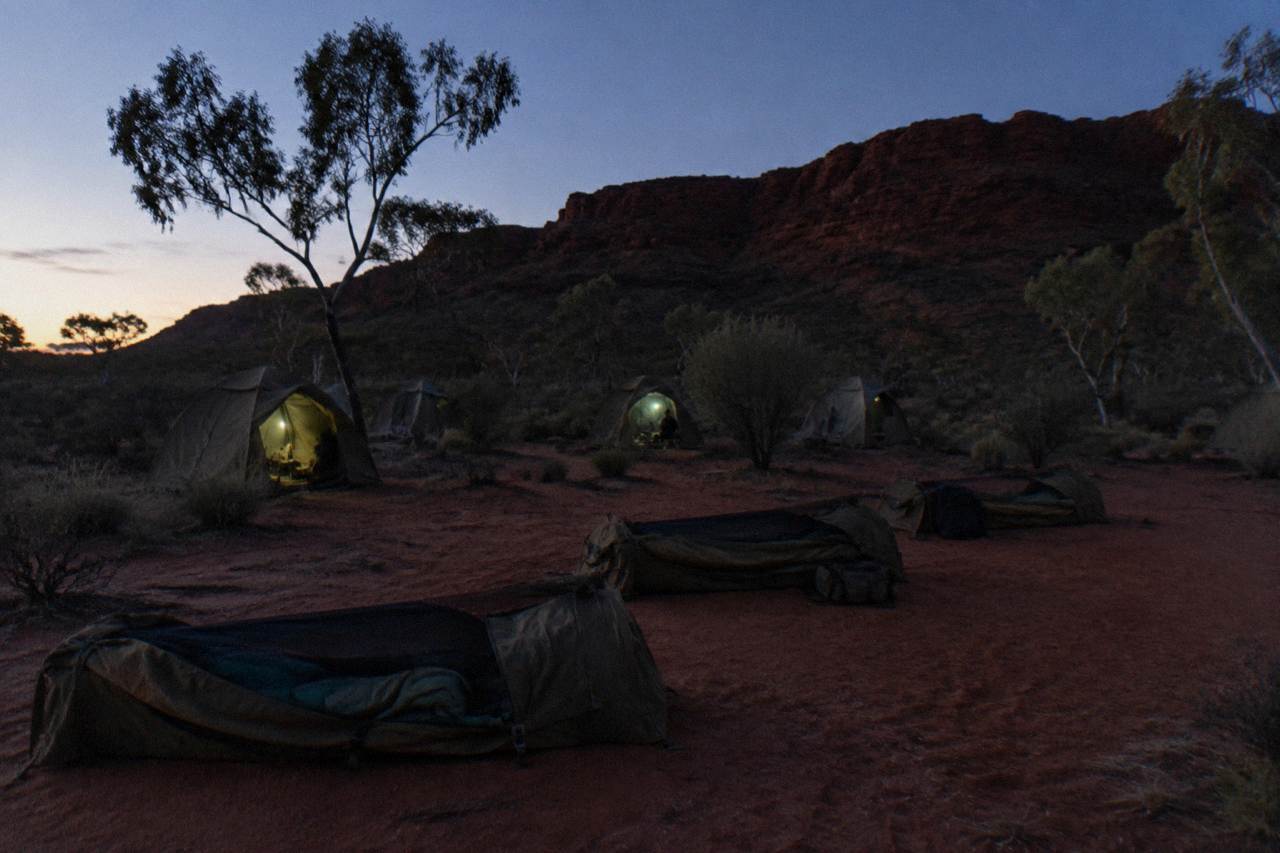
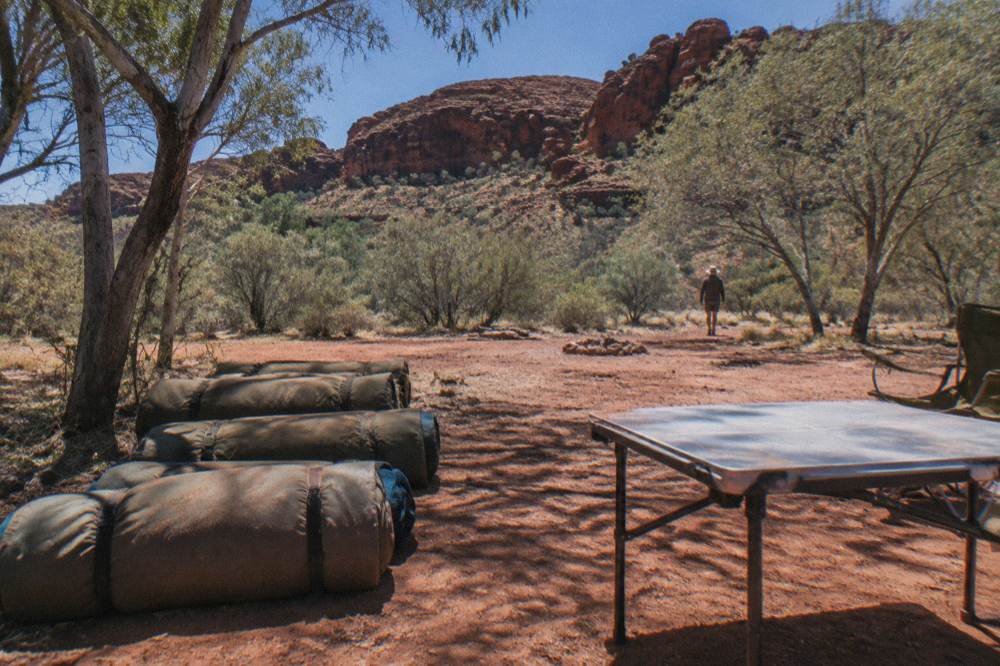
Swag camping is the defining feature. A swag is a heavy canvas shell that wraps around a mattress; you unroll it on the ground or in a tent, crawl in, and sleep in the open air. Every listing in this category uses swags as the standard bedding, which is why these tours cost a fraction of a resort-based itinerary: there is no hotel bill, only campground fees, shared cooking and a guide who drives, cooks and interprets the country.
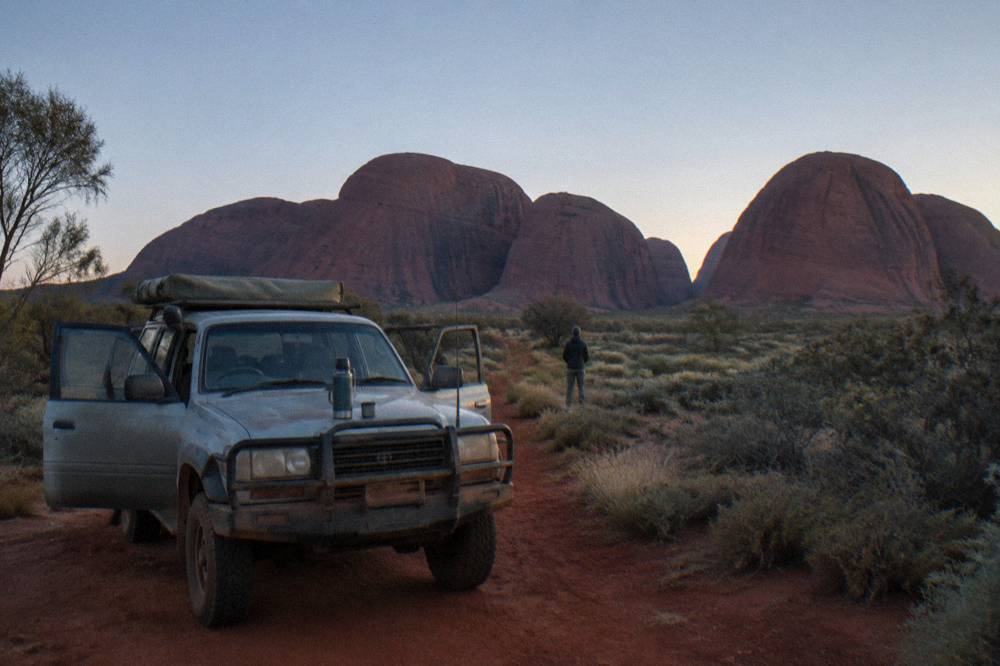
The shared-group format also shapes the experience. You travel in one vehicle with the same people for the whole trip, share cooking and camp setup, and follow a fixed itinerary that moves fast between sights, because the distances are real. Kings Canyon alone is roughly half a day's drive from Yulara, and Kata Tjuta sits 50 km by road from Uluru. A camping tour bundles that logistics into one price.
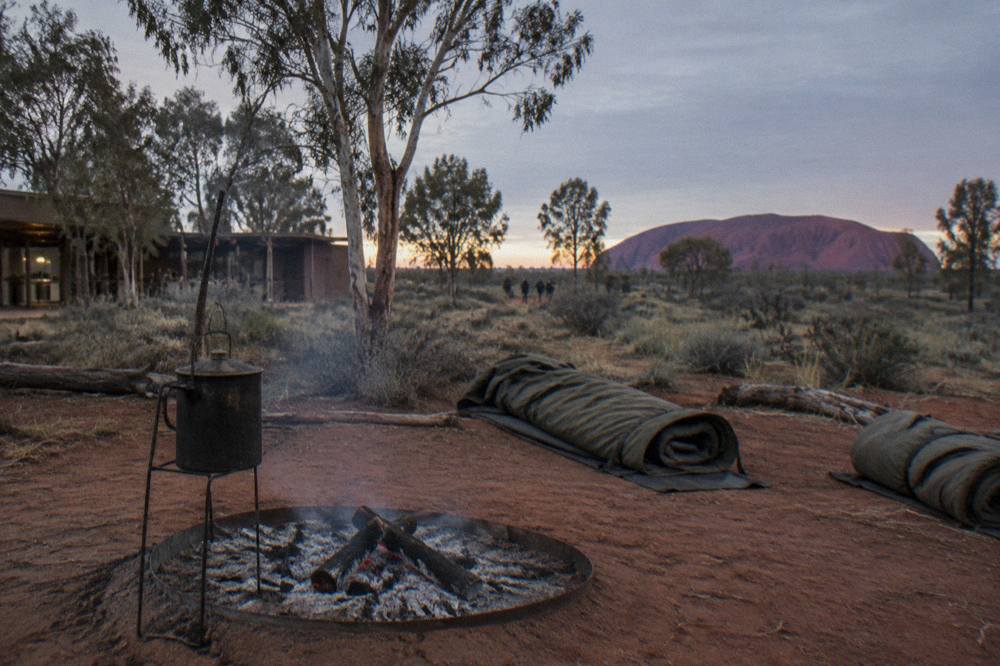
For context on what camping here involves beyond the tours themselves, the guide to camping near Uluru and Yulara covers the campground options, and the broader Uluru and Kings Canyon tours hub lists the day-trip alternatives if sleeping outdoors does not appeal.
Which Multi-Day Uluru Camping Tours Can You Book?
Three camping tours are bookable: the 3-day Uluru, Kata Tjuta and Kings Canyon Camping Tour from A$795, the 4-day 3-night version of the same route from A$1,195, both departing Yulara, and the 2-day Uluru-Kata Tjuta Overnight Camping trip from Alice Springs from A$765. Their ratings are 4.8 from 455 reviews, 4.9 from 355 reviews and 4.8 from 59 reviews respectively.
Here is the full comparison, built line by line from the roster:
| Tour | Operator | Days | From (per person) | Rating | Reviews | Departs |
|---|---|---|---|---|---|---|
| Uluru, Kata Tjuta & Kings Canyon Camping Tour | Adventure Tours Australia | 3 | A$795 | 4.8 | 455 | Yulara |
| 3-night Uluru, Kata Tjuta and Kings Canyon Camping Adventure | Adventure Tours Australia | 4 | A$1,195 | 4.9 | 355 | Yulara |
| From Alice Springs: 2-Day Uluru-Kata Tjuta Overnight Camping | Autopia Tours | 2 | A$765 | 4.8 | 59 | Alice Springs |
The price pattern is worth reading closely. The 3-day tour from Yulara is only A$30 more than the 2-day trip from Alice Springs, despite an extra night, because the 2-day price absorbs the long drive from Alice Springs to Uluru, 465 km and about 5.5 hours each way. The 4-day trip, from A$1,195, is the most expensive of the three, and what the extra money buys is a fourth day of itinerary rather than a different route.
Review depth differs sharply, and honesty requires saying so. The 3-day tour's 4.8 sits on 455 reviews and the 4-day's 4.9 on 355, both substantial pools. The 2-day trip's 4.8 comes from 59 reviews, a solid but much smaller sample, so treat that number with proportionate caution.
A guest review on the 4-day listing captures the tone of the category: "Amazing experience! Sophie was a fantastic guide, with great knowledge. And a terrific cook! Highly recommended if you want to see the great sites and learn as well." The cook line is not incidental; on these tours the guide prepares the meals, and reviews repeatedly name the food and the guiding as what lifts the trip.
Cancellation terms differ by listing, and none should be generalised. The 3-day tour lists free cancellation with a cutoff 7 days before start; the 4-day lists 6 days; the 2-day from Alice Springs lists 14 days, the longest on the roster. All three allow free cancellation in some form, but the windows are long enough that booking well inside them matters, especially for the 2-day trip.
Two Days From Alice Springs Or Three Days From Yulara?
Choose the 2-day trip from Alice Springs if you are already in the Red Centre without a car; choose the 3-day tour from Yulara if you can fly into Ayers Rock Airport or stay at the resort, because it covers the same three rock sites in one extra day with less driving pressure per day. The 2-day trip costs from A$765, the 3-day from A$795.
The departure city is the single biggest structural difference on this roster. Every other tour on this site leaves from Yulara, Ayers Rock Resort; the 2-day Autopia trip is the only one that starts in Alice Springs. That makes it the natural pick for travellers arriving by rail, by flights into Alice Springs, or overland on the Stuart Highway, since it removes the need to cover 465 km yourself. The trade is that day one of that tour is largely consumed by the drive south.
Flying in changes the maths. Qantas, Virgin Australia and Jetstar all fly direct into Ayers Rock (Connellan) Airport at Yulara from Sydney, Melbourne, Brisbane and Cairns, which puts you within minutes of the resort and the 3-day tour's pickup. The trade-offs between the two arrival airports are laid out in detail in flying into Uluru or Alice Springs, and the road option is covered in the Uluru from Alice Springs guide.
| Factor | 2-Day (Alice Springs) | 3-Day (Yulara) | 4-Day (Yulara) |
|---|---|---|---|
| Nights camping | 1 | 2 | 3 |
| Kings Canyon included | No | Yes | Yes |
| Big drives per day | Highest | Moderate | Lightest |
| Cancellation cutoff | 14 days | 7 days | 6 days |
| Best suited to | Alice Springs arrivals | Fly-in visitors | Slow-paced trips |
Note what the table implies: the 2-day trip covers Uluru and Kata Tjuta but not Kings Canyon, because there is no room for it once the Alice Springs drives are counted. Only the 3-day and 4-day tours include the canyon and its rim walk. If Kings Canyon is on your list, and for many visitors it is the walk they remember longest, the choice narrows to those two.
What Is A Swag Night Really Like?
A swag night means sleeping in a canvas bed-roll on the ground or under a simple tent, in desert air that can swing from near-freezing winter nights to summer nights above 20 degrees, with the roster's camping tours using swags as standard bedding at every overnight stop. You are outdoors, in shared campsites, with facilities that vary by campground.
The climate data explains why swags work here. Yulara's average overnight lows fall to 4.4 degrees in July and 5.6 in June, cold enough that a warm sleeping bag matters, while January nights average 22.8 degrees. Daytime maxima tell the other half: 38.4 degrees on average in January against 20.4 in June. Camping in this country is genuinely seasonal, and the swag is the bedding that handles both ends because it is designed for exactly this range.
What the listings state about inclusions should be read literally. The listings describe camping with swags, shared group travel and guide-prepared meals; anything beyond that, such as specific meal counts or campground names, is on the live listing rather than in a summary here, because operators adjust campgrounds and menus by season. Treat the listing's own inclusions section as the contract, not a brochure description.
Practical expectations matter more than romance. You will help with camp tasks in a shared group, wake before dawn on most days because sunrise touring is built into these itineraries, and spend long stretches in a vehicle on sealed and unsealed roads. Reviews across the category suggest guests who arrive expecting a moving road trip with camp cooking rate it far higher than guests expecting a resort holiday with a tent.
What Is Included And What Do You Still Pay For?
The tours include guide, vehicle, camping equipment, swags and meals as stated on each listing; they do not include the Uluru-Kata Tjuta National Park pass, which every visitor must buy separately at $38 for an adult 3-day pass, under 18 free, pre-purchased online before entry, as the park's own pass page requires. Alcohol and personal extras are also your own cost.
The park pass is the item travellers most often miss. The tour listings state the fee separately and say it must be pre-purchased online; it is valid for Uluru-Kata Tjuta National Park only, so it does not cover any stop outside the park boundary. The full detail, including the annual option and how to buy, is in the guide to the Uluru national park pass, and the official source is the park's pass purchase page.
| Item | Included on camping tours? | Where to check |
|---|---|---|
| Guide, vehicle, fuel | Yes, all three listings | Listing inclusions |
| Swag and camping gear | Yes, as listed | Listing inclusions |
| Meals | As stated per listing | Live listing |
| Park pass ($38 adult, 3 days) | No, stated separately | Park pass page |
| Alcohol | Generally not, bring your own | Live listing |
| Travel to departure city | No | Your own booking |
One thing these tours cannot sell you is the resort's night-time experiences. Field of Light, the Bruce Munro installation of more than 50,000 spheres running since 2016 and extended through 2029, is sold direct by Ayers Rock Resort, with General Admission from $50 adult and $39 child; the resort's dining experiences are likewise direct-only. The Field of Light Uluru guide explains the pass tiers, and Wintjiri Wiru, the 1,200-drone telling of the Mala story, is covered in the Wintjiri Wiru drone show guide. If an evening light show matters to you, plan a night at the resort before or after your camping tour. If you'd rather spend that extra night under stars instead of in a hotel room, the guide to camping at Ayers Rock Campground covers the sites, facilities, and tour options.
There is one roster-listed sunrise alternative if you would rather not book the resort's own pass: the Field of Light Sunrise Tour with Hot Drinks from AAT Kings, a two-hour coach visit from A$115 per person, rated 4.6 from 677 reviews. It is a different proposition from the resort's general admission, with pickup from Yulara and hot drinks included, and it can slot into the free morning before a camping tour departs.
How Much Walking Is Involved?
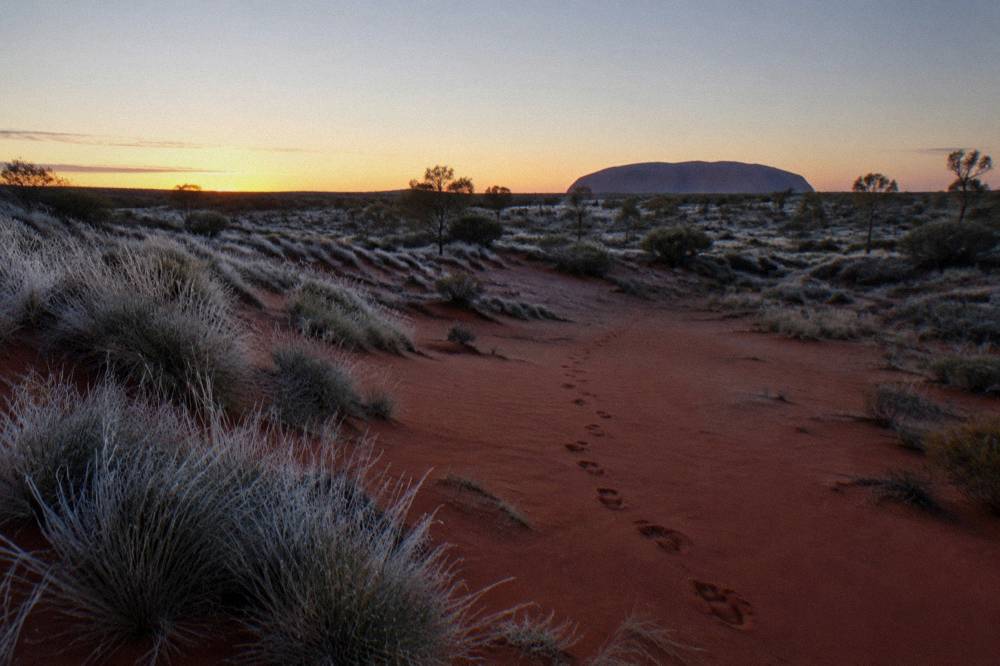
Expect one substantial guided walk most days: the Uluru base walk is about 10 km, Kata Tjuta's Valley of the Winds circuit takes 3 to 4 hours and Kings Canyon's rim walk is a half-day effort, so a reasonable base fitness is needed on all three tours, and in hot months the park itself restricts walking to the cooler morning hours.
The park's own guidance frames the physical demands. The base walk is about 10 km around the whole circumference, started clockwise from the Mala carpark in the early morning; in hot weather the park says to walk only in the cooler morning hours and finish before 11.00 am. The north-east walk closes from 11 am when the temperature reaches 40 C. Kata Tjuta's Valley of the Winds is a Grade 4 track, and Kata Tjuta sits 50 km by road from Uluru, so the drive and the walk fill a morning. Safety basics are on the park's staying safe page: carry at least one litre of water per person per hour, avoid walking between 2.30 pm and 6.30 pm, and call 000 or 112 in an emergency.
Conditions do change, and not only with heat. The park occasionally closes areas for cultural reasons and extreme weather, so the park's news page is the authoritative source before any visit. We do not promise any named track is open on any given day, and no honest guide should.
If ten kilometres on foot sounds like more than you want, a daytime upgrade exists on the roster. Segway the FULL base of Uluru, from Uluru Segway Tours, covers the full base loop on a Segway with a small group, from A$259 per person, rated 4.9 from 499 reviews. One guest review on that listing reads: "I wasn't sure I could manage the Segway but it became very comfortable. The team were very helpful and info. So, so pleased we did it!" The wider options are compared in the Uluru Segway and bike tours guide.
Which Months Suit Camping Best?
May to September is the park's own recommended window, with daytime maxima usually between 20 and 30 degrees and cold nights down to average lows near 4 degrees in midwinter; October to March regularly exceeds 35 degrees, summer walking is restricted to mornings, and bush flies are heavy from September to April, so most camping tours run best in the cooler half of the year.
The Yulara averages make the pattern concrete:
| Month | Avg max (C) | Avg min (C) | Avg rain (mm) |
|---|---|---|---|
| January | 38.4 | 22.8 | 28.8 |
| April | 29.9 | 14.5 | 15.7 |
| June | 20.4 | 5.6 | 18.2 |
| July | 20.6 | 4.4 | 17.6 |
| September | 28.7 | 10.7 | 9.0 |
| October | 32.3 | 14.9 | 21.1 |
For a camping tour specifically, nights matter as much as days. Winter's 4-to-6-degree overnight lows are comfortable in a swag with the supplied bedding, and the park notes that overnight temperatures in winter can be very cold, so pack warm layers even for a desert trip. The full monthly picture, including what to wear, is in the best time to visit Uluru.
There is also a cultural season worth knowing. The park describes the piriyakutu, or piriya piriya, season from roughly August to October, when food plants flower, a detail that adds a layer to a spring departure and comes straight from the park's seasons page. August and September are also usually the best months for wildflowers, and September's average rainfall of just 9.0 mm makes it the driest shoulder month on the table.
What Can You Add Around Your Camping Tour?
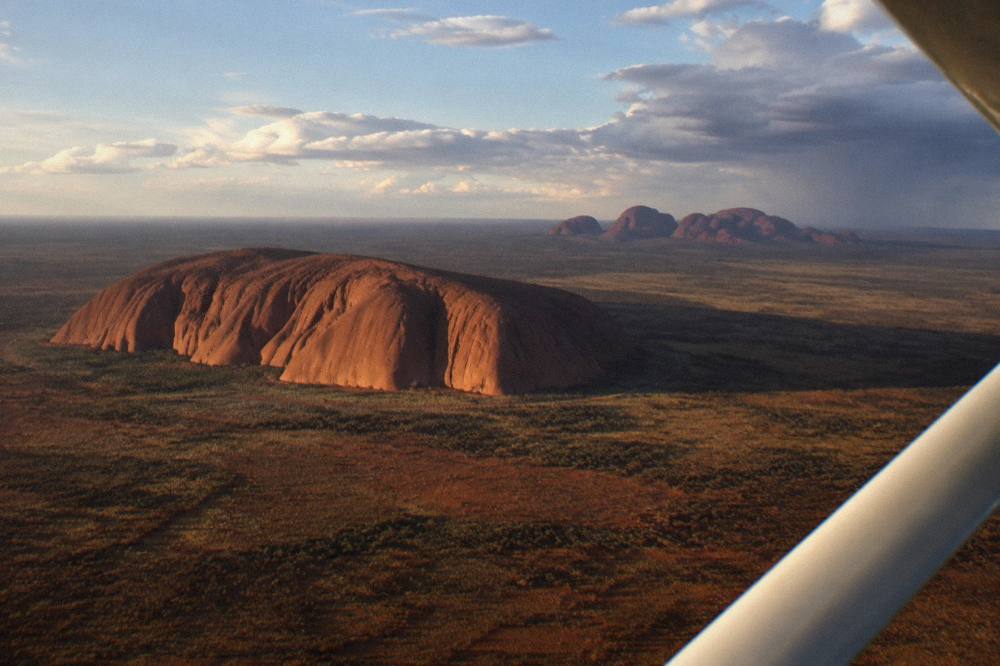
Most travellers add at least one paid experience in the free hours before or after a camping tour, and the roster's strongest short add-on is a scenic flight: the 15-minute Uluru helicopter experience from A$195 per person, rated 4.9 from 669 reviews, fits into a single free morning or afternoon at Yulara.
A short flight reframes the whole region. One guest review on the 15-minute listing puts it plainly: "being able to view Uluru by air gave a true perspective of the size." Uluru stands 348 metres high with a 9.4 km circumference, and its neighbour Kata Tjuta rises higher still, up to 546 metres across 36 domes covering more than 20 square kilometres, according to the park's own highlight pages. Seeing that geometry from above, in the slot of time a camping itinerary leaves open, is the most efficient upgrade on the menu. The full set of options is compared in the Uluru helicopter flights guide.
Ground-based add-ons matter too. If your camping tour ends mid-afternoon at Yulara, the sunset and sunrise viewing areas inside the park are free to use with your pass, and the ranger-guided Mala walk, free for park visitors, runs at set morning times. The trade-offs between guided and independent days are laid out in walking around Uluru without a tour, and the budget picture for the whole stay is in what an Uluru trip costs. Whichever mix you choose, Uluru Australia Tours keeps the full roster, including the 3-day Uluru, Kata Tjuta and Kings Canyon camping tour, on one page for comparison, and you can Check availability once your dates line up.
The honest summary: pick the 2-day trip if Alice Springs is your entry point and Kings Canyon is not essential, the 3-day if you fly into Yulara and want the full circuit at the category's most-reviewed price, and the 4-day, from A$1,195, if an extra night and a gentler pace justify the higher from price for you. All three deliver swag nights, guided walks and the same two operators' outback logistics, which is exactly why the comparison above comes down to days, dollars and departure city.
Common Questions About Multi-Day Uluru Camping Tours
What is the cheapest multi-day Uluru camping tour?
The 2-day Uluru-Kata Tjuta Overnight Camping trip from Alice Springs is the cheapest at from A$765 per person. The 3-day tour from Yulara is from A$795, only A$30 more, and includes Kings Canyon, which the 2-day trip does not.
Do you need to be fit for a camping tour at Uluru?
A reasonable base fitness helps. The Uluru base walk is about 10 km, Kata Tjuta's Valley of the Winds circuit takes 3 to 4 hours, and Kings Canyon involves a half-day rim walk. The park advises walking in the cooler morning hours and finishing before 11.00 am in hot weather.
Is the park pass included in the camping tours?
No. Every tour listing states the Uluru-Kata Tjuta National Park fee separately. An adult 3-day pass is $38, under 18 is free, and the pass must be pre-purchased online before entry. It is valid for this park only.
Can you start a camping tour from Alice Springs?
Yes, one can. The 2-day Uluru-Kata Tjuta Overnight Camping trip departs Alice Springs. The 3-day and 4-day tours both depart Yulara, Ayers Rock Resort.
What do you sleep in on a camping tour?
A swag, a canvas bed-roll with a mattress inside, standard bedding on all three tours. Winter nights at Yulara average lows between 4 and 6 degrees, so the supplied bedding and warm layers matter in the cooler months.
What is the best month for an Uluru camping tour?
May to September. Daytime maxima usually sit between 20 and 30 degrees, rainfall is low and the park itself recommends this window. October to March regularly exceeds 35 degrees and bush flies are heavy from September to April.