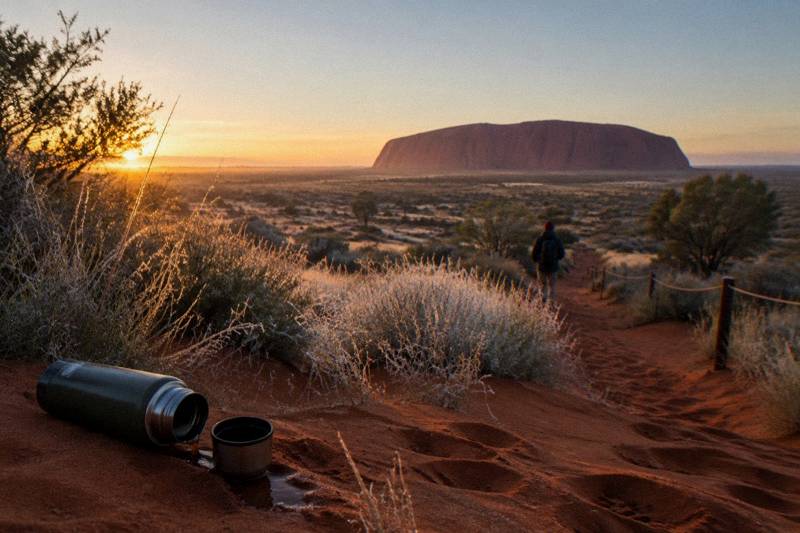
Is Field Of Light Uluru Worth It?
An honest value answer on Uluru's Field of Light: what it is, what each ticket tier costs from General Admission to dinner, how long you get, and which format suits which traveller.
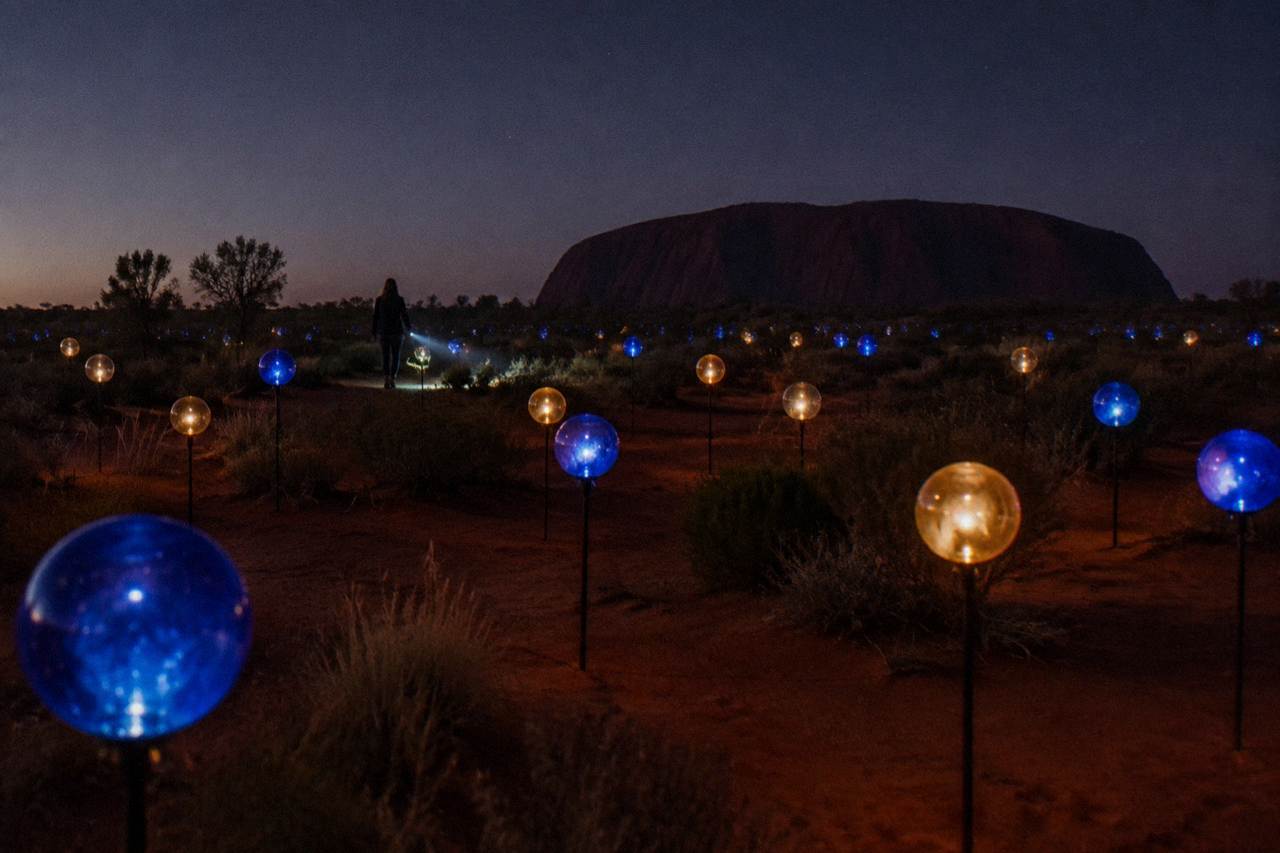
Yes, for most visitors it is, and the honest answer depends on which ticket you buy. More than 50,000 solar-powered spheres by artist Bruce Munro spread across the desert beside Uluru, and the installation has now run for a full decade: 2026 marks its 10-year anniversary since installation in 2016, and it has been extended through 2029. General Admission starts from $50 per adult, the Star Pass from $137, and the dinner experience from $360, all sold direct by Ayers Rock Resort for travel 1 April 2026 to 31 March 2027. Whether that feels worth it comes down to format, timing and how much you want layered onto the lights themselves, which is exactly what this article works through.
The worth-it question usually arrives at the point of booking, when the price tiers appear and the differences between them are not obvious from a product page. This article lays out what the installation actually is, what each tier costs, how long you spend on site, and how the resort's own passes compare with the coach-based sunrise tour that appears on tour rosters with a live listing and free cancellation listed 24 hours before start. It also flags where the money goes and where the honest criticisms land, because a decade-old installation with a healthy share of five-star reviews still has trade-offs worth knowing before you pay. If you're also tempted to see the rock from the air, our guide to whether Uluru helicopter flights justify their price weighs the views and flight times against the fixed-wing alternative.
Is Field Of Light Uluru Worth It?
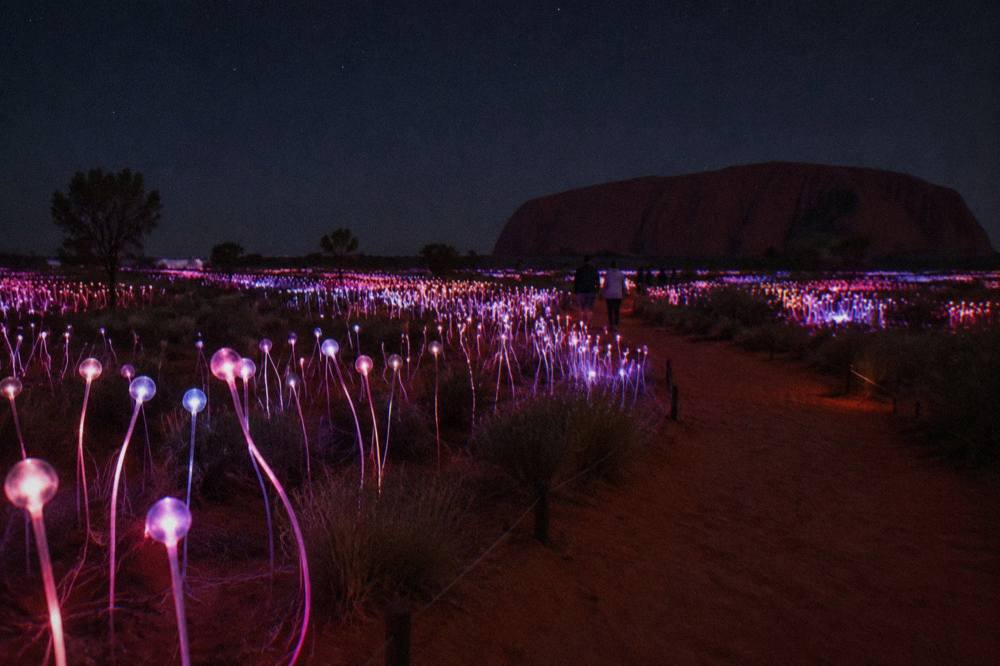
Yes, for most travellers, Field of Light is worth it, because it is one of the few Uluru experiences that looks nothing like the daytime itinerary and cannot be replicated for free. You are paying for something genuinely different from everything else on your schedule, rather than a repeat of the sights you will already see around Uluru. The installation covers an area the resort describes as more than seven football fields, with more than 50,000 frosted-glass spheres threaded by fibre optic cable, changing colour in slow waves through the desert night. General Admission from $50 per adult buys 1 to 2 hours on the site, which is enough to walk the paths and watch several full colour cycles. The strongest value case is for visitors already staying at Yulara, since every tier departs from the resort and the marginal cost is the ticket alone rather than travel you would not otherwise take.
The weaker case is for visitors combining Uluru with a tight budget. A park pass is $38 for an adult for 3 days, under 18 free, and that pass covers sunrise viewing areas, the Cultural Centre and the base walk; none of those need a tour. Field of Light sits outside that logic because it is a ticketed art installation on resort land rather than a park experience, so it is an add-on rather than a substitute. A traveller who skips it still gets a full park day. A traveller who books it gets something genuinely unlike anything else in the Red Centre, which is the honest summary of what the $50 buys. If you're still working out which tour style suits your trip, our guide to choosing the right Uluru tour compares sunrise and sunset coaches, guided walks, scenic flights and cultural experiences by price and format.
Format choice matters as much as the yes-or-no. The roster's Field of Light Sunrise Tour with Hot Drinks, operated by AAT Kings, runs about 2 hours from A$115 per person and is rated 4.6 from 677 reviews, with the listing noting free cancellation 24 hours before start. The resort's own General Admission from $50, Star Pass from $137 and Dinner from $360 are sold direct only. Those are four different propositions at four price points, and the sections below take them one at a time.
What Exactly Is The Field Of Light?
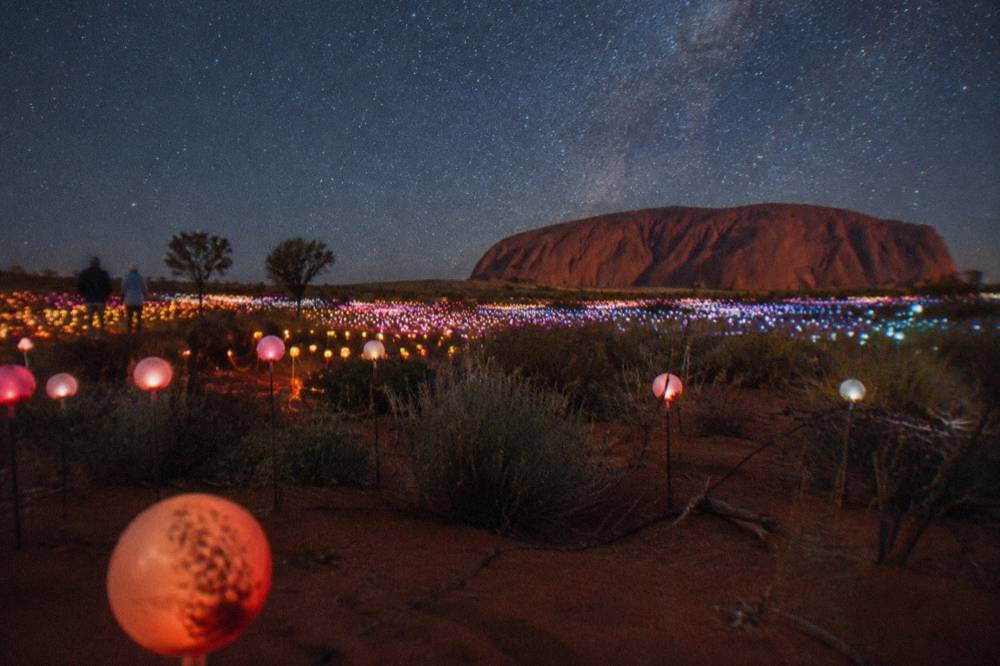
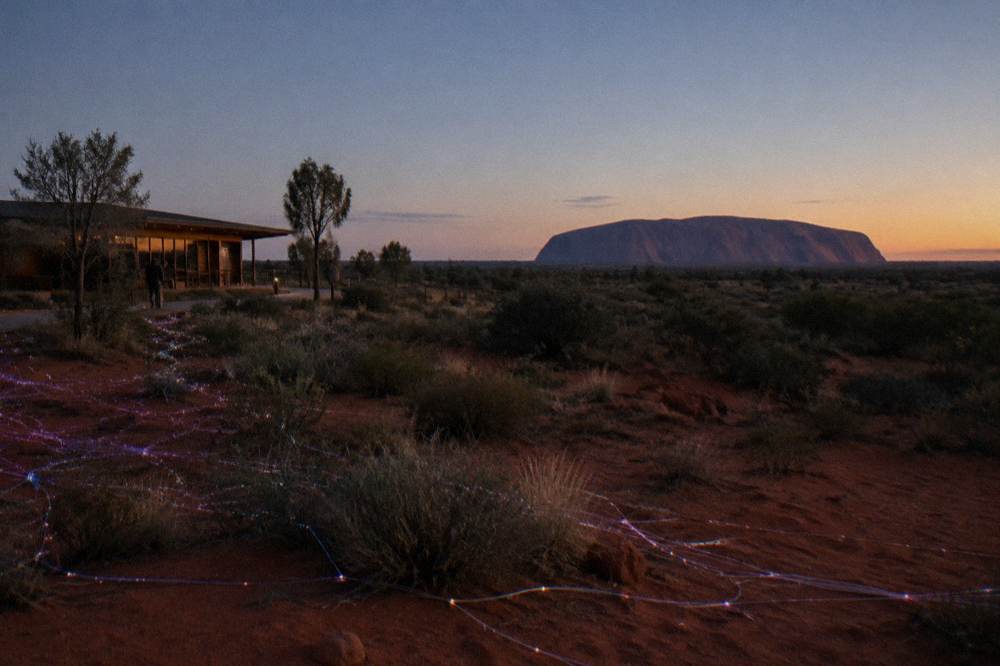
Field of Light is a large-scale outdoor light installation by British artist Bruce Munro, installed in the desert a short distance from the base of Uluru, made up of more than 50,000 solar-powered glass spheres on slender stems. The spheres light after dark and shift through a slow cycle of colours, soft blues, deep violets, warm ambers and whites, across a site the resort measures at more than seven football fields. It has been in place since 2016, making 2026 its 10-year anniversary, and the resort has extended it through 2029, so it is a long-running fixture rather than a temporary pop-up that might vanish before your trip.
The effect is best understood as a landscape-scale artwork rather than a light show in the fireworks sense. There is no music, no projection and no narrative; visitors walk raised paths through the field while the colours cycle around them, with Uluru a dark mass on the horizon. Munro conceived the work decades before Uluru hosted it, and this desert edition is the largest the artist has realised. The installation's power comes from scale and silence, and reviewers who love it tend to describe exactly that, while reviewers who feel let down usually expected more motion or spectacle, which is worth calibrating before you book.
Because the field sits on the resort side of the landscape rather than inside the national park's gated sights, it runs after dark through the resort's own operations, and the national park's own night-time rule is part of why: all visitors must be out of Uluru-Kata Tjuta National Park by closing time, so night-sky experiences at Uluru happen on resort land. That is also why the installation is sold direct by Ayers Rock Resort as General Admission, Star Pass and Dinner tiers, while the coach-based sunrise visits run under tour operators with live listings. For more on how the whole evening dining and light landscape fits together, the guide to Field of Light at Uluru covers the tiers in detail.
Timing the colour cycle matters less than timing your season. The field is viewable year round after dark, and the resort sells all tiers across the year, but the desert cold after sunset in winter and the heat of summer evenings change how long people happily stand among the spheres, a point the section on timing returns to.
How Much Does Field Of Light Cost At Each Tier?
The direct tiers run from $50 per adult for General Admission, $137 for the Star Pass at sunset, and $360 for the full Field of Light Dinner, with child prices at $39, $87 and $180 respectively, for travel 1 April 2026 to 31 March 2027. The roster alternative, the Field of Light Sunrise Tour with Hot Drinks from A$115 per adult, sits between General Admission and the Star Pass and adds coach transport and hot drinks. Every price is a "from" figure; the resort and operators both vary rates by date, and the resort's four tiers are sold direct only, with no booking card on this site for them.
| Ticket | Adult from | Child from | What it adds | Sold by |
|---|---|---|---|---|
| General Admission | $50 | $39 | 1 to 2 hours at the field after dark, transport from the resort | Ayers Rock Resort, direct |
| Star Pass | $137 | $87 | Sunset viewing with a drink and canapes before the field | Ayers Rock Resort, direct |
| Field of Light Dinner | $360 | $180 | Three-course dinner at a viewing platform plus the field | Ayers Rock Resort, direct |
| Sunrise Tour with Hot Drinks | A$115 | on the listing | Coach pickup, hot drinks, dawn departure, about 2 hours | AAT Kings, via the operator's live listing |
The value logic across that table is straightforward. General Admission is the pure experience at the lowest price and is the right call for anyone whose main question is simply whether the lights themselves are worth $50; they are, for one visit, in the way a single entry to any major artwork is. The Star Pass buys sunset, a drink and canapes, which suits travellers who want the transition from daylight to dark rather than arriving in full night. The dinner tier is a dining event with the field attached, priced accordingly, and earns its cost mainly for special occasions. The sunrise tour inverts the timing: you see the field in the last of the dark and then watch dawn arrive over Uluru, with pickup handled.
Two honest caveats belong next to any price table. First, the park entry pass ($38 adult for 3 days, under 18 free) is separate and is not included in any Field of Light ticket; it is valid for Uluru-Kata Tjuta National Park only, and tour listings state the fee separately. Second, none of the resort tiers appears on a live tour listing, so comparing them with roster tours means reading two different booking pages rather than one comparison grid, which is where many travellers get stuck.
One way to think about the spend: if you are already paying for one premium evening at Uluru, decide between the dinner tier and the resort's other night experiences first, because Sounds of Silence runs from $295 per adult and Tali Wiru from $455, both direct, and they compete for the same evening slot. The Sounds of Silence guide compares that angle. If your interest is specifically the spheres, the cheapest honest answer is General Admission or the sunrise tour, not the dinner.
How Long Do You Actually Get Among The Spheres?
General Admission allows 1 to 2 hours on site, which is enough to walk the full path network and watch several complete colour cycles; the sunrise tour runs about 2 hours total including transport, and the dinner tier runs considerably longer because the meal is served before or during the field time. None of the tiers is a quick photo stop: the field is large, the paths are meant for slow walking, and the resort's own framing of the General Admission experience as 1 to 2 hours reflects how long visitors typically take rather than a hard clock-out.
The practical planning point is what that duration does to your evening. A General Admission visit in winter means standing or walking outdoors in cold desert air; overnight temperatures in the coldest months average well into single digits at Yulara, and the cold nights at Uluru question is worth reading before packing. In summer the air stays warm but the walk itself is exposed, and the desert's summer safety logic, avoiding exertion in the hottest part of the day, applies less at night but still shapes comfort. The sunrise tour flips this: you stand in the coldest pre-dawn hour with a hot drink, which is either the best or worst part of the experience depending on how you feel about cold mornings.
Duration also interacts with photography. The field is dim and spread out, so phone cameras struggle and long exposures need stillness; visitors who want photographs should plan to spend the full allowance rather than the minimum. Photographing the field itself is permitted, but note the park's separate cultural photography rules apply inside the national park, not at the resort site, so no-photo zones around Uluru's sacred sites are a different matter from the installation. The park's photography guidance is on its official photography page.
Sunrise Tour Or Dinner: Which Format Suits You?
Pick the sunrise tour if you mainly want the field plus a dawn view of Uluru at the lower price point. Pick the dinner if you are after a special-occasion evening out, where the meal and the field together are the point of the whole experience. The Field of Light Sunrise Tour with Hot Drinks runs from A$115 per person, rated 4.6 from 677 reviews, with pickup from the resort and hot drinks in the pre-dawn cold; the dinner tier runs from $360 per adult and is a seated, catered event. They are not really competitors; they serve different evenings and different budgets.
The sunrise tour has a practical advantage beyond price. Departure and pickup are handled, the group arrives in the dark with time to spare before the colour cycle ends, and the same morning often flows into other plans, since the field visit finishes as the park's sunrise viewing areas open. Travellers pairing it with a second morning activity get an efficient day. A different evening option, the Uluru (Ayers Rock) Sunset + Outback Barbecue Dinner & Star Talk by AAT Kings, from A$328 per person and rated 4.2 from 445 reviews, trades the field for sunset, barbecue and a star talk; one guest review on that listing describes it plainly: "The barbecue was really good and the star gazing was good even though the clouds didn't cooperate." That is the honest risk with any sky-dependent evening: weather decides.
For travellers who want the field without the dinner price, the decision is really General Admission versus the sunrise tour, roughly $50 direct versus A$115 with transport and drinks. If you have a car and are happy to make your own way to the resort departure point on the resort's schedule, General Admission is the leaner buy. If you want everything handled, a hot drink in hand and the dawn payoff, the tour earns its difference. Visitors structuring several days around Uluru can weigh it against the fuller itineraries in the guide to things to do in Uluru, where evening experiences are only one column of the plan.
When Is The Best Time To See The Field?
The field runs year round, but May to September offers the most comfortable evenings, with Yulara's daytime maximums usually 20 to 30 C and cold, clear nights; October to March brings heat, more flies and a higher chance of cloud from summer rain patterns. The installation itself does not change by season, but standing outdoors for 1 to 2 hours after dark certainly does, and the same months that make walking at Uluru pleasant make standing among the spheres pleasant too.
The Bureau of Meteorology's outlook to December 2026 favours above-average temperatures and above-average rainfall for the southern Northern Territory, so late-spring and early-summer visitors should plan for warm evenings with a real possibility of cloud cover, which softens the visual without ending it. Bush flies are present from September to April, though they ease after dark. Winter visitors get the sharpest skies and the coldest feet; a jacket rated for single-digit temperatures is not optional at a winter Field of Light visit. For the fuller month-by-month picture, the guide to the best time to visit Uluru works through the trade-offs. Whatever month you choose, the guide to what to wear at Uluru Field of Light covers the layers, shoes and fly protection that suit each season.
Timing within the night matters as much as the month. The field is most dramatic in full darkness, and General Admission visits are scheduled to land there; the Star Pass deliberately straddles sunset so you watch the colours emerge as the sky drops. The sunrise tour inverts it again, catching the field in the final dark minutes before dawn washes the spheres out and Uluru itself becomes the show. Neither timing is wrong, but they feel different enough that knowing your preference before booking saves a mismatch.
Tips Before You Book Any Field Of Light Ticket
Book ahead, budget for the separate park pass if the same trip includes the national park, dress for the season's night temperature, and read the cancellation terms on whichever page you buy from, because the resort tiers and the roster tours are sold under different policies. The Field of Light Sunrise Tour with Hot Drinks lists free cancellation 24 hours before start; the resort's direct tiers carry their own terms on the resort's booking pages, and it is worth reading them before paying rather than after, as the resort's Field of Light pages state the current conditions of sale.
A few practical points that consistently trip visitors up:
| Topic | What to know |
|---|---|
| Park pass | $38 adult for 3 days, under 18 free, separate from every Field of Light ticket, valid for Uluru-Kata Tjuta National Park only |
| Duration | General Admission 1 to 2 hours; sunrise tour about 2 hours; dinner tier longer with the meal |
| Weather | No operator can promise clear skies; cloud softens the field, rain can affect departures |
| Clothing | Winter nights are genuinely cold; summer evenings warm with flies before dark |
| Photography | The field is dim; phones struggle, and the park's separate no-photo rules apply inside the park, not at the field |
| Booking | Resort tiers direct only; the sunrise tour has a live listing with pickup from Yulara |
The last tip is about expectations. Field of Light is slow, quiet and horizontal: it rewards standing still and letting the colour waves pass. Travellers arriving expecting a show with motion, sound or narrative are the ones who leave disappointed, and the reviews that read as lukewarm almost always describe that expectation gap rather than a flaw in the artwork. Calibrate for an artwork in the landscape and the worth-it answer tilts clearly to yes.
If the spheres are not the deciding factor and the evening budget is fixed, the alternatives are real: the Australian BBQ Dinner Under the Stars from A$219 per person, rated 4.5 from 79 reviews, keeps dinner and stars without the field, and the wider evening and dining landscape is covered in the Field of Light and dining hub. Whichever way you lean, the site's own coverage at Uluru Australia Tours keeps the full roster of sunrise, walking, flight and multi-day options side by side. For visitors whose real question is budget across a whole trip rather than one evening, the breakdown in how much an Uluru tour costs puts the ticket tiers into full-trip context.
Common Questions About Field Of Light At Uluru
Is Field Of Light Uluru Worth It?
For most visitors, yes. It is a large-scale, unreplicable artwork with more than 50,000 spheres beside Uluru, running since 2016 and extended through 2029. General Admission from $50 per adult buys 1 to 2 hours on site, which most travellers find enough. It is an add-on to the park experience rather than a replacement for it, so weigh it as one evening's spend.
How long does Field of Light take?
General Admission allows 1 to 2 hours at the field after dark. The sunrise tour runs about 2 hours including coach pickup and hot drinks. The dinner tier runs longer because the three-course meal is served as part of the evening.
Does the park pass cover Field of Light?
No. The park pass is $38 for an adult for 3 days, under 18 free, and is valid for Uluru-Kata Tjuta National Park only. Every Field of Light ticket is separate, and tour listings state the park fee separately as well.
Is Field of Light closing soon?
No. It has run since 2016, 2026 is its 10-year anniversary, and Ayers Rock Resort has extended it through 2029.
Can I book Field of Light through a tour listing?
The resort's own General Admission, Star Pass and Dinner tiers are sold direct by Ayers Rock Resort only. The coach-based sunrise visit, operated by AAT Kings from A$115 per person, is the roster option with a live listing, pickup from Yulara and free cancellation listed 24 hours before start.